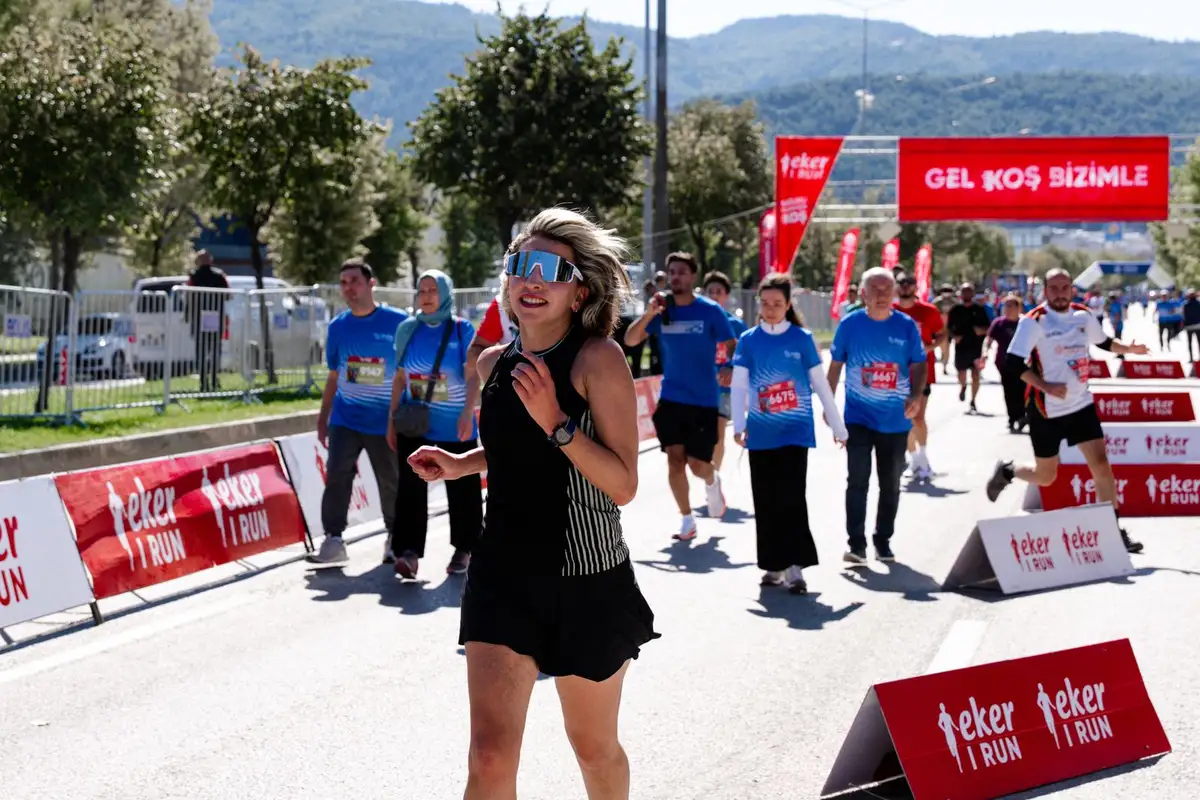
More than 41,000 people lined up for the 21st Delhi Half Marathon on 18 October, and over 10,000 of them were women. Mass running has become one of India’s biggest fitness habits. In Delhi, it now has a hard deadline: the arrival of winter smog.
The numbers from 18 October
The elite men’s race started at 5:18 am. Behind the professionals came a field of more than 41,000 runners, according to ANI, with women accounting for over 10,000 of them. The event also met its target of five million meals for its Run For Zero Hunger campaign.
At the front, Kenya’s Charles Matata won in 58 minutes 52 seconds, beating the course record of 58:53 set by Amedework Walelegn in 2020 by a single second. Ethiopia’s Wudinesh Alemu Keneni won the women’s race in 1:06:35. The total prize purse was USD 275,732, with USD 27,000 each for the two winners. Kenyans Samwel Nyamai Mailu (59:24) and Stanley Mburu (59:33) completed the men’s podium.
Speaking about the range of people on the road, Delhi Chief Minister Rekha Gupta said ‘there is no difference of community, no bar of age.’
Running is now a mass event
Delhi is not an outlier. The Tata Mumbai Marathon in January drew a record 69,100 participants, IANS reported, including more than 65,400 who ran on the road and over 3,700 who ran virtually. The organisers put the 2025 edition’s socio-economic contribution to the city at ₹530.59 crore.
Maharashtra’s Chief Secretary Rajesh Aggarwal said the race had ‘positively impacted both the physical health of people and the economic health of the city.’ For most of these runners, the goal is not a podium. It is a finish line, a timing chip and a reason to train for months.
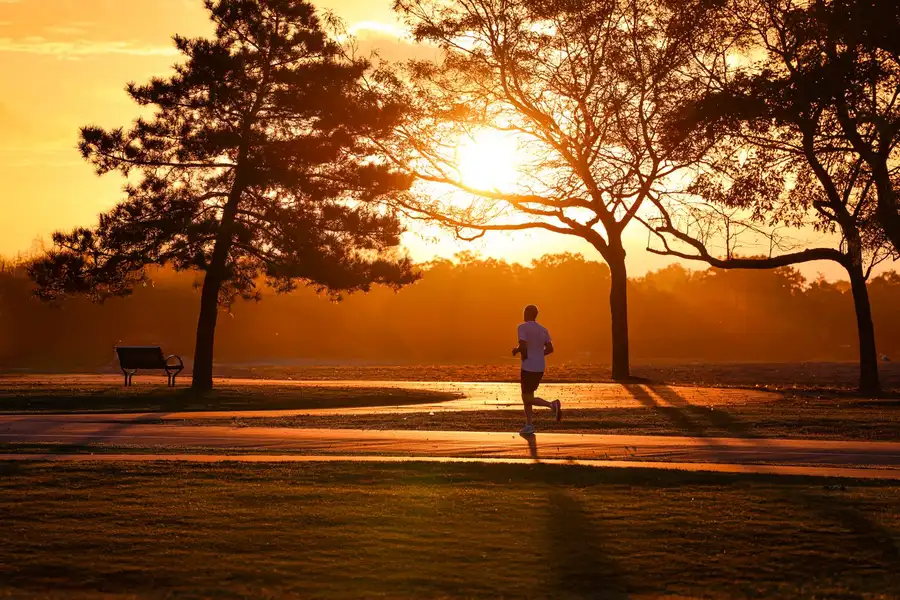
That is what makes running different from a gym membership. A race date forces a training plan, and the plan often starts with a few kilometres at dawn in a neighbourhood park.
The gap at the top
The Indian elite results show how far the country’s best are from the global front. Shailesh Kushwaha won the Indian men’s race in 1:05:05, about six minutes and 13 seconds behind Matata. Ankita Dhyani took the Indian women’s title in 1:12:46, about six minutes and 11 seconds behind Alemu. The Indian podiums were tight: Gaurav Mathur (1:05:11) and Hemant Singh (1:05:37) followed Kushwaha, while Soniya (1:14:56) and Bhagirathi (1:15:51) followed Dhyani.
The money is different too. The top three Indian elite men and women received ₹3.5 lakh, ₹2.5 lakh and ₹1.5 lakh, while Matata took home USD 42,000 including a course-record bonus. India’s running boom so far is a participation boom, not yet a performance one.
Last winter, the smog won
Delhi’s problem is the calendar. ThePrint reported in December 2025 that the GSI Cyclothon, planned for 16 November with about 5,000 participants, was moved to February a day before the event because of hazardous air. The New Delhi Half Marathon organised by Bank of India was postponed from 14 December.
The IAU 50 km World Championships, set for 7 December, were pushed to 14 March 2026. It was the first time the IAU had postponed a championship solely over air quality. Outdoor sports in Delhi-NCR schools and colleges were halted for November and December under pollution-control measures.
‘Once AQI shoots past 200 or 300, any certified race director is expected to cancel an event — that’s the rule,’ P Venkatraman, chief executive of YouTooCanRun, told ThePrint. Special Olympics International guidelines cited in the same report advise limiting strenuous outdoor activity at an AQI of 150 to 200 and avoiding outdoor competitions above 300.
Why mid-October matters
The Delhi Half Marathon sits just before the worst stretch of the season. This year’s race had a cool early-morning start and good weather, Telangana Today reported, on a morning when the men’s course record fell.
For the tens of thousands of amateurs who trained for it, that window is the payoff. For organisers planning anything in November or December, it is a gamble on the air.
What to watch
Watch whether Delhi’s winter races hold their dates this year or repeat last season’s late cancellations, and whether more organisers shift events to October or to February and March. Watch the women’s numbers too: more than 10,000 in Delhi is a base that race organisers will want to grow. And watch the Indian elite times. A field of 41,000 is the base of a pyramid; the test is whether it eventually narrows that six-minute gap at the top.