You have seen the number. It is on supplement packaging, in fitness reels, in newspaper health supplements and on the side of protein-fortified biscuits.
“73 per cent of Indians are protein deficient.”
It is not true, and the government’s own data — collected from 261,953 households — says something considerably more interesting.
Where the number actually came from
The 73 per cent figure traces to a market-research survey by IMRB, titled Understanding Protein Myths and Gaps Among Indians. Its sample was roughly 1,800 people across four regions.
It was not a dietary assessment. Nobody weighed food, ran a nutrient analysis or drew blood. It was a consumer survey about beliefs and reported habits.
It has been amplified since 2020 largely through Right to Protein, a campaign whose backers include the soy industry and US soybean export interests.
That does not automatically make the number wrong. But a 1,800-person opinion survey promoted by protein sellers is a thin foundation for a national health claim — particularly when a far larger government dataset exists and points the other way.
What 261,953 households actually eat
The Council on Energy, Environment and Water analysed the National Sample Survey Office’s Household Consumption Expenditure Survey for 2023-24 — 261,953 households, the largest such exercise India runs.
Protein intake per person per day:
Rural India: 60.7g in 2011-12 → 61.8g in 2023-24.
Urban India: 60.3g → 63.4g.
Both rose. Both sit in the range generally considered adequate for an average adult.
India is not running out of protein. Consumption is stable and slightly improving, in both rural and urban households, across more than a decade.
So if quantity is fine, what is the problem?
The problem is where the protein comes from
This is the real finding, and it is a much better story than the fake one.
Cereals supply about 50 per cent of Indian protein intake. The recommended share is around 32 per cent.
Pulses supply just 11 per cent. The recommended share is 19 per cent.
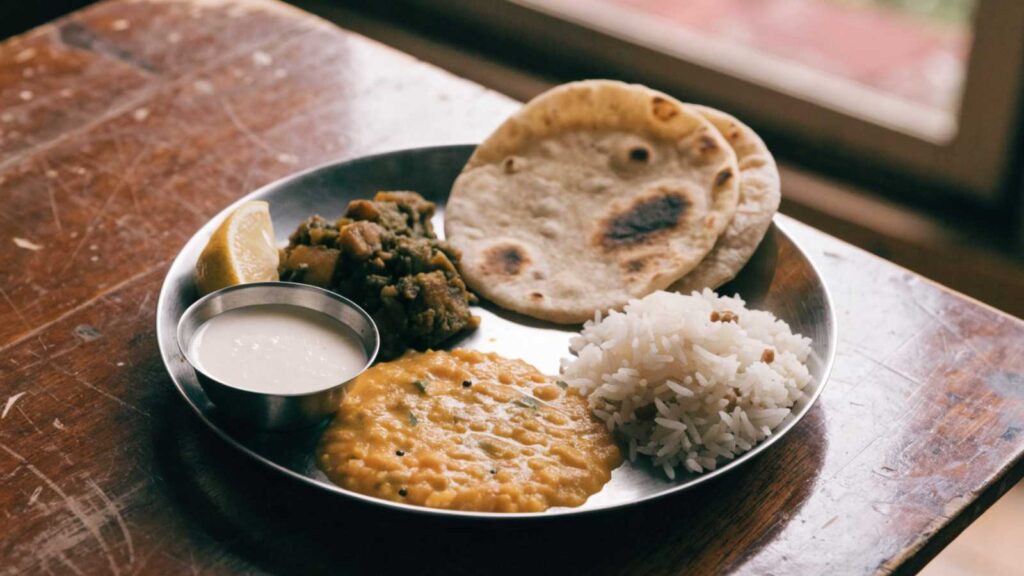
India is getting its protein from rice and wheat — grains eaten primarily for carbohydrate, whose protein is less complete and less bioavailable than protein from dal, dairy, eggs, fish or meat.
The total is adequate. The composition is skewed. Those are different problems requiring different solutions, and only one of them is solved by selling people powder.
And it depends heavily on income
Animal-source protein is where the gap becomes a class issue.
The poorest households meet 38 per cent of the recommended intake of animal-source protein. The richest exceed it, at 123 per cent.
A more than threefold difference, inside the same country, at the same time.
That is the actual protein story in India: not a nation uniformly deficient, but a nation where the quality of protein tracks income almost perfectly, and where the households that need better protein are the ones least able to buy it.
Fortified snack bars do not fix that. Cheaper dal and eggs might.
Meanwhile, the emergency nobody is marketing
The same CEEW analysis found something that should be generating far more noise than the protein debate.
Indians consume roughly 11 grams of salt a day. The World Health Organization’s limit is 5.
More than double, nationally, as an average.
Fibre intake is 31.5g against a recommended 32.7g — essentially on target. And coarse grain consumption per person has fallen roughly 40 per cent in a decade, which is the same dietary-diversity problem visible from another angle.
There is no industry campaign about salt, because there is no product to sell against it. The nutrient India is genuinely over-consuming is the one with no marketing budget attached.
The supplement industry has its own problem
For those who do buy protein powder, two peer-reviewed Indian studies are worth knowing about.
The Citizens Protein Project, published in Medicine in April 2024, tested 36 brands sold in India. 69.4 per cent were inaccurately labelled, with protein shortfalls of 10 to 50 per cent against the claim. Aflatoxins turned up in five products; pesticide residues in three.
A second study by the same team, published in November 2025, tested 34 whey powders and found something counter-intuitive: 83 per cent of the pharmaceutical-branded products were mislabelled beyond a 5 per cent tolerance, while the nutraceutical brands broadly matched their claims. Nitrogen spiking with taurine — which inflates apparent protein content in standard testing — appeared in 89 per cent of the pharma formulations versus 12.5 per cent of the nutraceutical ones.
The brands most people assume are the safe, clinical choice performed worse than the ones they distrust.
Both studies are single-team, modest in sample size and largely self-funded, and should be read as strong signals rather than definitive audits. They have not been contradicted by anything larger.
What to do with all this
If you eat a normal Indian diet with regular dal, dairy or eggs, you are very probably getting enough protein and have been for years.
The changes actually supported by the data are unglamorous: more pulses and less cereal-derived protein, more dietary diversity, and considerably less salt. None of it requires a tub.
The protein deficiency crisis was, to a significant degree, manufactured — by a small survey, amplified by people with something to sell. The real findings sat in a government dataset the whole time, and they are more useful.
Consumption figures are from CEEW’s analysis of the NSSO Household Consumption Expenditure Survey 2023-24, published December 2025. Supplement testing is from the Citizens Protein Project studies published in Medicine (April 2024 and November 2025). This article is general information, not medical or dietary advice; individual protein requirements vary with age, body weight, activity and health conditions.