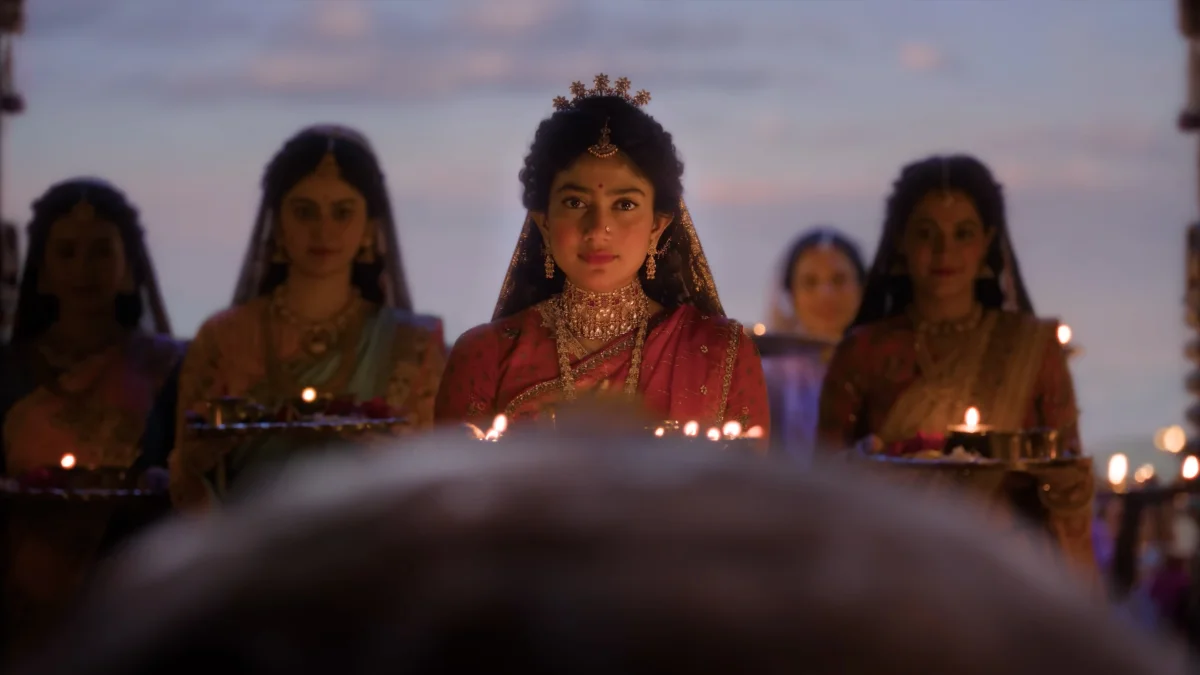
Ramayana: Part 1 opened in theatres on Thursday 5 November and collected ₹182.70 crore net in India over its first three days, according to trade tracker Sacnilk. That puts it among the biggest starts of 2026. It also landed below the opening-day record set by Dhurandhar 2 earlier this year, and below what the trade had projected.
The three-day numbers
Sacnilk estimates the Nitesh Tiwari film made ₹64.85 crore net on Thursday across Hindi, Kannada, Telugu, Tamil and Malayalam. Friday fell 25.9 per cent to ₹48.05 crore. Saturday bounced back 45.3 per cent to ₹69.80 crore, the best day so far.
The show count barely moved across the three days, from 25,200 on Thursday to 23,316 on Friday and 23,696 on Saturday. What changed was how full those shows were: average occupancy dropped to 28.9 per cent on Friday and climbed to 41.3 per cent on Saturday.
That adds up to ₹182.70 crore net, or ₹218.25 crore gross once taxes are included. Sacnilk counts 69,88,029 tickets sold in India over the three days, which works out to roughly ₹312 per ticket on its gross figure.
These are tracker estimates compiled from several sources, and Sacnilk itself notes they may differ from figures the producers release.
Short of the record
Dhurandhar 2 opened at ₹102.55 crore net, the first Bollywood film to cross ₹100 crore on day one, as The Week reported on release day. Ramayana’s opening was ₹37.70 crore lower.
It also missed the trade’s own expectations. Before release, The Hollywood Reporter India cited estimates of ₹70 crore to ₹75 crore net for the opening day, possibly ₹80 crore. The film had booked ₹130.12 crore in advance sales including blocked seats, according to The Week.
The timing did not help. The film opened on a Thursday in what THR India called the historically quiet mid-week, pre-Diwali period. Even so, Navbharat Live reported that the opening beat Drishyam 3’s ₹62 crore, making Ramayana the second-biggest Bollywood opener of the year.
Fuller halls in the south
Hindi accounts for ₹136 crore of the three-day total, or 74.4 per cent. The other four languages together brought in ₹46.70 crore: Kannada ₹18.70 crore, Telugu ₹16.75 crore, Tamil ₹6.60 crore and Malayalam ₹4.65 crore.
The dubbed versions run on far fewer screens but fill them better. On Saturday, Hindi shows averaged 36.3 per cent occupancy across 19,927 shows. Malayalam shows were 83 per cent full, Tamil 78.5 per cent and Kannada 66.5 per cent, each on fewer than 1,000 shows.
Kannada is the standout. On opening day it earned ₹7.25 crore from 1,197 shows, more than Telugu’s ₹6 crore from 1,776 shows. In Tamil, the film shares Diwali screens with Suriya’s Scene and Nayanthara’s Mookuthi Amman 2, which both opened on Friday.
The overseas share
Sacnilk estimates overseas gross at ₹165.75 crore, taking the worldwide total to ₹384 crore by Sunday afternoon. That makes overseas 43.2 per cent of the film’s earnings so far. The tracker calls its overseas figures rough estimates.
The foreign audience was visible before release. ThePrint reported on 30 October that advance sales in three overseas markets had reached about ₹22 crore, with North America alone at ₹16.72 crore. The average overseas ticket price was around ₹1,700.
At home, the release left little room for anything else. Sacnilk tracked 4,912 shows for Ayushmann Khurrana’s Udta Teer on Wednesday 4 November. On Thursday, the day Ramayana opened, it tracked 218.
What to watch
Diwali falls on Sunday 8 November, giving Ramayana a four-day opening weekend. Sacnilk’s benchmark for the festival is 2024, when Singham Again and Bhool Bhulaiyaa 3 together made ₹227.75 crore net in their first three days.
Ramayana needs ₹45.05 crore on Sunday to pass that mark on its own. Its weakest day so far was ₹48.05 crore. Sacnilk notes the comparison is not strictly like-for-like, since this year’s window runs four days and covers one film rather than two.
The bigger test comes on weekdays after the festival. With a reported budget of ₹4,000 crore, according to ThePrint, and a story planned in two parts, Ramayana needs a long run rather than one big weekend.