
Advertisement

- Updated on November 16, 2026
- IST 3:00 am
Does hard water cause hair fall? The research so far does not show that. The lab studies behind the claim found that hair strands exposed to hard water became roughly 7 to 8 per cent weaker and picked up mineral deposits, which points to breakage along the strand, not hair falling out from the root.
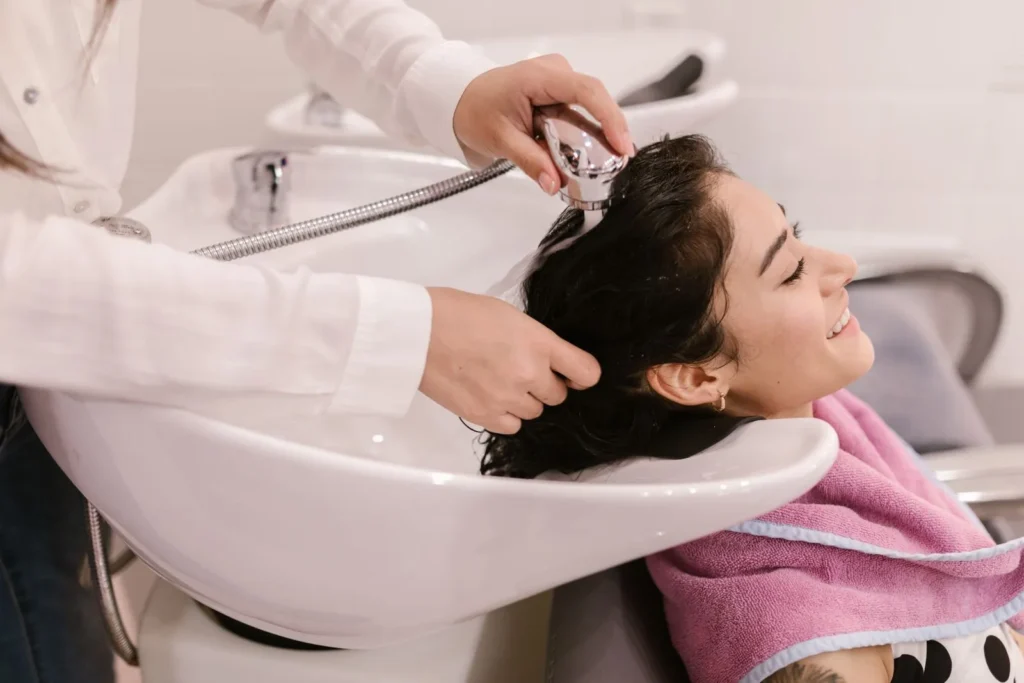
Does hard water cause hair fall?
“Hard water hair fall” is one of the most common hair complaints in Indian homes, especially from people who move to a new city and blame the tap water. Hair turns rough and tangled after a wash, and more of it seems to end up on the comb.
The evidence is thinner than the marketing suggests. The three studies most often cited all worked with hair strands in a lab, measuring how much force it took to snap a strand or examining the surface under a microscope. None of them followed people over time and counted hairs shed from the scalp. That design can tell you whether hard water makes hair easier to break. It cannot tell you whether hard water makes hair fall out.
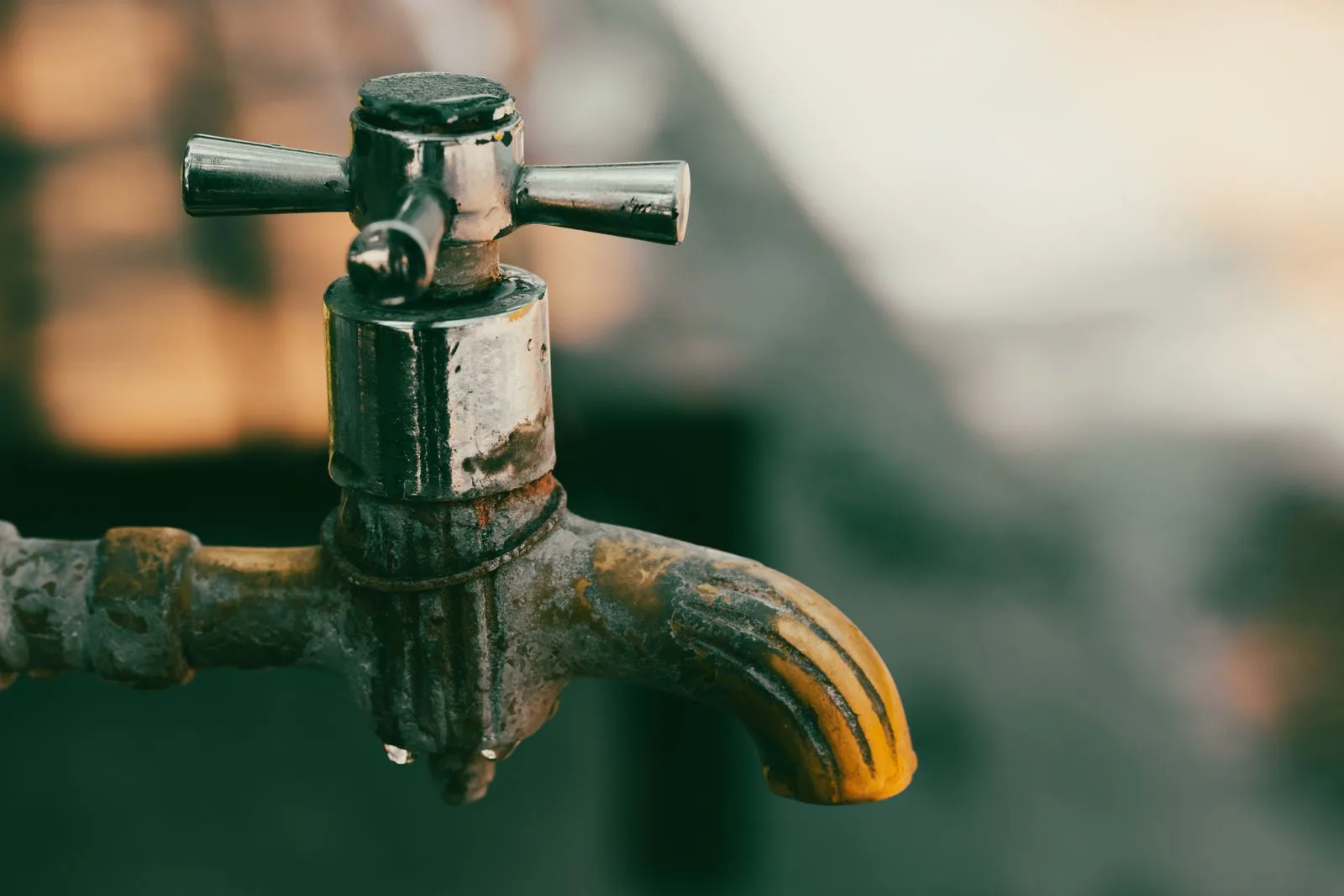
What counts as hard water in India?
Water is called hard when it carries a lot of dissolved calcium and magnesium salts, usually measured as calcium carbonate in milligrams per litre (mg/L). The white crust on taps and buckets is those minerals left behind.
India’s drinking water standard, IS 10500:2012 from the Bureau of Indian Standards, sets an acceptable limit of 200 mg/L for total hardness and a permissible limit of 600 mg/L where no alternative source is available. The standard is written for drinking water and sets no separate limit for bathing or hair washing. For comparison, the hard water used in two of the studies below, drawn from Kohat in Pakistan, measured 486.7 mg/L: more than twice the acceptable limit, but under the 600 mg/L ceiling.
What did the hard water studies actually find?
A 2016 study in the Journal of the Pakistan Medical Association took hair from 76 healthy men aged 20 to 30 in Peshawar and split each strand in two. One half was treated with Kohat hard water for 10 minutes on alternate days for three months; the other half with deionised water. The hard-water halves needed less force to snap: a mean of 238.49 against 255.36 for the control, a statistically significant difference (p = 0.001).
A 2018 paper in the International Journal of Trichology repeated the idea with 70 men and three groups: untreated hair, hair treated with deionised water and hair treated with hard water. Untreated and deionised hair were almost identical (255.49 and 254.84). Hard-water hair scored 234.16, significantly lower. The authors concluded that “hard water decreases strength of hair and thus increases breakage.”
A third, smaller study, published in 2017 in the Indian Journal of Dermatology, Venereology and Leprology, washed hair samples from 20 volunteers for three weeks in either hard tap water or bottled water and examined them with a scanning electron microscope. It found significantly more magnesium deposited on the hard-water hair (p = 0.001), but no significant difference in calcium deposits and no clear structural damage to the hair surface (p = 0.066).
- Key numbers
- 6.6 per cent: drop in strand strength with hard water in the 2016 study (238.49 vs 255.36)
- 8.3 per cent: drop against untreated hair in the 2018 study (234.16 vs 255.49)
- 486.7 mg/L: hardness of the test water used in both strength studies
- 200 mg/L and 600 mg/L: BIS acceptable and permissible limits for total hardness
- 20 volunteers, 3 weeks: size and length of the microscope study
- 0 of 3 studies: number that counted hair shed from the scalp

Is hair breakage the same as hair fall?
In everyday speech, “hair fall” covers two different things. Shedding is when a whole hair comes out from the root. Breakage is when the shaft snaps somewhere along its length, leaving shorter pieces behind.
The strength studies measured only the second. A weaker strand snaps more easily while combing, so the findings fit complaints about brittle hair in hard-water areas. They say nothing about the hair follicle, which is where shedding starts.
There are other limits too. The 2016 and 2018 papers share several authors, the same Kohat water source, the same age group and the same method, so they read more like two reports of a similar experiment than two independent confirmations. Both studied only men, and the 2018 authors noted that results in women may differ. In all three studies, hair was treated in a lab rather than washed with shampoo on a living scalp.
Why is everyone selling a hard water fix?
Hard-water haircare is turning into a marketing category. Symphony’s website calls selected storage geysers “India’s 1st Hair Fall Control Storage Geyser”, saying its Puropod nine-layer filtration “helps reduce water hardness, chlorine, and impurities”. The page cites no lab or clinical results for the hair claim, and its detailed copy talks about reducing “dryness and hair damage” rather than hair fall itself.
In October, Nagpur-based haircare brand Headtrixx promoted itself with the tagline “Made for Your Water” in a sponsored press release carried by ThePrint headlined “Hard water haircare: the specialist category finding its place in India”. The release cited no independent data. Hair care is already a large business in India, as Marico’s premium hair oil growth shows, and “hard water” gives brands a fresh problem to sell against.

What does the evidence not tell you?
None of the three studies tested a shower filter, a water softener or a filtered geyser on anyone’s hair. None measured scalp health or hair density over months in an Indian city. So the research reviewed here does not back products that promise to stop hair fall by fixing your water.
It is a familiar pattern in viral haircare. As with rosemary oil for hair growth, a broad promise rests on a small number of narrow studies. What the evidence does support is more modest: hard water can leave mineral deposits on hair and, in lab tests, made strands somewhat weaker. It is one of many environmental factors people point to, alongside the smog that studies link to skin problems.
What to watch
Claims on hair products are not a free-for-all. Shampoos and conditioners are cosmetics, and Rule 36 of the Cosmetics Rules, 2020 bars false or misleading claims. CDSCO has used those rules before: in February it cancelled import registrations held by Kult App after finding that labels for about 50 products did not match the approved ones.
The bigger gap is research. A useful study would follow men and women washing their hair at home with hard and softened water, using Indian water samples, and count both shedding and breakage over several months. Until that exists, watch whether brands selling “hard water” fixes publish their own test data.
FAQ
Does hard water cause hair fall?
That has not been shown. Lab studies found hard water made strands 7 to 8 per cent weaker and left mineral deposits, which points to breakage, not shedding from the root.
What is the hard water limit in India?
BIS standard IS 10500:2012 sets an acceptable limit of 200 mg/L total hardness for drinking water and a permissible limit of 600 mg/L where no other source exists.
Do shower filters stop hair fall?
None of the studies reviewed here tested shower filters, softeners or filtered geysers, and brand pages making hair claims cite no published results.
Is hair breakage the same as hair fall?
No. Shedding is a whole hair coming out from the root; breakage is the strand snapping along its length. The hard water studies measured breakage-related strength only.
Sources
- Journal of the Pakistan Medical Association: Effect of topical application of hard water in weakening of hair in men (2016-09-01)
- International Journal of Trichology (PMC): To Evaluate and Compare Changes in Baseline Strength of Hairs after Treating them with Deionized Water and Hard Water and its Role in Hair Breakage (2018-05-01)
- Indian Journal of Dermatology, Venereology and Leprology: Scanning electron microscopy study of hair shaft changes related to hardness of water (2017-11-01)
- Assam Public Health Engineering Department: Water Quality Standards (IS 10500:2012) (2012-05-01)
- Symphony Limited: Storage Geysers, Hair Fall Control (2026-11-15)
- ThePrint (ANI PR): Hard water haircare: the specialist category finding its place in India (2026-10-01)
- Medical Dialogues: CDSCO Cancels Kult App’s Cosmetic Import Registrations Over False Labeling (2026-02-27)
You May Like This



Advertisement


You May Like This



Advertisement


Advertisement


Advertisement