
Advertisement

- Updated on November 12, 2026
- IST 4:42 pm
Exercise in Delhi pollution runs against official advice this week if it is outdoors: the city’s AQI stood at 321, in the “very poor” band, at 7 am on Thursday, 12 November, and the Union health ministry’s advisory tells the general public to avoid outdoor physical activity at that level, especially in the morning and late evening. Research finds that exercise usually outweighs pollution harm in most cities, but Delhi is one of the few places where the modelled maths for cycling tips within the first hour.
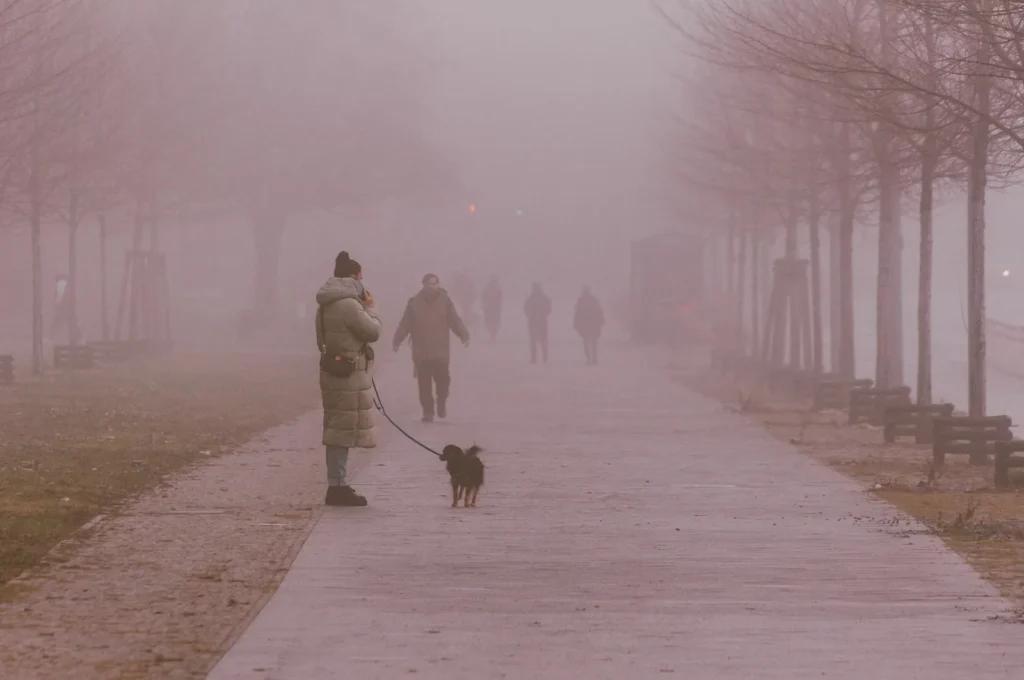
What is Delhi’s air quality this week?
Delhi woke up to an AQI of 321 at 7 am on Thursday, 12 November, according to Central Pollution Control Board (CPCB) data reported by Business Today. The city had dipped below 300 earlier in the week, but by noon on Wednesday the Air Quality Early Warning System had it back at 311.
Some stations were worse. IIT Delhi read 414, in the “severe” band, and ITO 397. Of 57 reporting stations, 39 were “very poor”.
On curbs, the Commission for Air Quality Management (CAQM) invoked Stage III of the Graded Response Action Plan (GRAP) across Delhi-NCR on 6 November, when the AQI was 380, according to News On AIR. Business Today’s 12 November report describes Stage II measures as the ones in force. We covered the earlier spike when Delhi’s AQI hit 382 and Stage III returned.
Is it safe to exercise in polluted air? What the research says
The first key study, published in The Lancet in December 2017 by researchers led by Imperial College London and Duke University, sent 119 volunteers aged over 60 on two-hour midday walks, either in London’s Hyde Park or along Oxford Street, a busy corridor full of diesel traffic. Some had stable lung or heart disease.
After the park walk, lung capacity improved and often stayed better for more than 24 hours; on Oxford Street the gain was smaller and faded. Arterial stiffness fell by more than 24 per cent in healthy walkers after Hyde Park, but by only up to 4.6 per cent after Oxford Street.
The second, a 2016 modelling paper in Preventive Medicine by Tainio and colleagues, asked at what level of fine particulate matter (PM2.5) pollution cancels out the benefit of cycling or walking. At 22 µg/m³, the average urban level in the WHO database the authors used, the benefit only stops growing after seven hours of cycling or 16 hours of walking a day.
Delhi was the outlier. With an annual PM2.5 of 153 µg/m³, the most polluted city in the database, the model put the “tipping point” (where extra activity adds no further benefit) at 30 minutes of cycling a day and the “break-even point” (where harm starts to outweigh benefit) at 45 minutes. For 30 minutes of walking, both points sat above 200 µg/m³. The authors still conclude that “benefits from active travel generally outweigh health risks from air pollution” in most settings.

Is morning walk good in pollution? What the advisories say
The Union health ministry’s Advisory on Air Pollution and Health, published through the National Centre for Disease Control (NCDC), sets out actions by AQI band. For the general population on “very poor” days (301–400), it says: “Avoid outdoor physical activities, especially during morning and late evening hours.” On “severe” days (401–500) it is simply “Avoid outdoor physical activities”. Vulnerable groups, including the elderly and people with heart or lung disease, are told to “remain indoors and keep activity levels low” once the air turns very poor.
On walks specifically, the advisory says: “On days with poor to severe AQI, avoid outdoor morning and late evening walk, run, jog and physical exercise.” It also suggests keeping windows shut in the morning and late evening.
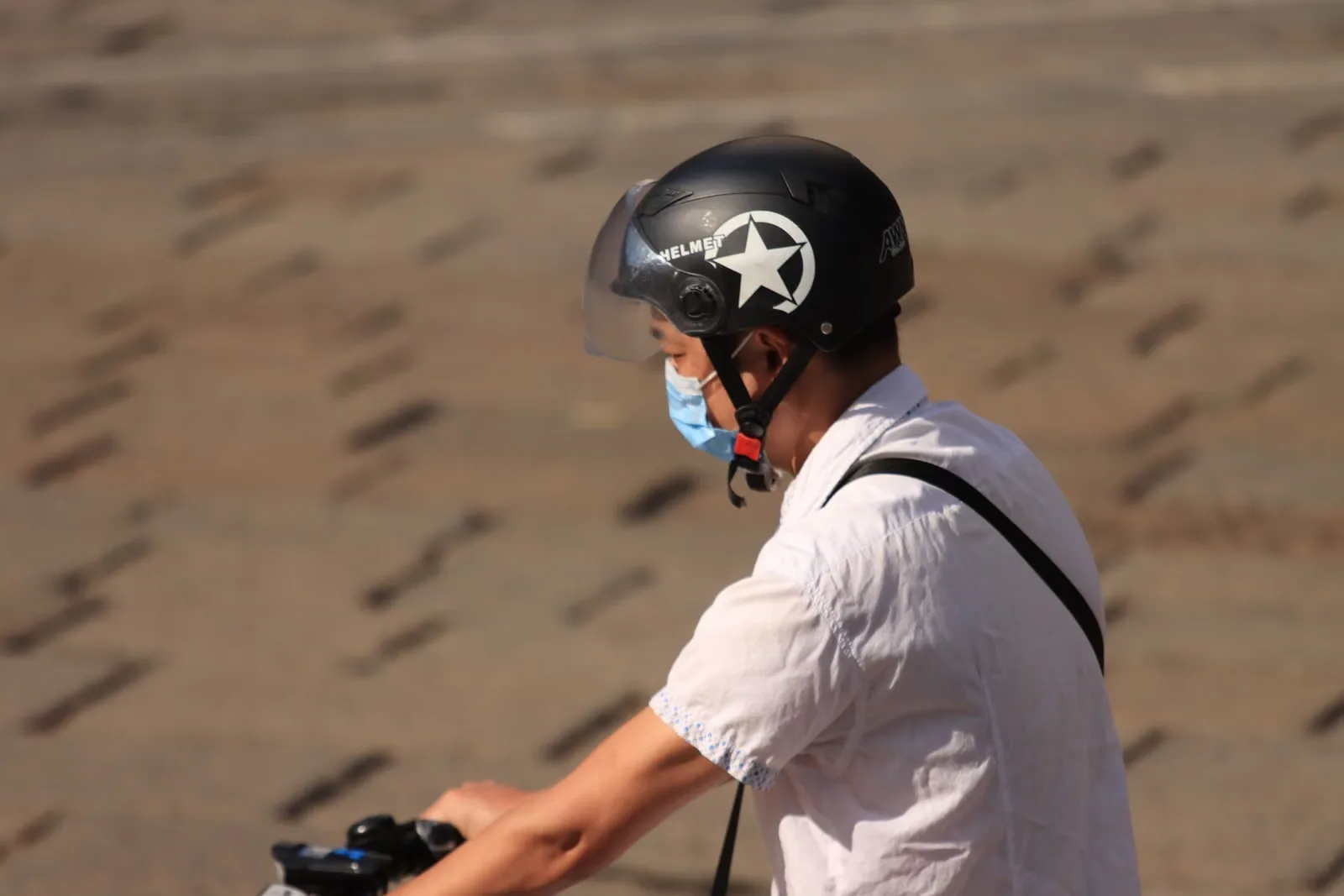
On masks, it says that if people choose to use one, “the disposable N95 or N99 is useful provided user instructions are followed”, and that “paper masks, handkerchiefs, scarves and cloth are not effective.”
An AIIMS doctor made similar points last November. Business Standard reported that Dr Harshal Ramesh Salve, Additional Professor at the Centre for Community Medicine at AIIMS New Delhi, said in a video on X that pollution levels are “highest in the early morning until 8:30 or 9:00 am”. The advice listed included “Avoid running, jogging, or cycling outdoors in polluted air” and “Choose indoor exercise”.
“We can’t really tolerate the levels of air pollution that we currently find on our busy streets,” said Professor Fan Chung of the National Heart & Lung Institute at Imperial College.
Who is most affected: runners, gym-goers and morning walkers
The trade-off bites hardest for people whose routine is outdoors and early: running groups, cyclists and morning walkers. More than 41,000 people ran the Delhi Half Marathon on 18 October, just as smog season was setting in.
For 18–40-year-olds, the evidence is thinner than the headlines suggest. The Lancet walking study tested only people over 60, and the Tainio model works from long-term annual averages and all-cause deaths, not a single bad week. Neither tells a healthy 28-year-old exactly what one 5 km run at AQI 320 does. What they do show is that the benefit of exercise shrinks as exposure rises, and that Delhi sits at the far end of that curve.
Gyms are the obvious fallback, and gym habits are spreading as India’s fitness market grows. But indoor air is not automatically clean. The health ministry’s own advice to keep windows shut during the morning and late evening is a reminder that outdoor air finds its way inside.
Key numbers
- 321: Delhi’s AQI at 7 am on 12 November (CPCB, via Business Today)
- 414: IIT Delhi station, the city’s worst reading that morning
- 153 µg/m³: Delhi’s annual PM2.5 in the Tainio et al. (2016) database
- 45 minutes: daily cycling at which modelled harm overtakes benefit in Delhi
- 24 per cent vs 4.6 per cent: drop in arterial stiffness for healthy walkers, park vs busy street (The Lancet, 2017)
- 4.2 million: premature deaths worldwide from outdoor air pollution in 2019 (WHO)

What to watch
The weather. The India Meteorological Department has ruled out rain in the immediate forecast, Business Today reported, and still, cold, moist air is trapping particles near the ground.
The 400 line. Several stations, including IIT Delhi, were already above it on Thursday morning. If the city average crosses 400 into “severe”, the health ministry’s advice for the general public hardens from avoiding outdoor activity “especially” at dawn and dusk to avoiding it altogether.
GRAP changes. CAQM moves between stages as forecasts change; each stage carries its own citizen charter.
Better evidence. The key studies come from London streets and global models built on annual averages; short-term data on young Delhi exercisers is the gap.
Frequently asked questions
Is it safe to exercise outdoors when AQI is above 300?
The health ministry’s advisory tells the general public to avoid outdoor physical activity in the “very poor” band (301–400), especially in the morning and late evening, and to avoid it entirely above 400.
Is morning walk good in pollution?
Not on poor-to-severe days, according to the advisory, which names morning and late evening walks specifically. An AIIMS doctor has said pollution is highest in the early morning until about 8:30 or 9 am.
Is gym better than outdoor exercise in pollution?
Official advice points people indoors when AQI is high, and the AIIMS guidance says “choose indoor exercise”. Indoor air is not pollution-free, which is why the ministry also advises keeping windows shut at peak hours.
Does wearing a mask make outdoor exercise safe?
The advisory does not say so. It says only that disposable N95 or N99 masks are “useful provided user instructions are followed” and that cloth masks are not effective.
Sources
- Business Today: Delhi pollution: Delhiites wake up to 'very poor' air as AQI tops 321, no respite anytime soon (2026-11-12)
- The Week: IMD weather update: Will rain bring relief for pollution-hit Delhi as AQI remains 'very poor'? (2026-11-12)
- News On AIR: CAQM in NCR and adjoining areas invoked Stage 3 of GRAP with immediate effect (2026-11-06)
- EurekAlert! (Duke University news release on The Lancet study): City air pollution cancels positive health effects of exercise in over-60s (2017-12-05)
- Preventive Medicine (Tainio et al., open-access copy): Can air pollution negate the health benefits of cycling and walking? (2016-06-01)
- NCDC, Ministry of Health and Family Welfare: Advisory on Air Pollution and Health (2024-05-01)
- Business Standard: Delhi's annual battle with air pollution: AIIMS issues health advisory (2025-11-06)
- World Health Organization: Ambient (outdoor) air quality and health – fact sheet (2024-10-24)
You May Like This




Advertisement


You May Like This






Advertisement


Advertisement


Advertisement