
Advertisement

- Updated on November 10, 2026
- IST 3:56 pm
India’s rabi (winter) crop sowing stood at 37.56 lakh hectares on 30 October, about 46 per cent below the 69.02 lakh hectares planted by the same date last year, according to Agriculture Ministry data. Wheat, the grain behind most of the country’s rotis, had been sown on just 19,000 hectares. Officials say there is still time, but the weather outlook for November does not make catching up easy.

The Numbers So Far
The Union Agriculture Ministry’s weekly sowing data, reported by PTI and Business Today on 3 November, shows a shortfall in almost every major winter crop as of 30 October. Total rabi area was 37.56 lakh hectares against 69.02 lakh hectares a year earlier.
Wheat shows the steepest fall in percentage terms. Farmers had planted it on 19,000 hectares, compared with 3.34 lakh hectares at the same point in 2025, a drop of about 94 per cent. A week earlier, as of 23 October, wheat stood at 11,000 hectares against 27,000 hectares, PTI reported.
The larger gaps in absolute terms are in pulses and oilseeds, which are sown earlier than wheat. Pulses covered 9.45 lakh hectares against 19.56 lakh hectares. Within that, gram (chana) was at 5.90 lakh hectares against 14.35 lakh hectares, down roughly 59 per cent, and lentil (masoor) at 1.10 lakh hectares against 2.14 lakh. Oilseeds stood at 20.97 lakh hectares against 38.62 lakh hectares, almost all of it rapeseed and mustard (20.50 lakh hectares against 38.07 lakh). Coarse cereals (3.78 lakh hectares against 4.22 lakh) and winter paddy (3.16 lakh against 3.29 lakh) held up far better.
Why Sowing Has Stalled
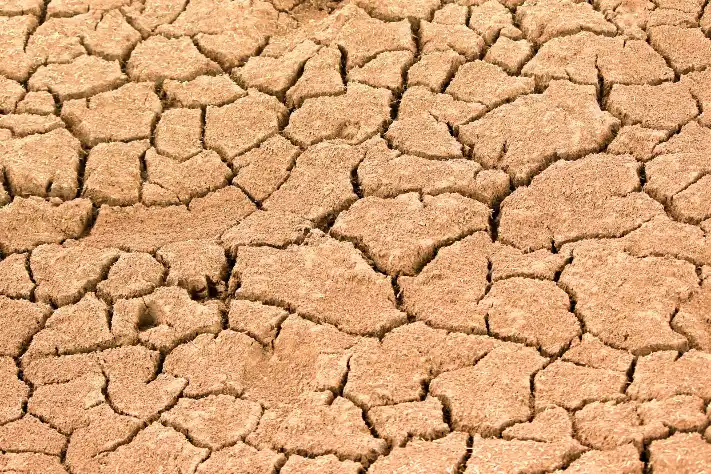
The main reason is dry soil. Rabi crops are usually sown in October and November and harvested in March and April, and they lean heavily on the moisture the monsoon leaves behind. This year the June–September monsoon was 13 per cent below normal.
The deficit was sharper in parts of the wheat belt. Punjab’s rainfall was 38 per cent short and Rajasthan’s 22 per cent, PTI reported in late October; the two states together account for about 31 per cent of India’s wheat area. Business Today reported that 48 per cent of India’s 734 districts received deficient rain, and that reservoirs held 126.7 billion cubic metres on 15 October, 24 per cent less than a year earlier and 44.3 per cent of live capacity.
That matters because wheat needs several rounds of irrigation after planting, and reservoir and canal water in key wheat-growing states is below normal, according to experts quoted by PTI. The Finance Ministry’s October Monthly Economic Review, as reported by ANI, had warned that an intensifying El Niño could threaten soil moisture during the rabi sowing season.
Is It Too Early to Worry?
For wheat, partly yes. Most wheat in India is sown in November and December, so end-October figures cover only a sliver of the season. Even last year’s 3.34 lakh hectares at this point was about 1 per cent of the 336 lakh hectares that wheat eventually covered in the 2025-26 crop year. A 94 per cent fall on such a small base looks dramatic, but it does not yet tell us much about the final harvest.
A senior Agriculture Ministry official made the same argument on 6 November, saying it was too early to worry about the decline in acreage. “Sowing can be undertaken till December,” the official told PTI.
The mustard and chana numbers are harder to wave away. These crops go into the ground earlier, so a shortfall of close to half by the end of October is a real delay in the crops that supply mustard oil, besan and chana dal.
The weather is not helping either. The India Meteorological Department’s November outlook, issued on 31 October, says rainfall is most likely to be below normal over most of the country, under 77 per cent of the long period average, though some areas of central, northwest and northeast India may get normal to above-normal rain. It expects above-normal maximum and minimum temperatures over most parts of India, and says “very strong El Nino conditions” are prevailing in the equatorial Pacific and likely to continue through November–December.

What the Government Is Doing
Agriculture Minister Shivraj Singh Chouhan chaired a review meeting on Monday, 2 November. According to PTI, he directed officials to speed up rabi sowing right after the kharif harvest using whatever soil moisture remains, and urged farmers in areas with limited irrigation to switch to less water-intensive, lower-cost crops such as chana, mustard, masoor and millets. He also asked for climate-resilient, heat-tolerant seeds developed by agricultural scientists to be made available.
The ministry said stocks of urea, DAP, MOP and NPK fertilisers and certified seeds are adequate, and that supply is being managed with states down to the district level. The senior official said on 6 November that a contingency plan covers 225 districts hit by the deficient monsoon and low soil moisture, and will be revised as conditions improve. A soil health policy aimed at cutting chemical fertiliser use may follow in the next three to four months.
The targets have not been cut. The rabi foodgrain production target is 177.72 million tonnes, including 121 million tonnes of wheat, 17.20 million tonnes of pulses and 22.30 million tonnes of nutri/coarse cereals. The wheat target is above the previous record of 120.7 million tonnes.
What It Could Mean for Your Kitchen
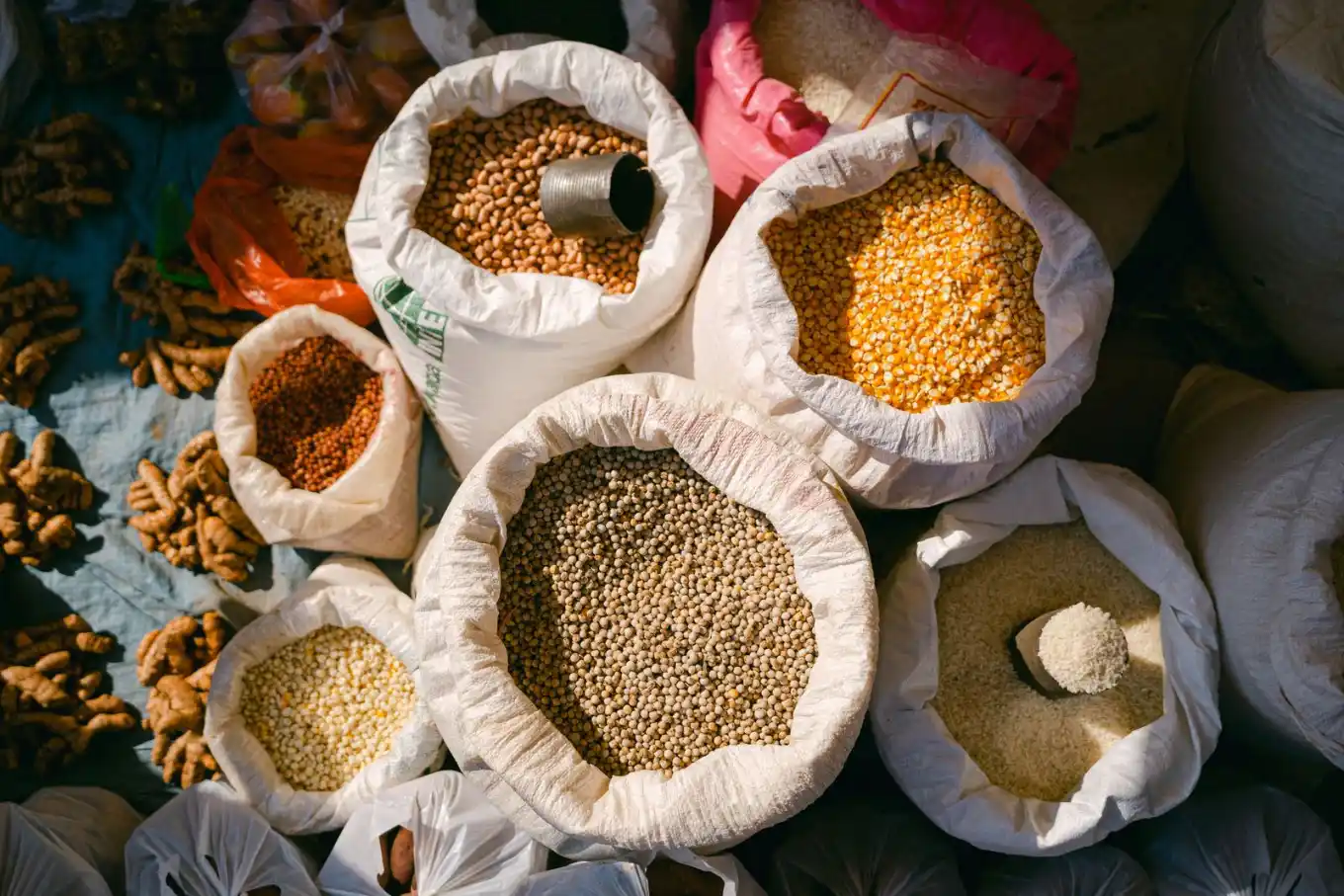
Atta, dal, besan and mustard oil are daily staples for most Indian households, from family kitchens to PG messes and office canteens. Food inflation was already 7.74 per cent in September, according to official data cited in the Finance Ministry’s review.
A Business Today analysis of the weak monsoon listed wheat and other cereals, pulses such as tur, urad and chana, vegetables, and edible oils including mustard as the items most exposed to price pressure. It also cautioned that “a weak monsoon does not automatically translate into higher food inflation”. Imports and government stock releases can moderate pulse prices, and edible oil prices also depend on global prices, import duties and the rupee.
On grain, the government has a large cushion. Central pool stocks on 1 September stood at 870.45 lakh tonnes, made up of 479.92 lakh tonnes of wheat and 390.53 lakh tonnes of rice, according to Business Today. That is about 2.8 times the 1 October stocking norm of 307.70 lakh tonnes. Meanwhile, the ministry’s mandi analysis shows prices of paddy, wheat, maize, gram, lentil, arhar, soybean and mustard well above their minimum support prices, PTI reported.
Key Numbers
- 37.56 lakh hectares: total rabi area sown by 30 October, against 69.02 lakh hectares a year earlier (down about 46 per cent)
- 19,000 hectares: wheat sown, against 3.34 lakh hectares last year
- 20.50 lakh hectares: rapeseed and mustard, against 38.07 lakh hectares
- 5.90 lakh hectares: gram (chana), against 14.35 lakh hectares
- 13 per cent: shortfall in the June–September monsoon
- 24 per cent: drop in reservoir storage on 15 October from a year earlier
- 225: districts covered by the government’s contingency plan
- 121 million tonnes: this season’s wheat production target
What to Watch
- The weekly sowing data. The Agriculture Ministry’s next releases through November will show whether wheat picks up as the main sowing window opens, and whether mustard and chana narrow the gap.
- Winter rain. IMD will issue its December forecast and a December–February seasonal outlook at the end of November.
- Crop switching. If farmers follow the advice to move from wheat to chana, mustard or millets in dry areas, the final crop mix could look different from last year.
- Retail prices. The next monthly inflation releases will show whether pulses, edible oil and atta prices start to move, and whether the government draws on its grain stocks to hold them down.
Sources
- Business Today: India's rabi sowing falls 46% to 37.56 lakh hectares; wheat acreage plunges 94% (2026-11-03)
- The Siasat Daily (PTI): Rabi sowing down 46 pc as deficient monsoon dries up soil moisture (2026-11-03)
- The Week (PTI): Too early to talk about rabi season; sowing can continue till Dec: Official (2026-11-06)
- Free Press Journal (PTI): India Wheat Sowing Falls 59% To 11,000 Hectare Amid Deficient Monsoon (2026-10-27)
- Business Today: Food inflation risk returns: Which essential food items could become costlier after a weak monsoon (2026-10-24)
- Business Today: Global food security faces fresh risks, but India's grain buffer offers a cushion (2026-10-08)
- India Meteorological Department: Press release: Monthly outlook for rainfall and temperature for November 2026 (2026-10-31)
- ThePrint (PTI): Above-normal maximum temperatures likely over most parts of India in Nov: IMD (2026-10-31)
- Devdiscourse (ANI): Elevated crude prices, El Niño risks may keep India's inflation under pressure: Finance Ministry (2026-10-29)
You May Like This




Advertisement


You May Like This





Advertisement


Advertisement


Advertisement