
Advertisement

- Updated on November 19, 2026
- IST 4:30 am
According to the WHO’s Global TB Report 2026, India had about 25 per cent of the world’s tuberculosis cases in 2025, more than any other country. India’s TB deaths have fallen 38 per cent since 2015, but this year the WHO has not published its estimate of how many new TB cases India has. Here is what the report says, why that number is missing and what to watch next.

What does the Global TB Report 2026 say about India?
The World Health Organization (WHO) released its Global Tuberculosis Report 2026 on 12 November. Worldwide, it estimates that 10.6 million people fell ill with TB in 2025 and about 1.1 million died. India accounted for about 25 per cent of those cases, the largest share of any country.
India also carried about 23 per cent of global TB deaths in 2025, according to The South First’s reading of the report. Jan Swasthya Abhiyan India (JSAI), a public health network, says the report records 2.63 lakh TB deaths in India last year.
The Union Health Ministry says TB deaths have fallen 38 per cent since 2015, faster than the global fall of 35 per cent. PTI reported that the WHO’s estimated TB death rate for India dropped from 280 per million people in 2015 to 180 per million in 2025.
India and the world: the 2025 numbers side by side
| Measure (2025) | World | India |
|---|---|---|
| People who fell ill with TB | 10.6 million | About 25% of the world total |
| TB deaths | About 1.1 million | 2.63 lakh (about 23%) |
| Fall in TB deaths since 2015 | 35% | 38% |
| TB deaths per million people | Not given here | 180 (280 in 2015) |
| Treatment success, drug-susceptible TB | Not given here | 94% |
| New-case (incidence) estimate | Published | Held back this year |
Why is India’s TB incidence estimate missing?
Incidence is the WHO’s estimate of how many people develop TB in a year, including those never diagnosed. It shows whether a country’s TB problem is actually shrinking.
This year, the WHO has not published India’s incidence estimates for any year from 2010 to 2025. The South First reported that India’s country profile and the indicators linked to incidence have also been held back. In its dataset, the WHO says these figures are “under review, pending finalisation and use of data from district-level sentinel surveillance”, as quoted by The Wire.
The reason is a new survey. India ran a population-level TB prevalence survey in 50 representative districts in 2025. The Wire, citing The Indian Express, reported that the findings are still being analysed to produce new national estimates. Updated estimates for India are expected in early 2027.
There is a second data gap. The Wire also reported that the Union government has not published its own annual India TB Report. That report usually comes out in March, around World TB Day, and carries state-wise figures.
Did TB deaths in India really fall 38 per cent?
The 38 per cent figure is the WHO’s estimate, and the Health Ministry calls it India’s biggest-ever reduction in TB deaths. PTI reported that the WHO built it from several sources together:
- the Registrar General of India’s Sample Registration System
- community-based verbal autopsy studies
- treatment data from the government’s Ni-kshay portal
A year ago, the picture looked different. News On AIR reported that, based on the Global TB Report 2025, the government cited a 21 per cent fall in TB incidence and a 25 per cent fall in TB deaths. The 2026 report covers one more year and uses the wider set of death data listed above, so the two figures cannot be compared directly.
JSAI has welcomed the fall in deaths but says it should not hide how many people still die. It also points out that India reached the WHO’s interim 2020 target for cutting TB deaths five years late.
How many TB cases did India find in 2025?
Notified cases are patients who were actually diagnosed and recorded by the national programme. According to JSAI’s reading of the WHO data, India notified 25.3 lakh cases in 2025, down from 26.18 lakh in 2024. That is a fall of about 88,000 cases, or roughly 3.4 per cent.
A drop in notified cases can mean fewer people are getting sick, or fewer sick people are being found. Without the incidence estimate, we cannot tell which.
Globally, there is a large gap between the number of people who fall ill and the number who get diagnosed. The WHO says that of the 10.6 million people who developed TB in 2025, 8.4 million were diagnosed. That leaves about 2.2 million who were either undiagnosed or unreported.
What did the TB Mukt Bharat screening drive find?
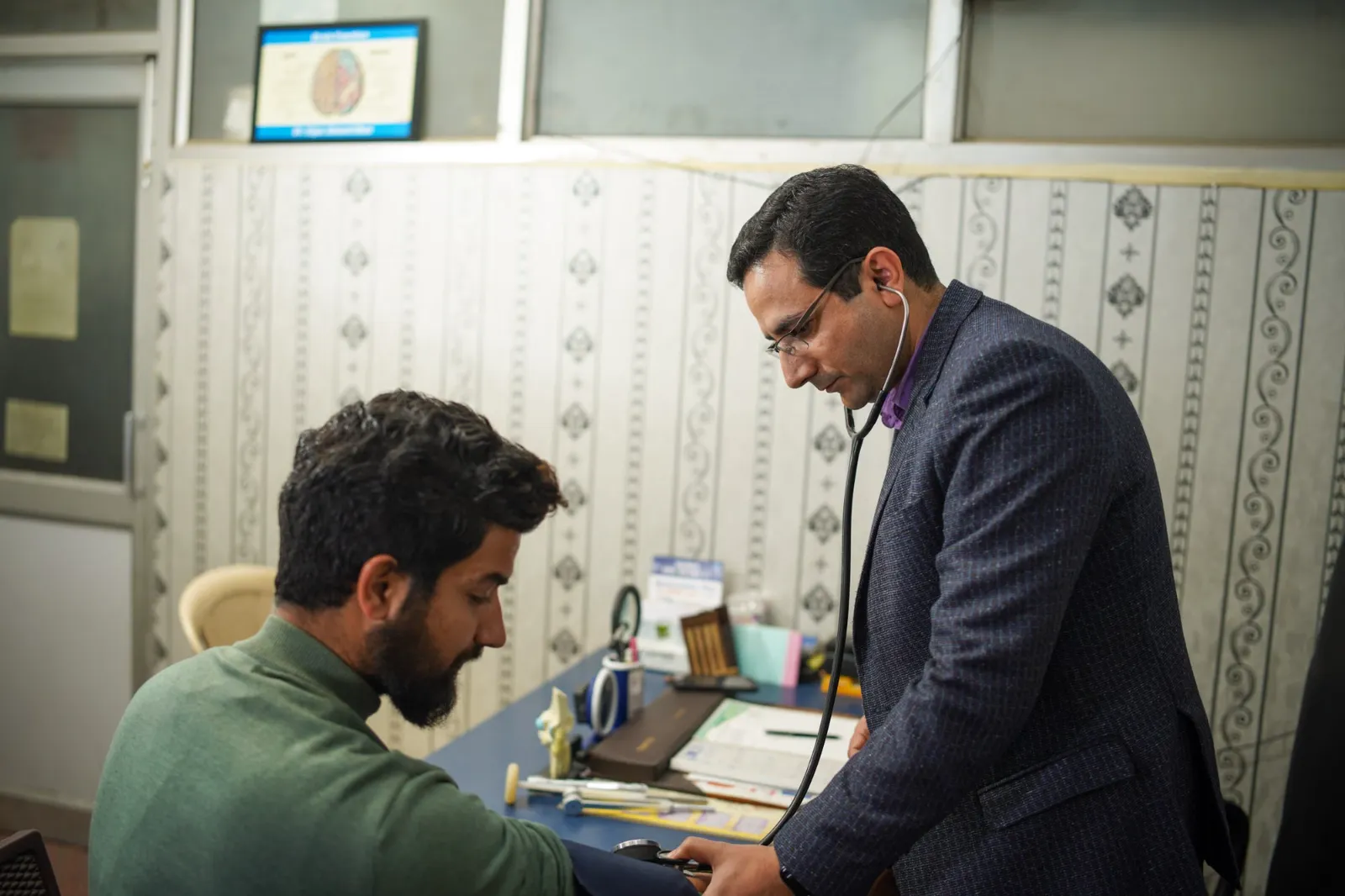
The Health Ministry’s response to the report focused on the TB Mukt Bharat Abhiyaan, its drive to screen more people for TB. The ministry says that between 7 December 2024 and 8 November 2026, the campaign:
- brought more than 25 crore people within TB screening activities
- carried out more than 11 crore chest X-rays
- ran more than 3 crore NAAT tests, which detect the TB bacterium’s genetic material
- detected 48.64 lakh TB cases, including 14.97 lakh asymptomatic cases
By our calculation, asymptomatic cases (people with TB but no symptoms) made up about 31 per cent of all the cases the drive found. The ministry credits this screening, including AI-enabled chest X-rays, for the progress.
The ministry also says 96 per cent of the TB programme’s funding needs now come from India’s own budget.
What do health groups say is still missing?
JSAI’s press release of 14 November raised more issues beyond the missing data. The first is hunger. The WHO estimates that 9.6 lakh new TB cases worldwide in 2025 were directly linked to undernutrition. India still struggles with undernutrition, as the Global Hunger Index numbers on stunting and wasting show.
The second is cost. JSAI notes from the report that 47 per cent of TB-affected households in the high-burden countries that were surveyed face “catastrophic costs”. This means medical bills, other expenses and lost wages add up to more than 20 per cent of a household’s yearly income. Health costs are rising across India as well: medical costs in India are projected to rise 10.1 per cent in 2027.
Drug resistance is a third concern. The South First reported that India, China, the Philippines and Russia together had more than half of the world’s estimated cases of rifampicin-resistant TB in 2025. This is a form of TB that does not respond to rifampicin, one of the main TB drugs.
How does India compare with other high-burden countries?
Most TB cases are in a small number of countries. The WHO says 30 countries account for 88 per cent of everyone who developed TB in 2025. PTI reported the top five as:
- India: 25 per cent of global cases
- Indonesia: 10 per cent
- Philippines: 6.8 per cent
- China: 6.5 per cent
- Pakistan: 6.4 per cent
Progress has not been the same in every region. Between 2015 and 2025, TB incidence fell 42 per cent in the WHO European Region and 30 per cent in the African Region. In South-East Asia, the region that includes India, it fell only 18 per cent. Globally, the incidence rate fell just 14 per cent over the decade, far short of the 50 per cent target set for 2025.
Key numbers
- 10.6 million: people worldwide who fell ill with TB in 2025 (WHO)
- 25 per cent: India’s share of those cases, the highest of any country
- 2.63 lakh: TB deaths in India in 2025, as cited by JSAI
- 38 per cent: fall in India’s TB deaths since 2015, against 35 per cent worldwide
- 94 per cent: treatment success rate for drug-susceptible TB in India (Health Ministry)
- 25 crore+: people covered by the TB Mukt Bharat screening drive
- Early 2027: when India’s updated incidence estimates are expected
What to watch next
The big date is early 2027, when the WHO expects to release India’s revised incidence estimates based on the 50-district survey. That number will show whether India’s falling case notifications mean fewer people are getting TB, or fewer are being found.
Next, watch whether the government publishes its India TB Report around World TB Day in March, with state-wise data. Also watch rapid testing: the WHO wants every newly diagnosed patient tested with a rapid test by 2027. People avoiding tests is a problem in other diseases too, as our report on 35 per cent of at-risk Indians skipping diabetes tests shows.
FAQ
How many TB cases does India have, according to the Global TB Report 2026?
India accounted for about 25 per cent of the 10.6 million people who fell ill with TB worldwide in 2025. The WHO has not published a separate incidence estimate for India this year because the figures are under review.
Why did the WHO leave out India’s TB incidence?
India ran a new TB survey in 50 representative districts in 2025, and the data is still being analysed. Updated estimates are expected in early 2027.
How much have TB deaths fallen in India?
India’s TB deaths fell 38 per cent between 2015 and 2025, compared with 35 per cent worldwide. The death rate dropped from 280 to 180 per million people.
Is TB treatment successful in India?
The Health Ministry says 94 per cent of patients with drug-susceptible TB were treated successfully.
Sources
- WHO: Amid challenges, countries increase domestic investment to protect progress against tuberculosis (2026-11-12)
- PIB (Ministry of Health and Family Welfare): India Makes Major Strides Towards TB Elimination: 38% Decline in TB Mortality, 94% Treatment Success Rate (2026-11-12)
- Business Standard: India records 38% drop in TB deaths since 2015, outpaces global rate: WHO (2026-11-13)
- DT Next (PTI): India records 38% drop in TB deaths since 2015, outpaces global decline: WHO report (2026-11-13)
- Sambad English: India records 38% decline in TB deaths since 2015, surpasses global average: WHO (2026-11-13)
- The Wire: India’s TB Estimates Missing From WHO’s Global Report as New Survey Data Awaits Review (2026-11-13)
- The South First: India accounts for one in four global TB cases, reports 38% fall in deaths: WHO (2026-11-14)
- Daijiworld: India records 2.63 lac TB deaths in 2025, JSAI demands stronger action (2026-11-16)
- Archyde: India’s TB Mortality Down 38% Since 2015, Surpassing Global Decline: WHO Report 2026 (2026-11-18)
- News On AIR: India Sees 21% Drop in TB Cases, 25% Fall in Mortality (2025-11-21)
You May Like This




Advertisement


You May Like This






Advertisement


Advertisement


Advertisement