
Advertisement

- Updated on November 24, 2026
- IST 4:30 am
The electric comb for hair growth that has gone viral is real, but so far it has only been tested on mice. In a study published in Nature Communications on 3 November, a Chinese team’s comb, called Detangle, restored about 98% of the hair on shaved patches of skin in 28 days, against about 70% for minoxidil. It has not been tried on a single person, it is not on sale, and the “hair growth combs” now selling online in India work in a different way.
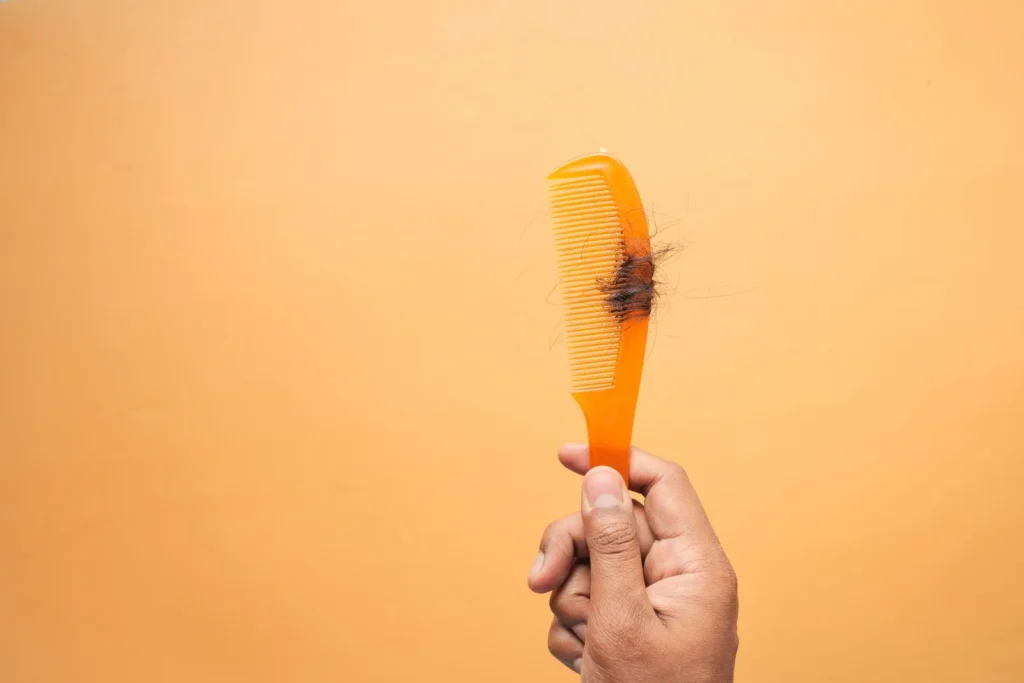
What is the electric comb for hair growth?
Detangle was built by a team led by researchers at Beihang University in Beijing. The name comes from the animated film Tangled. It looks like an ordinary comb, but its teeth carry tiny electrodes, and some of the shorter teeth hold compartments for medicine.
When the comb is drawn across the skin, it sends small pulses of electricity while the teeth gently lift the skin. The teeth are of two different lengths. The researchers say this makes the electric field 2.63 times stronger than teeth set in a straight row, and that it reaches up to about 9 times deeper into the area around hair follicles than medicine simply applied on top.
The pulses do two jobs. They stimulate the follicles directly, and they briefly make cell walls more open, a process called electroporation, so that the medicine stored in the teeth can get inside the cells.
Google Trends listed “electric comb hair growth” among India’s trending Beauty and Fashion searches this week, with 2,000+ searches and a 400 per cent jump. Short videos on Instagram and YouTube describe it as restoring “nearly 100%” of hair, usually without saying the results came from mice.

What did the study actually find?
The team tested the comb on male mice whose hair loss had been brought on with testosterone, to copy pattern baldness. The comb was used on shaved patches on the mice’s backs once every three days for 28 days. Other groups of mice got the standard drugs, minoxidil and finasteride, so the results could be compared.
| Treatment (mice, 28 days) | Hair regrown |
|---|---|
| No treatment | About 1% |
| Electric pulses only | About 40% |
| Finasteride | About 50% |
| Minoxidil | About 70% |
| Pulses + SRD5A2 siRNA | About 85% |
| Pulses + VEGFA plasmid | About 90% |
| Full Detangle (pulses + both) | About 97.85% |
The two molecules are experimental genetic treatments, not medicines you can buy. The VEGFA plasmid carries instructions that help grow new blood vessels around the follicles, to improve their blood supply. The SRD5A2 siRNA cuts the body’s production of DHT, a hormone that makes hair follicles shrink over time. The team also reported more hair follicles and better blood flow in the treated skin.
Is the electric comb good for hair?
It depends on which comb you mean.
For the Detangle comb, the answer today is: nobody knows yet for people. The study reports results in mice only. Medical Xpress, which covered the paper on 9 November, noted that the device “has yet to be tested in humans”, so whether people would see similar results “remains to be seen”. The authors write that the system “proves safe and effective” for deep delivery into the skin, but that is their claim from animal work, not a finding in patients.
Three details in the study matter more than the 98% headline:
- The electricity alone did less than the drugs. Pulses on their own gave about 40% regrowth in the mice, below minoxidil (about 70%) and finasteride (about 50%).
- The big jump came from the molecules. The comb’s best result needed two experimental genetic treatments loaded into its teeth. These are not approved hair-loss medicines.
- Mice are not people. The hair loss was induced with testosterone, the skin was shaved, and the test ran for four weeks. Human pattern baldness builds up over years.
The study is a promising early step for getting medicine deep into the scalp, not proof that a comb can regrow human hair.

What are the “hair growth combs” sold in India?
Search “electric comb for hair growth” on Amazon India and the first page is full of a different kind of product. On 23 November, most listings were combs or scalp massagers, many with red and blue LED lights and a vibration mode, and at least one adding “EMS” electrical muscle stimulation. Prices on that page ran from ₹939 to ₹3,199.
None of these is the Detangle comb, and none carries the experimental molecules that produced the study’s best result. Any claim on a product page that links its comb to the “98%” study is the seller’s claim, not something the study tested. PBTrendz does not recommend any product.
Hair care is a big business in India, as Marico’s latest results showed, and big claims often rest on small studies, as with rosemary oil for hair growth.
Does a hair growth comb work? What older studies say
Comb-like devices have been tested on people before, with modest results.
Laser combs. A 2014 paper in the American Journal of Clinical Dermatology pooled four randomised, double-blind trials of a US FDA-cleared laser comb in 128 men and 141 women aged 25 to 60. They used it three times a week for 26 weeks. Real devices added about 18 to 26 hairs per square centimetre, against about 2 to 9 for fake “sham” devices; the average gap was 15.27 hairs per square centimetre. No serious side effects were reported. Dry skin (5.1%) and itching (2.5%) were the most common. Two caveats: the maker partly funded the trials and supplied the devices, and these were lasers of set wavelengths (655 nm and 635 nm). The sham devices used white LED light. These trials do not show that a cheaper LED comb gives the same result.
Scalp massage. A small 2016 Japanese study in Eplasty gave 9 healthy men four minutes of scalp massage a day with a massage device for 24 weeks. Their hair got slightly thicker, from 0.085 mm to 0.092 mm. But the speed of hair growth did not change, and hair count in the massaged area actually dipped at 12 weeks. Nine men is a very small sample.
How common is hair loss in Indian men?
Pattern hair loss, or androgenetic alopecia, is the most common kind. The Detangle paper puts it at over 1.5 billion people worldwide.
Indian data are thin. One of the few population studies, published in the International Journal of Trichology in 2009, examined 1,005 men aged 30 to 50 who walked into a hospital over one week. 58% had pattern hair loss. It rose with age: 47.5% of men aged 30–35, 58.7% at 36–40 and 73.2% at 41–45. It is one hospital and old data.
Hair fall also has many other causes, and not all of them mean lasting hair loss. Our explainer on hard water and hair fall looks at one common worry.

What the evidence says
| Claim | What studies show | Source |
|---|---|---|
| An electric comb regrows 98% of hair | In mice, with experimental molecules; not tested in people | Nature Communications, 2026 |
| Electric pulses alone regrow hair | About 40% in mice, below minoxidil’s 70% | Same study |
| Laser combs grow hair | 15.27 more hairs/cm² than sham over 26 weeks; maker part-funded | Am J Clin Dermatol, 2014 |
| Scalp massage grows hair | Thicker hair in 9 men; no rise in growth rate | Eplasty, 2016 |
| LED and vibration combs work like the study comb | Not tested in the study; a different technology | Nature Communications, 2026 |
Key numbers
- 97.85%: hair regrown in mice with the full Detangle treatment in 28 days
- About 70%: regrowth with minoxidil in the same mouse tests
- About 40%: regrowth with the comb’s electric pulses alone
- 0: people treated with Detangle so far
- 15.27: extra hairs per cm² with a laser comb vs sham in pooled human trials
- 58%: men aged 30–50 with pattern hair loss in an Indian hospital study
- ₹939–₹3,199: price range of “hair growth combs” on Amazon India’s first results page on 23 November
What to watch
- A human trial. The only results so far are from mice. The first test in people will show whether the comb is safe and whether the effect holds on a human scalp.
- The molecules. The best result depends on two experimental genetic treatments. Any product using them would first need approval from drug regulators.
- Sellers using the headline. LED and vibration combs marketed with “98%” language are not backed by this study.
FAQ
Is an electric comb good for hair?
The viral Detangle comb worked in mice but has not been tested in people. LED and vibration combs sold online are a different technology, and this study says nothing about them.
Can I buy the Detangle comb in India?
No. It is a laboratory prototype described in a research paper. It is not on sale anywhere.
Does electric stimulation help hair growth?
In the mice, pulses alone took regrowth from about 1% to about 40%, still below minoxidil. There is no human data for this comb yet.
Which type of comb is best for hair growth?
No ordinary comb grows hair. The strongest trial evidence for a comb-shaped device is for laser combs, in studies part-funded by the maker. A dermatologist can explain the options for a person’s own hair loss.
This article explains research. It is not medical advice.
Sources
- Nature Communications: Combing-triggered electrostimulation synchronizing deep delivery for rapid hair regrowth in androgenetic alopecia (Liu et al.) (2026-11-03)
- Medical Xpress: Could this experimental electric comb be a cure for baldness? (2026-11-09)
- ScienceAlert: Scientists Invented an Electric Comb, And Tests in Mice Show It Promotes Rapid Hair Growth (2026-11-15)
- South China Morning Post: Comb developed by Chinese scientists restores hair growth by nearly 100% in mice study (2026-11-18)
- American Journal of Clinical Dermatology: Efficacy and Safety of a Low-level Laser Device in the Treatment of Male and Female Pattern Hair Loss (Jimenez et al.) (2014)
- Eplasty: Standardized Scalp Massage Results in Increased Hair Thickness (Koyama et al.) (2016-01-25)
- International Journal of Trichology: Male Androgenetic Alopecia: Population-Based Study in 1,005 Subjects (Krupa Shankar et al.) (2009)
- Google Trends: Trending now, India, Beauty and Fashion, past 7 days (2026-11-23)
- Amazon India: search results for “electric comb for hair growth” (2026-11-23)
You May Like This
1



Advertisement


You May Like This







Advertisement


Advertisement


Advertisement