

Advertisement

- Updated on April 16, 2026
- IST 9:06 am
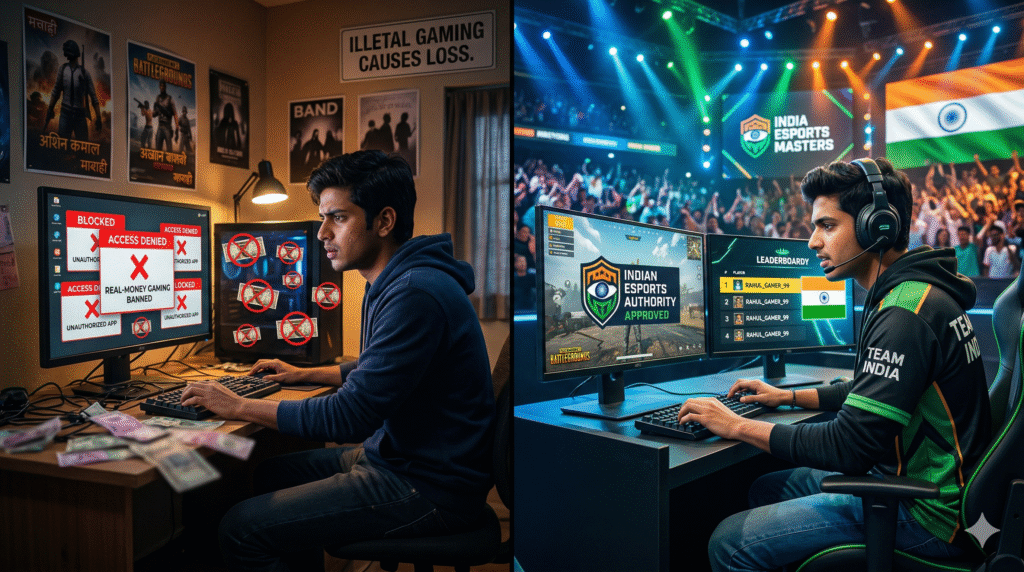
Imagine this: Vikram, a 19-year-old from Hyderabad, has been hooked on real-money fantasy cricket apps and skill-based cash tournaments for the last two years. Late-night lobbies, entry fees of ₹500 turning into quick wins or heart-breaking losses—he’s chased that rush through college breaks and family dinners. “One good day and I could clear my phone bill,” he’d joke with friends. But then the news drops: the Centre’s new PROG Act 2025 is live, real-money gaming is banned nationwide, and a powerful new watchdog called the Online Gaming Authority of India is here to enforce it. Vikram stares at his blocked app notifications, feeling the ground shift. “They’re killing the fun—what now?”
Now, picture Priya, 23, from Pune. She’s always been a pure esports grinder—Valorant customs, BGMI practice squads, and local LANs where strategy and team calls win the day. No cash stakes, just glory, rankings, and the dream of representing India at global events. When the PROG Act news hits, she’s thrilled. “Finally, proper rules, official recognition, and a clear path for real talent,” she tells her squad on Discord. Six months later, her team is prepping for registered tournaments under the new Authority, with sponsors knocking and zero legal grey areas.
So, what’s the truth? For years, India’s online gaming scene exploded into a ₹20,000+ crore industry, blending casual fun, esports dreams, and real-money stakes. Now, the Centre has proposed—and enacted—the Online Gaming Authority of India under the Promotion and Regulation of Online Gaming (PROG) Act 2025 to draw a firm line: ban all real-money gaming while promoting and regulating esports and social games. Is this a protective shield for young players or a heavy hand that could stifle innovation? In this blog, we’ll unpack the powers of the new Authority, the risks and rewards for gamers and developers, and the real-life experiences of Indian players navigating this seismic shift. Plus, we’ll share practical tips and desi hacks to thrive legally in the new era. Let’s dive in and figure this out together!
Understanding the PROG Act 2025: A National Framework for Gaming
First, let’s get the basics down. The Promotion and Regulation of Online Gaming Act, 2025 (PROG Act) isn’t just another policy tweak—it’s a landmark national law passed by Parliament in August 2025 and effective from October 2025. Think of it like a referee stepping onto a chaotic playground that had grown too wild. For years, online gaming operated in a fragmented state-by-state mess: some states banned real-money games outright, others allowed “skill-based” formats like fantasy sports or rummy. The result? Confusion, addiction concerns among youth, massive financial losses for families, and a booming grey market.
The PROG Act steps in with a uniform nationwide approach. It explicitly bans “online money games”—any game where real money is staked, won, or lost, whether based on skill or chance. No more cash tournaments, betting elements, or entry-fee-to-win models on digital platforms. At the same time, it actively promotes “permissible” formats: esports (competitive, skill-only multiplayer games) and online social/educational games (think casual puzzles, strategy titles, or learning apps). The goal? Protect vulnerable users—especially teens and young adults—from financial ruin, addiction, and mental health hits while nurturing esports as a legitimate sport under the National Sports Governance Act, 2025.
For India’s 500 million+ gamers (mostly aged 15-35), this is huge. The Act aims to clean up the ecosystem, safeguard public health, and position India as a global esports hub. But with enforcement now centralized, how exactly will it work on the ground?
Online Gaming Authority of India Explained: The New Watchdog
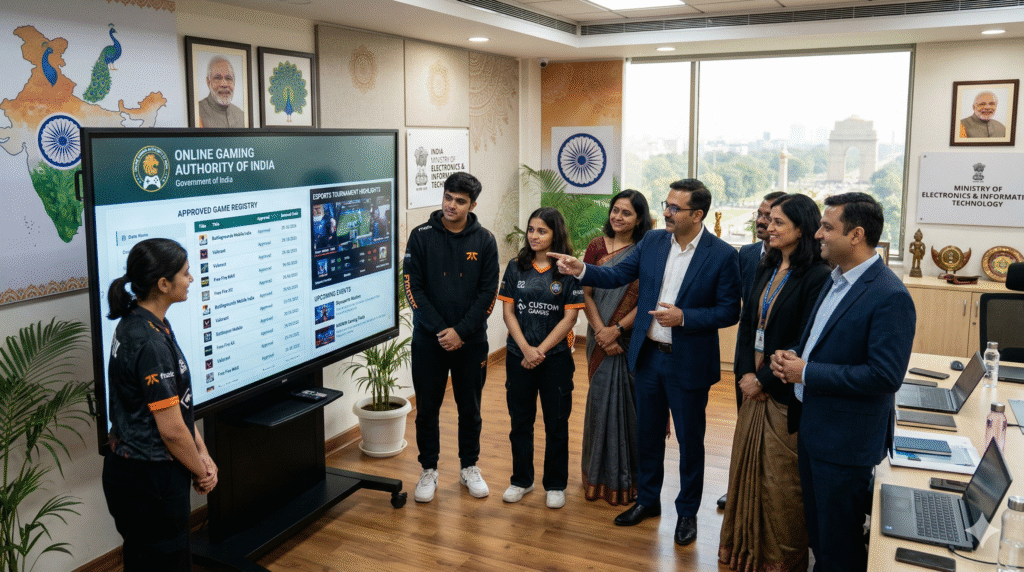
Unlike scattered state rules, the PROG Act creates a single powerful body: the Online Gaming Authority of India (OGAI). Established under Section 8, this Authority acts as the central referee with quasi-judicial powers similar to a civil court. It can summon people, investigate complaints, block apps and transactions, and even seize assets in serious cases.
Key functions include:
- Classifying Games: On its own or via applications, the Authority decides if a game is a banned “online money game” or a permitted esports/social title.
- Registration and Registry: Maintains a public national list of approved games. Esports titles must first get recognition as sports and then mandatory registration (valid up to 5 years). Social games can register voluntarily for legitimacy.
- Promotion and Oversight: Works with ministries (Youth Affairs & Sports for esports, Information & Broadcasting for social games) to support infrastructure, skill programs, and responsible gaming standards.
- Enforcement and Grievances: Handles user complaints through a three-tier system, directs banks to block payments, and penalizes violators (fines, imprisonment, or app bans).
The pitch? A safer, more transparent ecosystem where only skill-based, non-gambling games thrive. For developers, it means clear compliance rules; for players, verified safe titles. But with such sweeping powers, does the Authority empower growth or create bureaucratic hurdles in India’s fast-moving mobile gaming world?
The Big Debate: Does the Authority Help or Hurt Indian Gaming?

Here’s where opinions clash—gamers, developers, parents, and experts are divided. Let’s break it down with balanced perspectives.
The Pros: Why the Authority Could Be a Game-Changer
- Player Protection: Real-money gaming has led to documented cases of debt, depression, and family breakdowns among young Indians. The ban and Authority oversight aim to curb addiction and financial exploitation, especially for the 15-25 age group most at risk.
- Legitimacy for Esports: By recognizing esports as a sport and creating a clear registration path, the Authority opens doors to sponsorships, government support, international events, and even Olympic pathways. Prize money from skill-based competitions (without player stakes) is still allowed.
- Industry Clarity and Growth: A single national registry ends state-wise confusion. Compliant developers can attract investment, while the focus shifts to innovation in social and educational games—perfect for India’s diverse, mobile-first audience.
- Public Health and Economy: Reduces black-market risks, protects financial systems, and channels energy into positive skill-building.
Priya’s experience backs this: “With registered tournaments now official, my team feels supported, not shady. It’s motivating us to train harder.”
The Cons: Where the Authority Might Backfire
- Economic Hit and Job Losses: The real-money segment (fantasy sports, rummy, cash lobbies) was a massive employer and revenue driver. The blanket ban could push talent and money offshore, hurting startups and creators.
- Over-Regulation Risk: Strict classification and mandatory processes might slow innovation. Small indie developers fear delays or unfair rejections, while players worry about fewer fun options.
- Enforcement Challenges: Blocking every offshore app or VPN workaround is tough in a tech-savvy country. Critics argue it could drive underground activity rather than eliminate it.
- Impact on Casual Gamers: Many enjoyed low-stake fun without addiction. The sudden shift feels like overkill, potentially reducing overall engagement.
Vikram felt the pinch: “I lost my side income and favorite apps overnight. Now I’m hunting for free alternatives, but the thrill is gone for some.”
These real voices highlight a key truth: the Authority isn’t a villain or savior—it’s a tool. Success depends on fair implementation, stakeholder feedback, and adaptation.
The Indian Twist: Regulation Meets Desi Gaming Culture
Gaming has deep roots in India—from lan parties in the 2000s to mobile revolutions with BGMI and Free Fire. Our culture loves competition (cricket anyone?), quick mobile sessions between studies or jobs, and community play. But it also grapples with family pressures, parental concerns over screen time, and the allure of quick money in a price-sensitive economy.
The PROG Act aligns with desi values of responsibility and skill over luck. Karva Chauth-like discipline in training, IPL-style team spirit in esports, and educational games that feel like “Padhai with fun.” Yet challenges remain: rural gamers with limited data, urban youth juggling JEE prep and ranks, and the emotional high of cash wins now redirected. The Authority’s national registry could make verified desi titles (with Indian heroes or cultural themes) more prominent, fostering pride. The trick? Balance enforcement with promotion—think government-backed esports academies in smaller cities or school programs teaching strategic play.
Real Stories: Triumphs and Tumbles
Let’s hear from those living it.
- Arjun, 21, Bangalore: A former fantasy cricket enthusiast who switched to registered Valorant esports. “Losing cash games hurt at first, but now I’m in a pro academy with coaching and zero financial stress. My parents are finally supportive!”
- Neha, 17, Kolkata: Loved casual rummy apps for pocket money. “The ban felt unfair initially—I wasn’t addicted. But joining free social strategy games helped me focus on studies. I even won a school tournament under the new rules.”
These tales prove the shift isn’t easy but can lead to healthier, sustainable passion.
Safe Gaming in the PROG Era: Tips to Get It Right

Ready to adapt? Here’s how to stay compliant and enjoy gaming legally:
- Check the Registry: Always play from the Authority’s approved list—download only registered esports or social titles.
- Go Pure Skill: Stick to free-to-play or non-staked competitive modes. Focus on leaderboards, not wallets.
- Verify Apps: Look for the official registration certificate in-game or on the Authority website.
- Set Boundaries: Use built-in timers, share progress with family, and treat it as a hobby or sport.
- Report Issues: Use the three-tier grievance system for any suspicious titles or unfair bans.
- Stay Informed: Follow Authority updates, MeitY notifications, and creator streams explaining compliant play.
Desi Gaming Hacks: Thriving Legally with Esports and Social Titles
What you play (and how) in this new era can make all the difference. Here’s a practical routine for Indian gamers:
- Daily Warm-Up: 30 minutes of registered free esports drills—pair with chai for focus, just like pre-exam revision.
- Squad Practice: Team customs in approved games; review replays over samosas and analyze like a cricket match.
- Content & Recovery: Watch official tournament streams, then balance with outdoor play or family time. Avoid all-nighters.
- Tournament Prep: Enter only Authority-registered events. Fuel with balanced meals—dal-roti-veggies for steady energy and sharp reflexes.
Steer clear of any unverified cash lobbies or VPN tricks—they’re now high-risk. Nourish your skills, don’t chase shortcuts.
Wrapping It Up: A New Era for Indian Gaming—Safe or Stifled?
So, does the Online Gaming Authority of India under the PROG Act 2025 mark a protective new dawn or an overreach that cracks the vibrant scene? It’s not black-and-white. For many young Indians, it promises safer play, legitimate esports careers, and reduced family stress. For others, the real-money ban feels like losing a beloved playground, pushing some creativity underground or abroad.
The difference lies in execution: if the Authority listens to feedback, streamlines registration, and actively promotes talent, India could lead global esports while shielding its youth. The monopoly of unregulated cash gaming is cracking, but a bigger, healthier ecosystem is rising. If you’re a gamer, developer, or parent, now’s the time to adapt—explore registered titles, support local talent, and voice your views during consultations.
What’s your take? Hit by the ban, thriving in esports, or somewhere in between? Drop your story in the comments below—let’s swap experiences, tips, and ideas to build this new chapter together. The game isn’t over; it’s just getting regulated. Play smart, India!
You May Like This
1


Advertisement
You May Like This








Advertisement
Advertisement
Advertisement