
Advertisement

- Updated on April 15, 2026
- IST 7:59 am

Imagine this: Rahul, a 29-year-old IT consultant from Pune, lands a dream remote gig with a US-based firm. Thrilled by the freedom, he packs his bags and shifts to a cozy beach setup in Goa for six months—work from anywhere at its finest. No more Mumbai traffic or 9-to-5 grind. But then, April 2026 hits: a tax notice lands in his inbox demanding ₹1.8 lakh in back taxes plus penalties. His “short stay” in Goa triggered state-specific professional tax filings he never knew about, and the foreign employer’s lack of Indian PE compliance now points fingers at him. “I thought WFA meant freedom,” Rahul vents to his college group, staring at legal fees that could wipe out his savings. Bewildered and defeated.
Now, picture Priya, 31, a content strategist from Hyderabad. She sticks to a structured work-from-home policy with her Bengaluru startup—same state, clear contract clauses, and monthly compliance check-ins with HR. Six months in, she’s saved on commute costs, spends evenings with family, and even claims legitimate home-office deductions without a single red flag from the taxman. Her employer handles GST and PF seamlessly. “It’s not just flexible—it’s stress-free and future-proof,” she shares over filter coffee with friends.
So, what’s the truth? Is “work from anywhere” (WFA) the ultimate career upgrade for Indian professionals, or a hidden tax and legal minefield that could derail your finances? With remote work exploding post-pandemic—especially among 15-45-year-olds juggling metros, hometowns, and even short overseas stints—does the freedom outweigh the compliance chaos? In this blog, we’ll unpack the risks, the rewards, and real-life experiences of Indian professionals navigating WFA versus traditional WFH. Plus, we’ll share safe strategies and desi hacks rooted in our everyday realities. Let’s dive in and figure this out together!
Understanding Remote Work: The New Normal or Compliance Trap?
First, let’s get the basics down. Remote work isn’t just logging in from your couch anymore—it’s evolved into two distinct beasts. Work from Home (WFH) typically means operating from your fixed residence, often in the same city or state as your employer’s registered office. It’s familiar, predictable, and aligns with most Indian labor laws designed for traditional setups. Work from Anywhere (WFA), on the other hand, lets you roam—different states, hill stations, or even abroad—chasing better work-life balance, lower living costs, or that digital nomad vibe.
For many young Indians, shedding the office commute can tip the scales toward sanity, boosting productivity and mental health. That’s where WFA enters the chat—praised as the ultimate flexibility hack amid India’s booming gig economy and startup scene. But with multi-state tax rules, GST twists, and permanent establishment (PE) risks already in play by 2026, is unrestricted location freedom the right move? Let’s explore.
Work from Anywhere Explained: Location Over Routine

Unlike rigid WFH policies that tie you to one spot, WFA is all about when and where you deliver value. It’s like setting a digital passport for your career—work during your peak hours, from wherever life takes you. Popular setups include:
- Intra-State WFA: Staying within your home state but ditching the office for cafes or family homes.
- Inter-State WFA: Hopping between Delhi, Bangalore, or your village—common for cost savings or family duties.
- International WFA (Digital Nomad Style): Short stints abroad or for NRIs returning briefly, triggering residency and double-taxation headaches.
The pitch? WFA gives your career a break from the 9-to-5 cage, cuts costs, and sparks creativity. For the average professional, it’s a lifestyle reset. But for Indians juggling joint families, festival travel, or metro-to-hometown shifts, does it sync with 2026’s updated tax codes—or throw your compliance into chaos?
The Big Debate: Does WFA Help or Hurt Your Finances and Career?
Here’s where it gets juicy—experts, HR pros, and real professionals don’t agree. Let’s break it down with balanced perspectives from 2025-2026 updates.
The Pros: Why WFA Might Work Wonders
- Lifestyle Freedom and Savings: Ditch expensive city rents for Goa beaches or hometown living. Many save 30-40% on costs while claiming home-office deductions under the new tax regime.
- Productivity Boost: No commutes mean more focus. Studies and Indian surveys show remote setups improve output, especially in IT and creative fields, helping attract top talent without office overheads.
- Talent Pool Expansion: Employers tap pan-India or global skills without relocation hassles. Employees build personal brands as adaptable pros—key for career growth in competitive 2026 markets.
- Work-Life Harmony: More time for family, yoga, or side hustles. Priya’s story? She balanced deadlines with kids’ school runs seamlessly.
The Cons: Where WFA Might Backfire Spectacularly
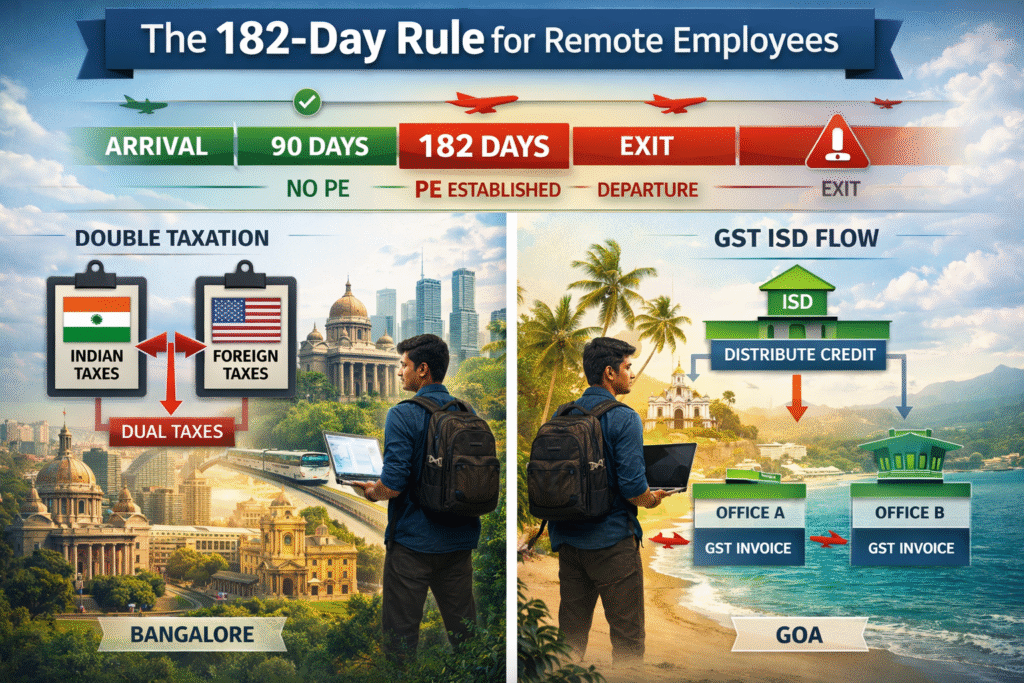
- Tax Residency Nightmares: Stay 182+ days anywhere? You could become a tax resident, making global income taxable in India—even from foreign employers. Short visits have exemptions, but cross-state moves trigger professional tax or TDS mismatches.
- Permanent Establishment (PE) Risks: For employers, remote workers in new states or countries might create a “fixed establishment” under GST or PE under income tax, leading to corporate tax filings, audits, and penalties. 2026 rules are tightening on digital/remote models.
- Multi-State Compliance Chaos: GST demands separate registrations or ISD (Input Service Distributor) setup by April 2025 for multi-state ops. Labor laws vary—leave policies, minimum wages, or Shops & Establishments Acts might follow your work location, not the company’s HQ.
- Double Taxation and Legal Gaps: NRIs or cross-border workers risk dual filings without proper DTAA relief. No specific remote-work law means contracts must spell everything out—or face disputes over health, safety, or IP.
Rahul learned this the hard way. His Goa stint created unexpected state tax liabilities and employer PE exposure. “I thought I was living the dream, but the paperwork turned it into a nightmare,” he admits.
The Indian Twist: Remote Work Meets Tradition and Traffic

Remote work isn’t new to us Indians—we’ve always adapted with “work from village during festivals” or family business calls. Karva Chauth, Diwali, or summer breaks in the hills—our culture is steeped in flexibility. But those moves often end with hasty tax filings or ignored GST notices, sending compliance into a wild ride. For professionals with PCOS-level stress from deadlines? That’s a tricky combo.
Our everyday setups lean heavy on family ties and metro dreams—rice fields one month, Bangalore tech parks the next. Delicious work-life balance? Yes. Ideal for 2026’s inter-state GST and PE rules? Not always. So, can WFA fit into this desi framework? Absolutely—if you tweak it smartly. A clear policy mimicking your “natural overnight family breaks” feels less like a leap. The trick is documenting everything, not winging it with vague emails.
Real Stories: Triumphs and Tumbles
Let’s hear from the professionals who’ve been there.
- Arjun, 27, Mumbai to Kerala: He embraced full WFA for a foreign client. Initial savings were great, but a 200-day stay flipped his residency status. “Taxman wanted worldwide income details—I scrambled with DTAA forms for months,” he shares. Lesson learned: Track days religiously.
- Meena, 34, Bangalore: As a working mom, she chose structured WFH with her Indian firm. Clear policies covered PF, ESI, and state benefits. “I lost zero sleep over notices and even got a promotion,” she beams. “WFA sounded fun, but WFH kept my sanity.”
These tales prove one thing: WFA isn’t a magic wand. It’s a tool—how you wield it with 2026 rules in mind matters.
Safe WFA for Professionals: Tips to Get It Right

Thinking of going full work-from-anywhere? Here’s how to keep it safe and sane:
- Map Your Moves: Track days in each location using apps. Under 182 days? Stay non-resident where possible to limit global taxation.
- Contract Clarity First: Demand (or draft) ironclad agreements covering tax withholding, PE disclaimers, and location-based benefits. Update for every shift.
- Compliance Check-Ins: Consult a CA or tax advisor quarterly. Factor in GST ISD rules if your employer spans states.
- Document Everything: Log expenses, working hours, and health setups. Hydrate your records—water-tight proofs beat audits.
- Leverage Tools and Treaties: Use DTAA for international gigs. Apps for TDS calculators and residency trackers are your new best friends.
Stress Less, Plan More: Yoga or walks keep cortisol low, but pair it with annual compliance reviews. Your future self will thank you.
Desi Compliance Hacks: Navigating Remote Work Like a Pro
What you “file” during your work window can make or break WFA. Here’s a practical Indian playbook for 2026:
- Morning Ritual (Breaking the Inactivity): 15-minute review of state tax portals with your morning chai—spot mismatches early.
- Midday Value Drop: Quick carousel or note on expenses—claim home-office deductions smartly with bills for desi setups like inverter costs.
- Evening Wind-Down: Monthly chat with your CA over virtual filter coffee. Discuss PE risks if your foreign boss has India clients.
- Snack-Size Engagement: Use free govt apps for GST/Income Tax e-filing. Join LinkedIn groups for “remote work tax India” tips from fellow pros.
Steer clear of “I’ll file later” laziness, vague WhatsApp approvals, or ignoring multi-state notices. Nourish your paperwork—don’t punish your peace of mind.
Wrapping It Up: WFA Freedom or Tax Trap—Your Smart Choice in 2026
So, does work from anywhere beat traditional work from home, or is it a compliance nightmare waiting to happen? It’s not black-and-white. For some Indian professionals, WFA is a game-changer—slashing costs, boosting balance, and unlocking opportunities. For others, it’s a legal and tax havoc-wreaker filled with surprise notices and penalties. The difference lies in how you do it—smartly, documented, and with expert guidance.
If WFA tempts you, dip your toes in. Start with intra-state trials, watch your location signals, and lean on CAs or HR for advice. Remote work is a marathon, not a sprint, and you’re tougher than any tax form. What’s your take? Tried WFA and dodged (or hit) the nightmare? Drop your story below—let’s swap notes and lift each other up in this flexible-but-filing-filled world!
You May Like This



Advertisement

You May Like This








Advertisement

Advertisement

Advertisement