

Advertisement
- Updated on April 16, 2026
- IST 8:37 am
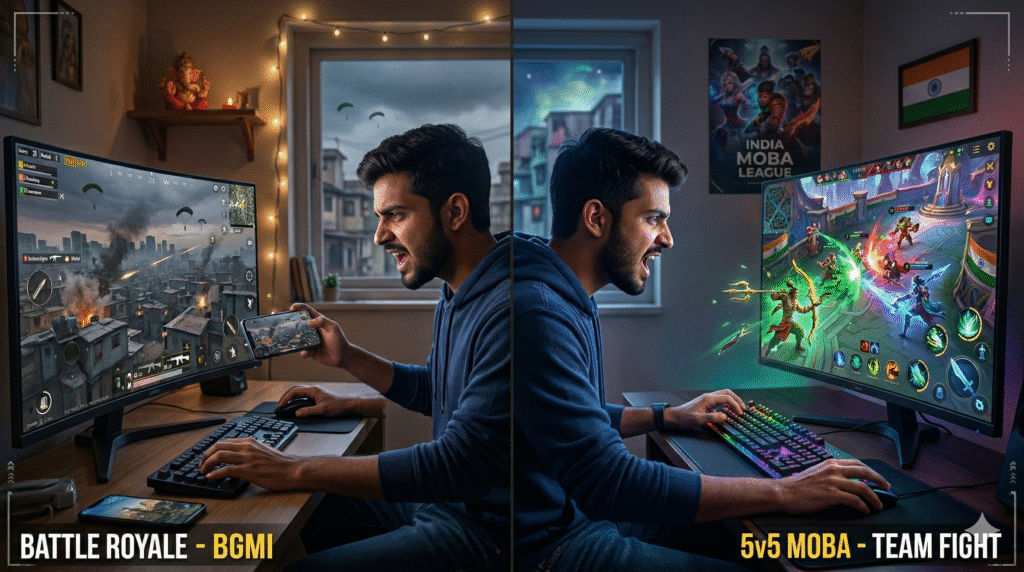
Imagine this: Rahul, a 22-year-old from Delhi, has been grinding Battlegrounds Mobile India (BGMI) for years. Chicken dinners, squad wipes, and late-night drops—he’s chased every rank, every tournament slot. But lately, the lobbies feel crowded, prize pools are harder to crack, and that solo-survival thrill is starting to fade. “BGMI was my everything,” he tells his friends over chai at a local cyber café. “But the scene’s saturated. Feels like the monopoly is cracking, and I’m stuck in the rubble.” He scrolls through feeds, seeing fewer fresh opportunities as the battle royale hype plateaus.
Now, picture Arjun, 24, from Bangalore. He too started with Free Fire MAX and BGMI, but last year he switched to a MOBA title like Moba Legends 5v5. At first, the 5v5 team fights felt overwhelming—no more lone-wolf drops. Yet six months in, he’s part of a rising amateur squad. They’re practising macros, shot-calling like a cricket team, and just qualified for a local qualifier. “It’s not just about reflexes anymore,” Arjun beams in a late-night Discord call. “It’s strategy, teamwork, and real growth. My skills finally have a future beyond one lucky circle.”
So, what’s the truth? For years, Indian mobile esports has revolved around battle royale giants like BGMI and Free Fire MAX, dictating viewership, sponsorships, and dreams. Now, for the first time, that monopoly is beginning to crack—not because battle royales are dying, but because MOBAs are rising fast. In 2026, with Honour of Kings launching in March and Moba Legends 5v5 (India’s adapted MLBB) building dedicated leagues, the scene is shifting toward deeper, team-based play. In this blog, we’ll unpack the risks, the rewards, and the real-life experiences of Indian gamers navigating this change. Plus, we’ll share practical tips and strategies rooted in our desi gaming culture. Let’s dive in and figure this out together!
Understanding the Battle Royale Monopoly: India’s Esports Anchor
First, let’s rewind. Battle royale titles like BGMI didn’t just dominate—they defined Indian mobile esports. Think of it like a high-stakes survival game where one squad drops, loots, and outlasts 99 others. It’s fast, accessible, and perfect for India’s mobile-first audience: affordable smartphones, patchy 5G in smaller cities, and that adrenaline rush of a final circle. BGMI alone pulled massive viewership—its 2026 series events hit peaks like 577K concurrent viewers, proving the format’s staying power. Free Fire MAX, even after its relaunch, kept casual players hooked with quick matches and events.
The monopoly worked because it was simple to pick up, hard to master, and easy to monetise through battle passes, skins, and creator content. Tournaments exploded: BGIS, PMGC qualifiers, and brand-backed cups turned gamers into household names. For many young Indians aged 15-25, esports meant “drop hot, survive, win.” But cracks appeared. Lobbies got sweatier, new players flooded in without fresh mechanics, and opportunities plateaued for mid-tier talent. Sponsorships favoured top orgs, leaving aspiring players frustrated. Meanwhile, the broader Indian esports market—valued around ₹200 crore+ and growing at 18%+ CAGR—is hungry for diversification. Enter MOBAs: a format promising longevity, global pathways, and skill depth beyond solo reflexes.
MOBA Explained: Strategy Over Solo Survival
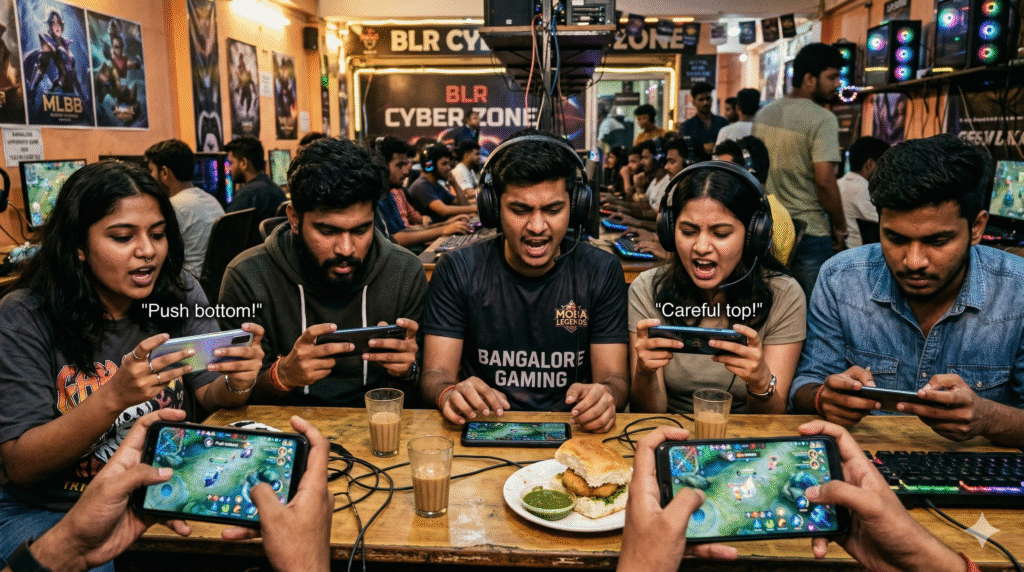
Unlike battle royales that reward individual positioning and gunplay, MOBAs (Multiplayer Online Battle Arenas) are all about 5v5 team coordination on a structured map. You pick a hero with unique abilities, lane up, push towers, and outsmart the enemy in objective-based fights. It’s less “last one standing” and more chess with explosions—macro decisions (lane rotations, objective control) matter as much as micro skills (mechanical combos).
Popular titles fueling India’s boom include:
- Moba Legends 5v5 (India-adapted MLBB): Fast-paced, mobile-optimised, with direct paths to Esports World Cup (EWC) 2026.
- Honour of Kings: Launched March 11, 2026, with massive pre-regs (over 500K) and two dedicated EWC slots for Indian teams—bringing one of the world’s biggest MOBAs to our phones.
- Others like potential Arena of Valor variants, but these two are leading the charge.
The pitch? MOBAs reward consistent practice, team synergy, and adaptability. Matches last 15-25 minutes, ideal for mobile sessions between college or work. For the average gamer, it’s a mental workout that builds leadership and communication skills that translate beyond gaming. But with India’s battle royale DNA, does this strategic shift sync up, or does it alienate the masses who love quick drops?
The Big Debate: Does the MOBA Boom Help or Hurt Indian Esports?
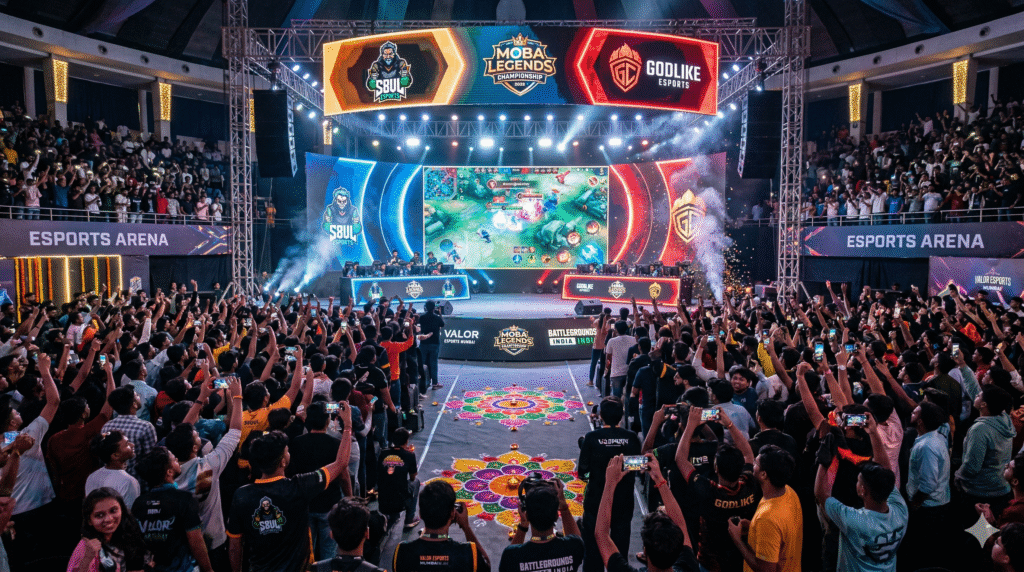
Here’s where it gets exciting—experts, creators, and players are split. Let’s break it down fairly.
The Pros: Why MOBA Could Be the Game-Changer
- Skill Depth and Longevity: Battle royales can feel luck-dependent (zone RNG, third-partying). MOBAs emphasise strategy, hero mastery, and team play—creating longer careers for pros. Top creators like Raistar and Gyan Gaming switched in late 2025, citing “deeper growth” and less burnout.
- Diversification and Global Opportunities: India’s esports pie is expanding (projected to hit hundreds of crores by 2030+). MOBAs open doors to international stages—MLBB’s M7 Worlds, Honour of Kings’ global events, and EWC 2026 slots. Viewership for mobile MOBAs globally dwarfs many titles, and India is getting direct qualification paths.
- Team Culture Fit: MOBAs mirror India’s love for collective wins, like cricket or kabaddi. Orgs like iQOO S8UL and GodLike are already dominating early tournaments, building loyal fanbases.
- Market Growth: With 500M+ gamers, MOBAs attract brands seeking engaged audiences. Early 2026 data shows rising downloads and watch hours as creators pivot.
Take Arjun’s story: His squad’s coordination in Moba Legends qualifiers led to a LAN invite. “I feel like part of something bigger,” he says.
The Cons: Where the Shift Might Stumble
- Steep Learning Curve: New players face 100+ heroes, complex macros, and team dependency. Solo BR grinders often rage-quit after early losses.
- Audience Retention Risk: Battle royales are more casual and watchable for drop-in viewers. Shifting focus might fragment the massive BGMI/Free Fire community if MOBAs don’t deliver immediate fun.
- Infrastructure Gaps: India’s scene is mobile-heavy, but high-level MOBA needs stable ping and practice facilities. Smaller cities lag behind metros like Bangalore or Mumbai.
- Overhype vs Reality: Not every creator transition succeeds. Some players report initial frustration with team coordination in a culture used to solo carries.
Rahul experienced this: “Tried MOBA once—felt lost without my squad synced. Sticking to BGMI for now, but I’m watching the scene.”
These tales show MOBAs aren’t a magic fix. It’s a tool—how India adapts it will decide if the boom sustains.
The Indian Twist: MOBAs Meet Desi Gaming Culture
Esports isn’t new to our desi roots—we’ve had lan parties, cyber café rivalries, and late-night grinds since the early 2000s. But battle royales fit our chaotic energy: quick matches between traffic jams or family dinners. MOBAs add structure, like our love for team sports during the IPL or the cricket World Cup.
Our gaming diets are lean, mobile and affordable. With Honor of Kings and Moba Legends 5v5 optimized for mid-range phones, they feel less alien. Tournaments are popping up in Kolkata, Mumbai, and online qualifiers—think Rai Star x Gyan Gaming Cup (₹15 lakh prize pool, grand finals in Kolkata). Creators are bridging the gap, streaming in Hindi/English mixes with relatable banter. Festivals? Imagine Navratri squads practising or Diwali clan battles. The trick is blending strategy with our high-energy vibe—short practice bursts, family-approved gaming hours, and local flavour in hero skins or events.
Real Stories: Triumphs and Tumbles
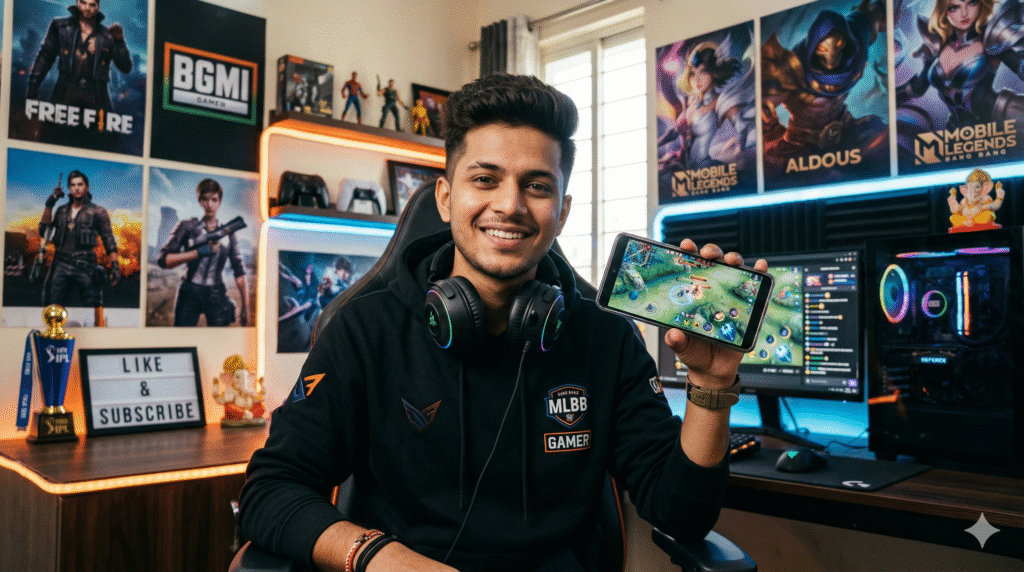
Let’s hear from the frontlines.
- Raistar and Gyan Gaming: These Free Fire legends shocked fans in December 2025 by entering Moba Legends 5v5. Their cup tournament drew massive viewership, culminating in iQOO S8UL’s thrilling 4-3 grand final win. “It’s about evolving,” Raistar shared. Their move signalled that pros are betting on MOBA’s future.
- Rising Squads: Teams like GodLike and S8UL are crushing early Moba Legends Master Series (MLMS) stages, with paths to EWC 2026. One amateur from Hyderabad went from BGMI casual to MOBA standout: “Team calls changed everything—won my first LAN feeling unstoppable.”
- The Struggles: Not everyone transitions smoothly. A Delhi grinder shared anonymously: “MOBA felt too serious. Missed the casual BR fun. Back to BGMI, but scouting hybrids now.”
These stories prove one thing: The shift isn’t automatic. It’s about mindset, practice, and community support.
Safe Entry into MOBA Esports: Tips to Get It Right
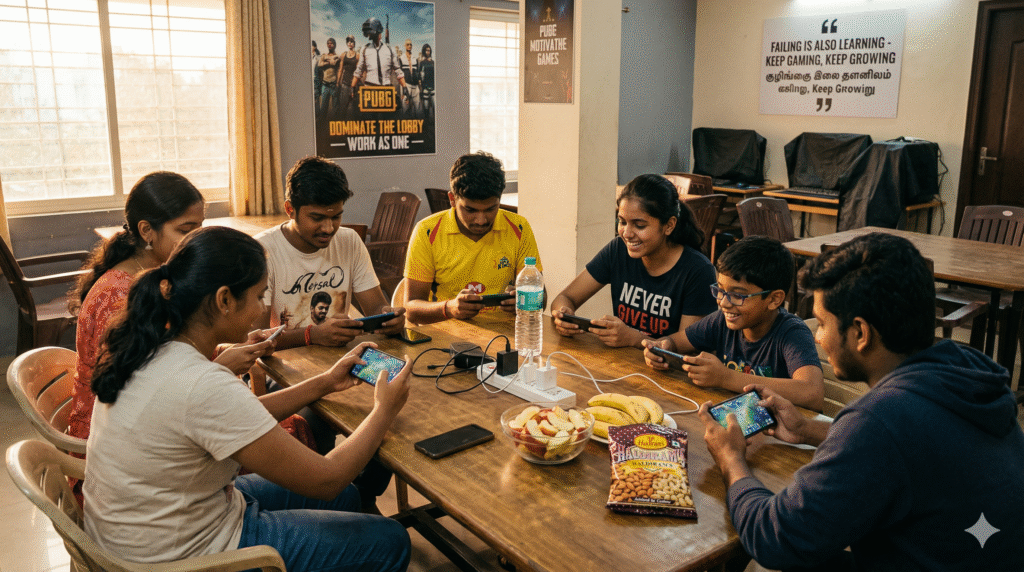
Thinking of making the jump? Here’s how to do it smartly:
- Ease In: Start with a 12-14 hero pool in casual matches. Master one role (tank, mage, marksman) before full 5v5 ranked.
- Build a Squad: Solo queue won’t cut it. Find 4 friends via Discord or college groups—practice voice comms and pings daily.
- Watch and Learn: Stream Raistar/Gyan sessions or pro VODs. Focus on macro (map awareness) over pure mechanics.
- Balance Life: Don’t burn out. Schedule 1-2 hour sessions around studies/work. Hydrate, stretch—gaming marathons kill performance.
- Gear Smart: Mid-range phone with good battery + stable Wi-Fi. Use in-game training modes religiously.
- Stay Updated: Follow MLMS, Honour of Kings qualifiers, and creator camps for free coaching.
Desi Gaming Hacks: Thriving in the MOBA Ecosystem
What you “consume” in your gaming window matters. Here’s a practical routine for Indian players:
- Warm-Up (Daily): 20-minute custom games + hero mastery drills—pair with filter coffee for focus.
- Practice Block: 5v5 customs with squad, reviewing replays over samosas. Analyse deaths like cricket match footage.
- Content/Recovery: Watch one pro VOD, then chill with family or a quick walk. Avoid all-nighters before exams.
- Tournament Prep: Simulate LAN pressure with scrims. Fuel with balanced meals—dal, roti, veggies for sustained energy.
Steer clear of toxic lobbies or overspending on skins. Build habits that last.
Wrapping It Up: To Shift or Not to Shift?
So, is India’s MOBA esports boom the next big shift after BGMI, or just hype? It’s not all-or-nothing. Battle royales built the foundation—massive audiences, creator economy, and cultural acceptance. MOBAs are expanding: greater skills, global stages, and sustainable careers. For some gamers, it’s a game-changer—unlocking team glory and international dreams. For others, sticking to BR feels safer amid the learning curve.
The difference lies in how we approach it—gradually, with community support, and eyes on 2026’s big events like EWC slots and MLMS playoffs. India’s 500M+ gamers and booming market mean there’s room for both. The monopoly is cracking, but the overall esports pie is growing bigger. If MOBA tempts you, dip your toes in. Start small, sync with your squad, and lean on the growing resources. Esports is a marathon, not a solo drop—and you’re built for the long game.
What’s your take? Still grinding BGMI, switched to MOBA, or riding both? Drop your story in the comments below—let’s swap tips, celebrate wins, and build this ecosystem together. Who knows? Your next squad might just qualify for EWC!
You May Like This
1


Advertisement
You May Like This




Advertisement
Advertisement
Advertisement