

Advertisement

- Updated on April 16, 2026
- IST 3:52 am
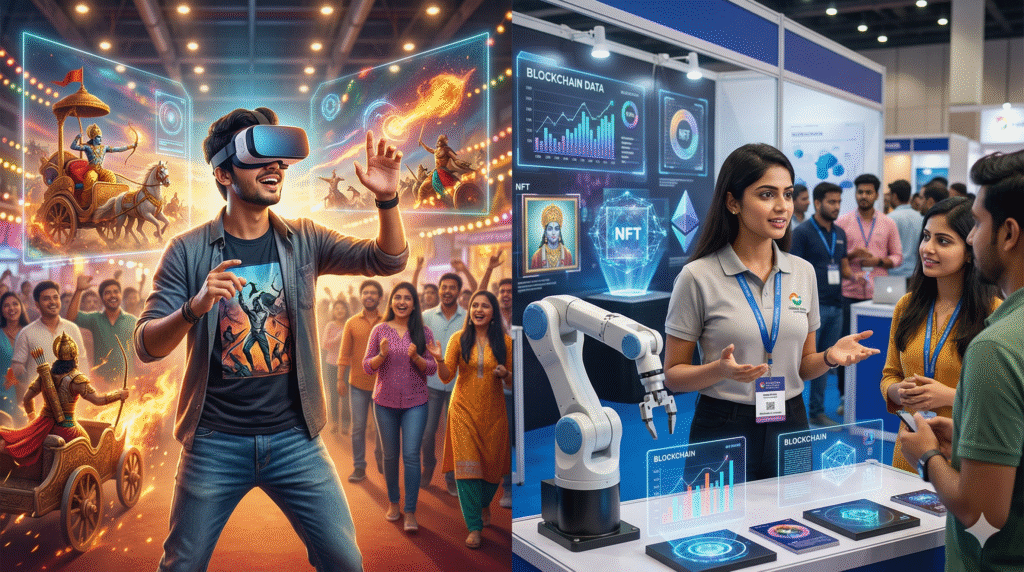
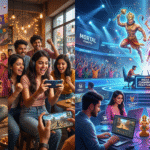
Imagine this: Arjun, a 22-year-old from a small town in Rajasthan, has spent years grinding free mobile battle royales on his budget Android phone during long power cuts and dusty bus rides. He saves up for a one-way ticket to Delhi, walks into the massive halls of Bharat Mandapam at the Digital Gaming India Expo 2026, and slips on a sleek VR headset. Suddenly, he’s not in New Delhi anymore—he’s dodging mythical demons in a hyper-realistic recreation of the Mahabharata battlefield, complete with desi war cries and real-time multiplayer from gamers across India. His heart races. “Bhai, this isn’t just gaming… this is our stories coming alive,” he whispers to his friend via in-game chat, eyes wide with wonder.
Now picture Priya, 29, a budding game developer from Bengaluru who’s been bootstrapping indie titles in her tiny apartment. She arrives skeptical—another expo full of hype? But by Day 2, she’s pitching her NFT-based folklore adventure to international investors at a blockchain panel, watching a robotics demo where AI companions react to player emotions in real time. Three days later, she leaves with two pilot partnerships and a head full of ideas. “This expo didn’t just show tech,” she later tells her team on a late-night call. “It showed us how we can finally build games that feel Indian at their core.”
The future of gaming was on full display in India — here’s everything we saw at the Digital Gaming Expo 2026. With over 200 exhibitors, thousands of attendees, and cutting-edge showcases in AR/VR, blockchain, NFTs, and robotics, the event (held March 23-25 at Bharat Mandapam, New Delhi) wasn’t just another trade show. It was a launchpad for India’s gaming ecosystem, already racing toward 517 million mobile players by 2026. In this blog, we’ll unpack the expo’s biggest trends, standout demos, real-world implications, challenges, and actionable tips for gamers, developers, and dreamers like Arjun and Priya. Whether you’re a casual player killing time on the metro or a creator coding your first title, this is your front-row seat to how these technologies are reshaping India’s gaming revolution. Let’s dive in and level up!
Understanding the Digital Gaming India Expo 2026: More Than Just Booths and Buzz
Organized by Exhibitions India Group as a premier B2B platform (with hybrid elements), the Digital Gaming India Expo 2026 brought together the entire gaming ecosystem—from local studios and global tech giants to policymakers and investors. Held right in the heart of New Delhi, it coincided with India’s explosive growth: a market projected to hit billions in revenue, fueled by affordable 5G, UPI payments, and a young population where gaming is no longer a “waste of time” but a serious career and cultural force.
Think of the expo like a massive mela for the digital age—vibrant stalls, live demos, panel discussions, and networking zones buzzing from morning till evening. Over 20,000 visitors (including students, professionals, and enthusiasts aged 15-45) explored how emerging tech isn’t copying Western models but remixing them with Indian flavors. It wasn’t about flashy consoles; it was about accessible, mobile-first innovation that reaches Tier-2 and Tier-3 cities. The energy was electric—crowds huddled around AR mirrors turning selfies into avatars, blockchain wallets lighting up with instant rewards, and robotic arms simulating perfect esports training drills.
But why does this matter now? India’s gaming scene is exploding beyond casual play. With projections of 952 million total gamers by 2029, the expo highlighted how AR/VR, blockchain, NFTs, and robotics aren’t distant sci-fi—they’re tools to solve real problems like monetization struggles, low player retention, and the need for culturally relevant content.
Key Technologies on Display: Breaking Down AR/VR, Blockchain, NFTs, and Robotics
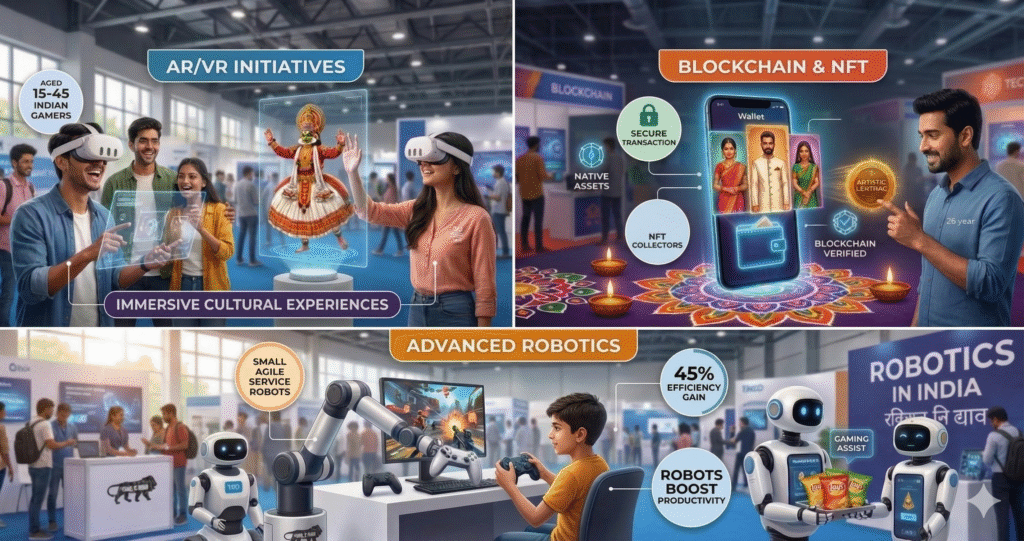
The expo’s heart was its tech pavilions. Let’s break them down with fresh eyes—no jargon overload, just real talk on what they mean for everyday Indian gamers and creators.
AR/VR: Immersive Worlds Rooted in Our Backyards
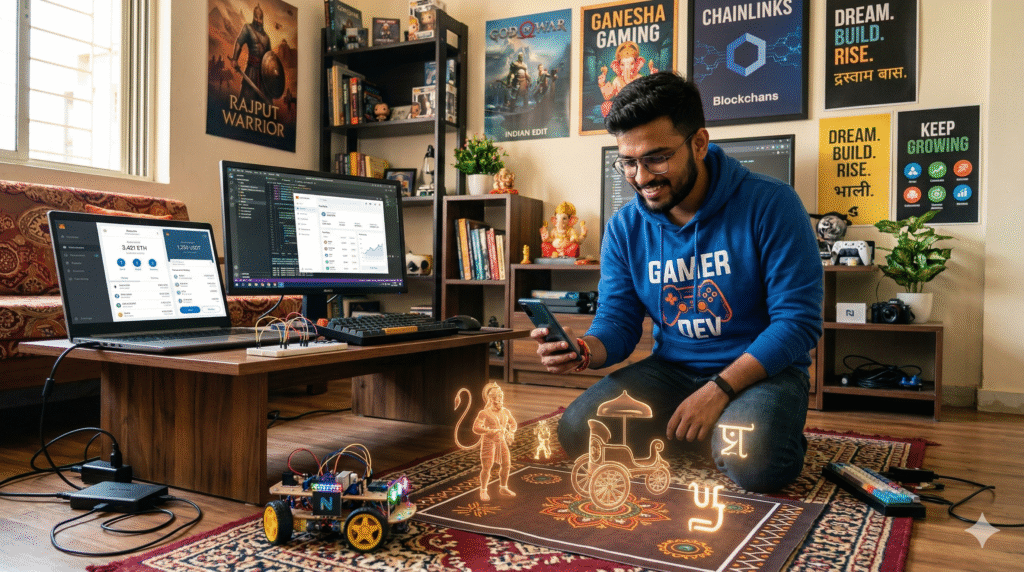
Augmented Reality overlays digital elements on the real world (think Pokémon GO but with Ganesha statues coming alive during festivals). Virtual Reality transports you entirely (full 360-degree escapes). At the expo, demos showed AR games where you scan your living room to battle asuras from Ramayana or VR setups letting you train with cricket legends. One standout: low-cost VR headsets under ₹5,000 paired with Indian-language voice commands—perfect for our diverse audience. These techs boost engagement by making games physical and social, not just thumb-tapping.
Blockchain and NFTs: True Ownership in a Free-to-Play World
Blockchain ensures secure, transparent transactions; NFTs give players actual ownership of in-game items (skins, land, characters) that can be traded or resold. Skeptics call it “hype and scams,” but expo showcases proved otherwise—decentralized gaming platforms where your rare cricket bat skin earns real rupees via UPI-linked marketplaces. Indian studios demoed NFT drops tied to real-world events like IPL or festivals, creating new revenue streams without heavy paywalls. It’s ownership that feels fair in a market where free-to-play dominates.
Robotics: From Sidekicks to Skill Builders
Robotics here meant AI-powered companions, training bots, and haptic feedback devices. Imagine a small robot arm helping you practice precise mobile controls or emotional AI bots that adapt to your mood during stressful boss fights. Demos included robotics for esports academies—affordable setups for rural coaching centers—and hybrid experiences where physical robots interact with VR players. It bridges the gap between screen and reality, making gaming more accessible and therapeutic.
These weren’t isolated gadgets; they integrated seamlessly, like an AR game with blockchain rewards controlled by robotic feedback.
Major Highlights and Trends That Stood Out
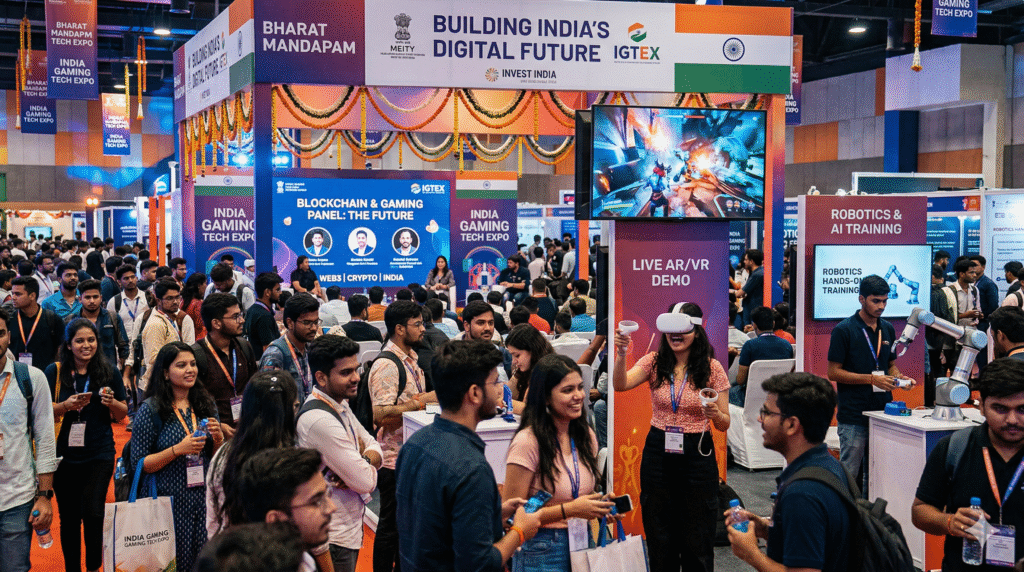
While specific “big reveals” varied by booth, clear trends emerged: hyper-local content (mythology + modern mechanics), cross-border partnerships (Indian devs with global blockchain firms), and accessibility focus (vernacular support, low-data modes). Panels discussed regulatory clarity for NFTs and esports recognition boosting investor confidence. One buzzing announcement vibe: several studios teased AI-robotic hybrids for adaptive difficulty in educational games—huge for parents worried about screen time.
The expo also spotlighted sustainability—energy-efficient VR rigs—and women in gaming, with dedicated zones showing inclusive titles. Overall, it reinforced India as the second-largest gaming market, not just by players but by innovation potential.
The Big Debate: Game-Changer or Gimmick? Multiple Perspectives
Not everyone left convinced. Pros: These techs can create jobs (thousands in studios), boost exports (Indian IPs going global), and improve skills (spatial awareness via VR, financial literacy via NFTs). For a country with 500+ gaming studios, it’s economic gold.
Cons: High costs for entry-level VR/robots, digital divide in rural areas, regulatory gray zones around NFTs/blockchain, and addiction risks with immersive tech. Some gamers worried about “pay-to-own” fatigue; developers flagged tech complexity. The expo balanced this with panels on ethical AI and inclusive design—showing critical thinking in action. It’s not black-and-white; success depends on smart, India-first implementation.
The Indian Twist: Cutting-Edge Tech Meets Desi Soul
Fasting during Navratri but still wanting to game? AR overlays let you play without breaking rules. Wedding season ludo nights? Blockchain turns family tournaments into NFT collectibles. The expo celebrated this fusion—games blending Holi colors with VR fireworks, robotics teaching traditional dances through gameplay, or NFT avatars in regional attire. Our carb-heavy diets and chaotic commutes? Short-burst AR experiences fit perfectly. This wasn’t Western tech imported—it was reimagined for chai stalls, metro rides, and joint-family living rooms.
Real Stories: Triumphs, Tumbles, and Takeaways from the Floor
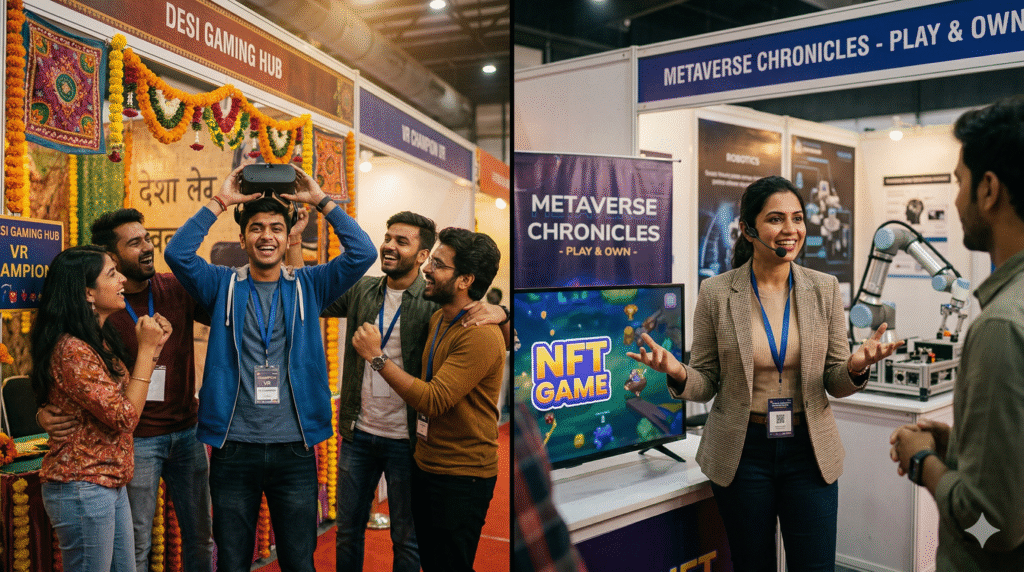
Arjun’s story continued: He joined a free workshop and left inspired to learn Unity for AR. Priya secured funding after demoing her prototype. Other tales flooded social media— a Tier-3 college student landing an internship at a robotics booth, a mom discovering VR as family bonding time. One developer shared how blockchain solved his monetization woes post-expo. These weren’t outliers; they proved the event’s power to turn curiosity into careers.
Smart Ways to Get Involved: Tips for Gamers, Creators, and Enthusiasts
- Start small—download free AR apps or try NFT marketplaces with tiny investments.
- Learn the basics—free YouTube tutorials on Unity for AR/VR or blockchain wallets.
- Network smart—follow expo-linked LinkedIn groups or join Discord communities.
- Focus on culture—build games with Indian stories for instant connect.
- Stay safe—verify platforms, protect wallets, balance screen time.
- Collaborate—pair with local artists or coders for unique twists.
Desi Tech Hacks: Making Expo Magic Work at Home
Pair cheap VR with your existing phone for mini-immersions. Use UPI for seamless NFT trades. Turn robotics ideas into DIY Arduino projects for budget training. Host local meetups inspired by expo panels—your mohalla could be the next esports hub!
Wrapping It Up: This Expo Was Just the Beginning
The Digital Gaming India Expo 2026 didn’t just showcase AR/VR, blockchain, NFTs, and robotics—it ignited a movement. For Arjun, it was escape and empowerment. For Priya, it was validation and opportunity. For India, it’s proof we’re not followers but leaders in the global gaming story, heading toward that 517 million player milestone with homegrown innovation.
The future isn’t coming—it’s here, in our hands and headsets. So, what’s your next move? Download a new AR title, sketch your first NFT concept, or plan your visit to the next expo. Drop your thoughts below—did you attend? What blew your mind? Share your gaming dreams or expo stories. Let’s build this revolution together, one innovative play at a time. Game on, India!
You May Like This
1


Advertisement
You May Like This





Advertisement
Advertisement
Advertisement