Everyone assumes Indian streaming is drowning in content. Twenty titles in a week. Four platforms. Nothing to watch and too much of it.
The data says the opposite, and it is not close.
India produced fewer than 300 streaming originals in 2025 — the lowest count since 2020. That was down 13 per cent on 2024, which was itself down 18 per cent on 2023.
Two years of double-digit decline. The Indian streaming industry is not expanding. It is contracting, deliberately, and almost nobody has said so out loud.
The correction nobody announced
The commissioning boom of 2021 and 2022 was built on a subscriber land grab. Every platform needed a slate, every slate needed titles, and titles were greenlit faster than the country could actually make them well.
What followed was predictable. There were not enough experienced showrunners, writers or line producers to fill that many shows at that speed. Quality thinned. Audiences noticed.
Then the business question changed. Platforms stopped optimising for acquiring subscribers and started optimising for keeping them — and a retention strategy needs fewer, bigger, safer bets than an acquisition strategy does.
The industry calls this a correction. The trade press has taken to calling it the great Indian OTT reset. Either way, the direction is one way.
What the merger did
Some of the decline is arithmetic rather than strategy.
When Disney+ Hotstar and JioCinema became JioHotstar, two commissioning slates became one. Shows that would have been ordered by two competing platforms to outbid each other were now ordered — or not ordered — by a single one. That merger alone is identified as a direct cause of the drop in originals.
Separately, the ban on Ullu removed 17 titles from the annual count compared with the year before.
So part of the fall is consolidation and part is regulation. But neither explains a two-year trend, and neither explains what the surviving platforms are choosing to spend on.
The number that explains everything
Here is the whole story in two figures from the first half of 2026.
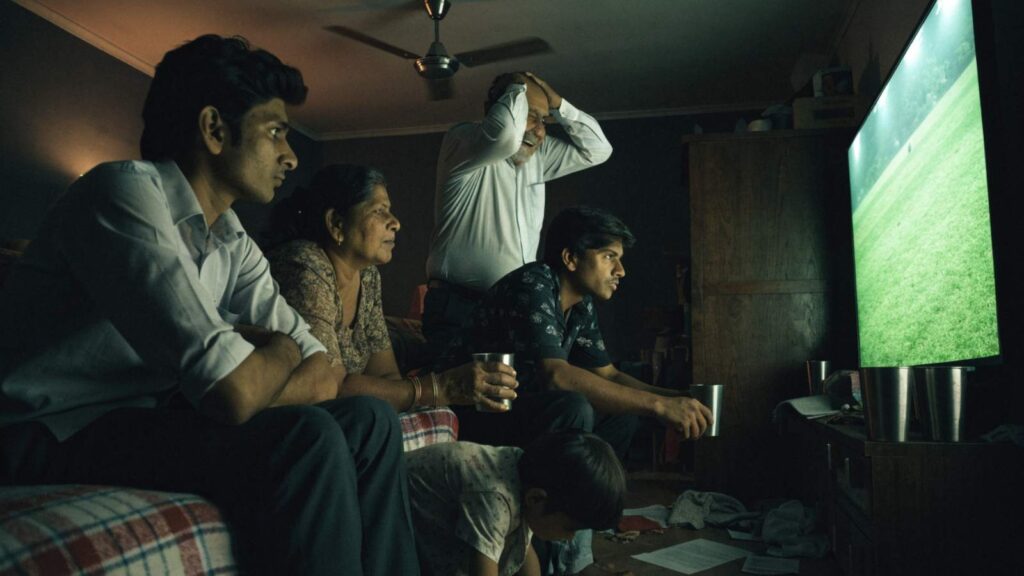
The ICC Men’s T20 World Cup drew 246 million viewers on JioHotstar. IPL 2026 drew 228.4 million.
The biggest Hindi original of the same six months — Made In India: A Titan Story — drew 17.8 million.
The most-watched scripted Hindi show in the country reached about 7 per cent of the audience a cricket tournament reached.
That is not a content problem. That is a gravity problem. Live sport now absorbs the overwhelming majority of Indian streaming attention, and everything scripted competes for what is left over.
If you run a platform and one property delivers 246 million people, the rational allocation of your next rupee is not a nuanced eight-part drama.
The pivot is visible in a single month's slate
Look at what Hindi streaming actually released in August 2026.
Kaun Banega Crorepati season 18. The Traitors season 2. Playground season 5. Two theatrical films arriving post-release. A handful of new scripted titles.
The month is dominated by returning unscripted formats — the cheapest reliable retention product a platform can buy. A returning reality season has a known audience, a known cost and no development risk. A new drama has none of those things and takes over a year to make.
When output falls and reality formats hold their slots, the shows being cut are the new scripted ones.
601 million people, and the television came back
None of this is happening because the audience shrank. It grew.
India’s streaming audience is now 601.2 million people — about 41 per cent of the population — up nearly 10 per cent year on year. Around 143 million households pay for something.
The more interesting shift is where they are watching. Connected TV users went from 69.7 million to 129.2 million in a year, an 85 per cent jump. Weekly active connected-TV connections rose from 30 million to 40 million, at roughly 85 hours a month each.
Streaming in India spent a decade as a phone-shaped medium. It has moved to the living room wall, which is exactly the environment where a three-hour cricket match beats a 40-minute episode.
Advertisers noticed before the audience did: connected-TV ad rates now run two to two-and-a-half times mobile rates.
Money is going up while output goes down
This is the part that surprises people.
Digital subscription revenue in India rose about 60 per cent. Video subscription revenue was up 61 per cent. Advertising revenue for entertainment and sport platforms grew 34 per cent. Another ₹8,500 crore of digital subscription revenue is projected to arrive by 2028.
Revenue up sharply. Originals down two years running.
That is not a business in trouble. That is a business that has worked out it does not need as many shows as it thought — because cricket rights, film libraries and returning formats retain subscribers more cheaply than original drama does.
The platforms are winning. Scripted television is losing. Both are true at once.
What this means if you make things
For an audience, the practical effect is subtle: fewer genuinely new Indian shows each year, more returning seasons, and a discovery problem that feels like oversupply because the interface is crowded even when the pipeline is not.
For anyone making shows, it is blunter. There are fewer commissions than at any point in five years, they are concentrated on fewer platforms, and the successful ones are increasingly formats rather than stories.
Hindi’s share of Indian originals has already slipped from about 65 per cent to 60 per cent, with Telugu gaining — one of the few genuinely healthy signs in the numbers.
The streaming era in India was supposed to be the thing that gave writers a hundred new places to work. Five years in, the count of new places is going down every year, and the one thing guaranteed to reach 246 million people does not need a script at all.
Content-volume and audience figures are from Ormax Media’s OTT reports and StreamView data for January–June 2026; revenue figures are from FICCI-EY. Viewership counts measure viewers watching 30 minutes or more.