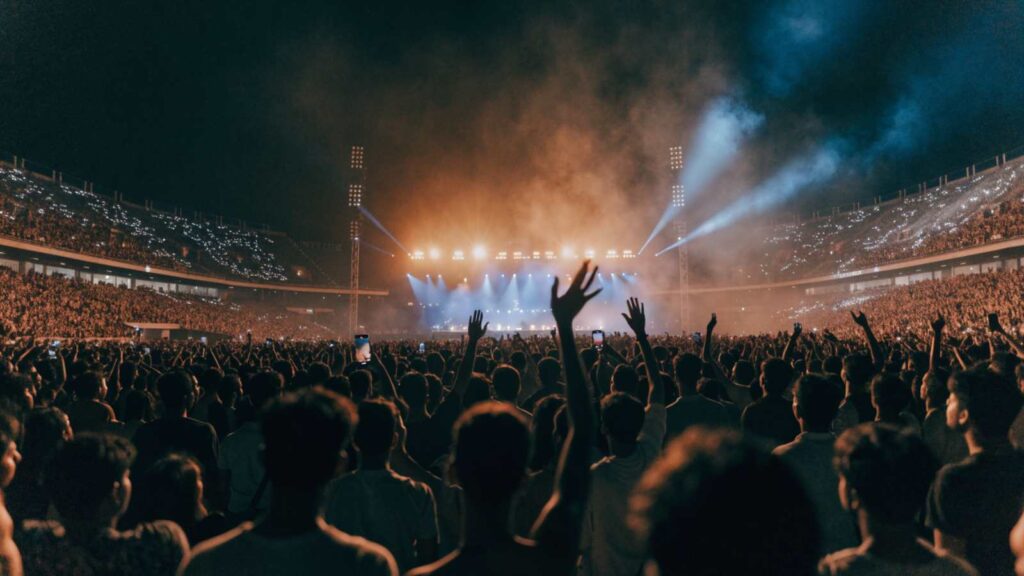
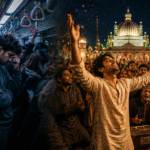
In January 2025, more than 2.2 lakh people walked into the Narendra Modi Stadium in Ahmedabad across two nights to watch a British band play. When the accountants finished, the number attached to those two evenings was ₹641 crore.
Eighteen months on, that is no longer the outlier. It is the template.
India’s organised live events business was worth about ₹12,000 crore in 2024 and is now estimated at roughly ₹13,000 crore, growing at close to 19 per cent a year. In 2025 alone, the country staged around 34,000 shows.
The money has arrived. The buildings have not.
What one night actually does to a city
The EY-Parthenon and BookMyShow Live report on the Ahmedabad shows is worth reading closely, because it breaks the ₹641 crore into pieces you can actually picture.
₹392 crore of it was direct spending inside the city — hotels, travel, restaurants, retail. ₹72 crore went to the government as GST. An estimated 15,000 jobs were created around the event, roughly 9,000 of them in Ahmedabad itself.
Per head, the report put lodging at about ₹12,400, interstate travel at ₹10,800 and food and drink outside the venue at close to ₹2,000. In other words, the ticket was often the smallest line on the bill.
That is the real argument for the concert economy, and it is why four state governments — Assam, Telangana, Gujarat and Delhi — have signed agreements with BookMyShow to pull more of these shows their way. A stadium concert is now understood the way a cricket Test used to be: three days of hotel occupancy, a spike in GST, and a city on television.
India has started travelling for music
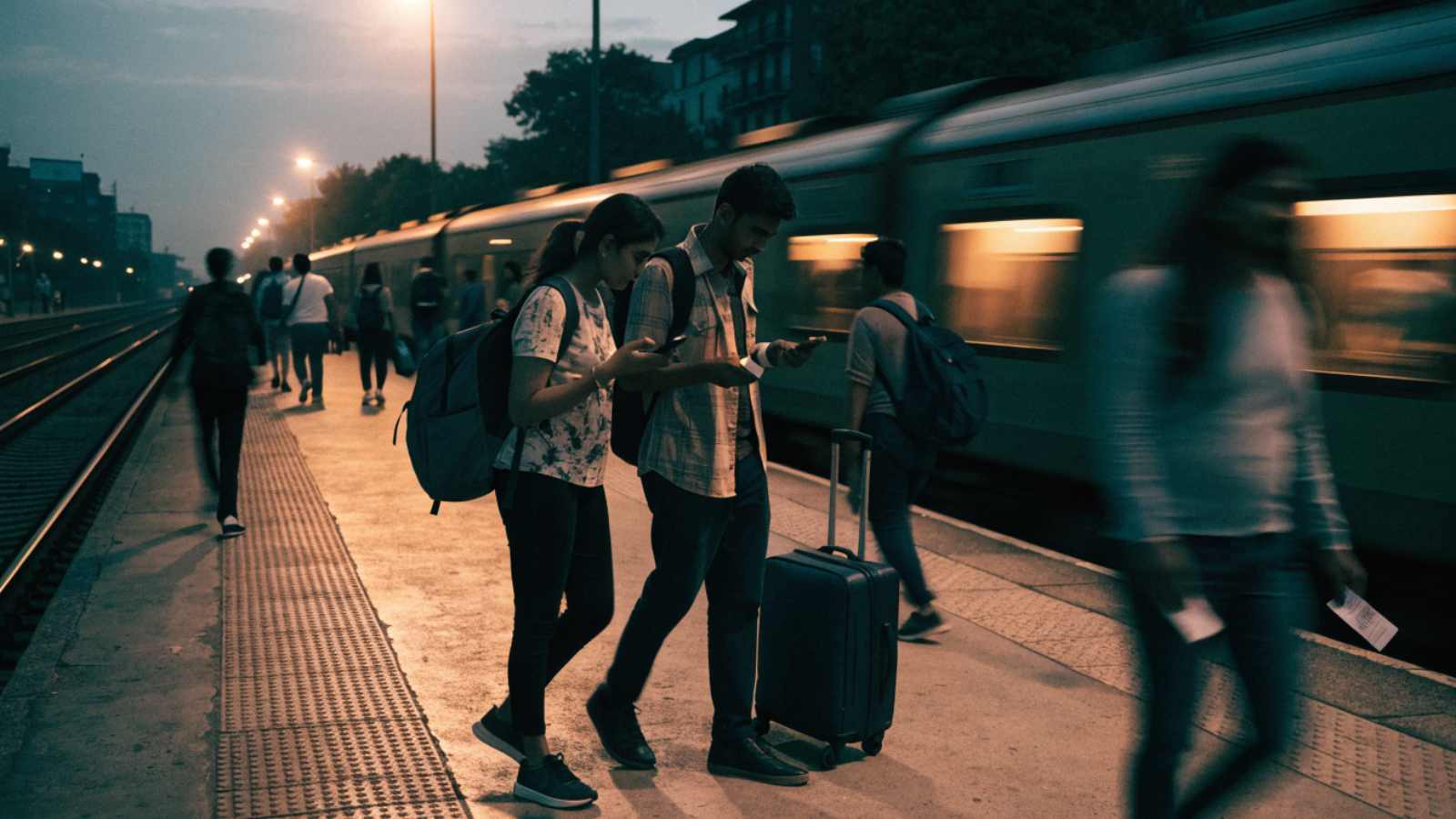
The single most telling number in this whole story is not a rupee figure. It is 5.6 lakh — the number of Indians who, according to BookMyShow’s Throwback 2025 report, crossed from one city to another in a single year purely to attend a live show.
That is not a fan base. That is a migration pattern.
Industry estimates suggest fans will now drive more than 500 kilometres for a strong enough line-up, and will pay up to three times the normal local hotel rate to be there when the lights go down. Around the Ahmedabad shows, hotels reportedly raised tariffs by more than 400 per cent and booking platforms saw activity spike roughly tenfold.
Nobody was doing this for a concert in India ten years ago. Live music was something that happened in your city, or did not happen to you at all.
The stage cannot take the weight
Here is where it gets awkward.
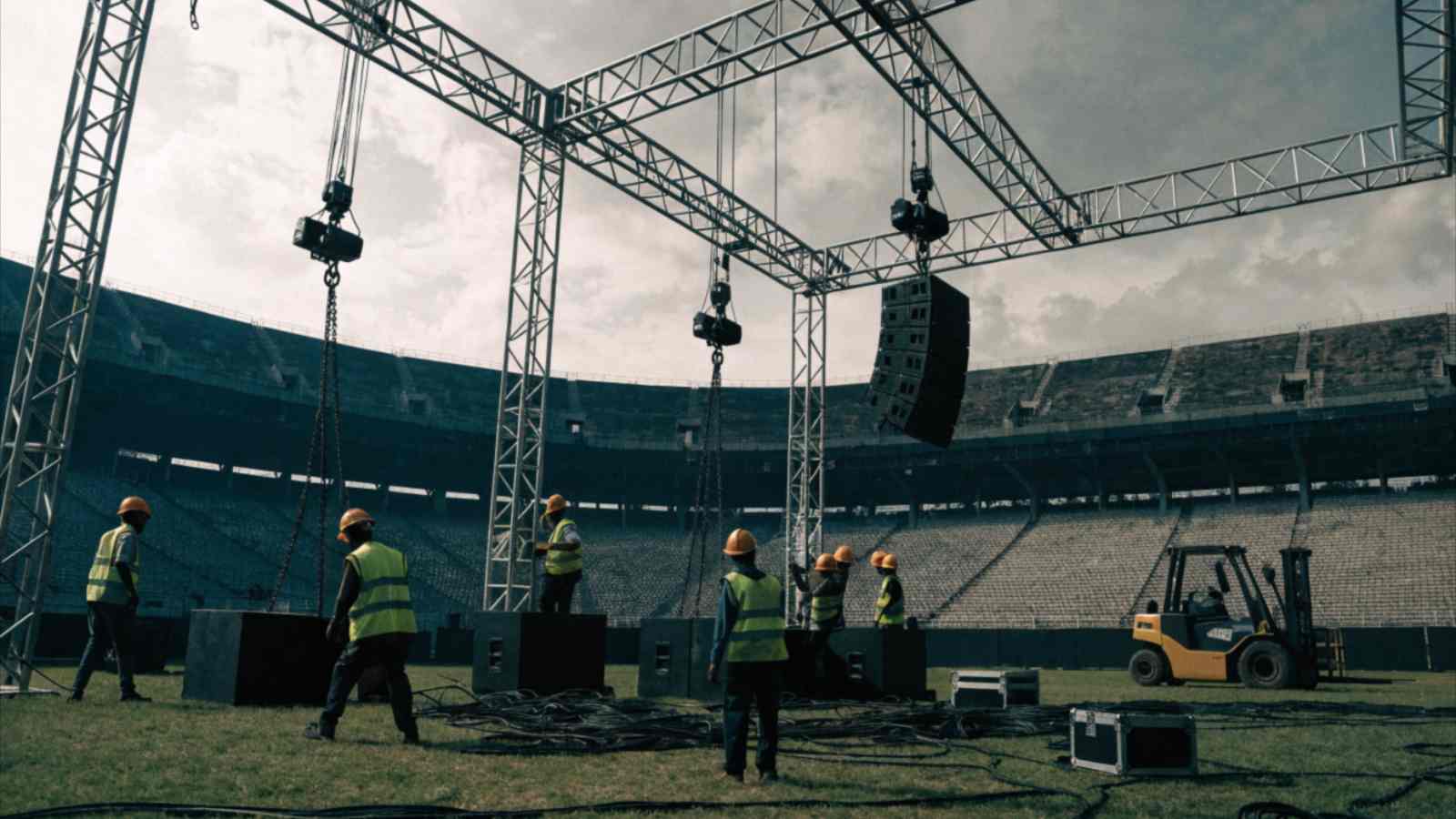
A global stadium tour travels with a rig — lights, screens, sound, staging — that can weigh close to 50 tonnes. According to industry accounts, the typical Indian stage structure has been built to hold about 15 tonnes.
BookMyShow’s VerTech stage, billed as the first 50-tonne-capable structure in the country, exists precisely because that gap was costing India shows. Tours were either arriving with a stripped-down production or not arriving at all.
Venue capacity is the other half of the squeeze. Purpose-built spaces are only now appearing — the District Arena at Terraform in Bengaluru, for instance, spread across 16 acres with a capacity above 17,000. For most of the last decade, “large venue” in India has meant a cricket stadium, a racecourse or an exhibition ground borrowed for the weekend.
Borrowed venues come with borrowed rules. And that is where the industry’s worst months have come from.
The tier-2 story nobody was expecting
The next part of this is the one that will decide whether the boom lasts.
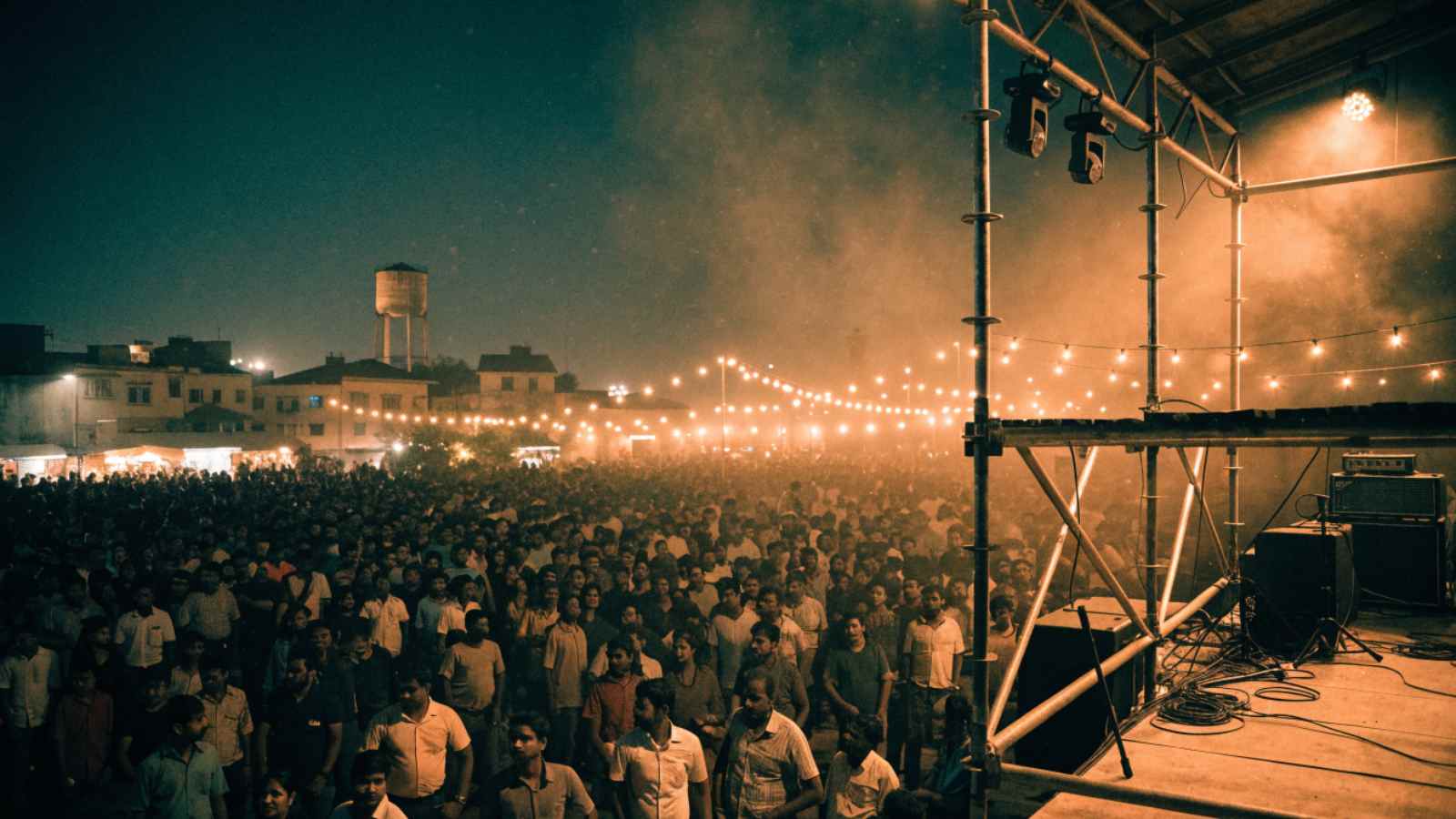
Visakhapatnam, Vadodara, Indore, Shillong and Rajkot all recorded significant increases in live-event participation in 2025. Jaipur, Kochi and Lucknow now host shows at a scale that would have been a Mumbai-or-Delhi proposition five years ago.
This matters more than another stadium show in a metro, because it changes who the audience is.
When a city gets its own stadium-scale concert, the 5.6 lakh people currently buying flights and 400-per-cent hotel rooms stop being the only way to see live music in India.
Ten to fifteen permissions, and no single door
To stage a large live event in Maharashtra, organisers have had to collect somewhere between 10 and 15 separate clearances — fire brigade, police, electricity, taxation, civic body — each with its own timeline and its own idea of what a safe crowd looks like.
The consequences have not been theoretical. Mumbai has seen permits pulled hours before an event was due to begin, and has seen deaths at venues where crowd-control concerns had already been flagged.
On 26 April 2026, the Maharashtra government announced a fix: a 25-member committee, chaired by the Principal Secretary and Director General of Information and Public Relations, to build a single-window clearance system for live events, with an external agency hired to build the digital dashboard behind it. It sits alongside the Centre’s Live Events Development Cell.
It is the right idea. It is also, at the time of writing, still an announcement rather than a working system — which means the 2026 season is being planned under the old regime.
Who is actually buying the tickets
The assumption is that this is a Gen Z phenomenon. It is only half true.
The 18–24 group drives the volume, and drives it toward EDM, hip-hop, Bollywood and international chart music. But it is the 25–34 band that attends most frequently, and that band is the one buying the premium formats — VIP pits, upper-deck packages, hospitality zones. Premium experiences nearly doubled in popularity in 2025.
The fastest-growing segment, meanwhile, is 35–44 — turning up for legacy acts, jazz and classic rock, the reunion-tour audience with disposable income and a babysitter booked.
And Punjabi music does something no other genre in India manages: it fills a room with people aged 20 to 60 at the same time.
The gap that decides the next three years
Every serious projection has this market growing at around 19 per cent a year through 2028. That is not the interesting question.
The interesting question is whether India spends the next three years building the stages, the arenas and the permission systems that a ₹13,000 crore business requires — or whether it keeps running a world-class demand curve on borrowed grounds and a fifteen-tonne rig.
The audience has already done its part. It has proved it will travel 500 kilometres, pay triple for a hotel room and treat a Saturday night in another state as a holiday. The rest of the industry is now the bottleneck.
Figures in this article are drawn from BookMyShow’s Throwback 2025 report, the EY-Parthenon and BookMyShow Live study on the Ahmedabad concerts, and published industry estimates of market size and growth. Economic-impact estimates for individual events are modelled figures, not audited accounts.