
Advertisement

- Updated on November 26, 2026
- IST 4:30 am
Sunscreen in winter still matters in most of India, because winter sun is weaker but far from harmless. A satellite study of four metros found that the daily skin-burning UV dose in winter was still 40 per cent of the pre-monsoon level in Delhi and 72 per cent in Chennai. Here is what the data, the World Health Organization (WHO) and dermatology bodies say about winter sun, smog, snow trips, dry or oily skin and the vitamin D worry.

Do you need sunscreen in winter in India?
The simplest guide is the UV index, a scale developed by WHO with partner agencies. WHO says that at a UV index of 3 or higher there is an increased risk of skin damage and protective measures are recommended. Below 2, it says the risk is limited even for very sensitive skin.
So how low does the Indian winter go? A 2014 study in the journal Advances in Meteorology used satellite data from June 2004 to May 2005 for Chennai, Mumbai, Kolkata and Delhi. It found UV was lowest in December and January in all four cities, mainly because the sun sits lower in the sky in winter. But across the year the UV index ranged from:
- Chennai: 8.1 to 15.33 (“high to extreme”)
- Mumbai and Kolkata: 5 to 16.5
- Delhi: 3 to 15
In other words, even Delhi’s lowest reading in the study sat at WHO’s threshold of 3, and Chennai never dropped below 8. On WHO’s own chart, a UV index of 8 or above means shade, a shirt, sunscreen and a hat “are a must”.
How much weaker is winter sun?
The same study measured the daily “erythemal” UV dose, which is the amount of UV weighted by how strongly it reddens skin. This table compares winter with the pre-monsoon season (March to May), when most people do think about sunscreen.
| City | Winter dose | Pre-monsoon dose | Winter vs pre-monsoon |
|---|---|---|---|
| Chennai | 4.45 | 6.19 | 72% |
| Mumbai | 3.82 | 6.26 | 61% |
| Kolkata | 3.06 | 5.48 | 56% |
| Delhi | 2.04 | 5.11 | 40% |
Doses in kJ per square metre per day, winter 2004–05 and pre-monsoon 2005. Percentages calculated by PBTrendz from the study’s Table 1.
Chennai’s winter sun keeps nearly three-quarters of its pre-monsoon strength. Delhi’s falls sharply, but not to zero.
Does smog block UV rays?
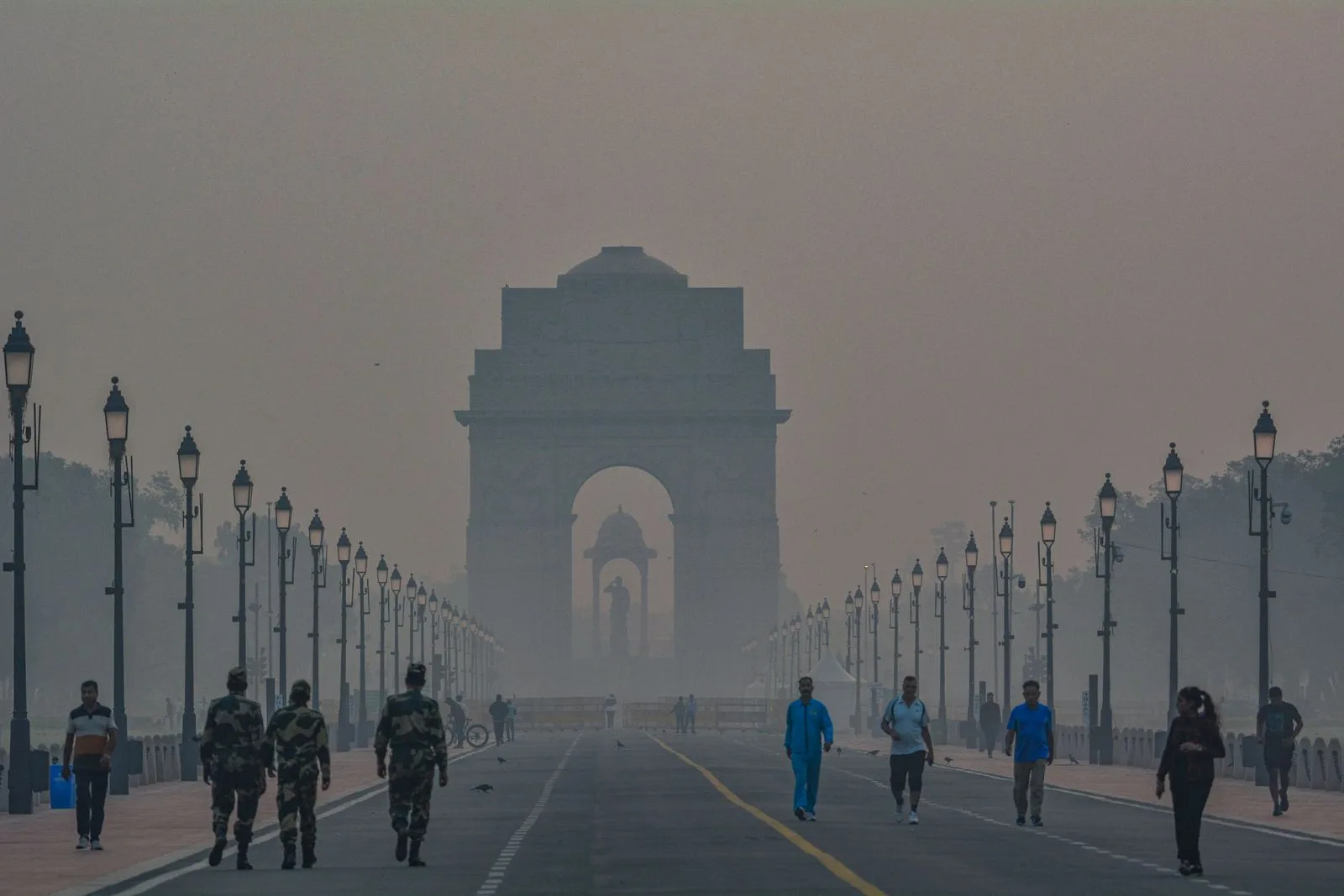
Partly. The same study estimated how much aerosols, the fine particles in haze and smog, cut the UV dose. In winter the cut was about 60 per cent in Delhi, 55.8 per cent in Kolkata, 41 per cent in Mumbai and 30 per cent in Chennai. Across all seasons, the paper says aerosols can reduce incoming UV by 30–60 per cent.
That is part of why Delhi’s winter dose is so low. But a 60 per cent cut is not a shield: the dose in the table above is what still reached the ground. Smog also brings its own skin problems, which we covered in our explainer on Delhi pollution and skin.
Can UV rays pass through clouds and windows?
Yes, for the most part. WHO says cloud cover generally reduces UV, but that “light or thin clouds have little effect and may even enhance UV levels because of scattering”. A grey winter morning is not the same as zero UV.
The Skin Cancer Foundation, a US charity, says UVA rays “remain constant throughout the year”, pass through clouds and fog, and can also pass through glass. That matters because UVA makes up most of what reaches us: an Indian expert consensus on sunscreen use, published in the Journal of Cosmetic Dermatology in September 2025, notes that roughly 95 per cent of UV exposure is UVA.
The same consensus, by a panel of 14 Indian dermatologists called the Indian Sunscreen Forum, adds a point that matters for Indian skin. Visible light, not only UV, can cause pigmentation, and this pigmentation lasts longer in darker skin tones. The panel recommends tinted or broad-spectrum sunscreens for people exposed to blue light from screens.

Why is the sun stronger in the hills and on snow?
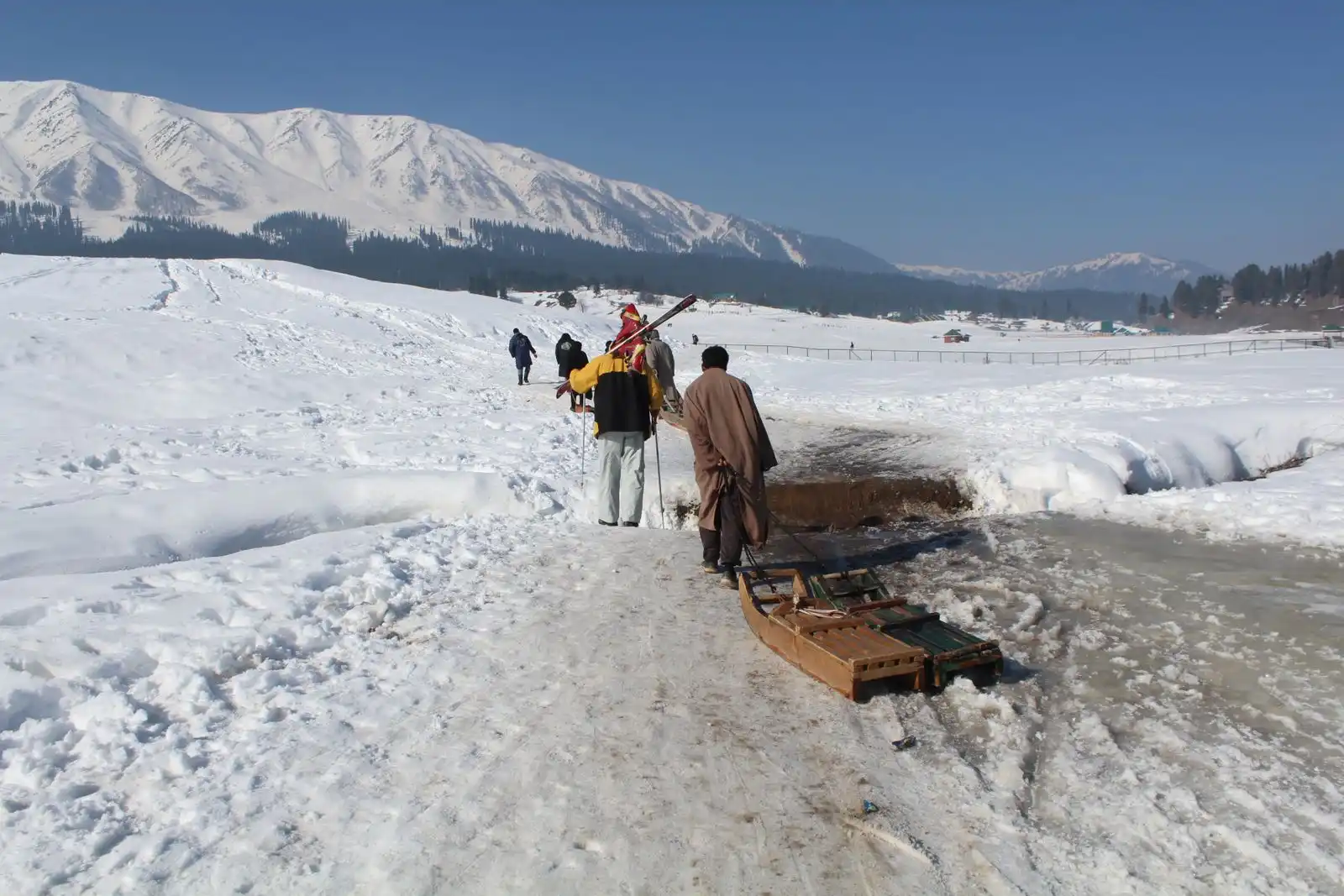
Winter is snow-trip season in Kashmir, Himachal Pradesh and Uttarakhand. Two things raise UV there:
- Altitude: WHO says UV levels rise by about 10 per cent with every 1,000 metres. A hill town 2,000 metres up gets roughly 20 per cent more UV than at sea level, by that rule.
- Snow: WHO says snow can reflect as much as 80 per cent of UV, and fresh snow “almost doubles” a person’s exposure. Australia’s Bureau of Meteorology puts the rise at around 90 per cent for fresh snow and 50 per cent for old snow.
Because UV bounces up from the snow, it reaches places people often miss. The American Academy of Dermatology (AAD) lists the ears, nose, lips, back of the neck and tops of the hands as spots not to overlook.
Which sunscreen suits dry or oily skin in winter?
Winter air dries skin. The Indian Sunscreen Forum consensus matches the texture to the skin type, not the brand:
- Dry skin: “emollient-rich cream-based sunscreens” with humectants, which hold water in the skin.
- Oily or acne-prone skin: non-comedogenic, oil-free gels, water-based lotions or silicone “dry-touch” formulas.
- Combination skin: mid-weight gel-creams or oil-free lotions.
- Sensitive skin: a patch test, or mineral filters (zinc oxide, titanium dioxide) without fragrance.
If dryness is the main winter problem, our piece on slugging skincare explains what the evidence says about sealing in moisture.
Should you use SPF 30 or SPF 50 in winter?
The AAD recommends a broad-spectrum sunscreen of SPF 30 or higher in winter too. In practice, the amount people apply often matters more than the number on the label. The Indian consensus notes that SPF is tested at 2 mg per square centimetre of skin, while most people apply only 0.5 to 1.5 mg, which gives less protection than the label suggests. It puts the face-and-neck amount at about one to two teaspoons.
On reapplying, advice differs. The AAD says at least every two hours, or after swimming or sweating. The Indian panel says that if the full amount is applied, reapplying within eight hours is not needed unless the sunscreen is rubbed, sweated or washed off, and that the common two-to-three-hour advice exists mainly to make up for people applying too little. SPF testing in India has its own problems, as our report on SPF tests showed.
Does sunscreen stop your body making vitamin D?
A 2019 review in the British Journal of Dermatology, by an international panel of 13 experts, concluded that sunscreen used for daily and recreational protection “does not compromise vitamin D synthesis, even when applied under optimal conditions”. The review flagged one exception: people with light-sensitivity disorders who need very strict sun protection, for whom it suggested vitamin D screening.
Do exfoliating acids make skin more sensitive to the sun?
Yes, according to studies reviewed by the US Food and Drug Administration (FDA). After four weeks of using a cream with alpha hydroxy acids (AHAs, such as glycolic acid), volunteers’ sensitivity to UV reddening rose by 18 per cent, and sensitivity to UV-induced cell damage doubled on average. The effect wore off within a week of stopping.
What the evidence says
| Claim | What studies show | Source |
|---|---|---|
| There is no UV in winter | Winter dose was 40% (Delhi) to 72% (Chennai) of pre-monsoon | Advances in Meteorology, 2014 |
| Smog blocks UV | Cut Delhi’s winter dose by about 60%, not 100% | Same study |
| Clouds block UV | Thin clouds have little effect and can raise UV | WHO |
| Cold snow is safe | Snow reflects up to 80% of UV | WHO |
| Sunscreen causes low vitamin D | Daily use does not compromise vitamin D synthesis | Br J Dermatol, 2019 |
| Exfoliating acids are harmless in sun | 18% more UV reddening after 4 weeks of AHAs | US FDA |
Key numbers
- 3: UV index at which WHO recommends protection; Delhi’s lowest reading in the study
- 40% and 72%: winter UV dose as a share of pre-monsoon, Delhi and Chennai
- About 60%: share of Delhi’s winter UV cut by haze and smog
- 10%: rise in UV for every 1,000 metres of altitude
- Up to 80%: share of UV that snow can reflect
What to watch
- The UV index in weather apps. WHO’s threshold of 3 is a simple check.
- Snow and hill trips. Altitude and snow together can push UV well above what the plains get.
- Newer Indian data. The city figures here are from 2004–05 satellite readings. The sun’s angle, the main driver, has not changed, but fresh city studies would help.
FAQ
Is sunscreen necessary in winter in India?
WHO recommends protection when the UV index is 3 or more. A satellite study found Indian metros at or above that level even in December and January.
Should I use SPF 30 or 50 in winter?
The AAD recommends SPF 30 or higher year-round. Applying enough matters as much: most people use less than the amount SPF is tested at.
Do I need sunscreen indoors in winter?
The Skin Cancer Foundation says UVA can pass through window glass. The Indian Sunscreen Forum also notes that visible light can darken pigmentation in darker skin.
Can sunscreen cause vitamin D deficiency?
A 2019 expert review found daily sunscreen use does not compromise vitamin D synthesis in healthy people.
This article explains published research and guidance. It is not medical advice; for a skin condition, see a dermatologist.
Sources
- Advances in Meteorology: Aerosol Modulation of Ultraviolet Radiation Dose over Four Metro Cities in India (Panicker) (2014-01-02)
- WHO: Radiation: The ultraviolet (UV) index (2022-06-21)
- WHO: Radiation: Ultraviolet (UV) radiation (2016-03-09)
- Journal of Cosmetic Dermatology: Practical Recommendations for Indians on Sunscreen Use, Indian Sunscreen Forum consensus (PRISM-ISF) (2025-09-16)
- British Journal of Dermatology: Sunscreen photoprotection and vitamin D status (2019-07-15)
- American Academy of Dermatology: Why you need sun protection in the winter (2021-05-25)
- Skin Cancer Foundation: Winter Sun Safety (2022-04-29)
- Bureau of Meteorology (Australia): Factors affecting UV exposure (2026-03-19)
- US FDA: Alpha Hydroxy Acids (2022-11-22)
You May Like This



Advertisement


You May Like This








Advertisement


Advertisement


Advertisement