

Advertisement

- Updated on May 12, 2026
- IST 9:31 am
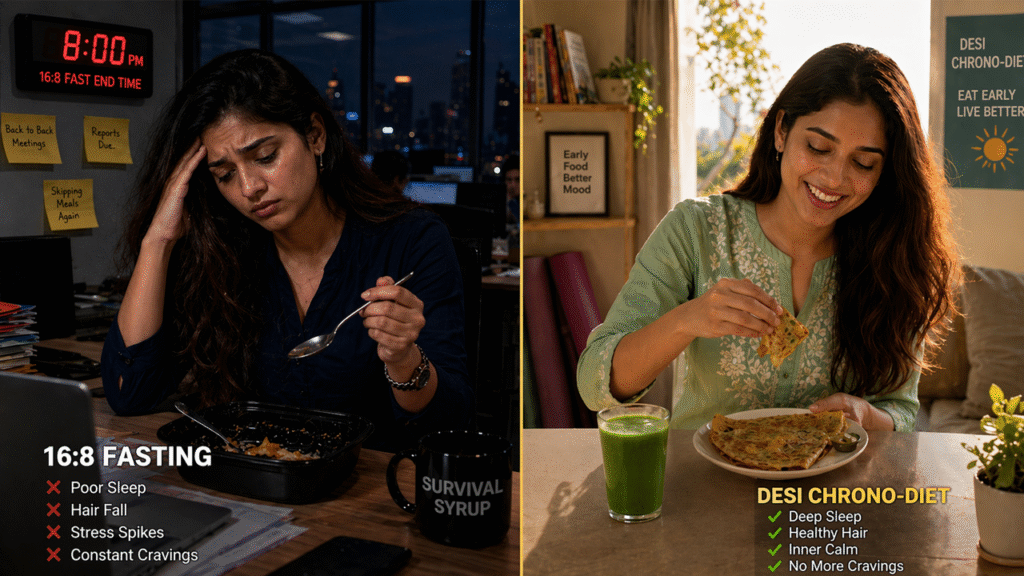
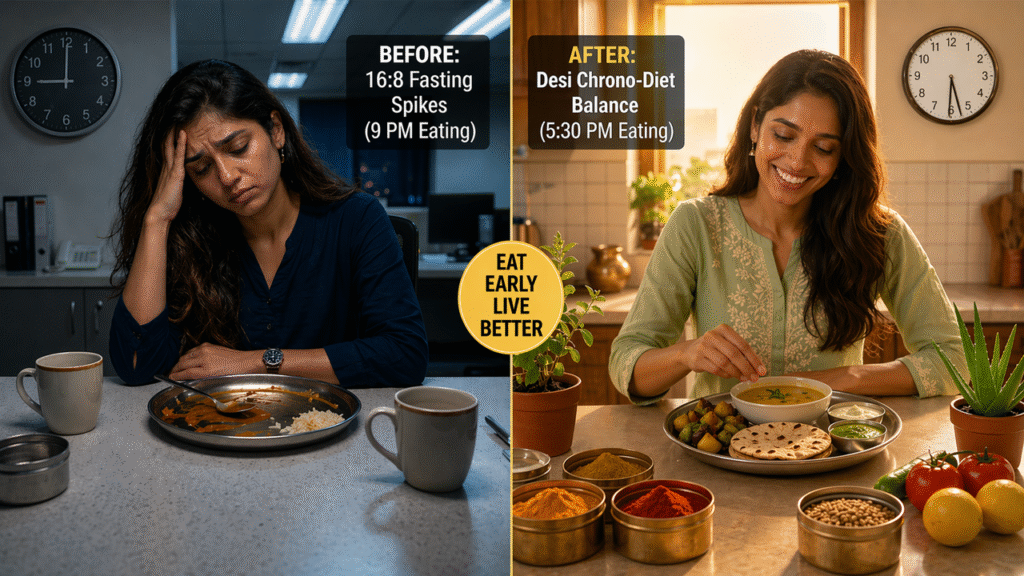
Imagine this: Sneha, a 28-year-old IT professional from Bengaluru, had heard the hype. Her colleague dropped 7 kilos in a month on the 16:8 intermittent fasting rule—eating only between noon and 8 pm, skipping breakfast like a pro. “Lose weight, reset your metabolism!” the reels promised. Sneha, juggling back-to-back meetings, late client calls, and Mumbai-style traffic on her scooter, jumped in. At first, the scale moved. But soon her hair started falling in clumps, her periods went AWOL for two months straight, and she felt wired yet exhausted, snapping at her family over nothing. “This fasting is wrecking my hormones—what no one tells you about 16:8 in India,” she confided to her WhatsApp group, defeated.
Now picture Ritu, 31, a teacher from Lucknow. She tried the same 16:8 but quickly realized her body wasn’t buying the Western script. Instead, she switched to a culturally tuned approach—aligning her eating window with India’s natural light cycle, shorter fasts on busy days, and desi ingredients that actually soothed her system. Six months later? Steady cycles, thicker hair, calmer mind, and sustainable weight loss without the crash. “It’s like my body finally synced with my life, not against it,” she shares.
So, what’s the truth? That 16:8 fast that changed your friend’s life? It’s slowly wrecking YOUR hormones—here’s why. With India’s unique mix of high-stress lifestyles, carb-loving diets, erratic sleep, and genetic tendencies toward insulin resistance, the one-size-fits-all Western protocol often backfires. In this blog, we’ll unpack the hidden risks of blind 16:8 for Indian bodies, dive into new insights from Indian nutritionists, introduce the game-changing ‘Desi Chrono-Diet’ as Intermittent Fasting 2.0, and share practical, research-backed tips rooted in our kitchens and culture. Let’s separate the hype from what actually works for desi hormonal health.
Understanding Intermittent Fasting: The Western Import That Promised the World
Intermittent fasting isn’t new to us Indians. Our grandmothers practiced upvaas during Navratri or Karva Chauth—mindful pauses that respected the body’s rhythms. But the modern 16:8 version? It’s a sleek import: fast for 16 hours, eat in an 8-hour window, often noon to 8 pm. The pitch sounds irresistible—burn fat, improve insulin sensitivity, reduce inflammation, all without counting every calorie.
Popular methods include:
- 16:8: The star of the show—fast 16 hours, eat in 8.
- 14:10: A gentler entry, popular for beginners juggling office and home.
- 5:2: Eat normally five days, restrict to 500-600 calories on two.
Globally, studies show promise: better blood sugar control, weight loss, and even longevity perks. But here’s where the plot twists for Indian bodies. Our circadian clocks—tuned to early mornings, spicy home-cooked meals, and late-night family dinners—don’t always play nice with rigid Western timing. Late eating windows clash with our natural melatonin rise, while high-stress jobs spike cortisol even before the fast begins. Recent 2025-2026 research from Indian nutrition labs highlights how desi metabolism, influenced by genetics and lifestyle, responds differently to prolonged fasting windows.
Why the 16:8 Rule Is Clashing With Indian Hormonal Health
Think of your hormones as a delicate orchestra. Insulin conducts the energy, cortisol handles the stress solo, thyroid keeps the metabolism humming, and reproductive hormones (estrogen, progesterone, testosterone) dance to the beat. For many Indians, especially women aged 15-45 dealing with PCOS-like tendencies or thyroid whispers, 16:8 can throw the whole symphony off-key.
New research from Indian nutritionists reveals a pattern: while early time-restricted eating (finishing meals by early evening) often helps, the classic noon-8 pm 16:8—common in urban India—frequently spikes cortisol. Why? Our days start with chai at 7 am, but fasting delays fuel, forcing the body into survival mode. Cortisol rises to keep blood sugar stable, but chronic elevation leads to hair thinning, stubborn belly fat, anxiety, and disrupted periods. Add India’s realities—pollution, late dinners, sugary chai breaks—and the stress compounds.
Women notice it first: irregular cycles, acne flare-ups, or sudden fatigue. Men aren’t immune—lower energy, mood dips, and even subtle testosterone shifts. Studies on Asian Indian adults show IF can aid weight loss, but without cultural tweaks, it risks nutrient gaps in our traditionally carb-heavy plates (rotis, rice, sweets). The result? Metabolic confusion instead of reset.
The Big Debate: Global Wins vs. Desi Realities
Experts and real users don’t agree—and that’s okay. Let’s break it down fairly.
The Pros: Where IF Shines
- Weight Management: Cuts calories naturally, improving insulin sensitivity—a boon for India’s diabetes-prone population.
- Inflammation Control: Some markers drop, easing joint aches or skin issues common in humid desi climates.
- Metabolic Boost: Early-window versions align with circadian rhythms, potentially stabilizing energy.
Ritu’s story fits here: her adapted protocol helped shed inches without the drama.
The Cons: The Hidden Toll on Indian Bodies
- Cortisol Chaos: Late fasting windows clash with our early-rising sun and high-pressure lives, elevating stress hormones and sabotaging thyroid or reproductive balance.
- Hormonal Ripple Effects: Research flags risks of period irregularities, hair loss from telogen effluvium, and even temporary thyroid dips in susceptible women.
- Lifestyle Mismatch: Skipping breakfast while rushing for metro or school drop-off? It amplifies fatigue in our non-stop culture. Nutrient shortfalls (magnesium, healthy fats) hit harder when meals are crammed into evenings heavy with rice and oil.
Sneha learned this the hard way—her 16:8 felt empowering until her body pushed back. Indian studies on diurnal fasting (like Ramadan adaptations) show ghrelin shifts and variable cortisol, proving timing and context matter hugely.
Critically, not everyone suffers. Lean, low-stress individuals or those with strong routines often thrive. But for the average 15-45 desi juggling work, family, and traffic? The data leans toward caution without personalization.
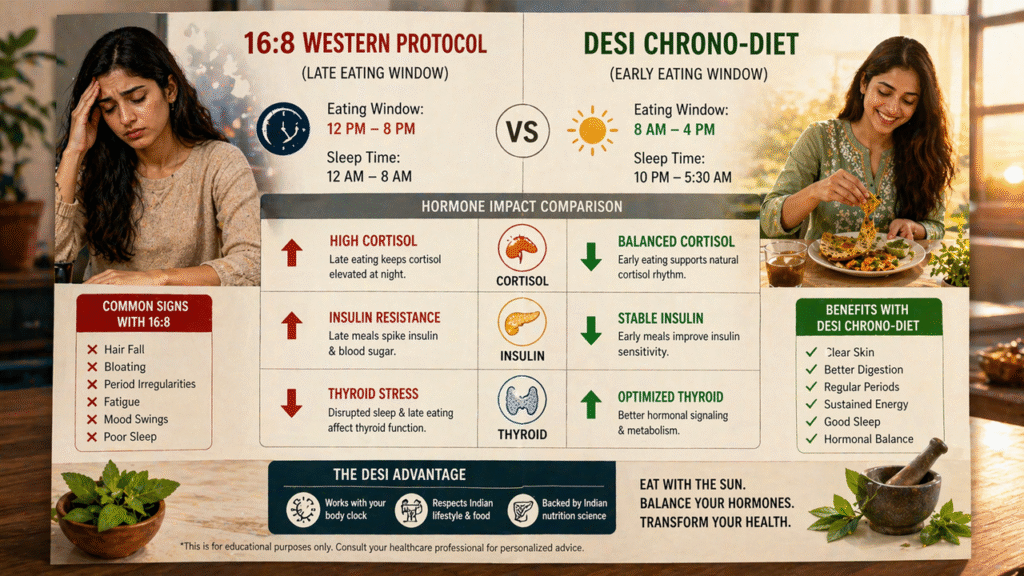
The Indian Twist: Introducing Desi Chrono-Diet – Intermittent Fasting 2.0
Fasting meets our ancient wisdom here. Chrononutrition—eating in sync with body clocks—isn’t rocket science for Indians. Our traditions already honor light and seasons. The Desi Chrono-Diet tweaks 16:8 into something sustainable:
- Prioritize earlier windows (10 am–6 pm or 8 am–4 pm) to match daylight and allow digestion before sleep.
- Shorter flexible fasts on hectic days, inspired by upvaas.
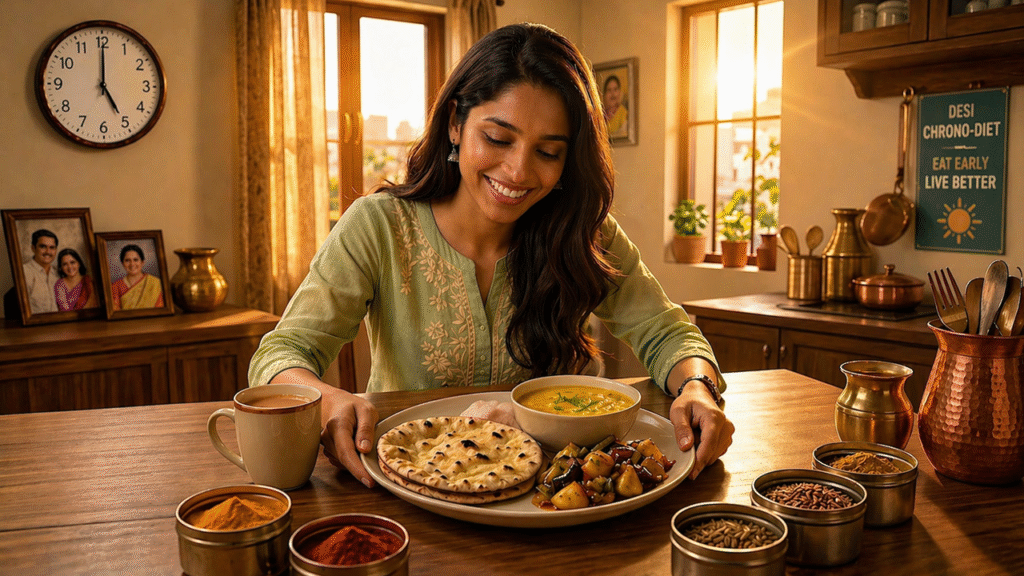
- Desi superfoods: ginger water for hydration, tulsi tea to calm cortisol, balanced thalis with protein and fiber.
This isn’t restriction—it’s rhythm. 2026 Indian research emphasizes that aligning with our erratic-but-improvable eating patterns (as one camera-phone study noted) yields better hormonal harmony than rigid imports.
Real Stories: Fan Voices and Industry Echoes
Let’s hear from the trenches.
- Meera, 24, Delhi: 16:8 caused her thyroid numbers to dip and periods to vanish. Switching to Desi Chrono (10 am–6 pm with moong dal focus) restored balance in 10 weeks. “It felt like listening to my body, not fighting it.”
- Arjun, 35, Hyderabad: As a sales guy with irregular hours, standard IF tanked his energy. Early chrono eating with curd and sabzi kept him sharp without the crash.
- Priya, 29, Chennai: PCOS warrior who saw acne and weight plateau on late 16:8. Her nutritionist-guided Desi version, paired with evening walks, brought steady cycles and glow.
These aren’t outliers. Thousands of urban Indians are quietly shifting to chrono versions and seeing results.
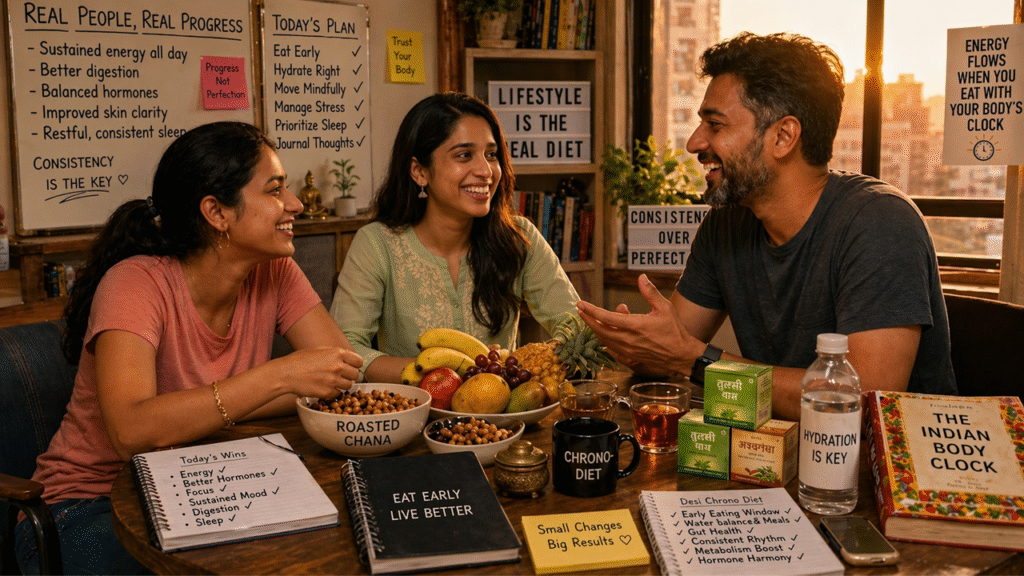
Safe Intermittent Fasting 2.0 for Indian Hormonal Health: Tips to Get It Right
Ready to upgrade? Here’s how to practice without the pitfalls:
- Ease In Gently: Start with 12-14 hours, not 16. Listen—your body signals first.
- Align With Light: Finish eating by 6-7 pm max for most. Early dinner mimics natural desi rhythms.
- Hydrate Desi-Style: Water, jeera water, or herbal teas during fasts. Avoid black coffee overloads that spike cortisol further.
- Track Symptoms: Note energy, mood, cycles, hair. Apps or a simple journal work wonders.
- Consult Pros: See a doctor or nutritionist—especially with PCOS, thyroid, or irregular periods. Bloodwork before and after is gold.
- Stress Less: Pair with yoga or evening walks. High cortisol from life + fasting? Double trouble.
- Balance Meals: No junk binges. Focus on protein, fiber, good fats to stabilize blood sugar.
Desi Diet Hacks: Chrono-Friendly Meals That Actually Work
What you eat in your window seals the deal. Here’s a sample Desi Chrono plan (10 am–6 pm window):
- Breaking Fast (10-11 am): Moong dal cheela with mint chutney or oats with almonds and seeds—gentle on insulin.
- Lunch (1-2 pm): Brown rice or millet roti with dal, seasonal sabzi, and curd. Balanced plate, desi soul.
- Snack (4 pm): Roasted chana, fruit with handful nuts, or Greek yogurt with jeera.
- Early Dinner (before 6 pm): Light khichdi, grilled paneer or fish, salad or soup.
Steer clear of late sugary chai, fried snacks, or heavy rotis at night. Nourish with spices—turmeric for inflammation, cinnamon for blood sugar. Variations for vegetarians, South Indian palates, or North Indian preferences keep it real.
Wrapping It Up: To Gamble or Not? The Choice That Redefines Us
Intermittent Fasting 2.0 isn’t about ditching the trend—it’s about Indianizing it. The classic 16:8 rule can disrupt hormones for many desis due to cortisol spikes, lifestyle clashes, and timing mismatches. But the Desi Chrono-Diet flips the script: sustainable, culturally smart, and backed by emerging research on chrono-nutrition for our unique bodies.
If standard IF tempts you, pause and personalize. Start small, honor your rhythms, and lean on experts. Your hormones aren’t broken—they just need the right desi beat. What’s your experience with fasting in India? Tried 16:8 and felt the crash? Share your story or Desi Chrono tweaks in the comments below—let’s build a community of smarter, hormone-happy Indians. Tag a friend struggling with energy or cycles and pass this on. Your body (and future self) will thank you!
You May Like This
1



Advertisement

You May Like This







Advertisement
Advertisement
Advertisement