

Advertisement

- Updated on May 11, 2026
- IST 2:37 am
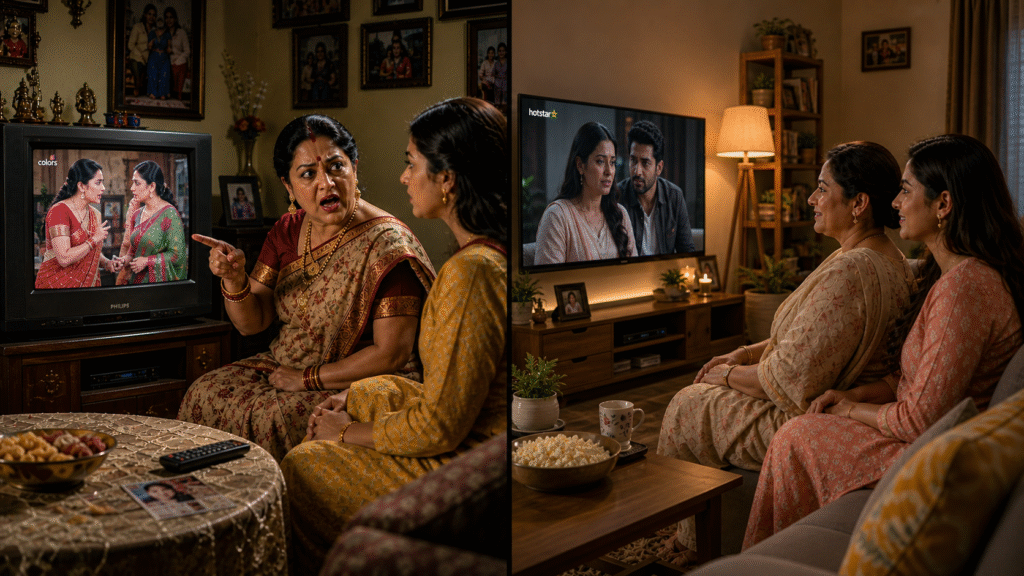
Imagine this: Ritu, a 42-year-old schoolteacher from Delhi, grew up rushing home every evening to catch the latest twists in Kyunki Saas Bhi Kabhi Bahu Thi or Kahaani Ghar Ghar Kii. The scheming saas, the ever-suffering bahu in her perfect saree, the joint-family kitchen wars—it was appointment viewing that brought her entire family together around the TV. “Those shows felt like our life, just louder,” she laughs, reminiscing about late-night discussions with her mother-in-law. But fast-forward to today, and Ritu finds herself switching off midway through reruns. The endless loops, the over-the-top melodrama, the same old patriarchal lectures dressed as “family values”—it all feels stuck in time, leaving her craving stories that actually mirror the messy, evolving Indian households she sees around her.
Now, picture Anika, 28, a marketing executive in Bengaluru. She never touched those “saas-bahu serials” growing up, calling them “outdated soap operas for aunties.” One lazy weekend, a colleague insisted she try an OTT show, and she got pulled into a world of raw family conflicts, quiet rebellions, and characters who felt like her cousins or neighbours. Six months later, she’s binge-watching with her flatmates, pausing to discuss everything from generational guilt to consent in marriage. “These stories don’t just entertain—they make me think about my own family,” she says, eyes lighting up. For her, the family drama is back, but it finally feels honest.
So, what’s the truth? Is the classic ‘saas-bahu’ formula dead, or is OTT breathing fresh life into it with a bold, unflinching modern twist? Streaming platforms are successfully reviving the beloved Indian family drama, but with edgy storytelling that speaks directly to young adults navigating patriarchy, consent, mental health, and changing gender roles. In this blog, we’ll unpack the legacy, the reinvention, the risks and rewards, real-life viewer experiences from across India, and practical tips for enjoying these shows without the old guilt. Plus, we’ll share desi recommendations rooted in our everyday family realities. Let’s settle in and explore how the saas-bahu is evolving—together.
Understanding the Saas-Bahu Legacy: The Formula That Defined Generations
First, let’s get the basics down. The classic saas-bahu serial wasn’t just entertainment—it was a cultural mirror (and sometimes a distorting one). From the late 90s through the 2010s, shows like Kyunki Saas Bhi Kabhi Bahu Thi, Kahaani Ghar Ghar Kii, and Yeh Rishta Kya Kehlata Hai dominated prime-time TV. Think affluent joint families, dramatic confrontations in living rooms, virtuous bahus sacrificing everything, scheming saases guarding “family honour,” and moral sermons delivered with thundering background music. These serials affected 1 in 3 Indian households at their peak, turning living rooms into shared emotional theatres.
At their heart, they tapped into very real Indian realities: the pressure of arranged marriages, the weight of patriarchy, the delicate balance of duty versus desire, and the quiet power struggles within extended families. They offered escapism wrapped in familiarity—relatable rituals like karva chauth or diwali preparations—but often amplified stereotypes, with women reduced to either angels or villains. Beyond the drama, these shows shaped societal conversations, reinforcing (or occasionally challenging) ideas about what a “good” Indian family looks like. For many older viewers like Ritu, they provided comfort and connection in a changing world. But as nuclear families grew, women entered the workforce in record numbers, and social media amplified diverse voices, the old formula began to feel repetitive and out of touch.
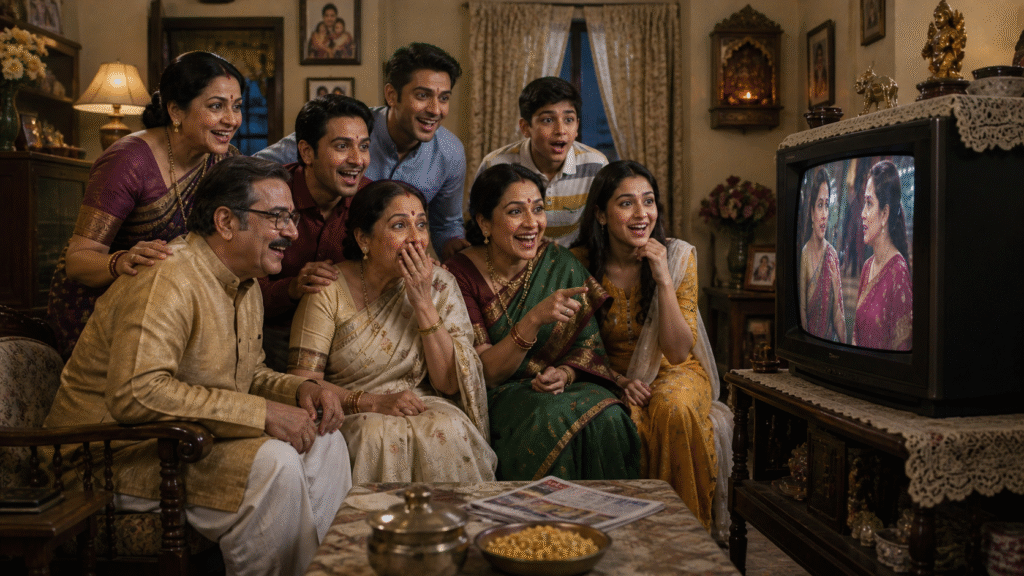
OTT Family Dramas Explained: From Daily Soaps to Nuanced Binge-Worthy Stories
Unlike traditional TV’s daily 20-30 minute episodes designed for endless cliffhangers and ad breaks, OTT family dramas are built differently. They come in complete seasons with higher production values, realistic dialogue, layered characters, and the freedom to explore grey areas without censorship constraints. No more five-year pregnancies or sudden memory loss tropes—instead, you get thoughtful arcs that unfold over 8-10 episodes, shot in authentic middle-class homes, with scripts that feel like conversations happening in your own drawing room.
Popular formats include slice-of-life gems like Gullak (the Mishra family’s everyday struggles and warmth on SonyLIV) and Yeh Meri Family (nostalgic yet fresh 90s vibes on Prime Video). Then there are edgier takes like Saas Bahu Aur Flamingo (a crime-infused family saga with strong female leads) and hard-hitting dramas like Chiraiya on JioHotstar, which fearlessly tackles marital consent and internalized patriarchy. Even reboots like Kyunki Saas Bhi Kabhi Bahu Thi 2 (2025, streaming on JioHotstar alongside Star Plus) promise a modern sensibility while nodding to nostalgia. The pitch? Family drama that respects your intelligence—stories that evolve with you instead of trapping you in endless loops.
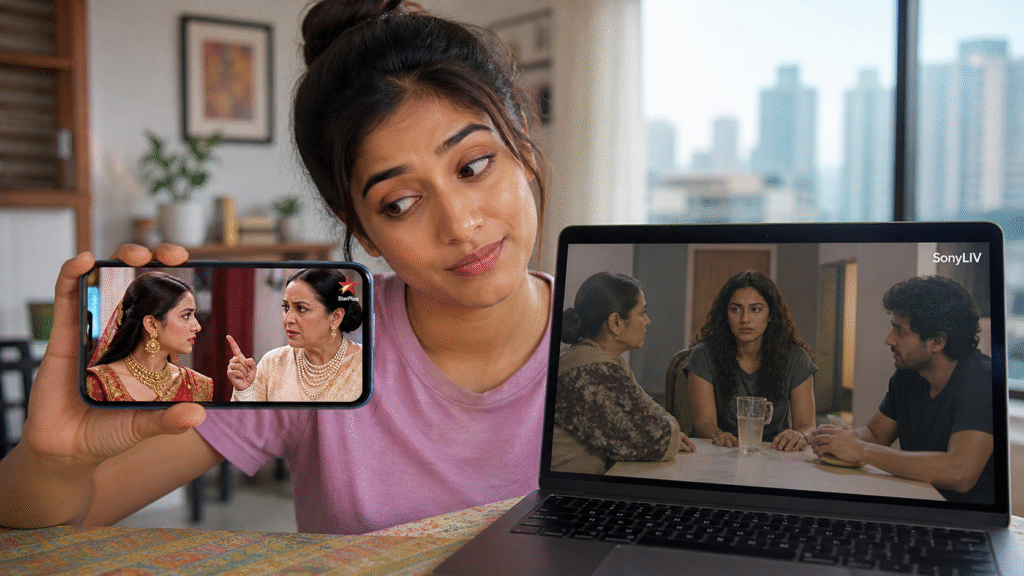
The Big Debate: Revival or True Reinvention?
Here’s where it gets juicy—viewers, critics, and creators are divided. OTT isn’t just airing old-style serials; it’s reshaping the entire genre.
The Pros: Why OTT Family Dramas Are Winning a New Generation
- Depth and Realism: Gone are the cartoonish villains. Characters now show vulnerability, growth, and contradictions. Chiraiya bravely confronts marital rape and the myth that marriage equals automatic consent, sparking nationwide conversations on patriarchy in a way TV serials never could.
- Sensitive Handling of Tough Themes: OTT allows nuanced exploration of consent, mental health, domestic power dynamics, and women’s agency without TRP-driven exaggeration. Young viewers finally see their lived experiences reflected—working mothers juggling careers and expectations, men grappling with toxic masculinity.
- Relatability for Today’s India: Stories focus on nuclear families, inter-generational clashes in urban settings, financial pressures, and evolving gender roles. Shows like Panchayat or Gullak capture middle-class aspirations with humour and heart, making them binge-worthy for 15-45-year-olds.
- Creative Freedom and Quality: Better writing, diverse casting, and cinematic visuals keep audiences hooked without daily repetition.
Take Anika’s experience: “Chiraiya didn’t preach—it showed the silence, the denial, the slow awakening. I discussed it with my mother for hours.”
The Cons: Where the Reinvention Might Miss the Mark
- Too Intense for Casual Family Viewing: The raw honesty can feel heavy. What used to be light evening entertainment now sometimes demands emotional labour, making it tricky for multi-generational households.
- Risk of New Stereotypes: While better than old tropes, some shows still lean on urban-elite lenses or sensationalism to stand out, potentially alienating smaller-town audiences.
- Binge Culture Fatigue: Easy access leads to marathon sessions that can blur boundaries between entertainment and escapism, affecting real family conversations.
- Nostalgia vs. Progress Tension: Reboots like Kyunki 2 walk a tightrope—too modern and they lose older fans; too traditional and younger ones tune out.
Ritu admits, “I love the realism, but sometimes I miss the simple emotional release of the old shows.”
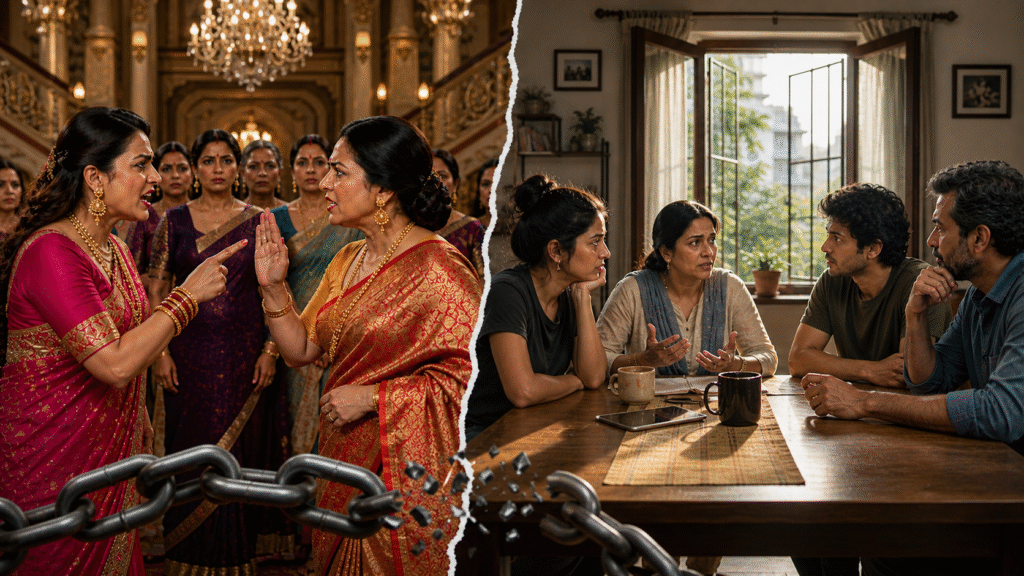
The Indian Twist: Family Dramas Meet Today’s Realities
Family storytelling isn’t new to us Indians—it’s woven into our culture through epics like the Mahabharata, joint-family rituals, and those marathon wedding functions. Traditional TV serials captured the joint-family ideal; OTT reflects the shift to nuclear setups, working couples, and digital-age pressures. Karva Chauth is now shown alongside career ambitions. Patriarchy isn’t just villainized—it’s examined from within, with characters (both men and women) unlearning old patterns.
Regional flavours thrive too: Tamil or Telugu family sagas on OTT mix local customs with universal emotions. The desi twist? These shows feel like family WhatsApp group chats—messy, loving, argumentative, and deeply personal.
Real Stories: Triumphs and Tumbles
Let’s hear from the viewers living it.
- Meena, 35, Chennai: “I grew up hating saas-bahu serials for their regressive messages. Then Chiraiya changed everything—it showed consent as non-negotiable even in marriage. My husband and I watched together and had the most honest talk we’ve ever had about our relationship.”
- Rahul, 31, Lucknow: A father of two, he dismissed OTT as “too serious.” But Gullak became family viewing. “It’s funny and real—no villains, just ordinary people trying their best. My kids now understand why I work late without resenting it.”
- Simran, 24, Jaipur: “I tried the Kyunki reboot for nostalgia but switched to modern shows. The old formula felt suffocating now. OTT versions respect my intelligence and show women with careers and choices.”
These stories prove one thing: the family drama isn’t dying—it’s growing up. Success depends on how honestly it reflects our changing homes.
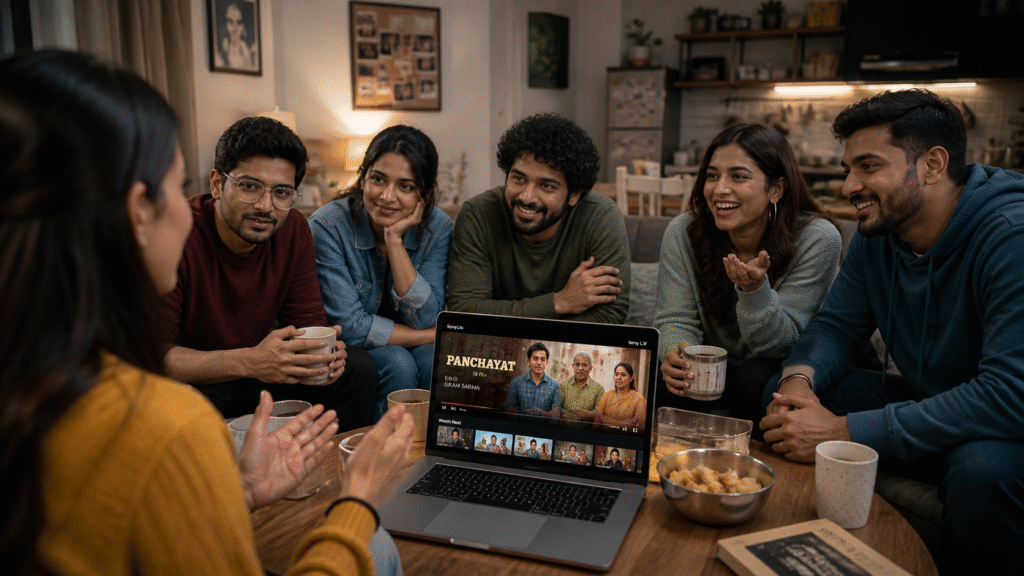
Navigating Modern Family Dramas: Tips to Get the Most Out of Them
Thinking of diving into the new wave? Here’s how to enjoy without the old pitfalls:
- Start Light: Begin with relatable slice-of-life like Gullak or Yeh Meri Family before tackling heavier ones like Chiraiya.
- Watch Mindfully: Discuss episodes with family—turn viewing into bonding rather than solitary binges.
- Set Boundaries: Use timers or weekend-only rules to avoid binge fatigue.
- Seek Representation: Look for shows that balance entertainment with progressive messages on consent and equality.
- Talk About It: Use the stories as conversation starters about real issues like patriarchy or mental health in your own home.
- Balance Nostalgia: Mix reboots with fresh originals for the best of both worlds.
Desi Drama Hacks: Must-Watch OTT Picks for Indian Families
What you choose to stream can make or break your experience. Here’s a curated list of modern family dramas:
- Gullak (SonyLIV): Heartwarming middle-class Mishra family chaos—perfect starter for all ages.
- Panchayat (Prime Video): Rural family and community wisdom with laugh-out-loud moments.
- Chiraiya (JioHotstar): Bold, necessary look at consent and family silence—ideal for meaningful discussions.
- Saas Bahu Aur Flamingo: Edgy, female-led family power struggles with thrills.
- Yeh Meri Family: Nostalgic yet fresh take on growing up in the 90s.
Steer clear of pure nostalgia traps if you want real evolution. Choose stories that nourish conversation, not just fill time.
Wrapping It Up: To Binge the Old Way or Embrace the New?
So, is the ‘saas-bahu’ back—or has OTT completely reinvented it? It’s not black-and-white. For some, the classic formula still offers comforting nostalgia and simple emotional catharsis. For millions of young Indians, modern family dramas on streaming platforms deliver depth, sensitivity around patriarchy and consent, and characters who feel like real people navigating today’s India. The difference lies in how creators balance tradition with truth, melodrama with meaning.
If these shows tempt you, start small, watch with an open mind, and use them as mirrors for your own family conversations. The Indian family drama isn’t disappearing—it’s finally growing up, becoming braver, kinder, and more honest. You’re part of that evolution. What’s your take? Did the old saas-bahu serials shape your childhood, or are you all-in on the OTT reinvention? Have you watched Chiraiya or Gullak? Drop your story in the comments below—let’s swap notes, share recommendations, and celebrate how we’re all rewriting the family script together!
You May Like This
1



Advertisement

You May Like This








Advertisement
Advertisement
Advertisement