

Advertisement

- Updated on May 11, 2026
- IST 12:03 pm

Imagine this: Raj, a 24-year-old delivery rider from Ludhiana’s dusty outskirts, scrolls through his phone at midnight after another 14-hour shift dodging potholes and traffic. Bills stack higher than his dreams of dropping his own rap track. Concerts? A luxury for “other people.” Then his cousin gifts him a ticket to Karan Aujla’s P-Pop Culture Tour stop in Chandigarh. “Bhai, just come once,” the message reads. Raj shows up exhausted, expecting noise and lights. Three hours later, he’s hoarse from screaming “Don’t Look” and “Kya Baat Ae,” chest pounding with every bass drop. For the first time, his Punjabi roots feel like rocket fuel, not a dead end. He leaves the stadium with tears in his eyes and a voice note for his first original song. “Aujla didn’t just perform—he handed me the mic,” Raj later shares online.
Now picture Meera, 29, a marketing executive in Bengaluru who grew up on Bollywood playlists and K-pop. Punjabi music was just “wedding bhangra” to her—fun at family functions, nothing more. A viral clip of Aujla’s Delhi opener lands in her feed, and on a whim she books Bengaluru tickets. Surrounded by 50,000 strangers chanting in Punjabi, she feels the energy hit like a warm hug from a culture she never knew she missed. By the time “Tauba Tauba” drops, she’s dancing like she’s known these lyrics forever. The next morning she tells her team, “I came for the hype. I left understanding why an entire generation is obsessed. This isn’t just music—it’s identity on stage.”
So, what’s the truth? Is Karan Aujla just another Punjabi hitmaker cashing in on the live-music boom, or has he built a ₹1000 crore empire that’s completely rewriting India’s concert economy? With the P-Pop Culture India Tour spanning 11 cities, pulling over 5 lakh fans, and generating unprecedented revenue that ripples through local businesses, stadium economies, and even street vendors, this isn’t just a tour—it’s a movement. In this blog, we’ll unpack his journey from small-town Punjab to global superstar, the business genius behind the tour’s scale, the cultural ripple effects, real fan stories, and practical ways you can tap into this wave yourself. Whether you’re a die-hard Aujla fan, a curious Gen Z’er discovering Punjabi beats, or an aspiring artist wondering how to make it big, let’s dive in and see how one man made Punjab the beating heart of India’s music universe.
Understanding Karan Aujla: From Village Roots to Global Phenomenon
First, let’s get the basics down. Karan Aujla—born Jaskaran Singh Aujla on January 18, 1997, in Ghurala village near Ludhiana, Punjab—didn’t inherit a music empire; he built one from scratch. No fancy connections, no industry godfather. His early life was grounded in the realities of small-town India: family responsibilities, the pull of migration, and the quiet grind of turning pain into poetry. As a teenager, he moved to Canada, where the Punjabi diaspora scene became his classroom. He started as a lyricist, penning fire for other artists, before stepping into the spotlight himself around 2014.
What sets Aujla apart isn’t just talent—it’s relentless authenticity. Tracks like “Don’t Look,” “Mexico,” “Kya Baat Ae,” and the explosive “Tauba Tauba” (which crossed borders and even featured in Bollywood) turned him into a streaming giant. Albums such as Bacthafucup, Making Memories, and the chart-topping P-Pop Culture consistently broke records on Spotify, Apple Music, and YouTube. But numbers only tell half the story. Aujla’s music fuses raw Punjabi storytelling with hip-hop swagger, trap beats, and universal emotions—heartbreak, hustle, pride, and joy. In a country where regional languages often stay regional, he made Punjabi the soundtrack of pan-India youth.
His move from lyricist to performer wasn’t overnight. It came with setbacks, personal losses, and the kind of resilience that resonates deeply with fans who see their own struggles reflected back. Today, at 29, he’s not just a singer—he’s a cultural bridge, a brand, and yes, an economic force.

The P-Pop Culture Tour Explained: Timing, Scale, and Spectacle
Unlike traditional tours that feel like quick cash grabs, the P-Pop Culture India Tour is meticulously engineered for impact. Kicking off February 28, 2026, at Delhi’s JLN Stadium with over 75,000 fans in attendance, the tour rolled through 11 cities—Mumbai, Pune, Ahmedabad, Chandigarh, Indore, Bengaluru, Kolkata, Jaipur, Lucknow, Ludhiana, and more—spanning February to April. Projections put total footfall above 5 lakh, with ticket revenue, sponsorships, merchandise, food & beverage, and local logistics pushing the overall economic footprint toward the ₹1000 crore mark when you factor in multiplier effects across cities.
It’s not just about playing songs. Production is stadium-level: jaw-dropping stage setups, flying entrances, immersive lighting synced to every beat, giant LED screens broadcasting close-ups that make 70,000 people feel like they’re in an intimate studio session. The setlist blends fresh P-Pop Culture tracks (“MF Gabhru,” “Him,” “Daytona”) with all-time anthems, creating an emotional rollercoaster that keeps phones down and hearts open. Gates open early, crowd management is tight, and every city feels like a homecoming.
The pitch? This isn’t background music for your drive—it’s a live experience that turns strangers into a family united by bass drops and shared pride. For the average music lover, it’s entertainment. For India’s live-events industry, it’s a blueprint for scaling regional stars into national phenomena.

The Big Debate: Does Aujla’s Empire Boost or Overhype the Indian Concert Economy?
Here’s where it gets juicy—industry insiders, economists, and fans don’t all agree. Let’s break it down fairly.
The Pros: Why This Model Is a Game-Changer
- Economic Ripple Effect: One Delhi show alone reportedly generated ₹160-175 crore including tickets, sponsors, F&B, and merch. Multiply across 11 cities and you’re looking at thousands of short-term jobs—security, hospitality, logistics, vendors, drivers. Local economies in each host city get a massive boost.
- Fan Loyalty as Currency: Aujla’s direct connection via social media, raw lyrics, and consistent drops builds a tribe that buys tickets, merch, and streams without hesitation. This loyalty translates into sold-out arenas that once only hosted Bollywood or international acts.
- Industry Elevation: By proving Punjabi music can fill 70,000+ capacity venues, he’s raising the bar for production quality, ticket pricing strategy, and artist payment models. Other regional artists now dream bigger, and promoters invest more confidently.
- Cultural Export Power: The tour positions India as a live-music destination while keeping Punjabi identity front and center—global diaspora streams the shows, international media covers them, and the soft power multiplies.
Take the Bengaluru show: IT professionals, college kids, and families from across South India turned out in droves, proving the music transcends language barriers.
The Cons: Where the Hype Meets Reality
- Ticket Pricing and Accessibility: With prices ranging from a few thousand to VIP lakhs, some argue that it prices out the very working-class fans who relate most to his lyrics. Not everyone can afford the experience Raj or Meera had.
- Commercialisation Concerns: Purists worry that massive production and brand tie-ups dilute the raw, street-level soul of Punjabi music. Is it still about the art or the spectacle?
- Sustainability Questions: Can every artist replicate this scale? Infrastructure in smaller cities lags, and over-reliance on one superstar risks creating bubbles rather than steady industry growth.
- Logistical Strain: Huge crowds bring traffic, security, and environmental challenges that cities must manage.
Yet even critics admit that the net positive outweighs the challenges when executed with care.
The Punjabi Twist: How Tradition Meets Modern India’s Concert Hunger
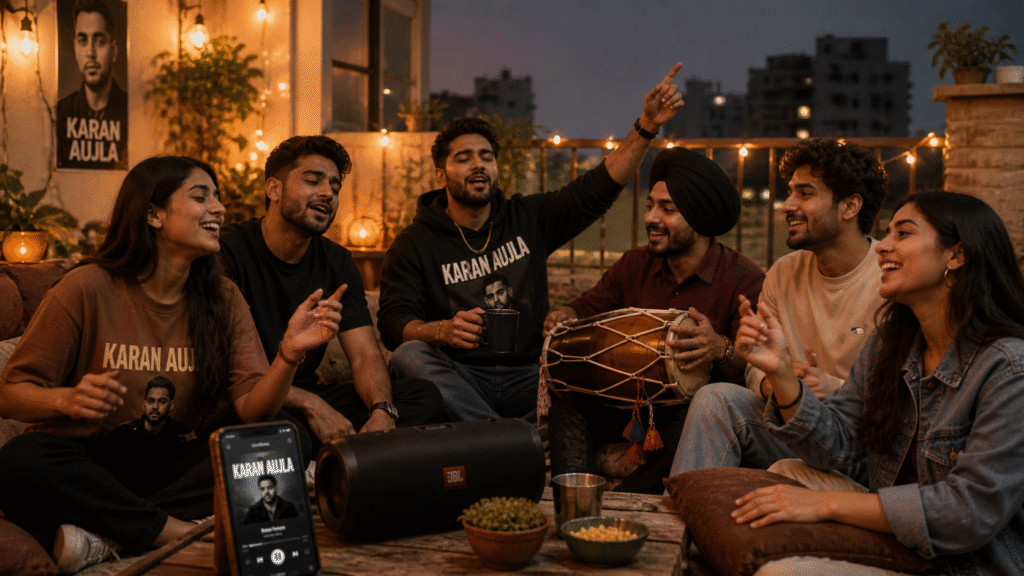
Punjabi music has always been in our DNA—wedding dhol, folk songs at harvest, bhangra energy that refuses to stay quiet. But Aujla took it from village lanes and diaspora clubs straight into stadiums. The P-Pop Culture tour feels like a modern mela: high-energy, emotional, rooted in Punjab yet welcoming everyone. It mirrors our festivals—Karva Chauth devotion meets Navratri celebration—but with strobe lights and 70,000 voices.
Our everyday playlists lean heavily on Bollywood and global pop. Delicious? Yes. Deeply personal? Not always. Aujla’s fusion—Punjabi lyrics over trap, hip-hop, and R&B—fits perfectly into young India’s hybrid identity. He didn’t dilute the language; he made the world lean in. The result? A cultural homecoming for millions who never realised they missed it.
Real Stories: Lives Changed by One Night Under the Lights
Let’s hear from the fans who lived it.
- Raj, 24, Ludhiana: The delivery rider we met earlier. After Chandigarh, he recorded his first track in a friend’s garage. “Aujla showed me the stage belongs to guys like us,” he says. His video now has 50k views.
- Meera, 29, Bengaluru: The marketing exec now hosts monthly Punjabi music listening parties at work. “It opened a whole new world. I feel more connected to India’s diversity than ever.”
- A family from Kolkata: Parents brought their teenage son struggling with exam pressure. The concert became their shared reset. “No phones, just presence and pride,” the dad shared.
These aren’t isolated tales. Across cities, the tour created spaces where hustle stories were celebrated, regional pride was loud, and strangers became brothers and sisters in rhythm.

Safe Ways to Experience the Aujla Wave: Tips to Get It Right
Thinking of catching the next tour or just diving into the music? Here’s how to make it meaningful and sustainable:
- Start Small: Stream the P-Pop Culture album or playlist first. Feel the vibe before committing to tickets.
- Plan Smart: Book early for better prices. Look for official promoters to avoid scams.
- Budget Wisely: Factor in travel, food, and merch. Many cities offer group discounts or student passes.
- Stay Safe & Respectful: Follow gate timings, stay hydrated, and keep the energy positive—no pushing, no littering.
- Support Local: Eat at nearby dhabas, buy from small vendors outside venues—they’re part of the economy too.
- Balance It: Use the music for motivation—play it during workouts, commutes, or study sessions. It’s therapy with beats.
Desi Music Hacks: Making Live Vibes Part of Your Everyday Routine
What you consume between tours can keep the fire alive. Here’s a practical Punjabi-powered routine:
- Morning Boost: Start the day with upbeat tracks like “MF Gabhru” or “Winning Speech” while doing chores or gym.
- Commute Anthems: Curate a playlist mixing Aujla originals with classics—perfect for metro or bike rides.
- Evening Wind-Down: Softer cuts like “Softly” or “Admirin’ You” paired with chai and reflection.
- Family Connect: Play full concert recordings during weekend gatherings—turns dinner into a mini mela.
Steer clear of pirated links. Support the artist, stream legally, and watch the ecosystem grow stronger.
Wrapping It Up: To Stream, Buy Tickets, or Chase the Dream?
So, has Karan Aujla’s ₹1000 crore empire redefined the concert economy? It’s not black-and-white. For some, it’s a life-changing night of pride and possibility. For the industry, it’s proof that regional talent can command global-scale stages and real economic power. The difference lies in how we engage—with respect, support, and open hearts.
If the P-Pop Culture wave tempts you, dip your toes in. Start with a song, save for a show, or even pick up the mic yourself. India’s music scene is exploding because of voices like Aujla’s—and yours could be next. What’s your take? Attended a P-Pop Culture show or discovered Aujla recently? Drop your story below—let’s swap notes, share playlists, and keep the energy going. Share this with a friend who needs a reminder that our roots can take us global. Stream his tracks, support live music, and who knows? The next big stage might just start with you hitting play.
In a noisy world, sometimes the loudest beats are the ones that quietly change everything.
You May Like This
1


Advertisement
You May Like This





Advertisement
Advertisement
Advertisement