

Advertisement

- Updated on May 10, 2026
- IST 6:33 am
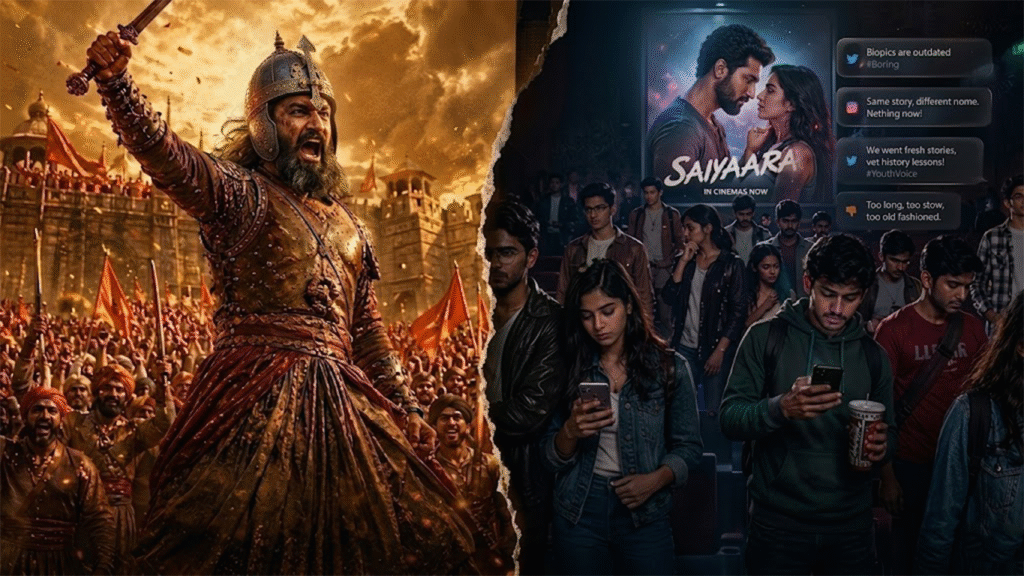
Imagine this: 24-year-old Arjun from Delhi, a die-hard history buff and weekend moviegoer, books tickets for the latest big-budget biopic months in advance. He grew up on tales of legendary figures from school textbooks and family dinners, so when the trailer drops—grand visuals, swelling patriotic music, a star in full heroic mode—he’s all in. “This one’s going to be epic,” he tells his friends over chai at a South Delhi café. Opening weekend arrives. Two hours later, he walks out feeling… flat. The facts feel twisted, the struggles glossed over, the hero too perfect. “It was inspiring on paper, but it just didn’t land,” he vents on a group chat, scrolling past the mixed reviews flooding X. His excitement? Gone.
Now picture Priya, 19, from Bengaluru, a college student who skipped the biopic hype entirely. Instead, she dragged her squad to Saiyaara, the soul-stirring musical romance that had everyone talking. No larger-than-life legend, just raw, flawed young love set against everyday dreams and heartbreaks. She left the theatre with tears in her eyes and a song stuck in her head. “This felt real—like something I could relate to,” she shares in her Instagram story, tagging friends who rushed to watch it too. Six months later, Saiyaara is still buzzing in her circle, while that biopic? Barely a mention.
So, what’s the truth? Once upon a time, slapping “based on a true story” on a poster was practically a box-office guarantee in Bollywood. Legends on screen meant packed houses, emotional highs, and repeat value. But in 2026, the legend alone isn’t selling tickets anymore. From the massive success of Chhaava—a rare historical biopic that defied odds—to the fresh wave of stories like Saiyaara that skipped the biopic formula entirely, audiences are voting with their wallets. Why the shift? In this deep dive, we’ll unpack the rise and stumble of Bollywood biopics, the audience fatigue creeping in, the heated debates over historical accuracy, and what the next generation of Indian cinema really wants. Whether you’re a fan of epic retellings or craving something more grounded, let’s figure this out together—desi style.
Understanding Biopics: The Allure of Real-Life Legends
First, let’s rewind and get the basics right. Biopics aren’t just movies—they’re cinematic tributes to real people who shaped our history, culture, or sports. Think of them as Bollywood’s way of turning textbooks into blockbusters: humble beginnings, towering obstacles, triumphant victories, all wrapped in dramatic music and star power. In India, where storytelling has always blended myth, history, and emotion, biopics hit a special chord. They promise inspiration, patriotism, and that feel-good rush of “if they can do it, so can we.”
The genre exploded in the 2010s with gems like Bhaag Milkha Bhaag, Mary Kom, and Dangal. Audiences lapped them up—families bonded over shared pride, young viewers found role models, and theatres rang with applause. Trade experts called it a “safe bet”: built-in buzz from the real-life hook, emotional connect, and easy marketing. But fast-forward to 2026, and the seesaw has tilted. While Chhaava (2025) roared to over ₹800 crore worldwide with its grand retelling of Sambhaji Maharaj’s saga starring Vicky Kaushal, many others stumbled. Films like Emergency faced backlash and underwhelming numbers amid controversies. The magic formula? It’s cracking under the weight of changing times.
For many in our 15-45 age group—students chasing dreams, young professionals juggling jobs, families seeking weekend escapism—biopics once offered validation. Now, they’re under the microscope. Social media turns every screening into a live debate. One wrong portrayal, one exaggerated scene, and the backlash is instant. It’s no longer just entertainment; it’s a conversation about truth, respect, and what stories we choose to celebrate.
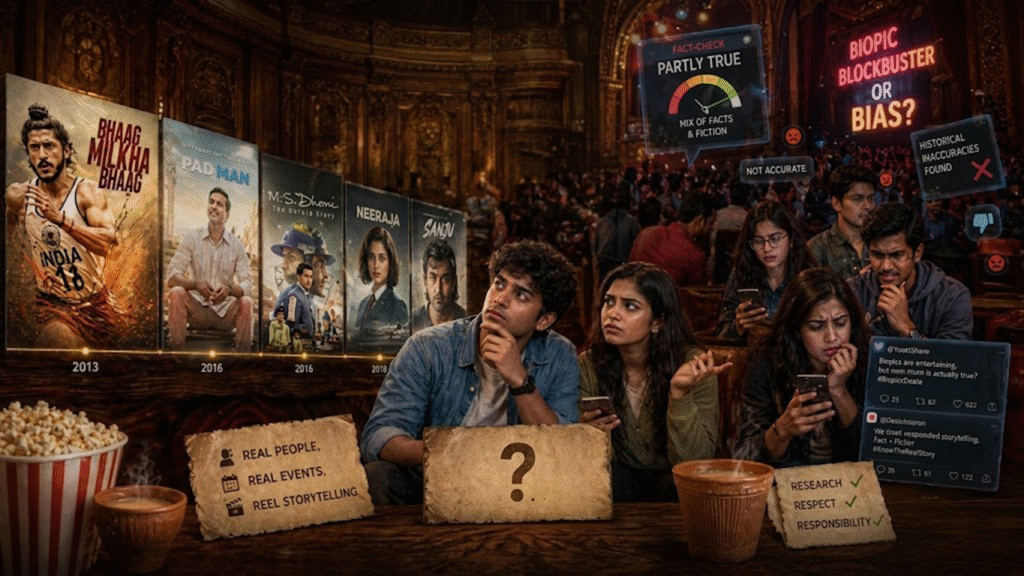
Biopics Explained: From Formula to Fatigue
Unlike pure fiction, where creators have free rein, biopics walk a tightrope. You’ve got real events, real people (or their families), and real expectations. The classic template? A three-act structure: struggle, rise, glory. Add a star who transforms physically, some soulful songs, and voila—guaranteed hit, right? Not anymore.
The pitch used to be simple: audiences love inspiration. Who doesn’t root for an underdog beating the odds? But in 2026’s hyper-connected world, that pitch feels dated. Viewers have binged nuanced international biopics on OTT, devoured podcasts dissecting history, and grown up questioning narratives. The younger crowd—Gen Z and millennials—aren’t satisfied with sugar-coated heroism. They want the messy truth: flaws, controversies, context. When a film skips the hard parts for dramatic effect or political appeal, it rings hollow.
Think of it like our favourite street chaat: the right balance of spices makes it addictive. Too much masala, and it overwhelms. Too little, and it’s bland. Biopics that nailed the balance—like Chhaava’s scale and emotional sweep—still win. But many others? They’re serving reheated recipes in a world craving fresh flavours.
The Big Debate: Does the Biopic Magic Still Work—or Is It Fading?
Here’s where it gets juicy—experts, critics, and everyday viewers are split. Let’s break it down fairly.
The Pros: Why Biopics Once (and Sometimes Still) Delivered
- Built-in Emotional Hook: Real stories carry weight. When done right, they inspire like nothing else. Chhaava proved this—its patriotic fervour and grand visuals pulled families back to theatres, raking in massive numbers.
- Star Power + Legacy Appeal: Casting a bankable actor in a transformative role creates buzz. Audiences show up for the “event” feel.
- Cultural Resonance: In a diverse nation like India, biopics on freedom fighters, sports icons, or cultural legends tap into shared pride. They bridge generations at Friday shows.
Take Chhaava’s success: it wasn’t just a movie; it became a talking point, blending spectacle with emotion in a way that felt timely.
The Cons: Where the Formula is Backfiring in 2026
- Audience Fatigue: After a decade of biopics, the template feels predictable. “Another underdog-to-champion arc? Pass,” say many 20-somethings tired of the same beats.
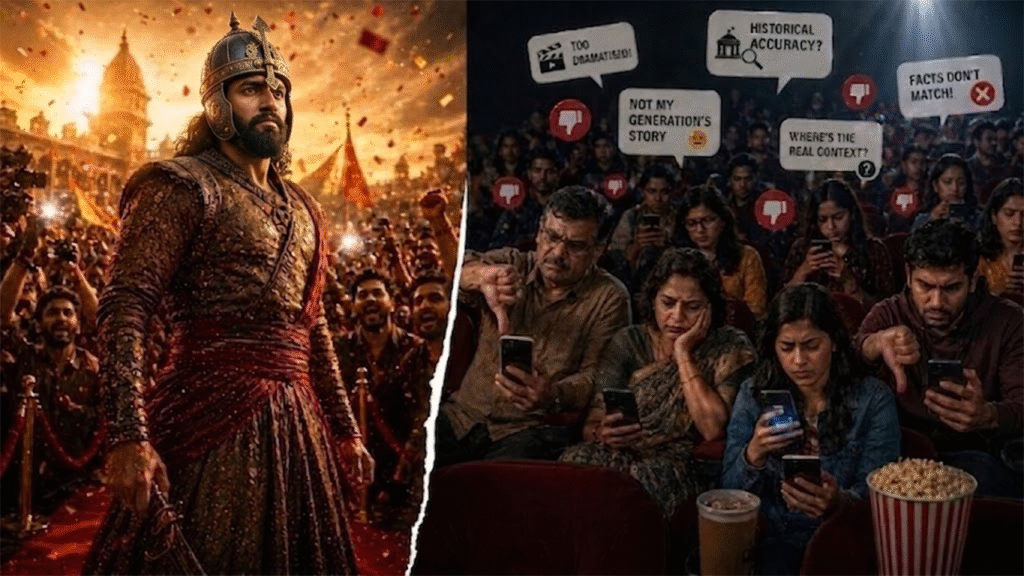
- Historical Accuracy Debate: Social media historians and fact-checkers pounce on liberties taken for drama. Whitewashing flaws or ignoring uncomfortable truths sparks boycotts. Films like Emergency faced heat for perceived biases, hurting word-of-mouth.
- Demand for Raw Truth Over Sugar-Coating: Younger viewers, armed with Google and Reddit threads, want complexity—not cardboard heroes. OTT has raised the bar with shows that show the grey areas. Theatrical biopics often feel sanitised by comparison.
- Competition from Fresh Genres: Why watch a formulaic biopic when Saiyaara-style romances or original thrillers deliver genuine feels without the baggage?
One trade analyst put it perfectly: “Biopics aren’t failing because stories are bad—they’re failing because audiences have evolved. They want authenticity, not just inspiration.” The result? Diminishing returns even for big names.
The Indian Twist: History, Controversy, and Desi Sensitivities
Biopics in India carry extra weight. Our history isn’t just facts—it’s identity, politics, and community pride. From Maratha warriors in Chhaava to political figures, every portrayal risks offending someone. Festivals like Independence Day once boosted these films, but now they trigger online wars over “whose history?”
Our love for larger-than-life heroes clashes with today’s call for nuance. Families debate at dinner tables: “Was it fair to show that?” Regional pride adds layers—Maharashtra cheers Chhaava, but scrutiny follows everywhere. Plus, our carb-heavy, emotion-packed cinema culture once forgave liberties. Now, with global content at our fingertips, tolerance is low. A 12-hour work shift in Mumbai or a college assignment in Hyderabad leaves little room for “just okay” biopics. Viewers want value for their ₹300-500 ticket.
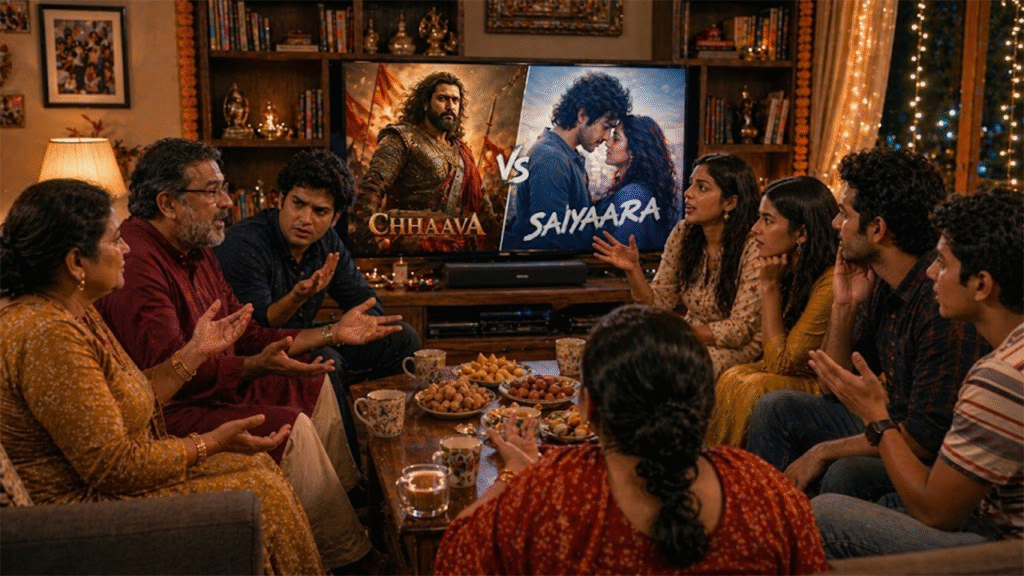
Real Stories: Triumphs, Tumbles, and Theatre Talk
Let’s hear from the audience—they’re the real critics now.
- Rahul, 28, Mumbai: Caught Chhaava on opening day. “The scale was insane—felt proud as an Indian. But some scenes felt stretched for effect.” He loved the energy but craved more depth.
- Meena, 35, Chennai: Skipped a recent political biopic after trailer backlash. “I watched Saiyaara instead. It moved me without pretending to teach history. Real emotions, no agenda.”
These voices echo across Tier-1 and Tier-2 cities. Social media is full of “biopic fatigue” threads. One viral post from a Delhi student: “Stop glorifying—show the struggle honestly.” Triumphs like Chhaava remind us the genre isn’t dead. But tumbles show it needs reinvention.
What Filmmakers (and Audiences) Can Do: The Path Forward
Thinking of greenlighting (or watching) a biopic in 2026? Here’s how to keep it relevant:
- Embrace Nuance: Show flaws alongside strengths. Audiences respect honesty.
- Focus on Storytelling Over Spectacle: Great writing trumps CGI heroes.
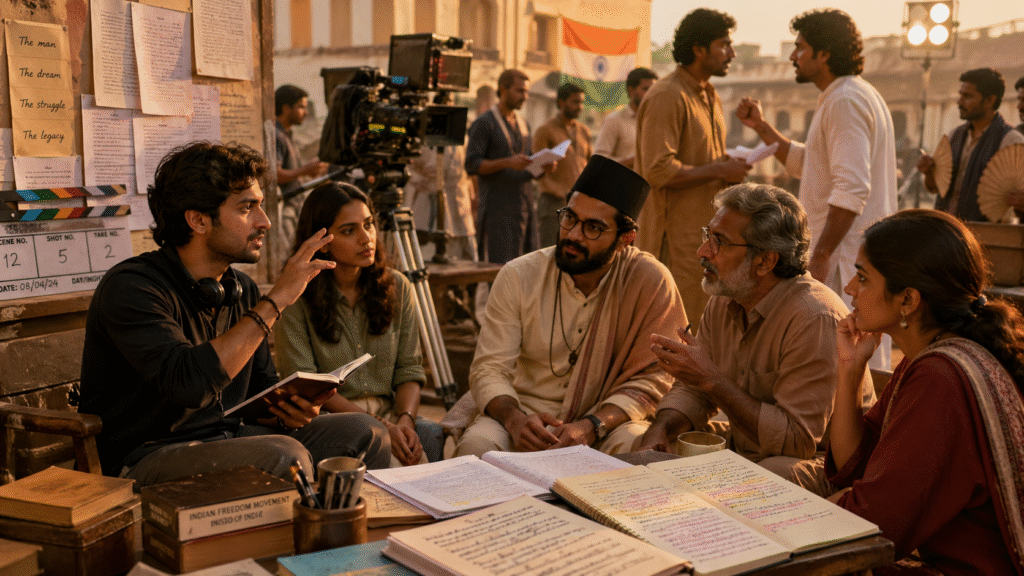
- Collaborate with Experts: Historians, families, and fact-checkers build trust.
- Innovate the Format: Blend biopic with thriller, romance, or fresh angles—like Saiyaara’s emotional rawness.
- Listen to the Crowd: Use social feedback early. Test screenings matter.
- Balance Inspiration with Reality: Make it uplifting without erasing complexity.
The future? Biopics that feel like conversations, not lectures.
Wrapping It Up: Legends Evolve—Or Fade
From Chhaava’s blockbuster roar to Saiyaara’s heartfelt melody, 2026 marks a turning point. Biopics aren’t doomed—they’re evolving. The ones that survive will ditch the old formula for raw, respectful, audience-smart storytelling. Audiences have spoken: they’re smarter, more discerning, and hungry for truth over tropes.
Bollywood’s next chapter isn’t about abandoning real stories—it’s about telling them better. If you’re a filmmaker, director, or just a passionate viewer, the power is in your hands (and tickets). What’s your take? Loved a biopic that got it right, or fed up with the same old script? Drop your thoughts in the comments—share your favourite (or most disappointing) biopic experience. Let’s keep the conversation going and push for cinema that truly reflects us.
Tag a friend who debates biopics over family dinners, and follow PBTrendz for more unfiltered takes on Bollywood’s biggest shifts. The screen is yours—make it count!
You May Like This
1



Advertisement

You May Like This








Advertisement
Advertisement
Advertisement