

Advertisement

- Updated on May 10, 2026
- IST 12:46 pm
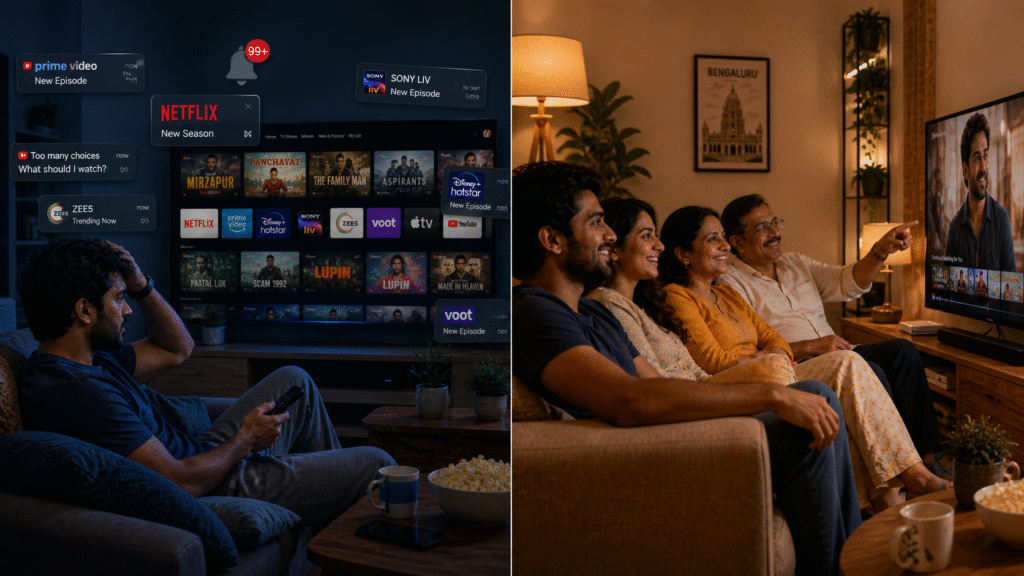
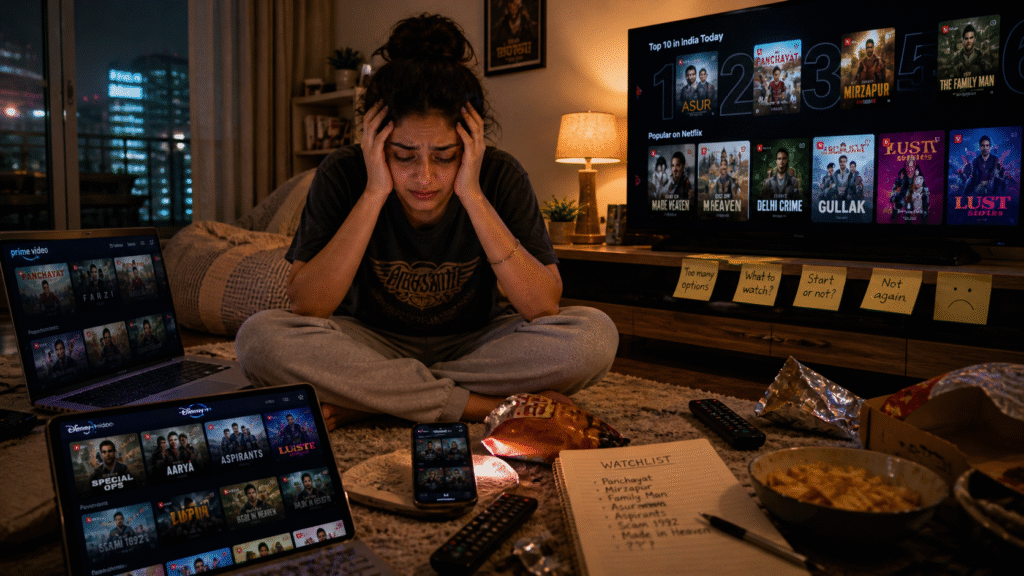
Imagine this: Rohan, a 34-year-old software engineer from Bengaluru, flops onto his couch after a long day of back-to-back meetings. He fires up his smart TV, ready to unwind with a gripping thriller or a light-hearted comedy. But one hour later? He’s still scrolling. Netflix, Prime Video, JioCinema, Hotstar, ZEE5—tabs upon tabs of thumbnails blur together. “Just five more minutes,” he tells himself, but the clock hits 11 PM and he ends up rewatching an old episode of The Office he’s seen a dozen times. Exhausted and annoyed, he switches off the TV, muttering, “There’s too much good stuff and nothing feels right.”
Now picture Neha, a 29-year-old marketing professional from Mumbai. She faces the same endless library every evening. But instead of drowning in options, she’s curled up with her family, laughing through the latest season of Panchayat. Her secret? A simple system she built after months of frustration. In under ten minutes, she picks something everyone enjoys, and they actually finish the episode feeling refreshed, not drained.
So, what’s the truth? With new web series, movies, and reality shows dropping every week, Indian viewers are caught in the ultimate modern trap: choice paralysis. You have thousands of options and somehow nothing to watch. This isn’t just laziness—it’s a real psychological phenomenon hitting millions of us in the age of OTT overload. In this blog, we’ll unpack why the streaming boom is secretly stealing our joy, explore the science behind it, share real Indian stories, and give you practical, desi-friendly hacks plus a curated decision guide so you can finally hit play with confidence. Let’s dive in and reclaim your evenings!
Understanding the "Too Much Content" Problem: The OTT Flood
The numbers are staggering. India’s OTT ecosystem has exploded to over 600 million users, with around 148 million paid subscriptions across platforms. Cheap data, smartphones in every hand, and Connected TV (CTV) screens in millions of homes mean entertainment is literally at our fingertips 24/7. Major platforms like Netflix, Amazon Prime Video, Disney+ Hotstar (now often bundled as JioHotstar), JioCinema, and regional players pump out fresh content weekly—hundreds of originals annually even after recent slowdowns, plus massive global libraries.
Think of it like walking into a giant Mumbai street food market with stalls stretching for kilometres: pav bhaji, dosa, chaat, biryani, golgappa, and every fusion imaginable. It sounds heavenly… until you’re paralysed, unable to choose, and end up hungry and overwhelmed. That’s exactly what’s happening with our screens. One study-like observation from viewer behaviour shows many of us waste 10-15 minutes per session just deciding—adding up to hours every week. And with FOMO (fear of missing out) amplified by social media (“Did you see the new Mirzapur season?”), the pressure mounts.
For the average Indian viewer aged 15-45—students cramming after college lectures, young professionals juggling WFH, or families gathered around the TV after dinner—this flood feels personal. We’re not just choosing between two channels like the old Doordarshan days. We’re juggling Hindi blockbusters, Tamil thrillers, Korean dramas, Hollywood epics, stand-up specials, cricket highlights, and hyper-local web series. The result? Digital entertainment fatigue sets in fast.
The Psychology Behind Choice Paralysis: Why More Feels Like Less
This isn’t new. Psychologist Barry Schwartz nailed it years ago with his book The Paradox of Choice. The idea is simple yet profound: while some choice is liberating, too much creates decision fatigue, anxiety, and regret. Your brain’s prefrontal cortex—already tired from a full day of work, traffic, or family duties—gets overwhelmed. Instead of excitement, you feel stuck.
Add “analysis paralysis” and the Netflix Syndrome (yes, it’s a real term): you spend more time browsing than actually watching. Research shows that when faced with dozens of thumbnails, we start overthinking—“Is this worth my limited free time? What if there’s something better two rows down?” We read reviews, check IMDb ratings, scroll Reddit threads, and still pick nothing. Or worse, we settle on something mediocre and feel dissatisfied because we’re haunted by all the “better” options we skipped.
Emotionally, it hits hard. There’s FOMO when friends rave about the latest buzzworthy series. There’s guilt when you finally pick something and realise it’s not as life-changing as the hype promised. And for many, it leads to reduced enjoyment even when you do watch—your mind is half on “maybe I should have chosen the other one.” It’s like ordering from a 50-page menu: by the time the food arrives, appetite is gone.
In our fast-paced Indian lives—where evenings are sacred for family bonding or solo recharge—this mental drain is extra costly. We deserve entertainment that energises, not exhausts.
The Indian Twist: Streaming Meets Our Desi Reality
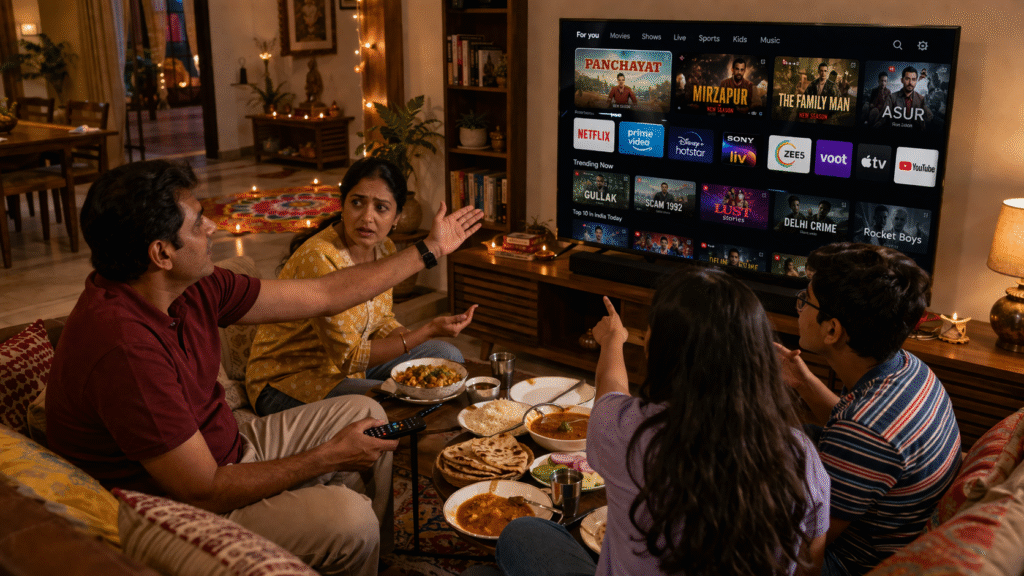
Fasting might be cultural for us, but endless scrolling? That’s the newest family tradition. Remember when Sunday evenings meant one Doordarshan movie or a cricket match on Star Sports? Now, with affordable Jio and Airtel plans, every household has 4-5 OTT apps. Family decisions turn into mini parliament sessions: “Beta, The Family Man ya Sacred Games?” “No, Kota Factory for motivation!”
Regional diversity adds another layer. A viewer in Kerala might crave Malayalam gems alongside global hits; someone in Punjab wants Punjabi web series mixed with Bollywood. Platforms have responded with dubbed content and hyper-local originals, but that multiplies the options further. Dinner-time viewing (a favourite habit for 97% of urban Indians, per surveys) becomes a battlefield of remote controls and “just one more trailer.”
Then there’s the cultural pressure. Social media groups explode with recommendations. Office WhatsApp chats buzz with spoilers. The fear of being left out of conversations at college or family gatherings pushes us deeper into the scroll. Yet, our busy schedules—commutes, tuitions, household chores—leave little room for trial-and-error. The Indian OTT boom, while democratising entertainment, has created a uniquely desi version of choice overload: abundant, multilingual, family-oriented, and relentless.
The Big Debate: Abundance – Blessing or Hidden Curse?
On one hand, the explosion is incredible. We have access to stories from every corner of the world and India—diverse voices, high production quality, and convenience that past generations could only dream of. Weight loss? No more waiting for TV schedules. Binge a whole season in one weekend if you want. For many, it’s pure joy and escapism after tough days.
But the downsides are real. Decision fatigue steals relaxation time. Subscription fatigue grows as we juggle multiple apps (and bills). Some viewers report lower satisfaction with shows because the “what if” lingers. Studies and viewer reports link it to reduced attention spans and even mild anxiety. One side effect? We default to safe, familiar reruns instead of discovering hidden gems. The very abundance meant to enrich us ends up limiting our actual enjoyment.
The balance? It depends on how we approach it. Abundance itself isn’t the villain—our unguided consumption is.
Real Stories: Triumphs, Tumbles, and Scroll Sessions
Let’s hear from fellow Indians who’ve lived it.
Rohan (the Bengaluru engineer we met earlier) finally admitted defeat after one too many wasted evenings. “I’d open five apps, read synopses for 40 minutes, then feel too tired to start anything,” he shares. His turning point? A weekend digital detox and a simple rule: pick within 10 minutes or default to a pre-made list.
Neha from Mumbai built a family “watch club.” They rotate picks based on mood—light comedy for weekdays, thrillers for weekends. “Now we actually finish shows together instead of arguing over the remote,” she laughs. “It feels like old-school TV but better.”
Then there’s Arjun, 22, a college student in Hyderabad. Overwhelmed by Gen-Z FOMO, he was watching three shows at once and retaining nothing. “I felt guilty missing trends,” he says. Switching to a ‘one-show-at-a-time’ rule with friends’ recommendations changed everything. “I enjoy stories more deeply now.”
These experiences show the problem is universal—but solvable.
Safe Strategies to Beat the Paralysis: Practical Tips to Get It Right
Ready to break the cycle? Here’s how to stream smarter, not harder:
- Set a Time Limit: Give yourself exactly 10 minutes to choose. Use a timer on your phone. Decision made, no regrets.
- Mood-First Filtering: Ask: “Am I in the mood for laugh-out-loud, edge-of-seat thriller, feel-good family drama, or thought-provoking?” Most platforms let you filter by mood or genre quickly.
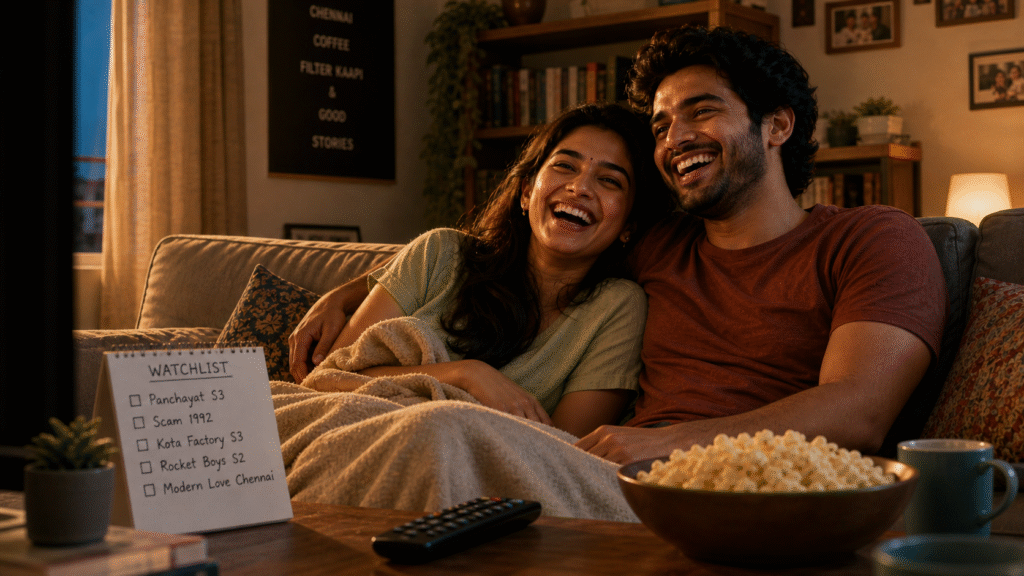
- Build a Personal Watchlist: Every time you hear a strong recommendation (from friends, Instagram, or a quick 2-minute search), add it to a dedicated “To Watch” list in one app. Limit it to 10-15 items max.
- Curate by Occasion: Create mini-playlists— “Weekday Wind-Down” (30-45 min episodes), “Family Friday” (light and inclusive), “Solo Deep Dive” (prestige dramas).
- Leverage Tools Wisely: Use JustWatch or Reelgood to see where content is available across apps. Some platforms have “Play Something” or shuffle features—embrace them when you’re truly indecisive.
- Rotate Platforms: Subscribe to 2-3 at a time max. Cancel and switch every few months to avoid fatigue.
- Involve the Family: Turn choosing into a quick game—each person suggests one title, then vote democratically.
- Mindful Breaks: Once a month, do a “no new content” weekend with old favourites or offline activities. It resets your palate.

Desi Streaming Hacks: Your Curated “What to Watch” Guide
Here’s a simple framework tailored for Indian viewers:
- Step 1: Know Your Vibe – Quick quiz in your head: Energy high/low? Alone or with family? Time available: 30 min or 2 hours?
- Step 2: Match to Categories – Quick picks: • Light & Fun (family safe): Panchayat, Kota Factory, The Great Indian Kapil Show • Thrilling Desi: Mirzapur, Paatal Lok, The Family Man • Global Binge-Worthy: Squid Game (if not seen), The Bear, Shōgun • Short & Sweet: Stand-up specials or anthology series like Delhi Crime
- Step 3: Check the Clock – Short episodes for busy nights; full movies only when you have time to savour.
- Step 4: Hit Play and Commit – No tab-switching mid-episode. Give it 15-20 minutes before judging.
This system turns endless scrolling into intentional joy. Nourish your entertainment time the way you’d plan a balanced Indian meal—variety with purpose.
Wrapping It Up: Hit Play and Actually Enjoy It
The “Too Much Content” problem isn’t going away—new releases will keep coming, libraries will grow, and algorithms will keep tempting us. But you don’t have to stay trapped in the scroll. By understanding the psychology, embracing a few smart habits, and approaching streaming with intention, you can transform evenings from frustrating to fulfilling.
Whether you’re a busy professional, a student, or part of a lively family, entertainment should recharge you, not drain you. So next time you open that app, remember Rohan’s struggle and Neha’s success. Set the timer, filter by mood, and just hit play on something good enough. Your perfect show is waiting—you just need to stop searching long enough to find it.
What’s your biggest streaming struggle? Have you cracked the code with a hack that works for your family or solo nights? Drop your stories and tips in the comments below—we’d love to swap notes and build an even better community guide together. Let’s turn choice overload into shared joy, one intentional watch at a time!
You May Like This
1



Advertisement

You May Like This








Advertisement
Advertisement
Advertisement