

Advertisement
- Updated on May 10, 2026
- IST 7:24 am
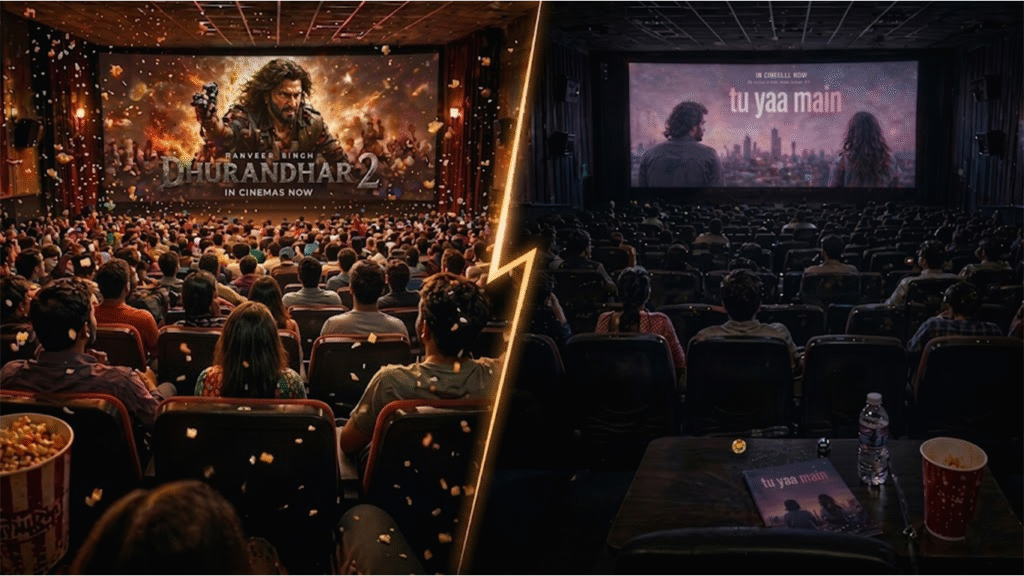
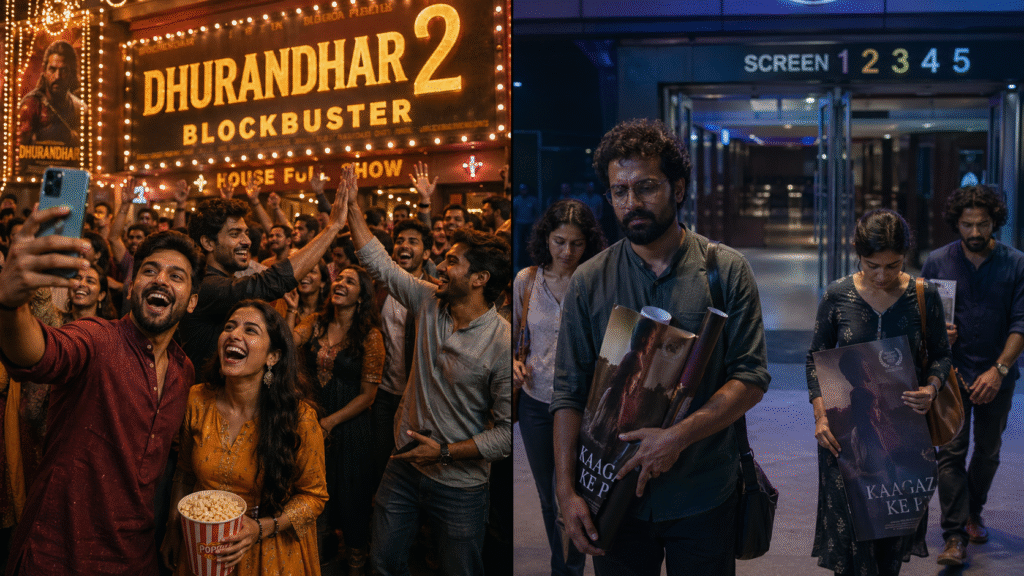
Imagine this: Arjun, a 32-year-old independent filmmaker from Pune, pours his heart, savings, and two years into a heartfelt mid-budget drama about modern Indian family struggles. With strong word-of-mouth and a talented but non-star cast, he secures a modest release in March 2026. Opening weekend feels promising—₹3-4 crore. Then Dhurandhar 2 drops like a thunderbolt. Theatres across the country allocate 70-80% screens to the Ranveer Singh spy epic. Arjun’s film gets squeezed into afternoon slots in half-empty halls. By week two, it’s pulled. “We had a story that could have connected with families,” he tells a friend over chai, voice cracking. “But one giant film swallowed the entire quarter.”
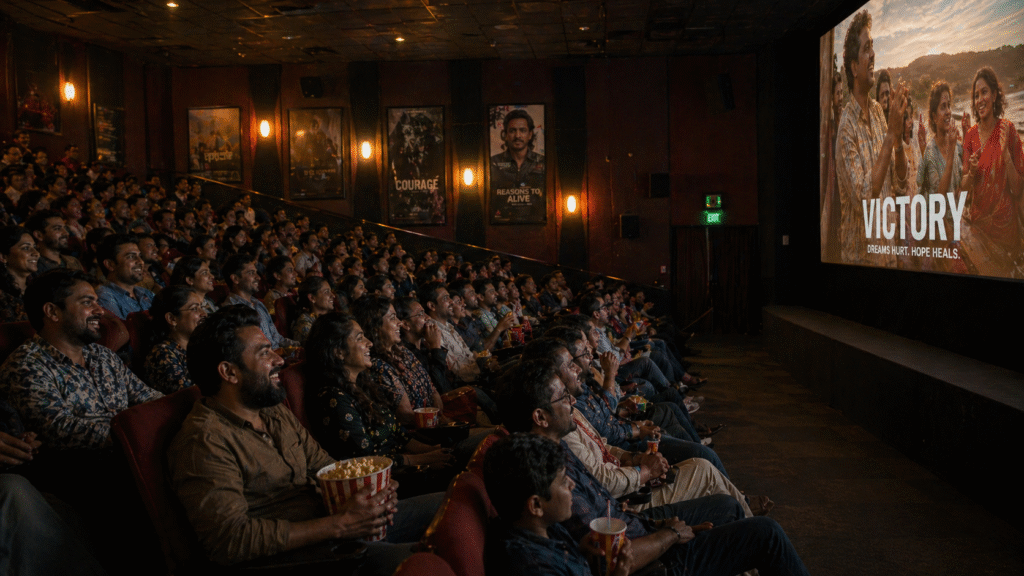
Now picture Priya, 28, a marketing executive in Delhi. She’s dragged her college gang to Dhurandhar 2 on a packed Friday night. The theatre erupts with whistles, cheers, and goosebumps during the high-octane action sequences. Three hours later, they’re still buzzing, already planning a repeat watch. “This is what cinema should feel like—pure spectacle!” she posts on her stories. For her and millions of others, Dhurandhar 2 isn’t just a movie; it’s an event that brought families and friends back to multiplexes in droves.
So, what’s the truth? Dhurandhar 2 has shattered records—crossing ₹1,000 crore net in India faster than any Bollywood film in history and racing towards ₹1,800 crore worldwide. It’s a monumental blessing for the industry’s confidence and theatrical revival. But is its shadow silently killing the diversity of Indian cinema? In this 2026 box office report card, we unpack the Q1 numbers, the Bollywood Q1 box office analysis, the Dhurandhar 2 impact on the industry, and the disturbing trend hitting small-budget films. From producer pressures to audience habits, we’ll explore whether this mega-success is a curse for the middle and small films that once kept our screens alive. Let’s dive into the numbers and stories that could reshape the movies you watch next.
Understanding the 2026 Box Office Landscape: A Tale of Giants and Ghosts
The first quarter of 2026 has been nothing short of dramatic for Indian cinema. Bollywood alone crossed ₹2,000 crore in collections, with Hindi films leading the charge. Yet behind the glittering totals lies a stark reality: success ratio hovers around 25%. Out of 15-odd major releases, only three truly shone—Dhurandhar 2, Border 2, and a couple of smart smaller bets. The rest? Underperformers or outright flops that barely recovered costs.
Think of it like a seesaw tilted heavily towards one end. On one side, grand-scale spectacles with massive budgets, pan-Indian appeal, and superstar power. On the other hand, thoughtful mid-budget or small films are fighting for oxygen. Dhurandhar 2, directed by Aditya Dhar and starring Ranveer Singh, set a new benchmark. Released mid-March, it didn’t just collect—it dominated. Week 1 alone brought in over ₹600 crore net domestically, with weekend highs that left competitors gasping. By late April, India’s net stood at ₹1,088 crore and climbing, worldwide gross nearing ₹1,800 crore. It became the first Bollywood film to hit ₹1,000 crore net domestically and entered the global top 10 of the year.
This isn’t random luck. Post-pandemic audiences have evolved. They crave either jaw-dropping VFX-driven escapism or hyper-relatable, content-first stories that feel fresh. The comfortable middle ground—the reliable family entertainers or modest dramas—feels squeezed out. Ticket prices in metros now average ₹250-400, making families selective. Why risk ₹1,000+ for a “decent” film when you can wait for it on OTT or save for a once-in-a-lifetime event like Dhurandhar 2?
Dhurandhar 2: The Mega Phenomenon That Redefined Expectations
Unlike typical sequels riding on nostalgia, Dhurandhar 2: The Revenge delivered a high-stakes spy thriller packed with patriotism, edge-of-the-seat action, and emotional depth. Its scale—reported budget around ₹250 crore—translated into breathtaking visuals, international locations, and a cast that included Sanjay Dutt, Arjun Rampal, and more. The marketing was relentless, turning the release into a national event.
The pitch worked. It gave theatres the “event cinema” experience audiences missed: packed houses, whistling crowds, repeat value. For the average viewer aged 15-45, it was a perfect blend of desi pride and Hollywood-level spectacle. Analysts call it a game-changer, proving Bollywood can still produce ₹1,000 crore+ hits. But its very success created a dangerous benchmark. Producers now whisper in boardrooms: “If it’s not Dhurandhar-level, why bother?”
The Big Debate: Is "Dhurandhar 2" a Blessing or a Curse for Small Films?
Here’s where the conversation gets juicy—industry insiders, filmmakers, and audiences are split. Let’s break it down fairly.
The Pros: Why This Success Could Be a Blessing
- Theatrical Revival: Dhurandhar 2 proved big-screen magic is alive. It pulled families back from OTT couches, boosting overall footfalls in Q1. Multiplexes reported 60-70% occupancy during its peak weeks, lifting even non-competing releases indirectly.
- Higher Industry Standards: The film raised the bar for production values, VFX, and storytelling ambition. Smaller films now have a roadmap—focus on quality to compete for attention.
- Investor Confidence: With one film minting record profits, funding flowed back into cinema. Banks and studios feel optimistic about big-ticket projects, potentially trickling benefits to the ecosystem.
- Pan-Indian Unity: Its success across languages and regions strengthened the “one India” cinema narrative, opening doors for cross-industry collaborations.
Priya’s story captures this joy perfectly. “We hadn’t gone to the theatre as a group in months,” she says. “Dhurandhar 2 reminded us why we love the big screen.”
The Cons: Where It Becomes a Curse for Small Films
- Screen Monopoly and Crowding Out: During its first four weeks, Dhurandhar 2 occupied 60-80% of screens nationwide. Small and mid-budget films like Arjun’s got minimal shows, poor timings, and zero word-of-mouth window. Many never recovered.
- Unrealistic Expectations: Producers now chase only “high-risk, high-reward” spectacles. Mid-budget films (₹40-100 crore) struggle to get greenlit because they can’t promise ₹500 crore+ returns.
- Funding Bias: Financiers prefer star-driven blockbusters. Original stories without big names or VFX budgets face rejection, stifling creativity and new talent.
- Diversity Erosion: The wide variety of Indian cinema—rom-coms, social dramas, regional gems—is shrinking. Audiences lose access to stories that once mirrored everyday life.
Arjun learned this the hard way. “One film’s victory became our defeat,” he reflects. “Theatres weren’t full because of lack of interest in our story—they were full because every screen was taken.”
2026 Q1 Box Office Report Card: The Numbers Don’t Lie
Let’s look at the cold, hard data for Bollywood Q1 2026:
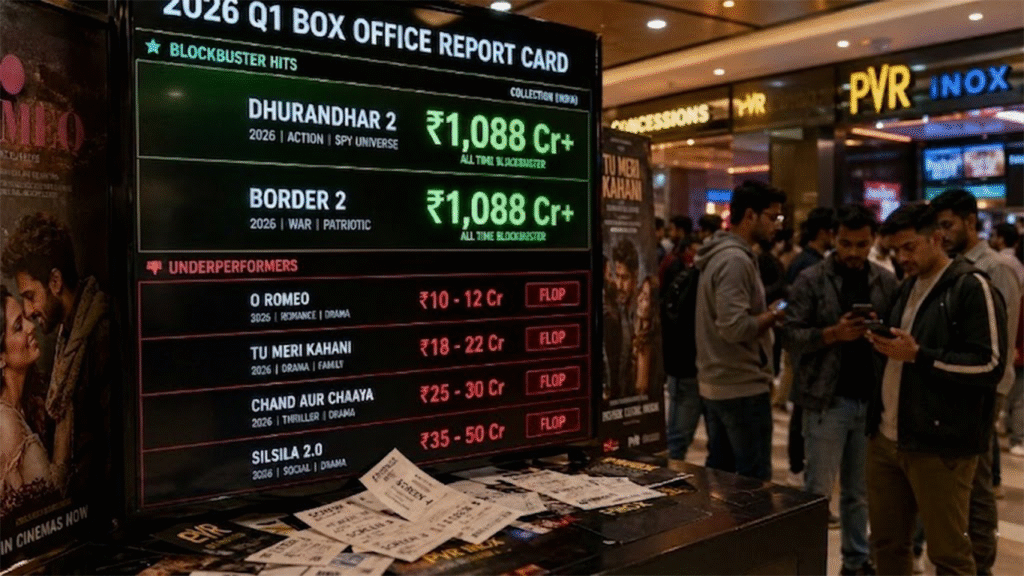
- Top Performers: Dhurandhar 2 (~₹1,088 Cr India net by mid-April), Border 2 (~₹360-460 Cr), and a handful of efficient smaller hits.
- Underperformers: Films like O Romeo, Mardaani 3, The Kerala Story 2 (mixed), and several mid-budget releases that struggled below ₹50-80 Cr.
- Overall: Hindi industry crossed ₹2,000 Cr, but with only 3 major successes out of 15+ releases. Success ratio ~25%. Many films recovered just 30-50% of costs.
This polarisation is the real story. Mega-blockbusters drive 70-80% of revenue, leaving scraps for others. Overseas and satellite deals favour big films too, creating a vicious cycle for the small-budget films crisis.
The Indian Twist: Family Audiences, Regional Cinema, and Changing Tastes
Fasting isn’t new to us Indians—wait, no, cinema-going has always been a family ritual. Sunday matinees, festival releases, and multi-generational outings defined our love for films. But in 2026, busy urban lives, smartphone addiction, and OTT convenience changed everything. Families now reserve theatres for “must-see” events only.
Regional cinema offers hope. South industries show small-budget gems delivering 700%+ ROI through strong content and word-of-mouth. Bollywood’s lesson? Scale isn’t everything—smart storytelling can still win. Yet the Dhurandhar 2 shadow makes producers risk-averse, favouring formulaic spectacles over fresh voices.
Real Stories: Triumphs, Tumbles, and Turning Points
Let’s hear from the trenches.
- Rohan, 35, Mumbai Producer: His small thriller opened decently but vanished after Dhurandhar 2’s release. “We had great reviews, but no screens left. Lost ₹15 crore. Next time? Only big budgets for me.”
- Sneha, 24, Bangalore Film Student: She loved a low-budget indie that somehow survived. “It wasn’t flashy, but the story felt real. Small films like this prove content can fight back—if given a fair chance.”
- Vikram, 42, Delhi Family Man: “We watched Dhurandhar 2 twice as a family. But I miss those simple films we used to enjoy without breaking the bank.”
These voices show one truth: Dhurandhar 2 isn’t a magic wand for the entire industry. It’s a tool—how the ecosystem uses (or misuses) its success matters.
Survival Strategies for Small Films in the "Dhurandhar" Era
Small films aren’t doomed—they need smart adaptation. Here’s how:
- Content-First Approach: Focus on universal emotions, strong scripts, and fresh angles that stand out in trailers.
- Targeted Releases: Stagger releases away from mega-blockbusters or go digital-first for niche audiences.
- Smart Budgeting: Keep costs low (₹10-30 Cr) for high ROI potential, like many South successes.
- Hybrid Marketing: Leverage social media, influencers, and community screenings for organic buzz.
- Theatre Partnerships: Negotiate better screen shares or special events with exhibitors.
- OTT + Theatrical Synergy: Use short windows strategically or build direct-to-digital brands.
Filmmakers who blend heart with smart business are quietly thriving. The future belongs to those who innovate, not imitate.
Wrapping It Up: Blessing, Curse, or Wake-Up Call?
So, is Dhurandhar 2 a blessing or a curse for small films? It’s neither purely black nor white. Its record-shattering run revived theatres, boosted confidence, and set new benchmarks for excellence—a clear blessing for Indian cinema’s global standing. Yet the unrealistic expectations, screen dominance, and funding shifts create a real crisis for diversity, making it feel like a curse for the smaller voices that keep our stories rich and varied.
The 2026 box office report card shows a polarised industry: spectacles thrive, but the middle and small segments are gasping. The difference lies in how we respond—as audiences, producers, and creators. We still crave stories that make us laugh, cry, and think—whether on a ₹200 crore canvas or a ₹20 crore one.
If you love cinema’s full spectrum, support bold, small films when they release. Demand better screen allocation. Celebrate content over hype. What’s your take? Did Dhurandhar 2 make you rush to theatres, or do you miss the variety of mid-budget gems? Have you seen a small film shine despite the odds? Drop your stories in the comments below—let’s discuss, share experiences, and cheer for a cinema ecosystem where both giants and underdogs can thrive. Share this if you believe in balanced Indian cinema, and keep watching stories that move you, big or small. Your voice shapes the next chapter.
You May Like This




Advertisement
You May Like This








Advertisement
Advertisement
Advertisement