

Advertisement

- Updated on May 11, 2026
- IST 12:40 pm
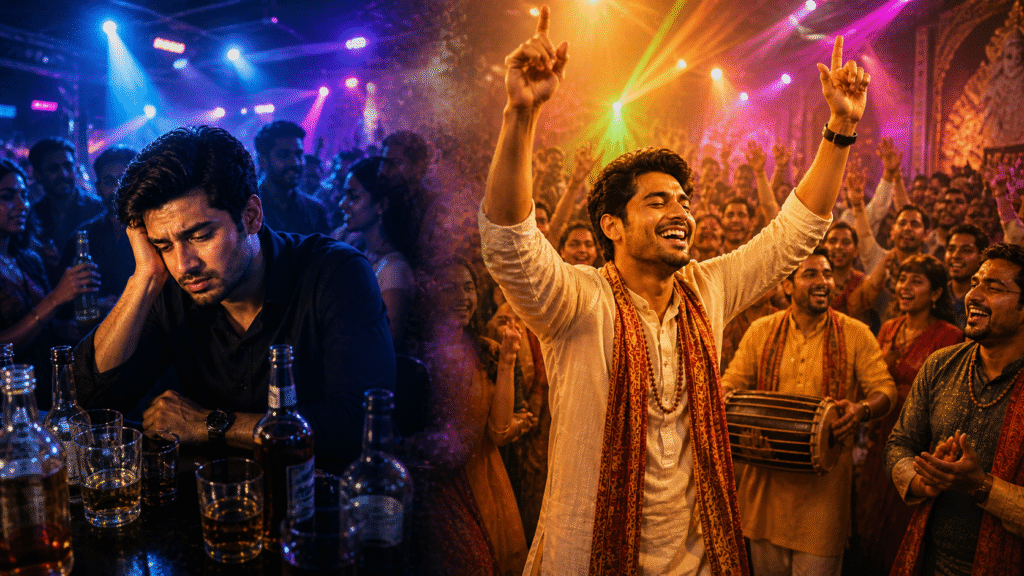
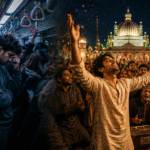
Imagine this: Arjun, a 27-year-old software engineer from Bengaluru’s bustling IT corridor, has just dragged himself home at 4 AM after another exhausting night at a high-end club. The thumping EDM beats still echo in his ears, his head throbs from cheap vodka shots, and tomorrow’s stand-up meeting feels like a mountain. Burned out, lonely despite the crowd, and craving something more than the weekend reset that never quite resets anything, he scrolls through Instagram one bleary-eyed morning. A reel pops up—hundreds of young people in ethnic kurtas and lehengas, hands raised under pulsing laser lights, chanting “Jai Shri Ram” to a fusion of dholak rhythms and electric guitars. No alcohol. No hangover. Just pure, electric energy and a weird sense of calm afterwards. Sceptical but curious, Arjun buys a ticket for his first “Bhajan Clubbing” event. Fast-forward three hours: he’s sweating, smiling, and feeling lighter than he has in years.
Now picture Meera, 24, a marketing executive in Delhi who grew up singing traditional bhajans with her grandmother during Diwali and Janmashtami. Those evenings felt peaceful but sleepy—more duty than delight. One Friday, a college friend coaxes her into a warehouse-turned-spiritual-rave in Hauz Khas. The lights dim, the crowd sways in unison, and suddenly she’s belting out Krishna bhajans with modern beats that make her heart race and her spirit soar. Six months later, Meera credits these nights with helping her manage work stress, sleep better, and reconnect with her roots in a way that feels fun, not forced. “It’s like therapy with a beat drop,” she laughs.
So what’s the truth behind Bhajan Clubbing India? Is this spiritual nightlife trend a fleeting Gen Z fad or a genuine wellness revolution blending ancient devotion with modern vibes? Across cities from Mumbai to Hyderabad, Bengaluru to Pune, young Indians—especially millennials and Gen Z—are trading bass-heavy clubs and late-night regrets for devotional music nights that deliver a “sober high.” In this blog, we’ll unpack the rise of this phenomenon, the science fueling its calming (and energising) effects, real-life stories from the dance floor, and practical tips to experience it yourself. Rooted in our rich cultural heritage yet reimagined for today’s fast-paced life, Bhajan Clubbing might just be the wellness trend India’s youth has been quietly craving. Let’s dive in.
Understanding Bhajan Clubbing: More Than Just Devotional Music
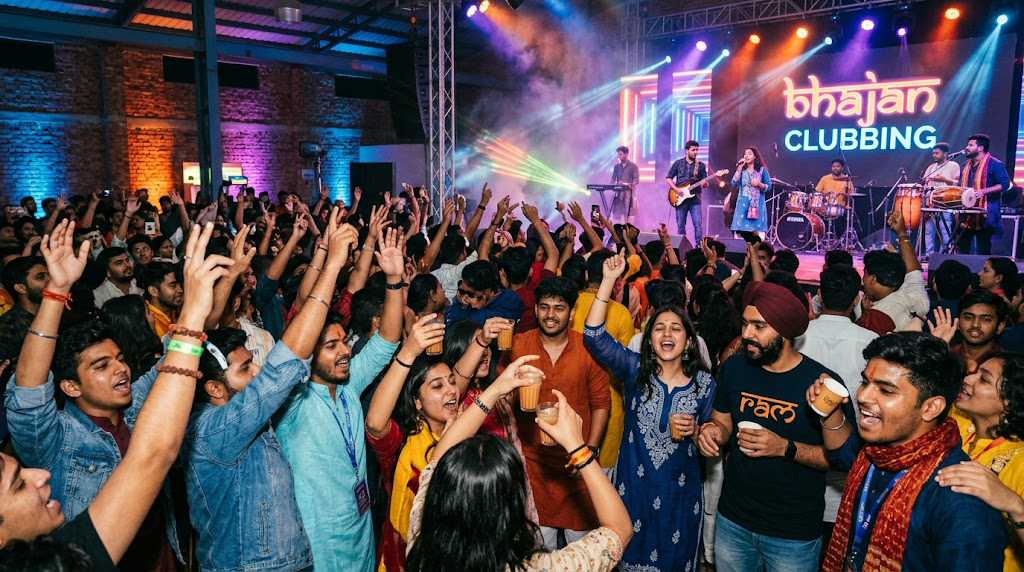
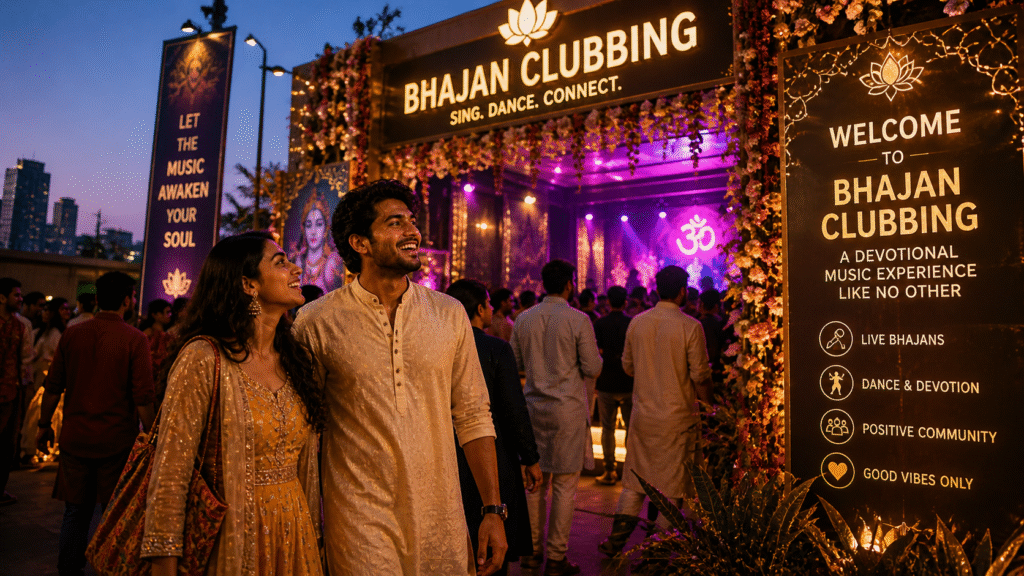
Unlike your grandmother’s quiet satsang or the temple kirtans of yesteryears, Bhajan Clubbing (also called bhajan jamming or devotional clubbing) transforms traditional bhajans—devotional songs praising deities like Krishna, Ram, or Shiva—into high-energy, concert-style experiences. Think professional sound systems, laser shows, fog machines, and live bands fusing classical ragas with rock, electronic beats, and contemporary production. The crowd dances, claps, and chants collectively, but the focus remains on bhakti (devotion), mindfulness, and community rather than intoxication.
Popular formats include the 16/8-style “chant windows” (intense 45-60 minute sets followed by breaks for chai and conversation), full-night immersive events in auditoriums or open grounds, and pop-up sessions in cafés. Google Trends data shows searches for “bhajan clubbing India,” “modern kirtan,” and “sober rave India” skyrocketing 400-600% since early 2024, with sold-out events drawing thousands in major metros.
What sets it apart from regular clubbing? Zero alcohol, prasad-like snacks (think roasted chana, coconut water, or tulsi tea), and an inclusive vibe where families, solo attendees, and friend groups mingle without judgment. It’s nightlife reimagined—not escape through substances, but elevation through sound and shared spirituality.
The Roots: From Temples and Festivals to Urban Dance Floors
Bhajans and kirtans have always been central to Indian culture. From the ecstatic Sufi qawwalis of the medieval era to the mass devotional singing during Navratri garba or Durga Puja processions, collective music has long been a vehicle for emotional release and spiritual connection. Think of the bhakti movement saints like Mirabai or Tulsidas, whose songs united communities across castes and regions.
Fast-forward to 2025-2026: post-pandemic India, with its mental health crisis, digital burnout, and search for meaning, provided the perfect soil. Young people, juggling high-pressure jobs, social media overload, and urban isolation, began craving experiences that felt both rooted and relevant. Events at historic venues like Delhi’s Purana Qila or Mumbai’s cultural hubs now host thousands, blending tradition with production values rivalling any EDM festival. Bands like Keshavam (a devotional rock outfit led by Lovish Sheetal and Prakriti Sharma Arora) and the viral Backstage Siblings have become household names, turning ancient chants into viral anthems on Instagram and YouTube.
It’s a full-circle moment: what was once confined to mandirs or living rooms is now lighting up nightlife, proving devotion can be as exhilarating as any party.
The Science Behind the Sober High: Why Bhajan Clubbing Feels So Good
Here’s where it gets fascinating—and research-backed. Chanting and devotional music aren’t just feel-good rituals; they trigger real physiological and psychological changes.
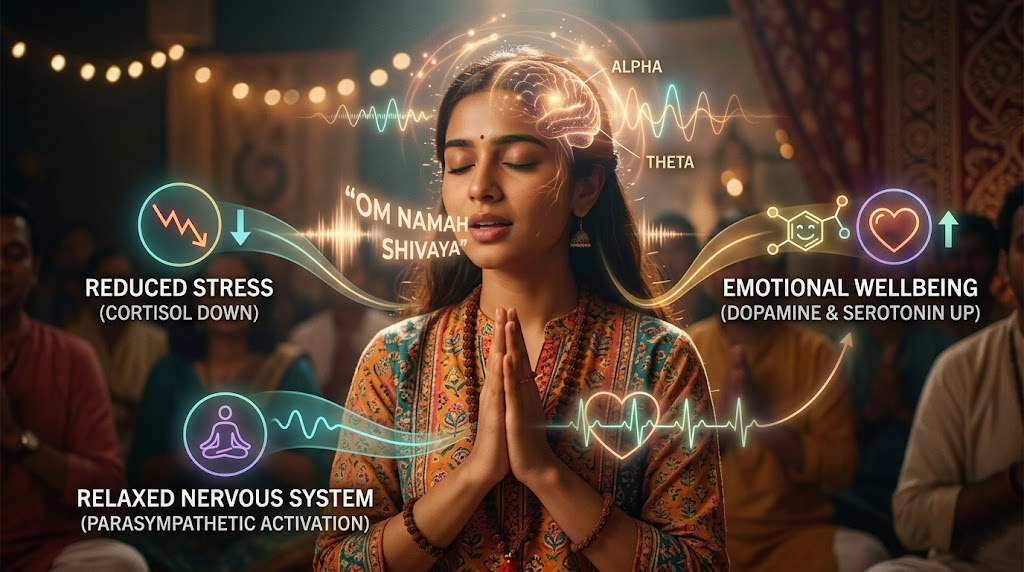
Studies on kirtan and mantra chanting show significant reductions in cortisol (the stress hormone)—up to 25-40% after regular practice. Group singing releases dopamine and serotonin (the happiness chemicals) while boosting oxytocin, the “bonding hormone” that fosters connection and trust. The rhythmic breathing and vocal vibrations stimulate the vagus nerve, activating the parasympathetic nervous system for deep relaxation even amid high energy. Brain scans reveal increased alpha waves associated with calm focus and creativity.
For Gen Z, facing anxiety, burnout, and loneliness at epidemic levels, this creates a natural “clean high”—no hangover, just sustained mood lift, better sleep, and emotional resilience. One 2024 study found participants in devotional music sessions reported 40% lower anxiety after six weeks, comparable to some mindfulness interventions. Add the community aspect—thousands chanting in harmony—, and you get a powerful social bonding effect that combats isolation more effectively than scrolling alone.
Critics might argue it’s just music therapy dressed in spiritual clothing, but for participants, the blend of ancient wisdom and modern neuroscience feels transformative.
The Big Debate: Genuine Spirituality or Commercialised Trend?
Not everyone is convinced. Some traditionalists worry Bhajan Clubbing commercialises sacred practices—turning bhakti into ticketed entertainment with flashy lights and merchandise. Is collective chanting diluted when paired with rock guitars and laser shows? Others celebrate it as a brilliant evolution: making spirituality accessible, inclusive, and appealing to urban youth who might otherwise drift from their roots.
Multiple perspectives emerge in conversations at these events. A young corporate attendee might say it recharges her without guilt. A musician in the band might emphasise preserving the devotional essence while updating the delivery. Even Prime Minister Narendra Modi has praised the trend as a beautiful merger of spirituality and modernity. Balanced view? It’s both—a cultural adaptation that keeps the core intact while meeting today’s audience where they are. As long as organisers prioritise authenticity over profit, the movement thrives.
Real Stories: Triumphs from the Chant Floor
Let’s hear from those living it. Rohan, 29, from Hyderabad, swapped weekend benders for weekly bhajan nights after a tough breakup. “The first time I chanted along, tears came. It wasn’t sadness—it was release. My anxiety dropped, and I found friends who actually listen.” Six months in, he’s lost weight from the dancing, sleeps better, and feels more present at work.
In Mumbai, 22-year-old college student Simran discovered the trend through a college fest. “I used to think spirituality was boring. Now I dress up in my favourite anarkali, dance like nobody’s watching, and leave feeling connected—to myself, to others, to something bigger.” Her group of friends now plans “bhajan brunches” to extend the vibe.
Even families are joining: parents who once worried about their kids’ clubbing habits now attend together, bonding over shared devotion. These stories echo across cities, proving that devotional music for youth delivers real wellness beyond the hype.
The Indian Twist: Bhajan Clubbing Meets Tradition and Modernity
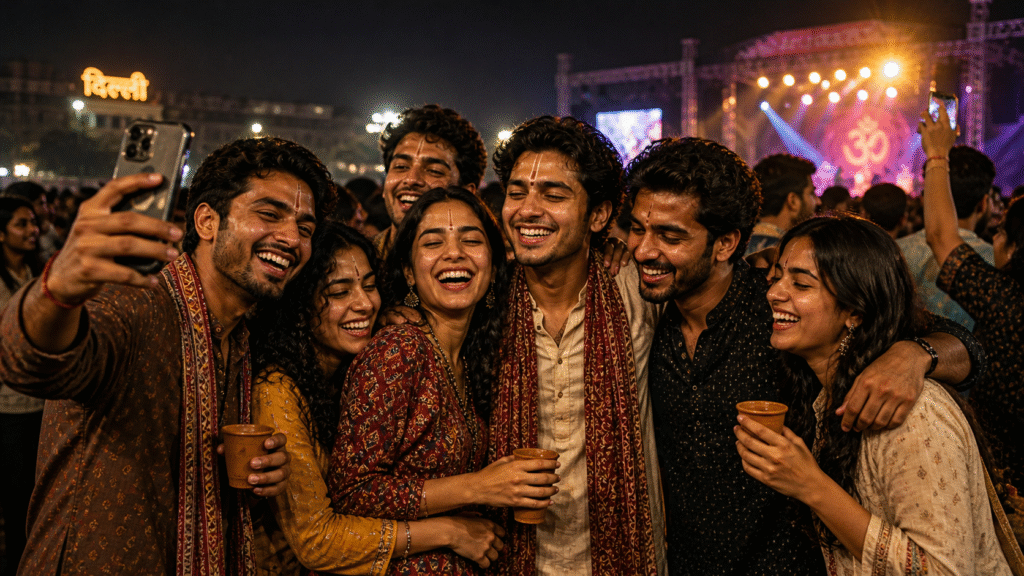
What makes this trend uniquely Indian? It seamlessly weaves our cultural DNA—festive energy of Holi or Navratri—with contemporary wellness. Venues serve cutting chai, filter coffee, and sattvic snacks. Attendees often wear traditional attire, turning nights into visual spectacles of vibrant lehengas and Nehru jackets under neon lights. Many events incorporate regional flavours: Carnatic-infused sets in Chennai, Sufi elements in Lucknow, or folk touches from Rajasthan.
In a country where festivals have always doubled as social outlets, the spiritual nightlife trend feels like a natural evolution. It’s affordable (tickets often cheaper than club entry), family-friendly, and aligns perfectly with India’s growing focus on mental health and mindful living. No wonder it’s spreading to Tier-2 cities and even abroad among the diaspora.
Safe and Joyful Bhajan Clubbing: Tips to Get It Right
Ready to trade the bass drop for a divine one? Here’s how to dive in safely and meaningfully:
- Start Small: Attend a shorter daytime or early-evening session if full-night energy feels overwhelming. Many events offer 12- or 14-hour “windows” mimicking natural rhythms.
- Dress the Part: Comfortable ethnic wear boosts the immersive feel and community vibe—think breathable cotton kurtas or fusion outfits.
- Hydrate and Nourish: Bring water, sip herbal teas, and enjoy light prasad. The energy is high, so fuel your body.
- Listen to Your Inner Voice: Track how you feel afterwards—mood, sleep, energy. If something resonates (or doesn’t), adjust. It’s personal.
- Go with Intention: Approach with openness. Chant along even if your voice cracks—it’s about participation, not perfection.
- Respect the Space: These are devotional gatherings. Phones for memories are fine, but stay present. Many organisers emphasise no substance use.
- Find Your Vibe: Search for events by city on Instagram or apps—look for reputable organisers tied to bands like Keshavam or community groups.
Desi Wellness Hacks: Enhancing Your Bhajan Clubbing Experience
Maximise the benefits with these practical ideas rooted in our kitchens and culture:
- Pair the night with a morning yoga or meditation session the next day to sustain the calm.
- Create your own mini bhajan club at home: Invite friends, play fusion playlists (available on Spotify/JioSaavn), and share homemade thepla or upma.
- Journal post-event: Note one gratitude or insight—turns fleeting feelings into lasting growth.
- Combine with Ayurveda: Sip warm turmeric milk or ashwagandha tea afterwards for extra stress relief.
These small tweaks make wellness and music a lifestyle, not just a weekend escape.
Wrapping It Up: To Chant or Not to Chant?
Bhajan Clubbing isn’t black-and-white—it’s a vibrant spectrum where ancient devotion meets youthful energy. For some, it’s a game-changing wellness tool that eases stress, builds community, and reconnects them to India’s spiritual heritage. For others, it’s simply the most fun, meaningful night out they’ve had in years. The difference lies in intention: approach it mindfully, and it can genuinely transform how you experience joy, peace, and connection.
If the idea sparks even a flicker of curiosity, take the leap. Search for the next event near you, grab a friend (or go solo—everyone’s welcoming), and let the chants move you. In a world of constant noise, these nights offer something rare: a beat that soothes the soul while lifting the spirit.
What’s your take? Have you experienced Bhajan Clubbing or a similar spiritual nightlife moment? Drop your story in the comments below—let’s keep the conversation (and the chanting) going! Share this with someone who needs a new kind of weekend reset. Your next divine night out might just be a ticket away. Jai Shri Krishna, and see you on the dance floor of devotion!
You May Like This
1



Advertisement
You May Like This





Advertisement
Advertisement
Advertisement