

Advertisement
- Updated on May 12, 2026
- IST 5:05 am
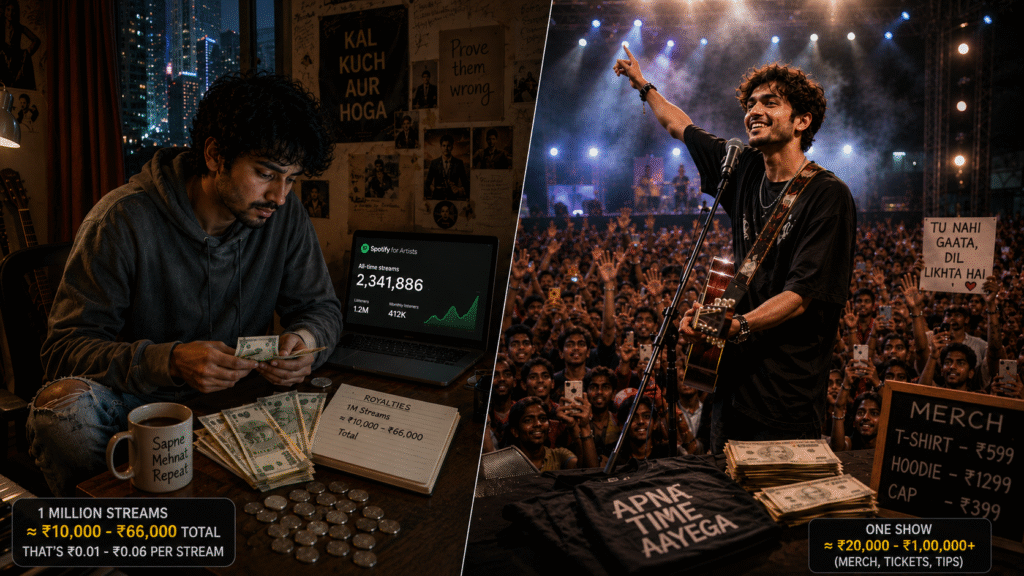
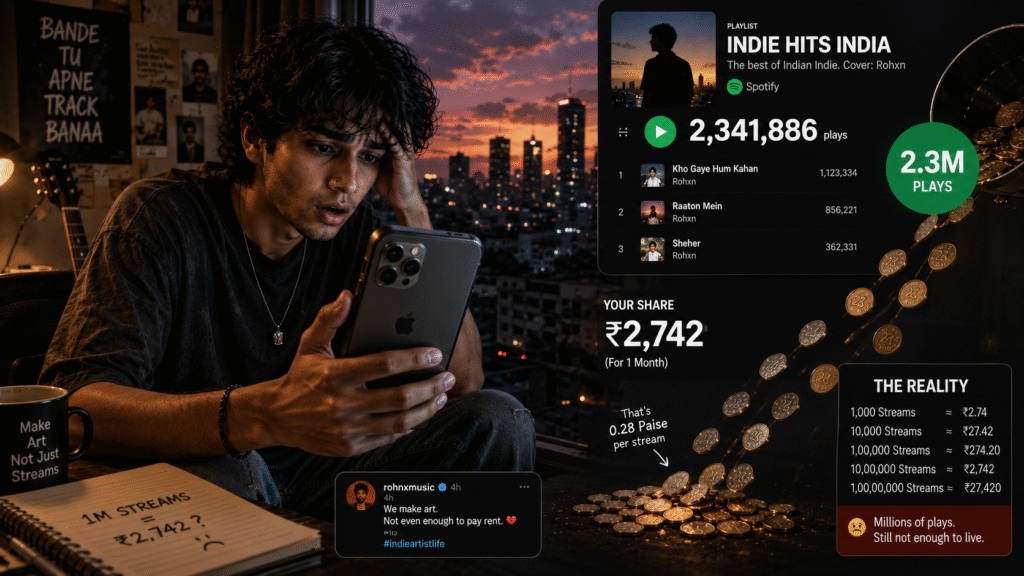
Imagine this: Rohan, a 26-year-old indie singer-songwriter from Delhi, finally drops his original track after months of late-night studio sessions, borrowing equipment, and maxing out his credit card. The song captures the raw hustle of city life—late trains, broken dreams, and fleeting hope. Within weeks, it explodes: over 2 million streams on Spotify, JioSaavn, and YouTube Music. Friends text him excitedly, “Bhai, you’re famous!” But when the royalty statement lands in his inbox? It’s barely enough to cover his next month’s rent in a tiny PG in South Delhi. Rohan stares at the screen, heart sinking. “All those plays, and I can’t even buy a decent chai and samosa for the team who helped me record it.”
Now, picture Priya, a 32-year-old playback singer from Mumbai who cracked the code. Her independent single, released alongside a blockbuster film song, racks up similar numbers—millions of streams across platforms. But she pairs it with smart moves: a sold-out college tour, brand collaborations, and merch drops. Six months later, she’s not just surviving—she’s thriving, booking bigger gigs and even mentoring young artists. For her, those streams opened doors, but the real money? It came from the stage lights and fan connections.
So, what’s the real story? With billions of streams pouring in across India every month, you’d think your favourite artists are rolling in cash like Bollywood superstars. Yet the shocking truth is far different. Most musicians earn a fraction of a paisa per play, forcing them to hustle harder on tours, brand deals, and merch just to pay the bills. In this deep dive, we’ll unpack the complex economics of music streaming in India—the payouts, the pitfalls, the hidden realities, and what it means for the artists who soundtrack our lives. We’ll explore fresh angles, real desi stories, and practical ways to support the music we love. Let’s hit play on the truth behind your playlist.
Understanding the Streaming Boom in India: From Cassettes to Cloud
Music streaming has completely transformed how we consume songs in India. Remember the days of buying cassettes or CDs from roadside stalls? Or illegally downloading MP3s? Today, platforms like Spotify, JioSaavn, Gaana, Amazon Music, and YouTube Music dominate. India is now one of the world’s largest streaming markets by volume, with hundreds of billions of streams annually. The industry’s music revenue hit around ₹59 billion in 2025, with streaming leading the charge and paid subscriptions growing fast—crossing 14 million in 2025 alone.
Why the explosion? Cheap data, smartphones in every hand, and affordable (or free) tiers make music accessible like never before. A college student in Lucknow or a software engineer in Bengaluru can discover new indie tracks or regional bangers from Assam or Tamil Nadu with a single tap. For artists, this means unprecedented reach—global playlists, international listeners, and discovery that was impossible in the pre-digital era.
But here’s the catch: while streams are skyrocketing, the money flowing back to creators hasn’t kept pace in the same way. Streaming is a volume game in a low-ARPU (average revenue per user) market. Subscription fees in India are among the cheapest globally—think ₹99-₹129 per month for premium—while ad-supported free listening dominates. This creates a massive pool of plays but a smaller royalty pie per stream compared to markets like the US or Europe.
Think of it like a giant desi wedding feast: everyone’s eating (streaming), but the share each artist gets from the thali is tiny. The platforms pool revenue from subs and ads, then distribute it pro rata based on an artist’s share of total streams. It sounds fair on paper, but for most Indian musicians—especially independents—it feels like trying to fill a bucket with a leaky tap.
How Streaming Royalties Actually Work: The Math Behind the Melody
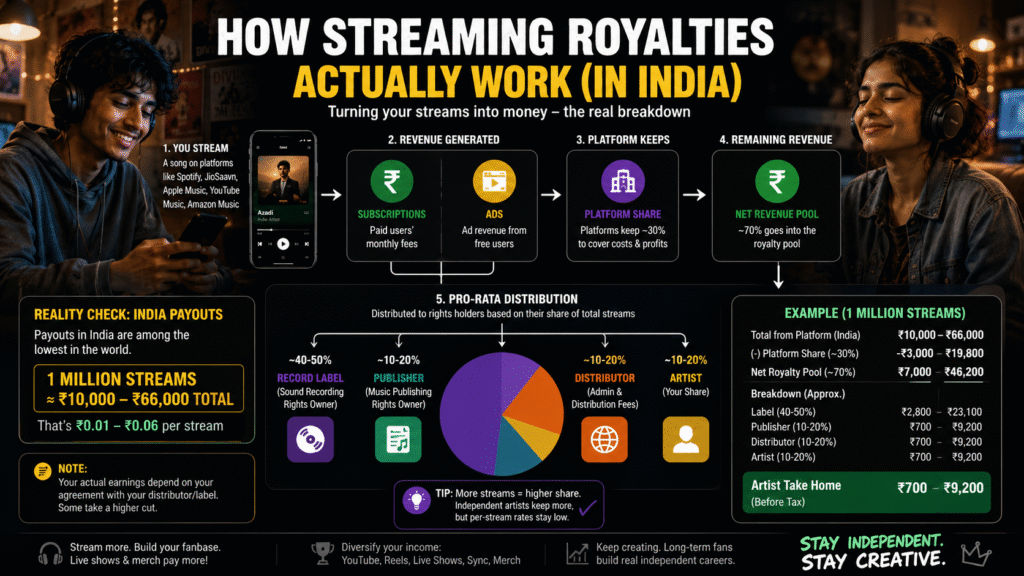
Let’s break down the mechanics without the jargon overload. When you hit play on Spotify or JioSaavn, the platform doesn’t pay the artist directly per stream. Instead:
- Revenue comes from premium subscriptions and advertising.
- This pot is divided among all rights holders (labels, publishers, distributors) based on total streams.
- The artist’s cut depends on their deal: independents using DistroKid or similar might keep 80-100% after platform fees, while label-signed artists often get 30-50% or less after splits with composers, lyricists, and publishers.
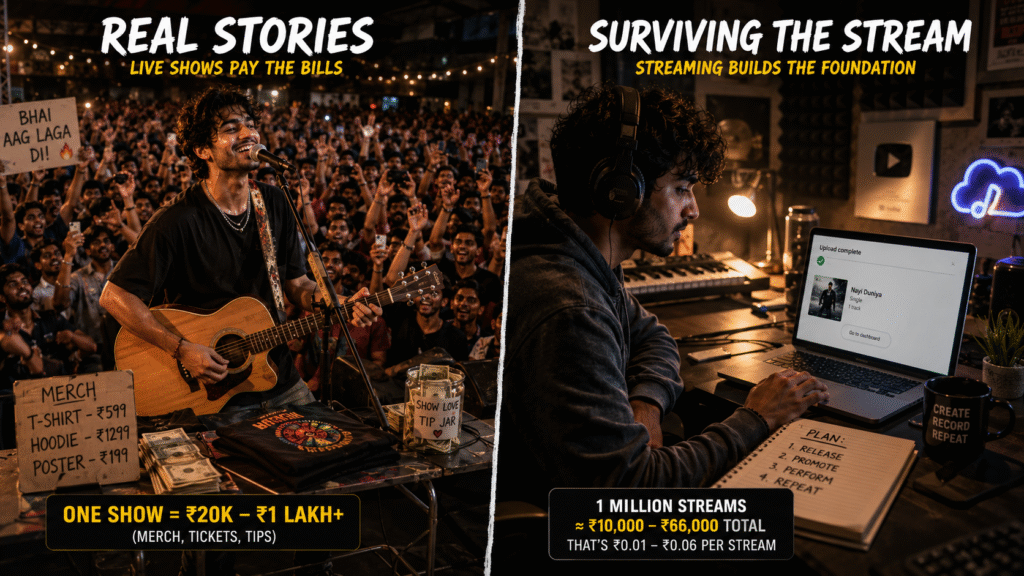
In India, the per-stream payout is painfully low. Estimates put Spotify at roughly ₹0.03 to ₹0.06 per stream (or about $0.0004–$0.0008 USD) for Indian plays—far below the global average of $0.003–$0.005. JioSaavn, Gaana, and others follow similar patterns due to the market dynamics.
Real numbers paint the picture: 1 million streams in India might generate around ₹10,000 to ₹66,000 in total royalties across all rights holders (master recording + publishing). The artist’s actual take-home? Often just a few thousand rupees after splits—enough for groceries or a phone bill, not a career. International streams boost this significantly (up to 4-5x higher payouts), which is why artists pushing for global playlists see better results.
Publishing royalties (for songwriters and composers) add another layer via bodies like IPRS, but collection and distribution can be complex. Add in distributor fees, taxes, and label advances/recoupments, and the numbers shrink fast. It’s not copy-paste math—it’s a layered, country-specific puzzle that demands smart navigation.
The Shocking Reality: Artist Earnings Per Stream in India
Here’s where it gets eye-opening. Your favourite artist needs hundreds of thousands—or even millions—of streams just to earn what a mid-level corporate job pays in a month. For an indie artist, 1 million streams might net ₹5,000–₹20,000 personally in India-heavy plays. Scale that to a “hit” with 10 million streams? Still not life-changing for most unless they have a label machine or international traction.
Compare that to a cup of coffee: yes, the hook holds true for many. A viral track with 500,000 Indian streams might bring in the equivalent of a few decent meals or studio time. Even big names in Bollywood playback often earn peanuts from pure streaming— their real cheques come elsewhere.
This isn’t laziness or bad luck. It’s structural: low subscription prices, heavy free-tier usage, and a fragmented industry where labels and platforms take big slices. Yet the industry is growing—Indian artists are seeing more global discovery, with nearly 50% of some royalties coming from outside India. Platforms report more artists hitting meaningful royalty milestones year over year.
Still, the gap between streams and survival highlights a tough truth: streaming is fantastic for visibility and fan-building, but it’s rarely a standalone payday in India’s digital age.
The Big Debate: Streaming – Boon or Curse for Musicians?
Experts, artists, and industry insiders don’t see eye to eye. On one side, streaming democratizes access. No more gatekeepers deciding who gets airplay—anyone with talent and a smartphone can upload and go viral. Indies like those in the “Indie India” playlists have built careers through consistent releases and algorithmic love. Global reach means a folk artist from Rajasthan can find listeners in Europe, boosting overall royalties.
Pros include:
- Discovery engine: Playlists and algorithms expose new talent faster than radio ever could.
- Passive income potential: Consistent catalog building compounds over time.
- Data-driven insights: Artists track listeners, locations, and engagement to plan tours and merch.
On the flip side, critics argue the model exploits creators. Pro-rata distribution favours mega-stars with billions of streams, leaving mid-tier and emerging artists with crumbs. Low per-stream rates in emerging markets like India exacerbate this. Many musicians feel streaming devalues their work—turning art into background noise while platforms and labels profit disproportionately.
For women artists, regional language creators, or those outside Bollywood, the barriers feel steeper: marketing budgets, playlist placement, and algorithm bias can make or break careers. Multiple perspectives matter here—it’s not black-and-white. Streaming has grown the pie (industry revenue up, more paid subs), but the slices aren’t equal yet.
The Indian Twist: Bollywood, Indie, Regional, and Platform Realities
India’s music scene adds unique flavours. Bollywood film songs still rule charts and streams, but they often operate on different economics—flat fees for singers/composers upfront, with streaming as bonus visibility. Indie and regional music (Punjabi, Tamil, Bengali, etc.) thrive on platforms but face the same payout squeeze.
JioSaavn and Gaana have deep local roots and massive free-user bases, while Spotify pushes editorial playlists and artist tools. YouTube remains huge for video streams and fan engagement. Cultural factors play in too: festival seasons, weddings, and festive playlists spike streams, but many listeners still prefer free tiers.
The desi lifestyle—family obligations, gig economy hustle, high production costs in Mumbai or Chennai—makes pure streaming reliance risky. Artists tweak strategies: shorter release cycles, social media virality, and cross-platform pushes. Yet the “Indian twist” also brings opportunity—booming regional pride and diaspora love fuel exports.
Real Stories: Triumphs, Tumbles, and Lessons from the Trenches
Let’s hear from the artists living it. Take a young hip-hop artist from Bengaluru who amassed 5 million streams on a breakout track. Initial joy turned to frustration when royalties covered only basic studio rent. He pivoted to corporate gigs and teaching workshops—streams became his calling card, not his bank account.
Or consider a folk fusion band from Kolkata. Their cultural tracks gained traction internationally, turning 20% of royalties into meaningful income from overseas plays. Paired with live folk festival circuits, it created sustainability.
Big names echo the sentiment. Even top playback singers rely on live performances for the bulk of their earnings—concerts can fetch lakhs to crores per show, while streaming is more about brand building. These tales show IF (intermittent success, pun intended) isn’t magic—it’s strategy, resilience, and adaptation.
Surviving the Stream: How Artists Actually Make Money Today
Streaming alone won’t cut it for most. Here’s how smart musicians build real income:
- Live shows and tours: The concert economy is exploding in India—festivals, college fests, and arena tours. Tier-2 cities are joining the party. This is where 70-90% of many artists’ earnings come from.
- Brand deals and sponsorships: From chai brands to fashion labels, influencers-turned-musicians monetise their vibe.
- Merch and fan experiences: Limited-edition tees, vinyl (for collectors), or exclusive online sessions.
- Sync licensing: Songs in ads, web series, or films bring upfront payouts.
- Teaching, workshops, and content: YouTube channels, masterclasses, or social media monetisation.
The key? Treat streaming as the foundation for a multi-lane highway, not the only road.
What Fans Can Do + Tips for Aspiring Artists
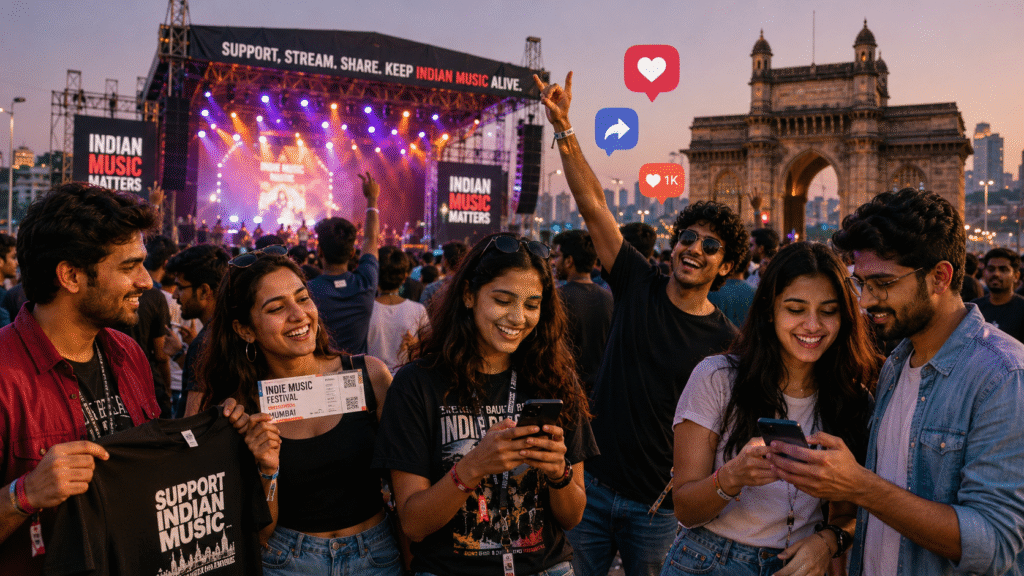
Fans hold power too. Stream on premium accounts when possible (it boosts payouts). Buy merch, attend shows, share playlists ethically, and support independents directly via Bandcamp-style platforms or Patreon.
For aspiring artists:
- Build a strong catalog and release consistently.
- Master socials and email lists for direct fan connections.
- Understand contracts—retain rights where possible.
- Diversify early: gigs, sync, teaching.
- Collaborate and network—community lifts everyone.
- Track data and iterate.
Looking Ahead: A Fairer Tune for Indian Music?
The future looks brighter with growing subscriptions, artist tools from platforms, and policy pushes for live events. More equitable models—like user-centric payouts or better transparency—are being discussed globally and could influence India. Superfans, regional pride, and tech innovations (AI tools for creators?) may shift the economics.
But change won’t happen overnight. It needs collective effort from platforms, labels, artists, and fans.
Wrapping It Up: Your Playlist, Their Paycheck
The economics of a hit song reveal a bittersweet melody: streaming connects us like never before, but pays creators far less than the joy they deliver. Your favourite artist isn’t swimming in royalties from that one billion-stream banger—they’re grinding on stages, negotiating deals, and betting on their passion.
If this resonated, take action. Support live music, upgrade to premium, amplify indie voices, and demand fairer systems. Drop your thoughts below—have you seen this gap in your favourite artists’ careers? What’s one song you’ll stream (and support) today? Share your stories, tag artists, and let’s build a music ecosystem where talent truly thrives. Because in the end, great music deserves great rewards.
You May Like This
1



Advertisement

You May Like This








Advertisement
Advertisement
Advertisement