

Advertisement

- Updated on May 12, 2026
- IST 6:05 am
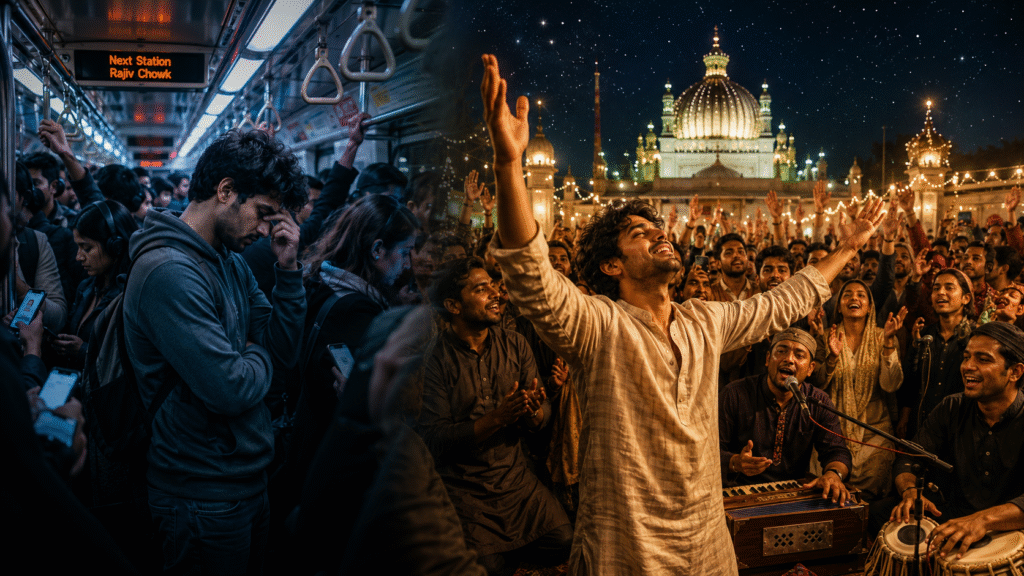
Imagine this: Arjun, a 24-year-old marketing executive from Delhi, is drowning in the chaos of metro life. Endless deadlines, endless notifications, and a social feed that promises perfection but delivers anxiety. Nights out mean thumping EDM beats and hangovers that leave him emptier than before. One Friday evening, a friend drags him to a dimly lit qawwali night at a heritage venue near Hazrat Nizamuddin Dargah. The first notes of the harmonium hit, voices rise in passionate call-and-response, and something shifts. By the time the group crescendos into “Kun Faya Kun,” tears stream down Arjun’s face. For the first time in months, his mind quiets. The world feels connected, not chaotic.
Now picture Priya, 21, a college student from Mumbai, scrolling past yet another influencer party reel. She’s always chased the “vibe” – clubs, festivals, quick dopamine hits. But lately, it feels hollow. One weekend, she stumbles into a Sufi music festival in Bandra. No alcohol, no poses for the ‘gram – just raw voices weaving poetry from Amir Khusrau and Bulleh Shah. Hours later, she walks out lighter, humming a melody that lingers like a warm embrace. “This isn’t just music,” she texts her group chat. “It’s therapy for the soul.”
So, what’s happening? In a world of constant hustle, Gen Z Indians are trading neon nights for mystic melodies. Sufi music and qawwali – once the domain of dargahs and traditional mehfil gatherings – are experiencing a powerful revival. Young people are flocking to sold-out concerts, urban Sufi nights, and fusion events that blend ancient devotion with modern energy. This isn’t nostalgia; it’s a search for deeper meaning. In this blog, we’ll unpack the roots of qawwali, the reasons behind its Gen Z surge, the artists redefining it, real stories from the front lines, and practical ways to dive in. Whether you’re a curious first-timer or a seasoned listener, let’s explore how this spiritual sound is striking a chord with India’s youth.
Understanding Qawwali: The Heartbeat of Sufi Devotion
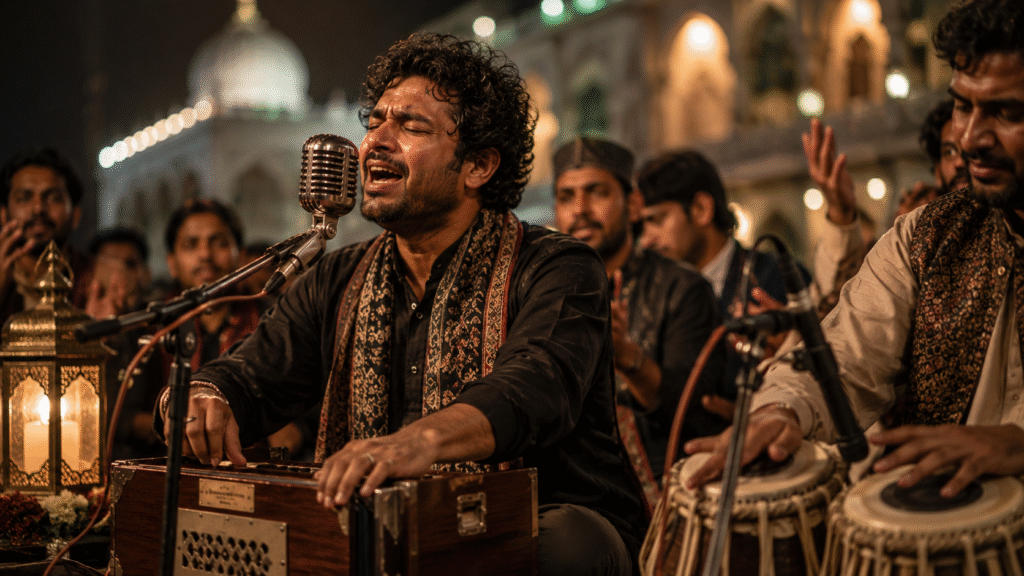
Qawwali isn’t background music – it’s a full-body, full-soul experience. Rooted in Sufism, the mystical branch of Islam that emphasises love, unity, and direct connection with the divine, qawwali uses poetry, rhythm, and ecstatic repetition to induce a state of spiritual ecstasy known as wajd. Think of it as a musical river: starting slow and introspective, building like a wave, crashing with harmonium swells, tabla beats, and clapping hands until the audience is swaying, singing along, even whirling in joy.
The story begins in 13th-century Delhi with Amir Khusrau, the legendary Sufi poet-musician and disciple of Hazrat Nizamuddin Auliya. Khusrau fused Persian, Arabic, Turkic, and Indian classical traditions, creating qawwali as we know it. He wrote in Hindavi (early Hindi-Urdu), making devotion accessible beyond elite circles. Classics like “Man Kunto Maula” or “Chhap Tilak” still echo in dargahs today. Over centuries, legends like Nusrat Fateh Ali Khan took it global, while Abida Parveen and the Sabri Brothers kept the flame alive in the subcontinent.
At its core, qawwali celebrates ishq – divine love. Lyrics draw from poets like Rumi, Kabir, and Bulleh Shah, speaking of surrender, longing, and oneness. It’s not strictly religious; its universal message of peace and connection draws Hindus, Muslims, Sikhs, and atheists alike. In India, it’s woven into our syncretic culture – from Ajmer Sharif to annual Urs festivals. But today, it’s leaping from sacred shrines to college fests and rooftop venues. Why? Because in our hyper-connected yet lonely era, qawwali offers what algorithms can’t: genuine emotional release and community.
The Sufi Revival: From Dargahs to Gen Z Stages
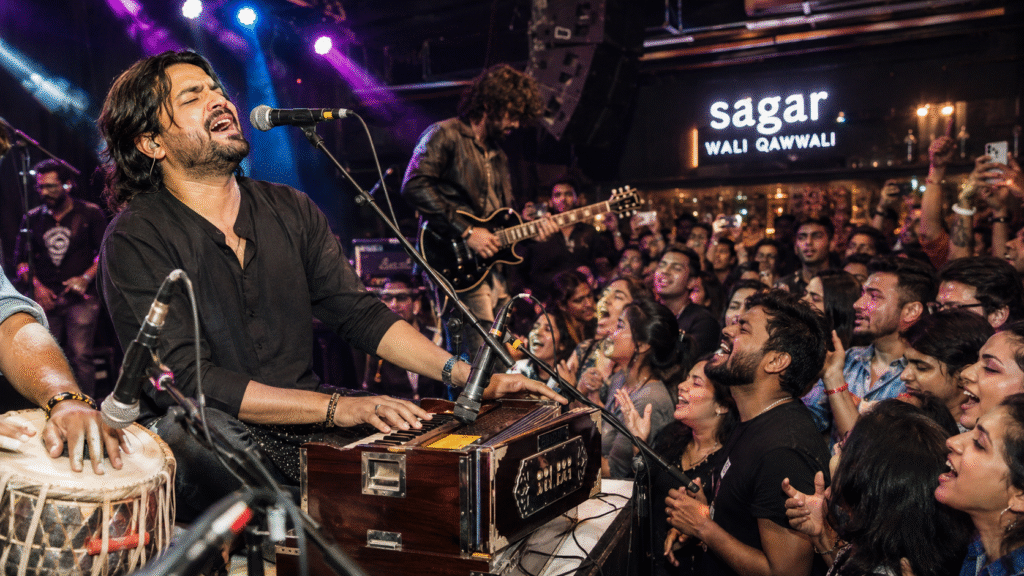
Fast-forward to 2026, and qawwali is everywhere. Events like Jahan-e-Khusrau at Mehrauli Archaeological Park, Sufi Heritage Festival in Visakhapatnam, and Orchestral Qawwali Project sell out weeks in advance. Urban Sufi nights in Bengaluru, Mumbai, and Hyderabad mix traditional renditions with fusion elements – rock guitars, electronic beats, even Kathak dance. Social media is flooded with clips: young crowds at Nizamuddin Dargah belting “Kun Faya Kun,” viral Reels of Sagar Wali Qawwali sessions, and stories from Ruhaniyat festivals across cities.
This revival mirrors broader trends like bhajan clubbing – sober, soulful gatherings where Gen Z seeks grounding without the hangover. An MTV Youth Study and similar surveys show over 60% of Indian Gen Z turning to spirituality for clarity amid pandemic fallout, job stress, and digital overload. Qawwali fits perfectly: it’s immersive, communal, and Instagram-worthy in its own authentic way. No filters needed when the music itself transports you.
Why Gen Z is Flocking to Mystic Music: The Search for Peace in Chaos
Let’s get real. Gen Z grew up with smartphones in hand, climate anxiety in their hearts, and a gig economy that demands constant hustle. Traditional partying feels performative; meditation apps feel solitary. Qawwali bridges both – it’s social yet sacred, energetic yet calming. Studies and anecdotal evidence point to real benefits: lower cortisol levels, improved emotional regulation, and a sense of belonging.
Pros abound. It fosters mindfulness through repetitive zikr-like chanting. The live call-and-response creates instant community – strangers become fellow seekers. For many, it’s cultural reconnection: rediscovering roots in a globalised world. Fusion versions make it relatable – rock-infused qawwali feels like your playlist, but deeper.
Of course, not everyone agrees. Traditionalists worry commercialisation dilutes the sacred – too much fusion risks turning devotion into entertainment. Some Gen Z listeners note initial awkwardness: “Am I supposed to clap or just vibe?” Others face family scepticism (“Why not just go to the temple?”). Yet balanced views prevail: when done respectfully, modernisation breathes new life into a 700-year-old tradition without erasing its essence. The key? Intent. Qawwali thrives when it stays rooted in love and surrender.
The Indian Twist: Sufi Music Meets Desi Soul
India’s version of Sufi music has always been uniquely ours – a beautiful synthesis of Hindu bhakti and Islamic mysticism. Dargahs like Nizamuddin in Delhi or Ajmer Sharif pulse with qawwali every Thursday. Festivals blend it with folk: think Punjabi Sufi from Wadali Brothers or Manganiyar traditions from Rajasthan. Bollywood amplified it – AR Rahman’s KM Sufi Ensemble, “Kun Faya Kun” from Rockstar, or Nooran Sisters’ hits made qawwali mainstream.
Gen Z is remixing this heritage. Young professionals attend after-work Sufi baithaks in Gurgaon or Hyderabad. College societies host “Sufi Nights” with budget tickets and student-friendly vibes. Even corporate wellness events feature qawwali for team-building. It fits our fast-paced desi life: a 90-minute concert can recharge better than a weekend getaway. Hydrate, skip the heavy snacks during the build-up, and let the music do the work.
Real Stories: Triumphs, Transformations, and Tumbles
Meet Meera, 23, from Bengaluru. Burned out from coding marathons and toxic relationships, she attended her first qawwali at a local park event. “I cried during ‘Tere Bin’ – not from sadness, but release,” she shares. Six months later, she’s volunteering at dargah clean-ups and incorporating Sufi playlists into her yoga routine. Her anxiety? Manageable now.
Then there’s Rohan, 26, from Kolkata, a sceptic who tagged along to Jahan-e-Khusrau 2026. “I thought it was old-school,” he laughs. The orchestral fusion with Kathak blew his mind. He started learning the basics of the harmonium and now hosts small Sufi listening circles for friends. “It’s like therapy, but with better music.”
Not every story is pure bliss. Some, like young Priya initially, feel overwhelmed by the intensity – the emotional high can surface buried feelings. Others find long sessions tiring without guidance. The lesson? Start slow, respect the space, and listen to your body and heart.
These tales show qawwali isn’t a magic fix. It’s a tool – one that rewards openness and consistency.
New Age Sufi Artists Leading the Charge
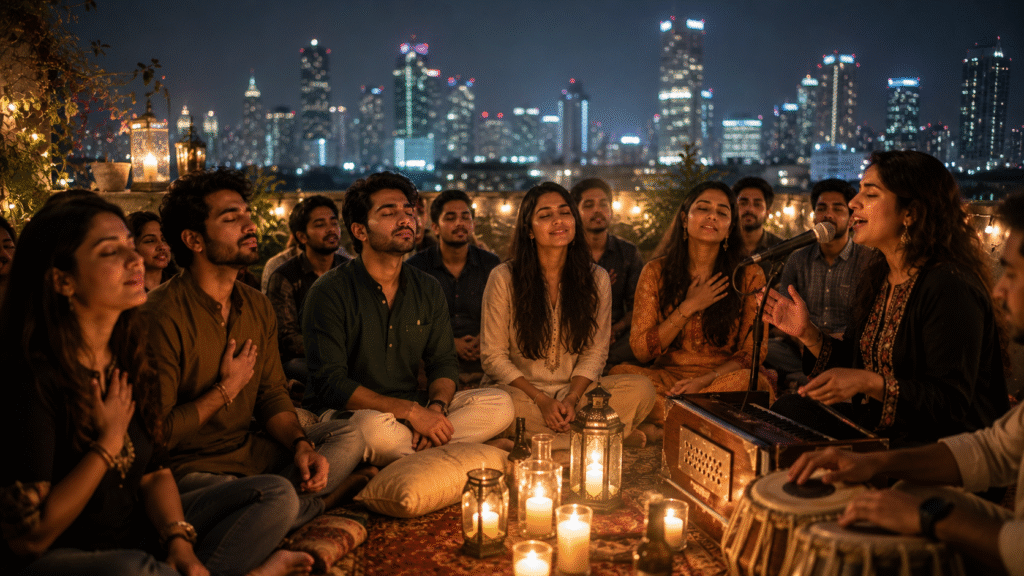
The revival’s torchbearers are blending legacy with innovation:
- Sagar Bhatia (Sagar Wali Qawwali): Delhi’s rising star fuses Sufi poetry with rock energy and honest storytelling. His live shows pack Gen Z crowds who sing along to relatable, modern kalams. Simple language meets powerful delivery – perfect for first-timers.
- Rehmat-e-Nusrat: Young ensemble from Uttarakhand’s hills, trained in Nusrat Fateh Ali Khan’s style. They bring fresh mountain energy to traditional qawwalis, ghazals, and bhajans, performing at festivals and intimate baithaks.
- Nizami Bandhu: Icons behind “Kun Faya Kun,” still drawing massive crowds with soul-stirring renditions at dargahs and stages.
- Lakhwinder Wadali and fusion acts like Abi Sampa with orchestral projects: Bridging classical and contemporary, adding dance and symphonic layers.
- Others like Harshdeep Kaur, Nooran Sisters, and emerging voices keep the tradition evolving while honoring roots.
These artists prove: authenticity + innovation = unstoppable appeal.
Safe Ways to Dive into Sufi Music: Tips for Meaningful Experiences
Ready to join the wave? Here’s how:
- Start Small: Begin with a 12- or 14-hour “listening fast” – dedicate an evening to one full album or live stream. No distractions.
- Choose Your Venue Wisely: Dargah Thursdays for raw authenticity; ticketed concerts (Jahan-e-Khusrau, Ruhaniyat) for production value. Check BookMyShow for 2026 lineups.
- Fuel the Vibe: Wear comfortable clothes. Bring water and light snacks. Participate – clap, sway, join the chorus when invited.
- Pair It Right: Listen with intention. Follow lyrics via apps or translations. Combine with journaling or a post-concert walk.
- Respect the Tradition: Silence phones. Dress modestly at dargahs. Learn basic etiquette – no shoes in sacred spaces.
- Build Community: Join local Sufi groups on Instagram or attend workshops. Share your journey online with #SufiRevivalIndia.
- Stay Balanced: If emotions run high, talk to friends or a counsellor. Use it as one tool among many for well-being.
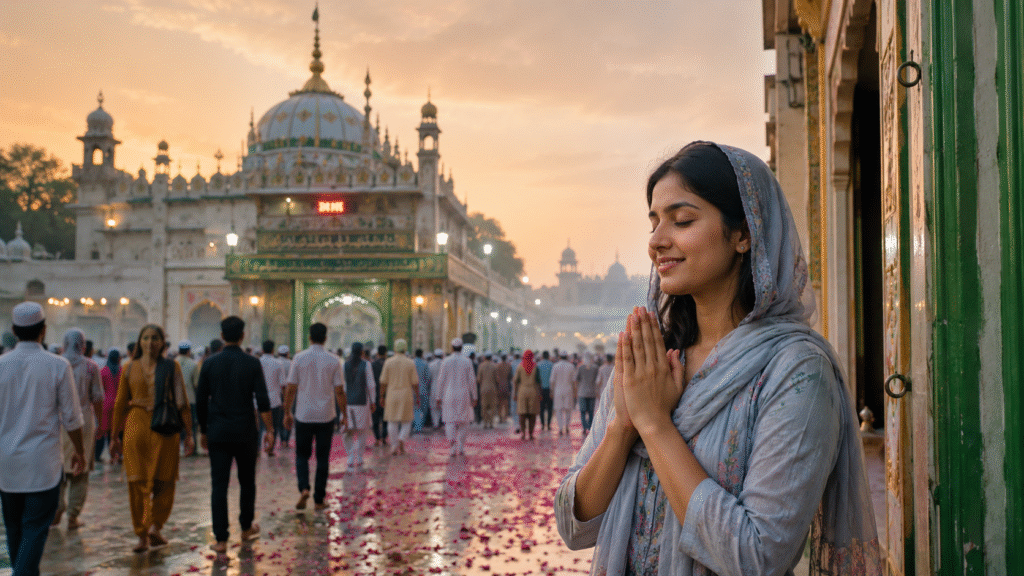
Desi Sufi Listening Hacks
- Morning: Gentle instrumental qawwali with chai for focus.
- Commute: Playlists by Sagar Bhatia or Rehmat-e-Nusrat.
- Evenings: Full mehfil recordings while cooking or unwinding.
- Weekend: Live event + friends’ potluck with Sufi-themed discussion.
Wrapping It Up: To Listen or Not to Listen?
The Sufi revival isn’t a fleeting trend – it’s a cultural heartbeat finding new rhythm with Gen Z. For some, qawwali and mystic music are game-changers: taming anxiety, forging connections, reigniting wonder. For others, it’s a beautiful side quest in life’s chaos. The difference lies in approach – with openness, respect, and a dash of curiosity.
If this resonates, start tonight. Stream a live session, book that next concert ticket, or simply close your eyes and let the voices carry you. Sufi music reminds us: in a noisy world, the deepest peace often comes through surrender to something greater.
What’s your story? Have you felt the pull of qawwali? Dropped a tear at a dargah or discovered a new favorite artist? Share in the comments below – let’s keep this revival alive together. Tag a friend who needs this vibe, and who knows? Your next spiritual high might just start with a single note. Peace be upon you – Allah Hoo!
You May Like This
1



Advertisement

You May Like This








Advertisement
Advertisement
Advertisement