

Advertisement
- Updated on May 11, 2026
- IST 3:51 am
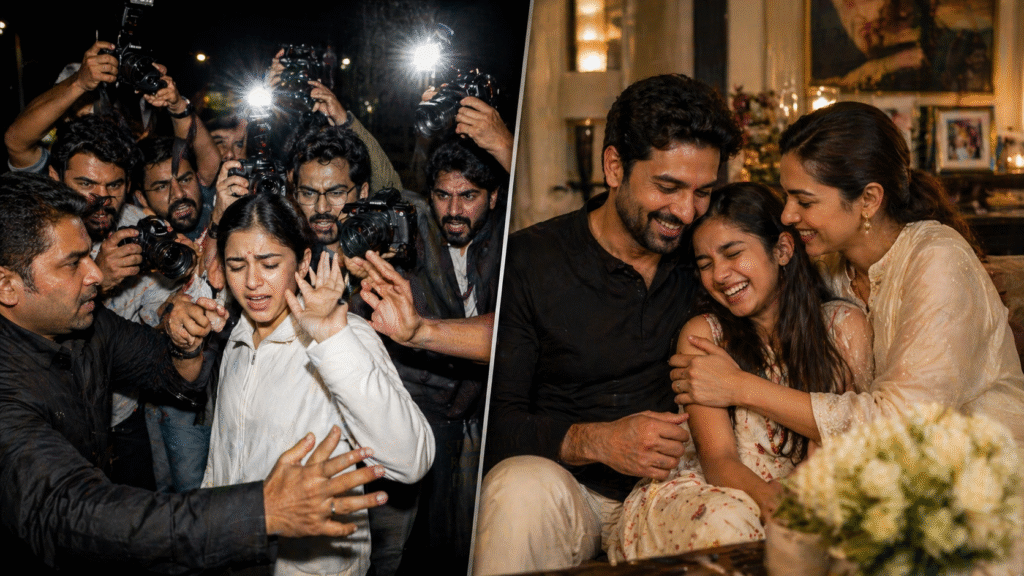
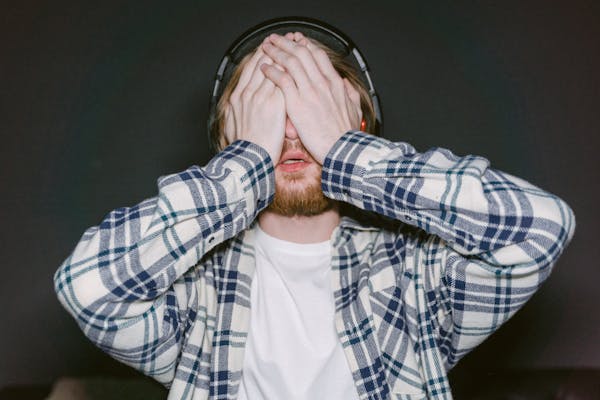
Imagine this: It’s a humid Mumbai evening. A young star kid, barely seven years old, clutches his mother’s hand as they step out for a simple family dinner after a long day. Suddenly, a swarm of paparazzi descends like a flash storm—cameras clicking relentlessly, voices shouting personal questions about his parents’ marriage, his school, even what he ate for lunch. The child freezes, hands flying to his face in panic. Security guards push back, tempers flare, and within seconds, what should have been a private moment turns into a viral ugly scuffle splashed across every social media reel. “Leave us alone!” the parent snaps, voice cracking with frustration. The next day, headlines scream: “Star Kid in Tears as Paparazzi Chaos Erupts!”
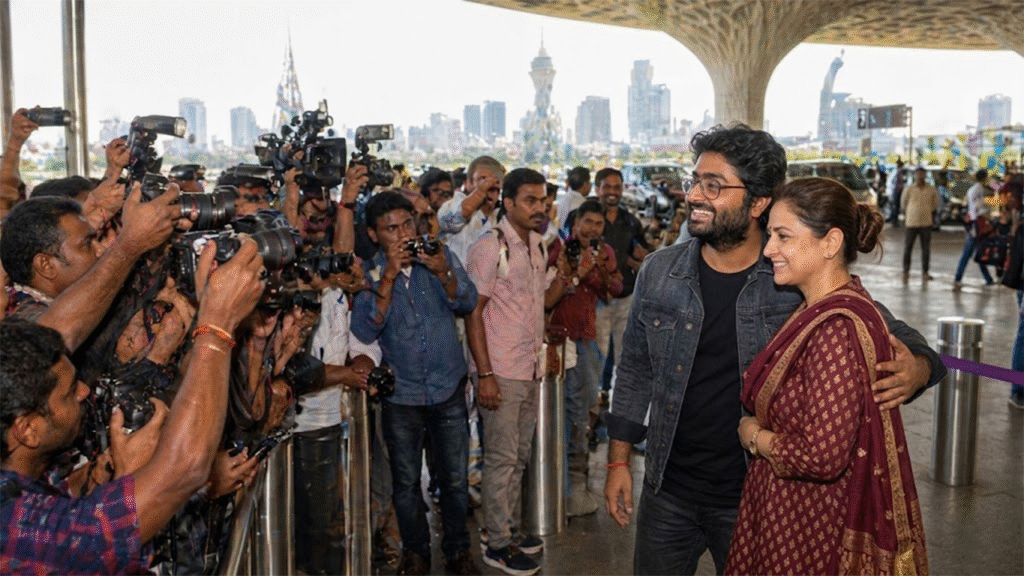
Now picture another scene. A rising actress, fresh off a blockbuster, arrives at the airport in a chic outfit. She pauses gracefully for the waiting lensmen, flashes a warm smile, and shares a quick soundbite about her next project. The photos go viral, fans flood her with love, and her film’s buzz skyrockets. No intrusion, just mutual respect. For her, the cameras feel like allies, not invaders.
So, what’s the truth? Is Bollywood’s paparazzi culture a necessary spark that keeps the industry glowing, or has the greed for constant limelight crossed into dangerous territory? With a recent ugly incident involving a paparazzo and a star kid reigniting fiery debates, fans, celebs, and even the media are asking: Where do we draw the line between public interest and private life? In this deep dive, we’ll unpack the history, the highs and lows, the real human cost—especially for innocent star kids—and explore whether it’s time for a fresh code of conduct in India’s glitzy entertainment world. Let’s shine a light on both sides and figure this out together.
The Rise of Paparazzi Culture in Bollywood: From Red Carpets to Relentless Chases
Paparazzi culture didn’t always dominate Bollywood like it does today. Back in the ’90s and early 2000s, celebrity photos were mostly controlled affairs—movie premieres, award nights, or carefully orchestrated press meets. Then came pioneers like Yogen Shah, who captured iconic moments such as Subhash Ghai’s daughter’s wedding in 2002. Fast forward to the digital explosion: smartphones, Instagram, and 24/7 news cycles turned everyday sightings into goldmines. Today, names like Viral Bhayani rule the scene, with armies of photographers camped outside Bandra homes, airports, and gyms, turning mundane moments into million-view content.
It’s a uniquely Indian beast. Unlike Hollywood’s more regulated (yet still intense) paparazzi scene, Bollywood’s version thrives on our collective love for larger-than-life drama. Fans crave glimpses of their idols’ “real” lives—airport looks, gym sessions, family outings. Media houses and PR teams often tip off paps for free publicity. It’s symbiotic, almost like a dance: celebs get eyeballs, paps get paychecks (a single exclusive shot can fetch thousands), and fans get their daily dose of escapism.
But here’s the twist—this “dance” has become a stampede. With social media algorithms rewarding sensationalism, the pressure to deliver constant content has blurred lines. What started as harmless fan service has morphed into something more invasive, especially when it targets families and children who never signed up for the spotlight.
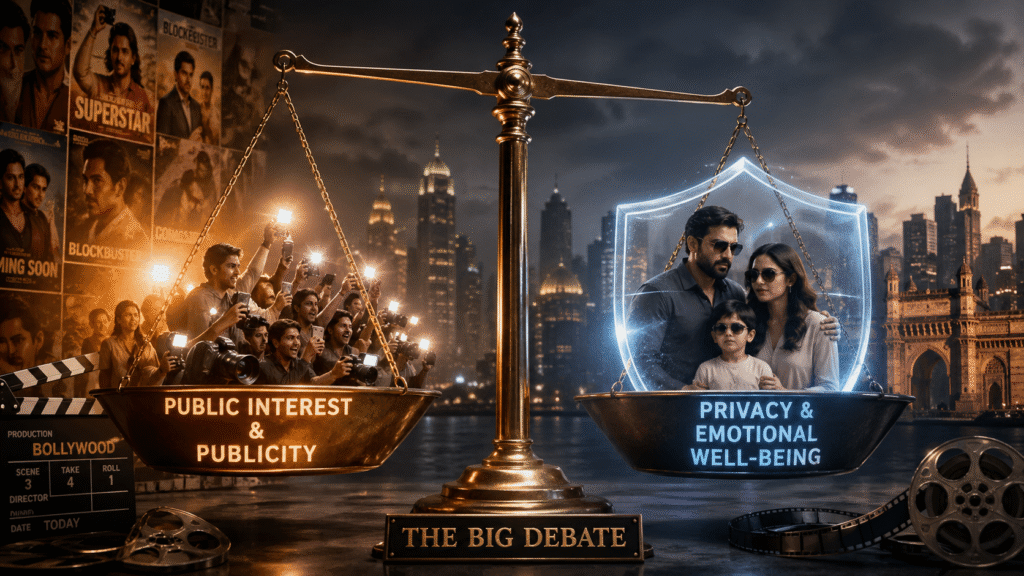
The Big Debate: Public Fascination or Privacy Invasion?
The argument cuts both ways, and it’s not black-and-white. Let’s break it down fairly, drawing from real experiences, expert views, and the emotional toll on those in the glare.
The Pros: Why Paparazzi Might Still Serve a Purpose
- Fan Connection and Accessibility: In a country of 1.4 billion, Bollywood stars are like modern gods. Paparazzi bridges the gap, letting fans feel close. A quick airport sighting can make a struggling fan’s day, humanizing idols and building loyalty that translates to box-office success.
- Career Boost and Public Accountability: Strategic pap moments keep careers alive between releases. Emerging actors get discovered; established ones stay relevant. Plus, in theory, constant scrutiny discourages off-screen scandals—though Bollywood’s track record shows it’s more selective.
- Economic Lifeline: For hundreds of freelance photographers, this is livelihood. As Akshay Kumar recently noted in an interview, a single photo can earn a pap ₹3,500–4,000—enough to support a family. It fuels an entire ecosystem of content creators, drivers, and editors.
Many celebs quietly admit the system works when boundaries are respected. It’s like oxygen for the industry’s hype machine.
The Cons: Where It Crosses into Harmful Territory
- Mental Health Toll: Constant flashing lights and invasive questions create unbearable pressure. Celebrities have spoken about anxiety, paranoia, and burnout. For star kids, it’s worse—early exposure can scar young minds before they even understand fame.
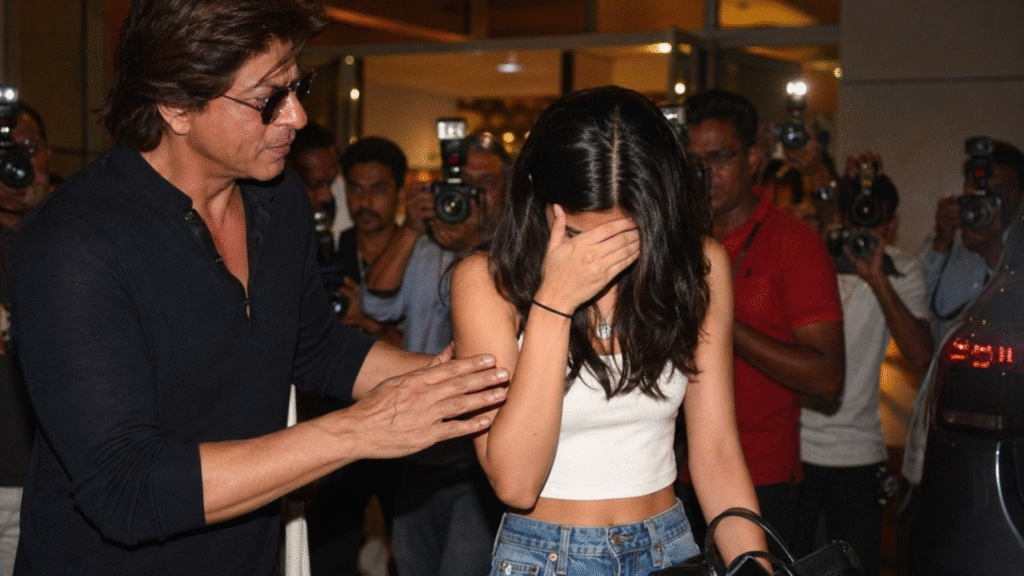
- Harassment and Safety Risks: Aggressive tactics—like hiding in bushes, using drones, or chasing cars—aren’t just annoying; they’re dangerous. Recent viral clips show security scuffles, distressed children, and celebs snapping under strain. It invades personal space in the name of “public interest.”
- Exploitation of Innocents: Star kids didn’t choose this life. Yet their faces, outfits, and even innocent tantrums become content fodder. This raises serious ethical red flags about consent and childhood privacy.
The recent ugly incident—where a paparazzo’s relentless pursuit of a star kid led to a heated confrontation—perfectly illustrates how the system can spiral. What fans see as “entertaining drama” is often raw stress for the family involved.
Star Kids Caught in the Crossfire: The Innocent Victims
This is where the debate hits hardest. From Taimur Ali Khan’s early days (adorable but overexposed) to recent cases involving Raha Kapoor, Vamika Kohli, or Hrithik Roshan’s son Hridaan reportedly being chased, the pattern is clear. Parents like Anushka Sharma-Virat Kohli and Alia Bhatt-Ranbir Kapoor have publicly requested paps to back off their children. Alia has fumed over rooftop photos invading her home; others have shared how constant attention affects kids’ emotional well-being.
Think of it like this: Fame is a double-edged sword for adults—they signed the contract. But thrusting children into it without choice? That’s like handing a kid a microphone in a storm and expecting them to sing happily. Studies and expert opinions (echoed in global privacy discussions) show early media exposure can lead to identity issues, anxiety, and a distorted sense of self. In India, where family is everything, protecting the next generation feels especially sacred—yet the limelight greed often overrides it.
The Indian Twist: PR Machinery, Social Media, and Cultural Pressures
Bollywood’s pap culture has a desi flavor. Our collective obsession with “family values” clashes ironically with the invasion of actual families. PR teams play both sides—leaking “candid” airport looks one day, then crying foul when it gets too personal. Social media amplifies everything: one blurry photo gets 10 million views overnight, turning private pain into public spectacle.
Compare this to the West. Hollywood has stricter laws (California’s anti-paparazzi statutes protect against harassment, especially of minors). In India, we rely on Article 21 of the Constitution—the right to privacy, affirmed in the landmark Puttaswamy judgment. There’s also the Bharatiya Nyaya Sanhita Section 78 for privacy breaches and Press Council guidelines, but enforcement is weak. No binding code exists for paps, leaving it to individual ethics.
Celebs themselves fuel the fire. Many court paps for promotions while demanding privacy when convenient. It’s a classic case of wanting cake and eating it too—understandable in a hyper-competitive industry, but it confuses the public.
Real Voices: Triumphs, Tumbles, and Heartfelt Appeals
Let’s hear from those living it. Alia Bhatt has repeatedly called out home invasions, urging respect. Anushka and Virat have politely requested no photos of their kids, thanking paps when they comply. Janhvi Kapoor has slammed inappropriate angles that objectify women. On the flip side, Akshay Kumar sees it as part of the job, noting how it supports photographers’ families. Sanjay Dutt’s recent snap during a family dinner (“Bas karna be”) captured the exhaustion many feel.
Fans are divided too. Some argue, “They chose fame—deal with it.” Others empathize: “Even stars deserve normalcy, especially for their children.” Real stories from industry insiders reveal paps often face aggression too—yet many admit unchecked aggression harms everyone.
Finding the Balance: Time for a New Code of Conduct?
The solution isn’t banning paps—that would kill the buzz Bollywood thrives on. Instead, let’s get practical with a clear, enforceable code:
- Respect Private Spaces: No photos inside homes, hospitals, schools, or funerals unless invited.
- Protect Star Kids: Blanket policy—no close-ups or identification of minors without parental consent. Blurred faces or group shots only.
- Consent First: Public events are fair game, but personal outings deserve a polite ask.
- Self-Regulation: Photographers’ associations train members on ethics, with penalties for violations.
- Celeb Responsibility: Be consistent—don’t court paps selectively. Use official channels for publicity.
- Fan Power: Support ethical content. Call out harassment instead of rewarding it with views.
A collaborative body involving celebs, paps, media houses, and legal experts could make this real—much like industry self-regulation in other areas.
Wrapping It Up: Redefining the Limelight
So, has Bollywood’s greed for limelight gone too far? The answer lies somewhere in the middle. Paparazzi culture fuels the dream machine that millions aspire to, but unchecked, it devours privacy, mental peace, and childhood innocence. The recent star kid incident isn’t just one ugly fight—it’s a symptom of a system that needs recalibration.
We, as fans, celebs, and media, hold the power to change it. Demand better. Support boundaries. Celebrate talent without invading lives. Bollywood’s magic comes from stories on screen—not shattered private moments off it.
What’s your take? Have you witnessed paparazzi culture crossing lines? Should there be stricter rules for star kids? Drop your thoughts in the comments below—let’s keep the conversation respectful and push for positive change. Share this if you believe privacy deserves its own spotlight. Your voice matters in rewriting this script!
You May Like This
1



Advertisement

You May Like This






Advertisement
Advertisement
Advertisement