

Advertisement

- Updated on May 11, 2026
- IST 4:07 am
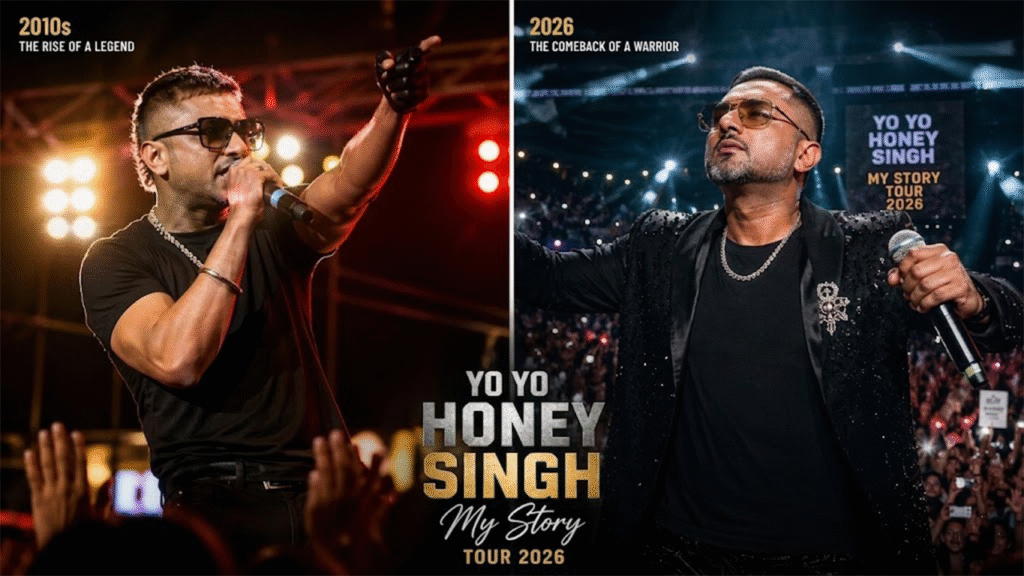
Imagine this: It’s 2016, and 18-year-old Arjun from Ludhiana is cruising through Punjab’s dusty highways in his beat-up scooter, blasting “Brown Rang” on loop. The bass shakes his bones, the swag in every lyric makes him feel invincible. Honey Singh isn’t just a singer—he’s the voice of a generation, the king who turned Punjabi hip-hop into India’s party anthem. But then the music stops. For years, silence. No new drops, no tours, just whispers of health struggles and a fading legend. Arjun grows up, gets a job in Delhi, and wonders: Did the king lose his crown forever?
Now picture the same Arjun in March 2026. He’s standing shoulder-to-shoulder with thousands at Delhi’s packed stadium during the India chapter of Honey Singh’s My Story World Tour. The lights explode, the beat drops on fresh tracks from My Story Album 2026, and there he is—Y o Yo Honey Singh, mic in hand, owning the stage like the old days but with a deeper fire. The crowd roars as he performs “Come Back” and “SO GAYA 4,” raw energy mixed with hard-won wisdom. Arjun wipes away a tear. “Bhai, the king is back—and this time it feels real.”
So, what’s the truth? Is Yo Yo Honey Singh’s musical comeback the triumphant return of the King of Hip Hop, or is it a nostalgic glow-up that doesn’t quite hit the same highs? After years battling bipolar disorder, addiction, and the pressures of sudden fame, the man who defined desi rap is dropping new albums, topping charts, and opening up like never before. In this blog, we’ll unpack the rise, the fall, the fiery comeback, and the real talk from fans and critics. We’ll explore whether his latest drops—like those from 51 Glorious Days and My Story—prove he’s reclaimed the throne or if the crown still feels a little loose. Let’s dive into the beats, the battles, and the buzz together!
The Rise of Yo Yo Honey Singh: How One Man Rewrote Indian Music
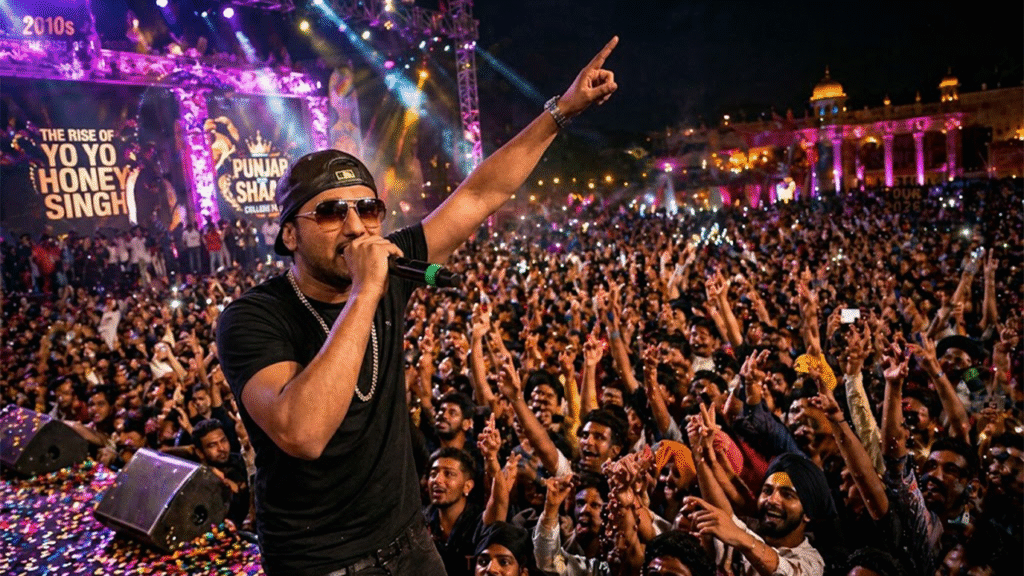
First, let’s rewind the tape. Before Honey Singh, Indian hip-hop was underground, mostly confined to English tracks or niche Punjabi scenes. Then came this Hoshiarpur-born talent—real name Hirdesh Singh—with a fusion of Punjabi folk, hip-hop swagger, and unapologetic desi attitude that exploded onto the scene around 2011-2012. Songs like “Angreji Beat,” “Blue Eyes,” and “Lungi Dance” didn’t just chart—they became cultural earthquakes. Weddings, college fests, street parties—everywhere you turned, Honey Singh was the soundtrack.
Think of it like a desi hip-hop Big Bang. He wasn’t just rapping; he was creating a movement. Millions of young Indians, especially in small towns and Punjab, found their voice in his high-energy anthems. He charged ₹70 lakh per song at his peak, starred in Bollywood hits, and turned everyday folks into overnight party kings. His style—mixing rap with catchy hooks, heavy beats, and that signature growl—made him the undisputed King of Punjabi Hip Hop. Albums like International Villager sold dreams along with downloads. For a generation growing up in the 2010s, Honey Singh was more than music; he was rebellion, confidence, and pure fun rolled into one.
But fame that bright casts long shadows. The constant spotlight, industry pressures, and personal demons started taking their toll. What looked like an unstoppable rise was building toward a dramatic fall.
The Darkness: Battles That Nearly Ended the Reign
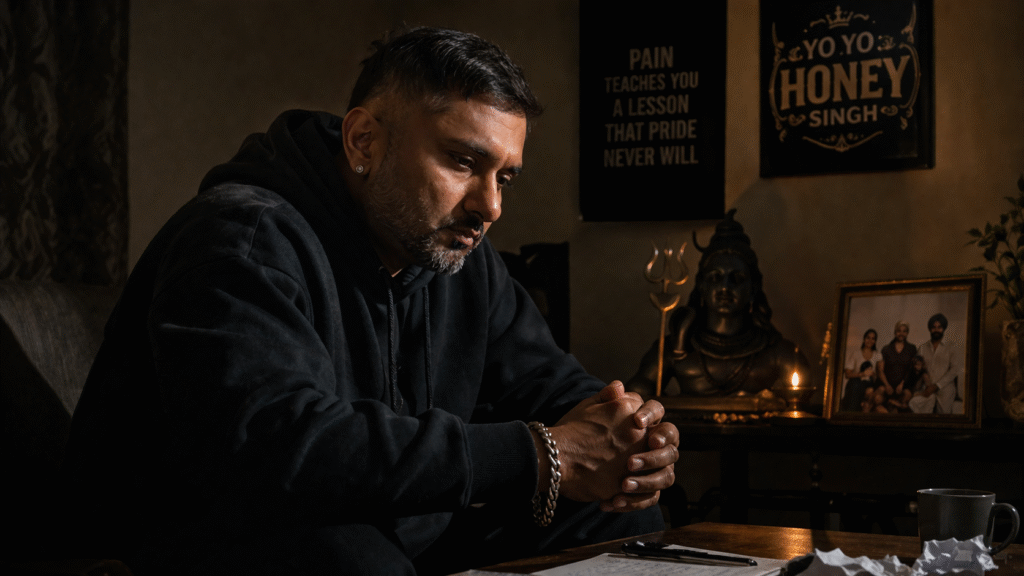
Fast forward to the mid-2010s. The king vanished. No new music, no public appearances—just rumors. In raw interviews years later, Honey Singh opened up about his darkest chapter: severe bipolar disorder, addiction, and a mental health storm that left him believing he was “dead” for three years. He described racing thoughts—over 30,000 negative ones in 30 seconds—and how the industry’s grind, combined with substance abuse, pushed him to the edge.
It wasn’t just personal; it was public. Fans worried, critics speculated, and the music world moved on to new voices like Badshah or AP Dhillon. Honey Singh has spoken candidly about family support, medical treatment, and even spiritual moments—like visiting a Shiva temple—that helped pull him back. His My Story tour literally structures the show into chapters: The Rise, The Fame, The Darkness, and now The Comeback. It’s raw, vulnerable storytelling that turns concerts into therapy sessions for thousands.
For many Indian men, especially in a culture where talking about mental health is still taboo, Honey’s honesty was revolutionary. He didn’t hide behind PR gloss; he admitted the toll of sudden wealth, isolation, and the “aggressive and reckless” persona his early lyrics sometimes projected. This phase wasn’t just a career pause—it was a life-or-death fight that reshaped him.
The Comeback Era: New Beats, New Battles, and Chart Domination
Enter 2024-2026: the phoenix moment. Honey dropped Glory and Honey 3.0 in 2024, followed by the massive 51 Glorious Days album in September 2025—a whopping 51-track beast. By early 2026, My Story Album 2026 arrived with fire like “SO GAYA 4,” “MY STORY,” “KUCH TO KAHO” (with Sagar Singh Monster), and the anthem “Come Back.” He launched the My Story World Tour, kicking off the India chapter with a thunderous Delhi show in March 2026, where he performed old hits alongside new bangers and got real about his journey.
The numbers don’t lie. He’s reclaimed the top spot as India’s most-viewed artist on YouTube, dominating Spotify and Apple Music charts. New tracks are trending, collaborations are buzzing, and stadiums are selling out. But it’s not just quantity—there’s a maturity in the lyrics now, blending the old swag with reflections on resilience, faith, and second chances.

The Big Debate: Back to His Absolute Best… or Close Enough?
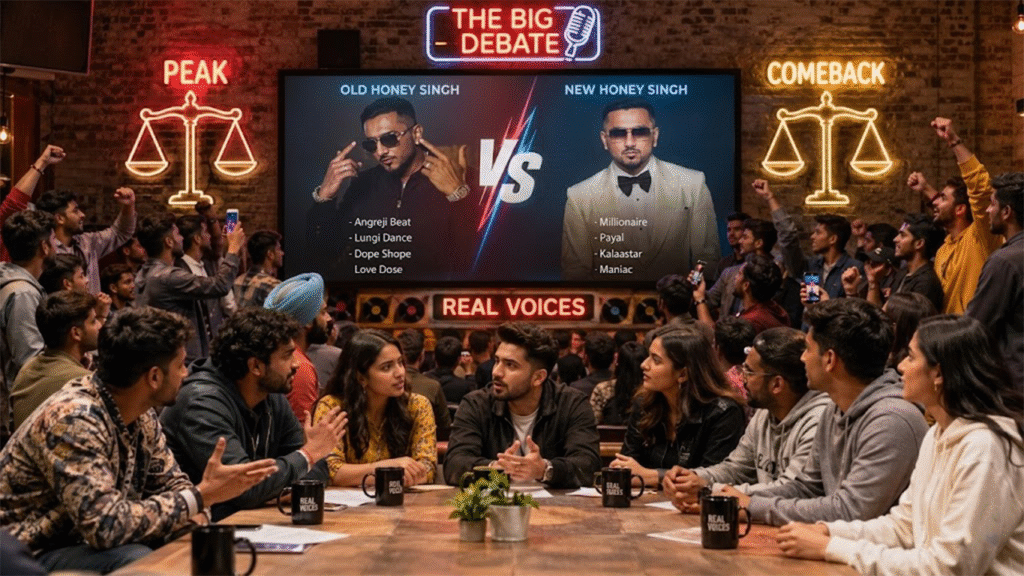
Here’s where it gets juicy—fans, critics, and even fellow artists are split. Let’s break it down.
The Pros: Why This Comeback Feels Legendary
- Raw Energy and Evolution: The new material has that signature Honey growl but with added depth. Tracks from 51 Glorious Days and My Story mix party vibes with personal storytelling—perfect for Gen Z who want both beats and meaning.
- Mental Health Advocacy: By sharing his bipolar journey openly, he’s inspiring millions. In a country where mental health conversations are often whispered, Honey’s platform normalizes seeking help.
- Cultural Impact and Charts: He’s not just back—he’s leading the Punjabi hip-hop revival. Massive streams, sold-out tours, and a new generation discovering (or rediscovering) his catalog prove the king still rules the airwaves.
Take Arjun’s story from the hook—he’s not alone. Thousands flood social media with “King is back” reels.
The Cons: Honest Questions Fans Are Asking
- Comparisons to the Peak: Some old-school fans say the new sound, while solid, lacks the raw, chaotic magic of 2012-2014 hits. Production is polished, but does it hit the same gut-punch?
- Lingering Controversies: Recent on-stage remarks (like the Delhi concert clip that went viral) sparked backlash over explicit language, leading to a public apology. Critics argue old habits die hard, questioning if growth is complete.
- Competition from New Gen: The scene has evolved with artists like AP Dhillon bringing smoother vibes. Is Honey adapting fast enough, or is nostalgia carrying him?
Honey himself seems aware—his tour narrative acknowledges the past while pushing forward. It’s not perfect, but it’s human.
The Indian Twist: Reigniting Desi Hip-Hop in a Streaming World
Honey Singh’s story is deeply desi. In Punjab and beyond, his music gave voice to aspirations of small-town youth—cars, swag, and dreams bigger than the fields. Our festivals, weddings, and even gym playlists still thump to his beats. The comeback hits different because it mirrors India’s own resilience: mental health awareness is growing, streaming has democratized music, and Punjabi hip-hop is now global.
Yet challenges remain—industry pressures, toxic masculinity in lyrics debates, and balancing commercial success with authenticity. Honey’s journey shows how desi culture can evolve: from party anthems to messages of healing, all while keeping the beat alive.
Real Voices: Fans, Critics, and the Man Himself
Let’s hear from those living it. A Delhi college student posted after the tour: “He spoke about darkness like it was yesterday—made me feel seen.” Older fans on forums say, “The swag is back, but the wisdom makes it better.” Honey’s own words during concerts: “This time it is personal.” Even amid backlash, his apology video showed accountability: “Main apni zubaan pe niyantran rakhunga.”
These stories prove one thing: Comebacks aren’t just about hits—they’re about heart.
Lessons from the King: What His Journey Teaches Us All
Thinking of chasing your own dreams? Honey’s blueprint offers powerful takeaways:
- Seek Help Early: Bipolar and addiction don’t discriminate—talk to professionals and lean on family, like he did.
- Own Your Story: Vulnerability isn’t weakness; it’s strength. His My Story album and tour turn pain into power.
- Evolve Without Losing Roots: Blend old fire with new wisdom—stay true to your sound while growing.
- Balance Fame and Peace: Success without mental peace is empty. Prioritize health over hype.
- Apologize and Improve: When you slip (as in recent controversies), own it and move forward.
Inspire the Next Gen: Use your platform for good—mental health, resilience, and authentic desi pride.
Wrapping It Up: The Throne Is His to Claim
So, is the King of Hip Hop finally back to his best? The answer isn’t a simple yes or no. Yo Yo Honey Singh’s comeback is messy, inspiring, flawed, and triumphant—all at once. The new music is climbing charts, the tours are electric, and his openness about bipolar recovery is changing lives. He may not sound exactly like 2013 Honey, but perhaps that’s the point. This version is wiser, battle-tested, and still delivering bangers that make India dance.
If you’re a fan who grew up on his tracks, this is your moment to celebrate resilience. The man who defined an era is writing a new chapter—and it’s one worth streaming. What’s your take? Is Honey Singh fully back, or does he still have work to do? Drop your favorite new track or old classic in the comments below—let’s swap stories, celebrate the king, and keep the conversation going. Share this if his journey moved you. The beat goes on!
You May Like This
1



Advertisement

You May Like This








Advertisement
Advertisement
Advertisement