

Advertisement

- Updated on May 11, 2026
- IST 2:12 am
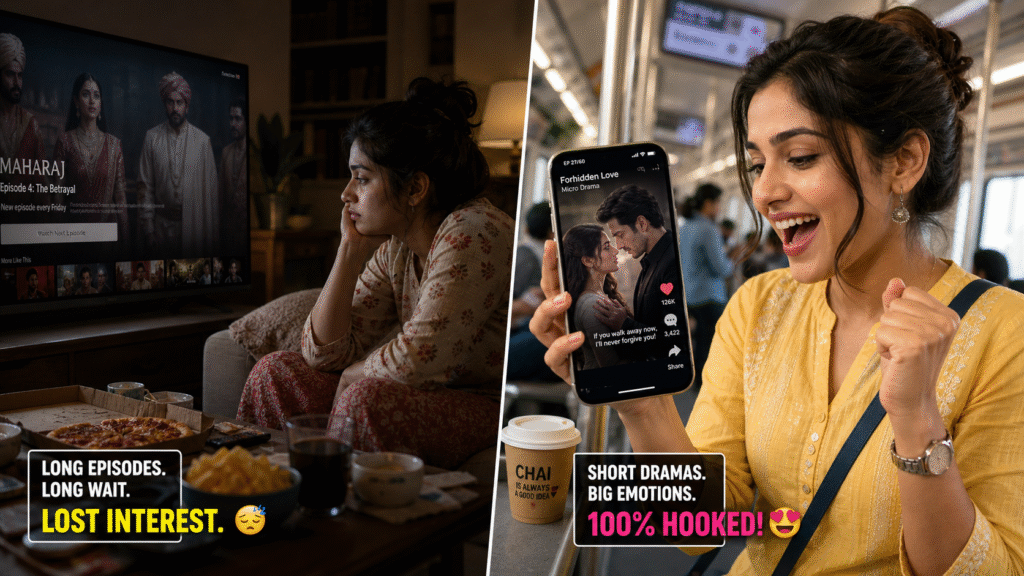
Imagine this: Neha, a 27-year-old marketing executive from Bengaluru, used to carve out her evenings for the latest web series on her favourite OTT app. She’d settle in after a long day of meetings, popcorn in hand, ready to lose herself in intricate plots, layered characters, and those satisfying 40-minute episodes. But lately? Her screen time has shifted. Now, during her metro commute, lunch breaks, or even while waiting for chai to boil, she’s glued to her phone—swiping through bite-sized episodes of high-stakes romance and betrayal that end on heart-pounding cliffhangers every 90 seconds. “One more episode,” she tells herself, only to realise she’s burned through 45 minutes without noticing. Her unfinished web series? Gathering digital dust.
Now, picture Arjun, 34, a software engineer in Mumbai. He’s tried the new trend his colleagues rave about—those ultra-short “micro-dramas” flooding Instagram Reels and dedicated apps. But after a few sessions, he feels empty. “Where’s the depth? The character arcs that actually stick with you for days?” he vents to his wife. He misses the immersive storytelling of traditional web series, the kind that sparks late-night discussions or inspires real-life reflections. Yet, even he admits: with his packed schedule, those quick hits are dangerously tempting.
So, what’s the truth? Is the micro-drama gold rush—a flood of 1- to 5-minute serialized soap operas—breathing fresh life into Indian entertainment or quietly strangling the traditional web series we once binge-watched? A new report from Meta, in collaboration with Ormax Media (“Micro Dramas: The India Story,” released March 2026), reveals the explosive shift. 65% of viewers discovered micro-dramas in the last year alone, with a staggering 89% stumbling upon them through social media feeds like Instagram and Facebook. Viewers are clocking a median of 3.5 hours per week on these stories, often in solitary late-night sessions. In this blog, we’ll unpack the addictive mechanics, the financial stakes for OTT giants, real Indian experiences, and whether long-form content can survive this short-form revolution. Let’s scroll deeper and find out together.
Understanding Micro-Dramas: Timing, Twists, and Tiny Screens
Unlike traditional web series that demand your full attention for 30–60 minutes per episode, micro-dramas are engineered for the vertical scroll. Think 60- to 120-second episodes shot in portrait mode, packed with dramatic music swells, rapid cuts, and relentless cliffhangers. No complex world-building—just instant emotional punches: secret affairs, revenge plots, rags-to-riches billionaire romances, or family betrayals that feel like desi soap operas on fast-forward.
Popular platforms leading the charge in India include Kuku TV (with hundreds of titles and massive downloads), Story TV, Quick TV, and MX Player’s Fatafat hub. These aren’t random Reels or user-generated Shorts; they’re professionally scripted, often AI-assisted for speed, and serialized across dozens of episodes. The format mirrors China’s hugely successful “duanju” but with an Indian soul—relatable middle-class struggles, regional languages (Hindi, Tamil, Telugu, and more), and tropes pulled straight from TV serials.
The pitch? Zero commitment. You don’t need a quiet evening or a big screen. Just your phone, a spare 2 minutes, and boom—you’re hooked. For the average viewer juggling work, family, and Mumbai traffic or Delhi metro chaos, it’s pure genius. But with hormones of attention already frazzled by endless notifications, is this format rewiring how we consume stories—or just exploiting our shrinking focus spans?
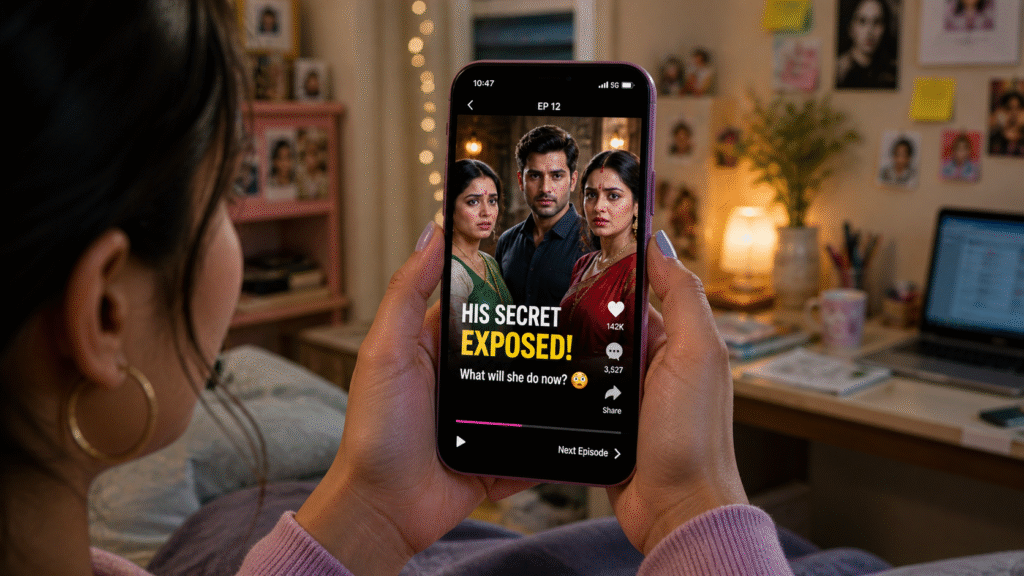
The Micro-Drama Boom in India: Social Feeds Fueling a Gold Rush
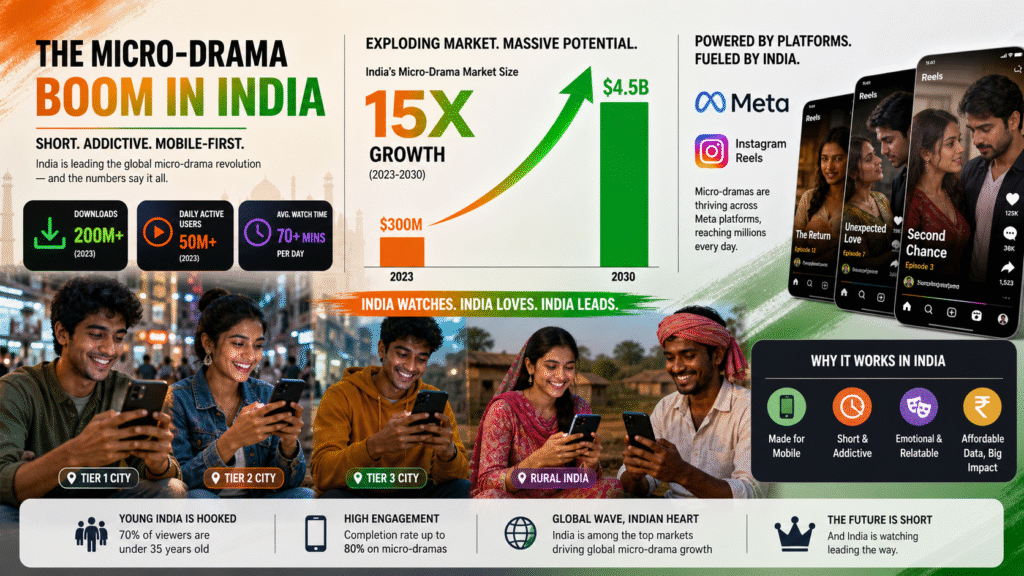
The numbers don’t lie. According to the Meta-Ormax report, micro-dramas have exploded into a $300 million market in their first meaningful year, with projections hitting $4.5 billion by 2030. Over 350 million app downloads, 100 million monthly active users, and apps like Kuku TV cracking the top 5 most-downloaded video streaming charts alongside (or ahead of) traditional OTT players. Discovery is almost entirely passive: 89% via algorithmic social feeds. You’re mindlessly scrolling, a provocative thumbnail catches your eye (“His Wife’s Shocking Secret!”), you tap, and suddenly you’re invested.
Why now? India’s mobile-first generation—especially in Tier-2 and Tier-3 cities—has cheap data, powerful smartphones, and fragmented attention. Busy professionals, homemakers stealing “me-time” at night, and young students all crave entertainment that fits into micro-moments. 90% watch alone (compared to just 43% for long-form OTT), often with earphones, turning commutes or late nights into private emotional escapes. Genres topping charts? Romance (72%), family drama (64%), comedy (63%), and suspense—mirroring the emotional highs of classic Indian TV soaps but condensed.
It’s a modern gold rush for creators too. Production is lightning-fast and low-cost compared to big-budget web series. New talent, regional storytellers, and even established studios like Yash Raj Films and Red Chillies are dipping toes in. The result? Democratized storytelling—but at what cost to depth?
The Big Debate: Revolution or Ruin for Traditional Web Series?
Here’s where it gets juicy. Experts, creators, and viewers are split. Micro-dramas aren’t just competing—they’re stealing eyeballs, time, and wallets from traditional OTT platforms.
The Pros: Why Micro-Dramas Are Winning Hearts (and Wallets)
- Perfect for Modern Lives: In a country where average attention spans are shrinking and schedules are chaotic, these 2-minute hits deliver quick dopamine without guilt. No planning your weekend around a full season—just instant gratification during idle moments.
- Massive Accessibility & Inclusivity: Low data usage, free initial episodes, micro-payments, and regional languages open doors for millions in smaller towns who found full web series too time-consuming or expensive. Romance and family themes feel familiar yet fresh.
- Creator Boom & Economic Goldmine: Fast production cycles mean more opportunities for writers, actors, and directors. Platforms report high engagement, with some users spending 30–60 minutes per session binging back-to-back episodes. Early revenue models (ads, subscriptions, in-app coins) are scaling rapidly.
- Innovation Spark: AI tools help generate variations quickly, keeping content fresh and algorithm-friendly.
Neha’s story fits here perfectly. Her micro-drama habit has become her daily unwind—light, fun, and perfectly paced for her hectic life.
The Cons: Where the Format Might Be Killing Long-Form Storytelling
- Attention Span Erosion: Constant cliffhangers train brains for ultra-short rewards, making 40-minute episodes feel like a slog. Arjun isn’t alone—many report struggling to finish traditional series now.
- Shallow Narratives & Quality Concerns: Plot-driven over character-driven, some content leans on tropes, sensationalism, or even “sleaze” for clicks. Critics worry about cultural impact and long-term viewer fatigue.
- Financial Hit to OTT Platforms: Viewers juggling 6+ streaming apps are shifting time (and spending) to micro-dramas. Traditional web series require huge budgets for production, marketing, and star power—revenues that could dry up as ad dollars and subscriptions flow to quick-hit apps. Big players like JioHotstar (with Tadka) and MX Player (Fatafat) are fighting back by launching their own micro-drama hubs, but the shift is undeniable.
- Addiction Risks: Solitary night-time binges (60% of viewing after 8 PM) can blur into escapism, affecting sleep, productivity, or real relationships.
The industry faces a classic disruption: short-form is eating long-form’s lunch, just like how Reels challenged full videos years ago.

The Indian Twist: From Doordarshan Soaps to Pocket-Sized Serials
Fasting isn’t new to Indians—wait, no, storytelling isn’t either! Our culture has always loved serialized drama—think Kyunki Saas Bhi Kabhi Bahu Thi or regional mega-serials that dominated family TV time. Micro-dramas are the digital evolution: same emotional melodrama, family intrigues, and moral dilemmas, but now vertical, mobile, and personal.
Traditional TV soaps were co-viewed rituals. Micro-dramas are solitary phone escapes—perfect for nuclear families or working women stealing moments. Regional flavors thrive (Tamil thrillers, Bengali family sagas), making it deeply relatable. Yet, the “desi” twist also brings challenges: balancing cultural sensitivity with addictive hooks, and navigating parental concerns about content in shared homes.
Real Stories: Triumphs, Tumbles, and Turning Points
Let’s hear from the frontlines.
- Meena, 29, Lucknow: A homemaker who discovered Kuku TV via Instagram. “I finish household chores faster just to squeeze in episodes. It’s my escape—romance without needing 2 hours straight.” She’s paid for premium but worries about screen addiction.
- Rahul, 31, Hyderabad: A content creator who switched from web series writing to micro-dramas. “Budgets are smaller, output faster—I’ve done 5 shows this month alone. But I miss crafting deep characters.” His income doubled, yet he questions long-term creative fulfillment.
- Simran, 24, Jaipur: Tried mixing both formats but found micro-dramas winning. “Traditional series feel slow now. I still love a good Netflix weekend binge, but daily? Phone stories win.”
These tales show micro-dramas aren’t universally “killing” anything—they’re reshaping habits. Success depends on smart use.
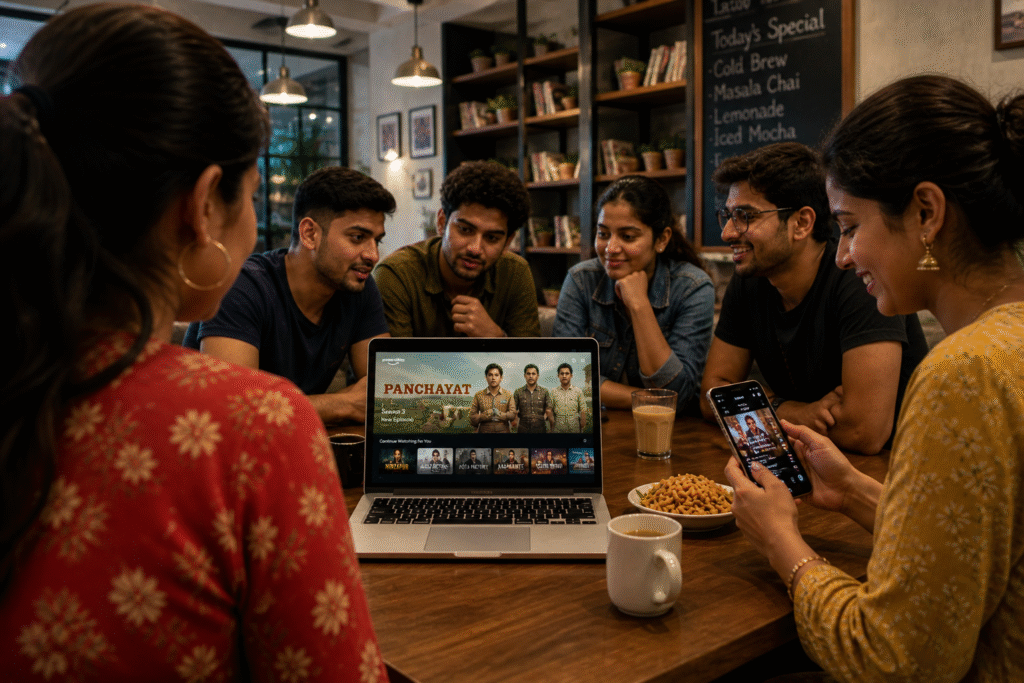
Navigating the Gold Rush: Tips to Balance Both Worlds
Whether you’re a viewer, creator, or platform executive, here’s how to thrive:
- For Viewers: Set time limits—use phone timers for micro-drama sessions. Alternate with longer-form content on weekends for deeper satisfaction. Track how it affects your mood and focus.
- For Creators: Blend formats—use micro-dramas as teasers or spin-offs for full web series. Focus on strong hooks while building emotional layers.
- For OTT Platforms: Hybrid models are key. Launch micro-drama verticals (like Fatafat or Tadka) while protecting premium long-form with exclusive stars and stories.
- Mindful Consumption: Prioritize quality over quantity. Choose platforms with better storytelling standards.
- Industry Watch: Support creators experimenting with “micro-to-macro” storytelling—short episodes that build into meaningful arcs.
Wrapping It Up: To Scroll or to Binge?
The micro-drama gold rush isn’t black-and-white. For millions of Indian viewers, these 5-minute soap operas are a lifeline—fun, accessible, and perfectly timed for our on-the-go lives. They’ve democratized entertainment, boosted creator economies, and turned fragmented attention into a massive industry. Yet, they pose real threats: eroding patience for deeper stories, shifting revenues away from ambitious web series, and potentially lowering overall content quality if unchecked.
Traditional web series won’t vanish—they’ll evolve, perhaps by adopting hybrid approaches or doubling down on cinematic excellence that micro-dramas can’t replicate. The real winners? Audiences who consciously choose balance, and creators who innovate across formats.
What’s your take? Have micro-dramas replaced your web series binges, or do you switch between both? Are you loving the quick hits or missing the depth? Drop your story in the comments below—let’s discuss how India’s watching habits are changing forever. And if you’re a creator or platform exec navigating this gold rush, share your strategies too. Your insights could help the next wave of storytellers!
You May Like This
1



Advertisement
You May Like This








Advertisement
Advertisement
Advertisement