

Advertisement

- Updated on May 9, 2026
- IST 5:57 am

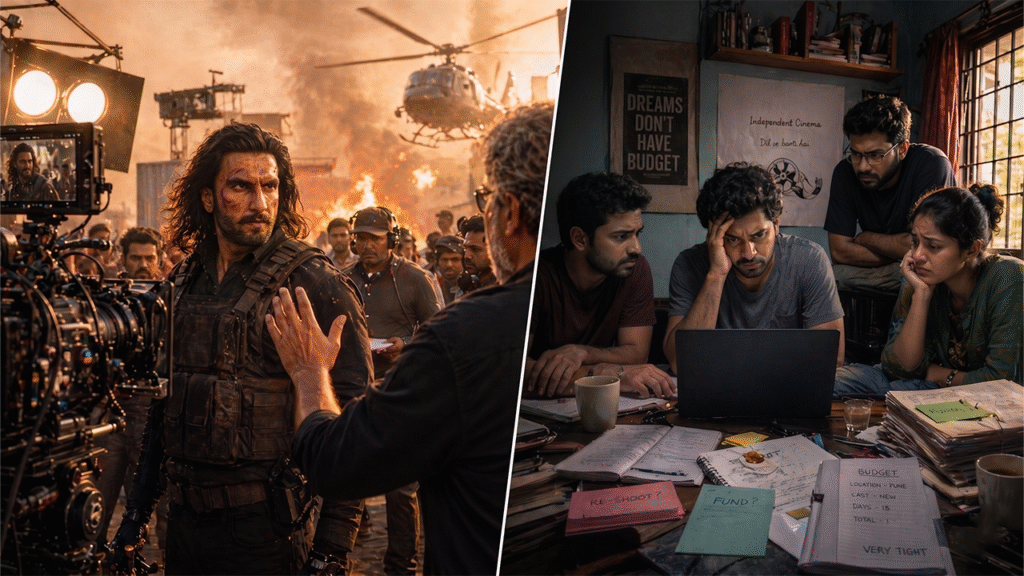
Imagine this: Arjun, a 32-year-old indie filmmaker from Pune, pours his heart, savings, and two years of sweat into Chhaya, a heartfelt middle-budget drama about urban loneliness and family bonds. The cast is fresh talent, the story raw and real—no stars, no CGI explosions. Release date set for late March 2026. Then Dhurandhar 2 drops like a thunderbolt on March 19. Theaters across India go into frenzy mode, screens booked solid for weeks. Arjun’s film gets shoved into 150 shows in single-screen halls. Collections? A heartbreaking ₹4.2 crore net. “One monster hit buried my dream,” he tells a friend over chai, voice cracking with exhaustion.
Now picture Meera, 29, a debut director from Hyderabad. Her quirky, low-budget slice-of-life comedy Coffee aur Confessions also hits theaters the same month. Instead of fighting the giant, she times her release smartly in a post-hype window, leverages word-of-mouth on social media, and taps into the theater buzz Dhurandhar 2 created. Six weeks later, she’s crossed ₹28 crore, picked up a Netflix deal, and is fielding calls from producers. “The big film brought people back to theaters,” she beams. “I just had to tell a story they wanted to share.”
So, what’s the real story behind 2026’s box office report card? Dhurandhar 2 has shattered records—India nett over ₹1,000 crore in record time, worldwide gross touching ₹1,700 crore-plus—but its shadow looms large. Is this spy-thriller spectacle a blessing that revives Indian cinema’s global swagger, or a curse quietly squeezing the life out of small and mid-budget films? In this deep dive, we unpack Q1 2026 data, weigh the highs and lows, hear real voices from the trenches, and explore what it means for the movies you’ll watch next. Let’s break it down, desi-style.
Understanding the 2026 Q1 Box Office Landscape: A Tale of Two Cinemas
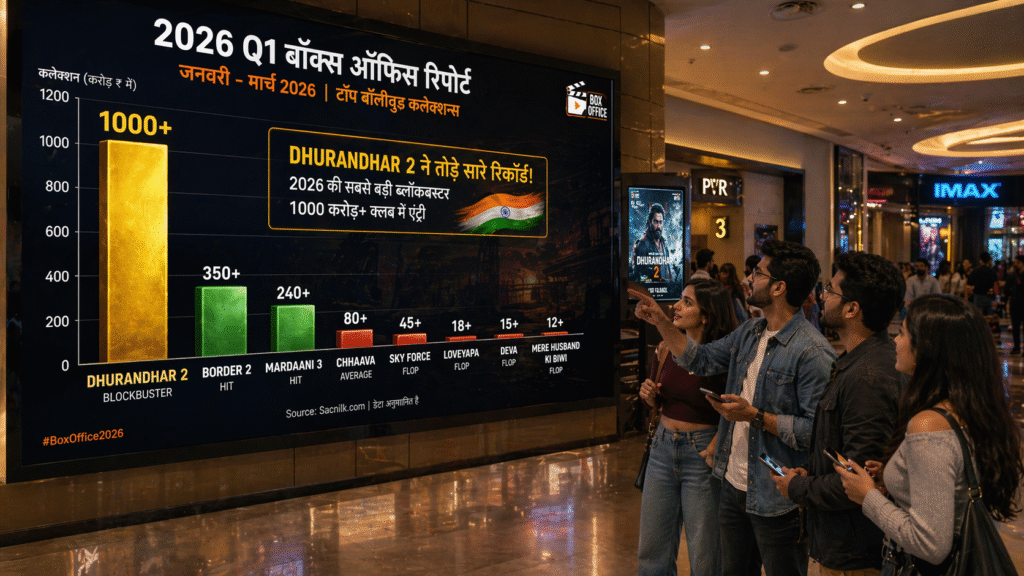
The first three months of 2026 painted a classic K-shaped recovery for Bollywood and Indian cinema at large. Total collections across languages hovered around ₹2,500 crore-plus, but the numbers tell a polarized story. A handful of big releases drove the lion’s share, while dozens of others barely made a dent.
Dhurandhar: The Revenge (the official sequel to the 2025 hit) dominated like no other. Directed by Aditya Dhar and starring Ranveer Singh as the undercover agent Hamza Ali Mazari, it crossed ₹1,000 crore nett in India faster than any previous Bollywood film. By early April, its India nett stood at approximately ₹1,088 crore, with worldwide gross crossing ₹1,700 crore. It even cracked the global top 10 highest-grossers of 2026, beating Hollywood and Chinese releases. Other winners included Border 2 (super hit at ₹362 crore nett) and Mardaani 3 (solid performer around ₹53 crore).
On the flip side, many mid and small-budget films struggled. Titles like Ikkis, Rahu Ketu, Happy Patel: Khatarnak Jasoos, Tu Ya Main, and Vadh 2 either flopped or underperformed, often collecting under ₹10-70 crore despite decent buzz. Even some star-driven projects like O’Romeo delivered mixed results. Across the board, only about three major films truly succeeded out of 14 noteworthy releases in Bollywood alone.
This isn’t new, but Dhurandhar 2 amplified it. The film ran for weeks in prime multiplex slots, leaving limited breathing room for smaller releases. Single-screen theaters, once a lifeline for content-driven films, followed suit. Yet, interestingly, some South Indian low-budget gems proved content still reigns—films with modest budgets and strong word-of-mouth carved their own niches, showing audiences crave stories that feel personal, not just spectacular.
For many in the 15-45 age group—the core multiplex crowd—cinema is escapism mixed with relatability. Big action thrillers deliver the former; small films often deliver the latter. When one overshadows the other, does the industry win or lose diversity?
Dhurandhar 2 Explained: The Spy Thriller That Rewrote the Rules
Unlike typical star vehicles, Dhurandhar 2 blended gritty realism with larger-than-life action. Ranveer Singh’s intense performance, backed by a powerhouse cast including Akshaye Khanna, Sanjay Dutt, Arjun Rampal, and R. Madhavan, struck a chord. The story continued the undercover operation from the first film, weaving in themes of revenge, patriotism, and moral gray areas inspired by real geopolitics. Released on March 19 amid Gudi Padwa, Ugadi, and Eid festivities, it rode festive cheer and massive pre-release hype.
The pitch? A metabolic reset for Bollywood—high production values (reportedly around ₹225 crore for the duology combined), globe-trotting visuals, and edge-of-seat tension. It gave your body (or rather, the audience) a break from formulaic dramas while tweaking expectations on scale. For the average viewer, it was pure adrenaline. But for the ecosystem of smaller films already dancing on a tightrope of budgets and screens, did it sync up—or throw the entire rhythm off balance?
The Big Debate: Does Dhurandhar 2 Help or Hurt Small Films?
Here’s where opinions split like a multiplex crowd during interval. Experts, producers, and filmmakers don’t agree. Let’s weigh both sides fairly.
The Pros: Why This Blockbuster Might Be a Blessing
- Industry-Wide Footfall Boost: Mega hits bring casual audiences back to theaters. Dhurandhar 2’s record run created a halo effect—more people bought tickets overall, helping even some smaller films in later weeks find screens. Theater owners reported higher occupancy rates in Q1, proving big films keep the lights on.
- Global Spotlight and Investment: Crossing ₹1,700 crore worldwide puts Indian cinema on the international map. OTT deals, satellite rights, and foreign markets become juicier. This confidence trickles down—studios feel bolder funding new projects, potentially opening doors for talent from smaller films.
- Raising the Bar Creatively: The film’s success proves quality action with strong writing works. It inspires better VFX, tighter scripts, and ambitious storytelling, pushing even indie creators to aim higher.
Take Meera’s story—she credits the post-Dhurandhar 2 buzz for giving her comedy the visibility it needed.
The Cons: Where It Might Backfire
- Screen Monopoly and Unrealistic Expectations: Big films occupy prime slots for weeks, starving smaller releases of shows. Producers now chase only “high-risk, high-reward” spectacles, making mid-budget films (₹20-80 crore) nearly extinct.
- Risk Aversion and Funding Crunch: After seeing flops like Rahu Ketu or Ikkis, financiers tighten purse strings for non-star, non-franchise projects. “If it’s not the next Dhurandhar, why risk it?” becomes the mantra.
- Loss of Diversity and Fresh Voices: Indian cinema thrives on variety—rom-coms, dramas, social-issue films, regional stories. When everything must compete with a ₹1,000-crore benchmark, the ecosystem shrinks. Young filmmakers like Arjun face shelved scripts and delayed releases.
Priya’s experience echoes this: her small film’s limited release window killed its chances before it could build momentum.
The Indian Cinema Twist: Tradition Meets Blockbuster Economics
Fasting isn’t new to us Indians—neither is big-scale cinema. From Sholay to Baahubali, we’ve always loved spectacle. But our multiplex culture, heavy on star power and weekend openings, now clashes with the need for steady, story-driven releases. Single-screen theaters in Tier-2/3 cities once nurtured small films; today, they chase the Dhurandhar 2 wave with extended runs.
Regional cinema offers hope. Some South Indian low-budget gems in Q1 2026 succeeded on content and word-of-mouth, proving audiences still reward relatability. Bollywood can learn: pair big-event films with smart, staggered releases for smaller ones. The trick? Break the fast (or the hype) with balanced programming—not just carb-heavy blockbusters.
Real Stories: Triumphs and Tumbles from the Trenches
Let’s hear from the people living it.
- Vikram, 38, Mumbai Producer (small film): “We had a beautiful coming-of-age story ready. Dhurandhar 2 wiped out our Friday-Sunday window. We recovered costs on OTT, but theatrical dreams died. It’s disheartening when one film dictates the entire quarter.”
- Neha, 27, Bangalore Director (indie hit): “My ₹15 crore psychological thriller released after the initial frenzy. The theater rush from the big film helped us get noticed. We crossed ₹40 crore. Big hits create the ecosystem; timing and story decide survival.”
These tales prove one thing: Dhurandhar 2 isn’t a magic wand (or a curse wand). It’s a tool—how the industry wields it matters.
Strategies for Small Films to Thrive in the Dhurandhar Era
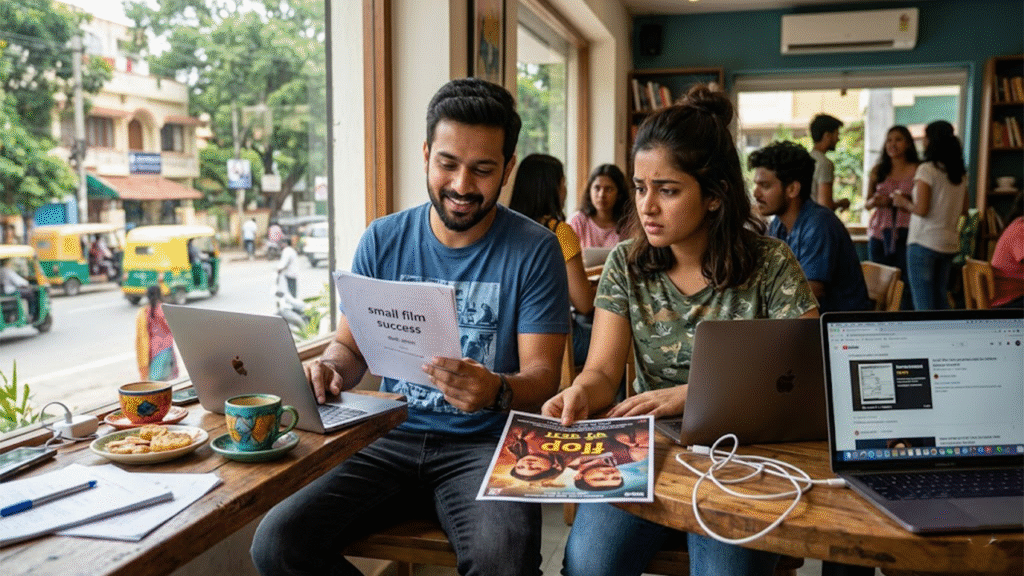
Thinking of backing or making a smaller film? Here’s how to stay safe and smart:
- Time It Right: Avoid clashing directly with mega releases. Staggered windows or post-hype slots can work wonders.
- Lean on Content and Word-of-Mouth: Strong stories, relatable characters, and social media buzz trump big budgets. Focus on what resonates with 15-45 audiences—ambition, love, identity, mental health.
- Hybrid Models: Plan for theatrical + OTT from day one. Secure digital rights early to cushion risks.
- Audience First: Use data and test screenings. Understand regional tastes—multiplex youth want spectacle, but Tier-2/3 crowds love emotional connect.
- Collaborate Smartly: Partner with streaming giants or regional studios for wider reach without massive spends.
- Stress Less on Scale: Build communities via festivals, YouTube, Instagram Reels. Keep cortisol (and budget stress) in check.
Future-Proofing Desi Cinema: Smart Plays for 2026 and Beyond
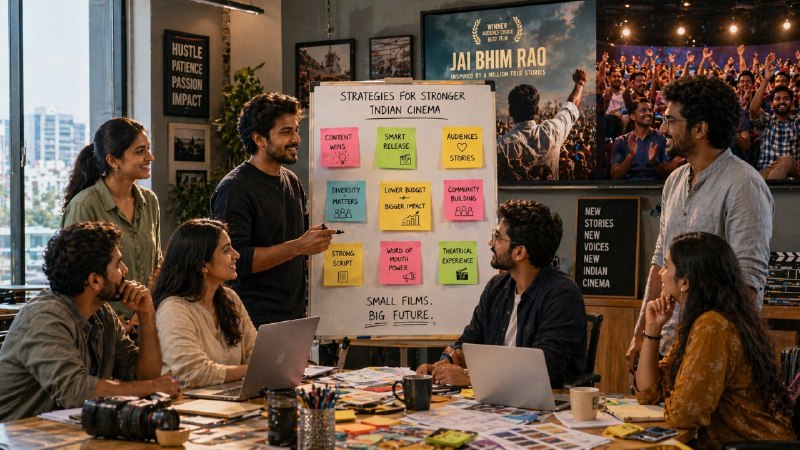
What you “serve” in the post-big-film window can make or break smaller projects. Here’s a practical playbook:
- Opening Act (Pre-Release): Tease with short, shareable clips—emotional hooks, not just action.
- Main Course (Theatrical): Target niche audiences first—women-centric stories, Gen-Z dramas.
- Side Dish (Marketing): Influencer tie-ups, college tours, and meme culture for organic reach.
- Dessert (Post-Release): Quick OTT pivot and fan events to extend life.
Steer clear of copycat big-film formulas. Nourish original voices—don’t punish them with impossible benchmarks.
Wrapping It Up: To Celebrate or Caution?
So, does Dhurandhar 2 worsen the crisis for small films or help Indian cinema overall? It’s not black-and-white. For some, it’s a game-changer—reviving theaters, boosting confidence, and proving scale works. For others, it’s a high-stakes pressure cooker, pushing producers toward safe spectacles and sidelining diverse stories.
The difference lies in how we respond—as an industry and as audiences. If we demand variety, support fresh talent, and encourage balanced programming, the blessing wins. Dip your toes into the conversation: What’s your take? Did Dhurandhar 2 make you skip smaller films, or did it inspire you to seek them out? Share your story in the comments—let’s swap notes and keep Indian cinema vibrant for the next generation. Your voice matters more than any box-office number.
You May Like This
1



Advertisement

You May Like This








Advertisement
Advertisement
Advertisement