

Advertisement

- Updated on May 9, 2026
- IST 7:37 am
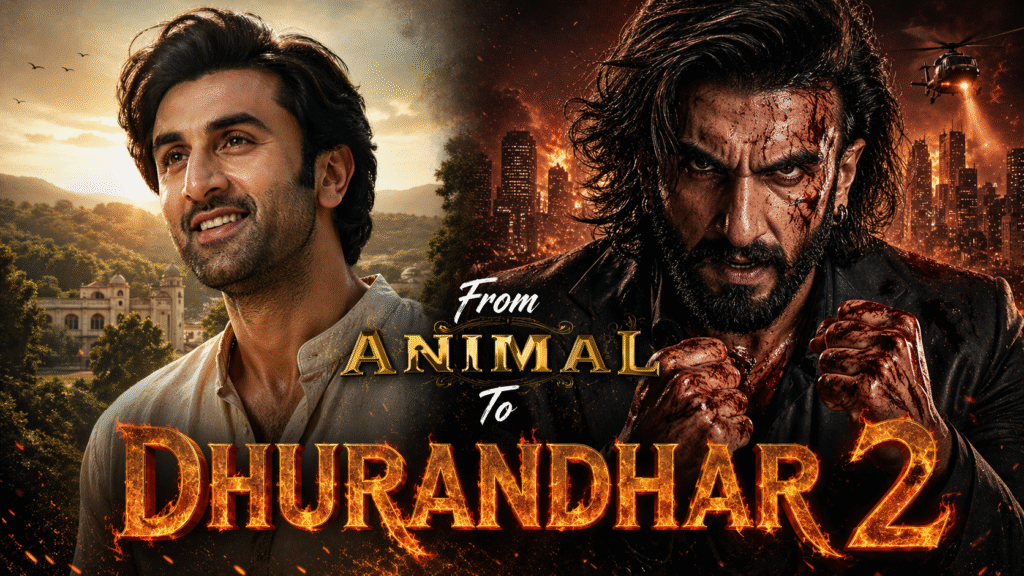
Imagine this: Rohan, a 24-year-old IT engineer from Pune, sits in his cramped PG room after another 14-hour shift, scrolling through job portals that scream rejection. Society tells him to be polite, patient, and “settle down.” Then he fires up Animal. Ranbir Kapoor’s Ranvijay Singh explodes onto the screen—unapologetic, raging, carving his own rules with bullets and bare fists. Rohan pumps his fist in the dark. “This is what power feels like,” he whispers. For the first time, the weight on his chest lifts.
Now picture Priya, 29, a marketing executive in Delhi, watching the same film with her friends during a girls’ night. She winces at every slap, every possessive growl. “This isn’t strength—it’s just damage dressed up as heroism,” she argues later on a group chat. Yet she admits the theater erupted in whistles and cheers. Fast-forward to Dhurandhar 2: The Revenge. Ranveer Singh’s Jaskirat Singh Rangi, alias Hamza Ali Mazari, goes deeper undercover, avenging 26/11 with cold precision and raw fury. Rohan calls it “next-level alpha energy.” Priya scrolls through the trailer and pauses—intrigued, conflicted, but unable to look away.
So what’s the truth? Why are India’s screens—and hearts—being hijacked by these dark, violent, morally grey alpha-male anti-heroes? From the box-office carnage of Animal to the record-shattering run of Dhurandhar 2, something fundamental has shifted in our hero worship. Nice guys aren’t just finishing last—they’re not even getting cast. In this deep dive, we’ll unpack the cultural earthquake, the sociological undercurrents, the real-life echoes, and what this obsession says about us as a nation. Buckle up, because the anti-hero isn’t just on screen anymore—he’s in our collective psyche.
Understanding the Anti-Hero Revolution: From Angry Young Man to Modern Alpha
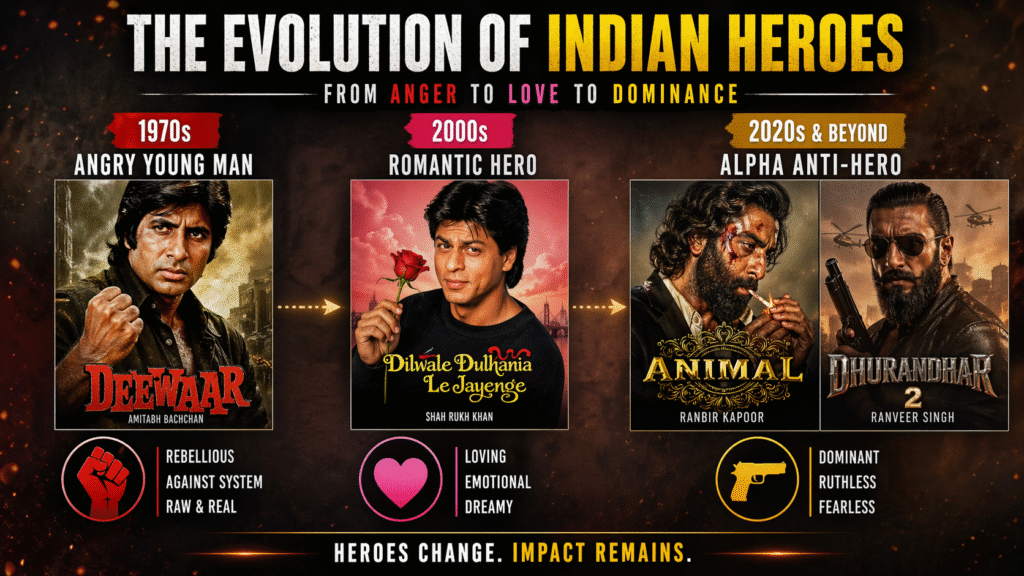
Bollywood heroes have always mirrored India’s soul. In the 1970s, Amitabh Bachchan’s “Angry Young Man” punched back at a broken system—corrupt politicians, unemployment, injustice. He was violent, sure, but his rage served the greater good. Fast-forward to the glossy 90s and 2000s: Shah Rukh Khan’s charming romantics swept us off our feet with grand gestures and unwavering goodness.
Then came the turning point. Post-2010s, especially after the pandemic, audiences grew tired of the “sanskari” savior. Enter the anti-hero—flawed to the core, driven by personal vendettas, daddy issues, and unfiltered testosterone. Films like Kabir Singh, Animal, and now the Dhurandhar saga didn’t just break rules; they shattered the pedestal. These men don’t ask for permission or applause. They take what they want—respect, revenge, dominance. And India can’t stop watching.
Why? Because in a country where 1.4 billion dreams collide daily with traffic jams, job scarcity, and social media pressure to “hustle harder,” these characters offer something the perfect hero never could: raw, unfiltered catharsis. It’s like watching your inner beast finally break free from the cage of “log kya kahenge.”
The Alpha-Male Anti-Hero Explained: Timing, Rage, and Box-Office Gold
Unlike the classic hero who wins with virtue, the new alpha wins with sheer force of will. Let’s break down the formula that’s printing money:
- Unapologetic Violence as Language: In Animal, Ranvijay’s rampages aren’t just action—they’re declarations. No long speeches about justice; just consequences delivered with surgical brutality. Dhurandhar 2 takes it global with espionage, betrayals, and a spy who infiltrates enemy lines while carrying the scars of national trauma.
- Personal Trauma as Fuel: Daddy issues, lost love, family massacres—these aren’t side plots; they’re the engine. The anti-hero’s pain justifies his darkness, making us root for him even as we cringe.
- Rejection of Vulnerability: Crying? Therapy? Forget it. These men channel emotion into fists and firearms. It’s hyper-masculinity dialed to 11, and the audience eats it up.
The numbers don’t lie. Animal shattered records despite (or because of) the controversy. Dhurandhar and its sequel didn’t just match it—they rewrote the script, proving the formula works across genres—from family revenge sagas to high-stakes spy thrillers. Karan Johar himself noted that this “front-footed machismo” and “alpha energy” speaks to a starved multiplex and single-screen audience. It’s not niche anymore; it’s mainstream dominance.
The Big Debate: Does This Trend Empower or Endanger Us?
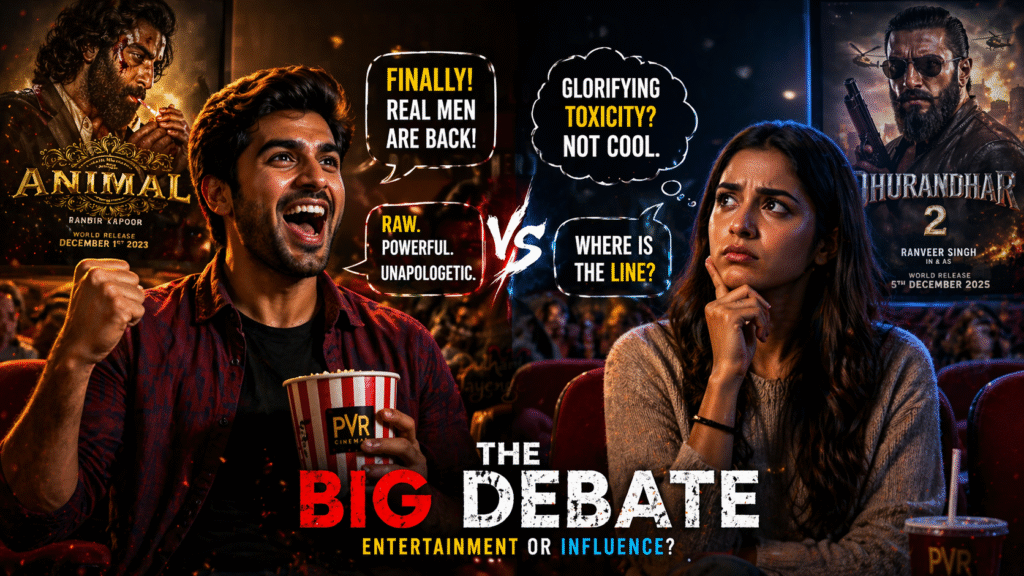
Here’s where it gets juicy—experts, feminists, fans, and even filmmakers are split down the middle.
The Pros: Why India is Hooked
- Power Fantasy in Frustrating Times: Young men like Rohan feel emasculated by corporate hierarchies, delayed marriages, and economic uncertainty. Watching an alpha seize control provides instant validation. It’s escapism with a shot of adrenaline.
- Authenticity Over Perfection: Real life is messy. Post-pandemic audiences crave characters who bleed, rage, and break rules—just like us. As one director put it, “The hero doesn’t have to be right in everything anymore.” This relatability hits harder than any saccharine happy ending.
- Box-Office Proof of Demand: When Dhurandhar 2 crossed massive milestones in weeks, it sent a clear message: audiences vote with their tickets. This energy sells—heroic dialogues, whistles in theaters, repeat value.
- Cultural Resonance: India has a long warrior tradition—from Mahabharata’s Arjun to modern-day aspirations of strength. These films tap into that without apology.
Take the fan who posted after Animal: “Finally, a hero who doesn’t apologize for being a man.” For many, it’s liberating.
The Cons: Where It Might Backfire
- Glorification of Toxic Masculinity: Critics argue these films normalize possessiveness, violence against women, and emotional suppression. Slaps framed as passion? Revenge as the only language? It risks shaping impressionable minds (especially teens 15-25) into believing dominance equals manhood.
- Impact on Gender Dynamics: In a country already grappling with shifting roles—working women, #MeToo awareness—these portrayals can reinforce outdated power imbalances. Some women love the intensity; others see red flags waving wildly.
- Mental Health Ripple Effects: Constant exposure to rage without consequences might desensitize viewers or make real-world aggression seem “heroic.” Studies on media influence show young audiences often internalize on-screen behavior.
- One-Dimensional Evolution: Not every anti-hero needs to be a raging bull. When every big film chases the same formula, cinema risks becoming repetitive and regressive.
Priya’s group chat exploded with debates: “Entertaining? Yes. Role model? Absolutely not.” The divide is real—and it’s driving conversations nationwide.
The Indian Twist: Masculinity, Society, and Our Desi Screens
Fasting isn’t new to us Indians—wait, no, let’s talk masculinity. From epics where warriors proved worth through battle to colonial resistance and post-Independence nation-building, Indian men have long been defined by strength and duty. But today’s reality—urban stress, nuclear families, social media comparisons—has turned that into pressure cooker frustration.
Our diets of daily news (crime, politics, inequality) make the anti-hero’s revenge feel justified. Add Bollywood’s pan-India appeal mixing South Indian mass cinema (KGF, Pushpa) with Hindi intensity, and you get a perfect storm. These films don’t just entertain; they reflect our collective anger at a system that often fails the common man.
Yet here’s the nuance: many women in the audience aren’t “offended” en masse. As Karan Johar observed, a huge chunk reacts positively to the raw energy. It’s not black-and-white misogyny for everyone—it’s complicated desire for unfiltered storytelling in an increasingly filtered world.
Real Voices: Triumphs, Tumbles, and Theatre Confessions
Let’s hear from the front lines.
- Vikram, 27, Mumbai: “After Dhurandhar 2, I hit the gym harder. The character’s discipline in chaos motivated me to take charge of my life. No more people-pleasing.”
- Sneha, 31, Hyderabad: “Loved the action, hated how women were props. But the theater vibe was electric—everyone cheering together. It’s escapism, not a manual for life.”
- Aarav, 19, college student in Lucknow: “Animal showed me it’s okay to feel rage. Society wants us silent. These heroes scream for us.”
- Meera, 35, working mom in Kolkata: “I took my son to Dhurandhar. We discussed afterward—what’s real strength? It sparked better conversations than any lecture.”
These stories flood social media, Reddit threads, and family WhatsApp groups. Some walk out inspired; others disturbed. But everyone’s talking. That’s the power of the anti-hero.

Navigating the Alpha Wave: Tips for Smart Viewing and Reflection
Thinking this trend is here to stay? Here’s how to engage without getting swept away:
- Separate Fiction from Reality: Enjoy the adrenaline, but remember—no one in real life should emulate unchecked violence.
- Discuss Openly: Use these films as conversation starters with family and friends about healthy masculinity.
- Seek Balanced Stories: Support films that show complex men who evolve—vulnerability alongside strength.
- Critique Constructively: Praise the craft (performances, direction) while calling out problematic tropes.
- Support Diverse Heroes: Demand stories where strength comes in many forms—intellect, empathy, resilience.
- Self-Reflection: Ask yourself—does this character empower me, or just numb the frustration?
Cinema shapes culture, but we shape what succeeds next.
Wrapping It Up: To Cheer or Question the Anti-Hero?
From Animal’s explosive debut to Dhurandhar 2 rewriting records, India’s love affair with the violent alpha-male anti-hero isn’t a fleeting trend—it’s a cultural reckoning. It speaks to our hunger for authenticity, our frustrations with the status quo, and our complicated relationship with power and masculinity. For some, it’s pure entertainment and empowerment. For others, a mirror that needs polishing.
The difference lies in how we consume it: mindlessly or mindfully. Bollywood will keep serving what sells, but audiences ultimately decide the menu. So, is the anti-hero here to stay, or will the pendulum swing back to kinder, more evolved heroes?
What’s your take? Did Animal or Dhurandhar 2 fire you up or make you rethink masculinity? Drop your story in the comments below—whether you’re team alpha, team critic, or somewhere in between. Let’s keep the conversation going and push cinema to reflect the best (and most honest) versions of us. Share this if it hit home, and tag a friend who needs to read it. Your voice matters in shaping the next big screen revolution!
You May Like This
1



Advertisement
You May Like This








Advertisement
Advertisement
Advertisement