

Advertisement

- Updated on May 9, 2026
- IST 7:07 am
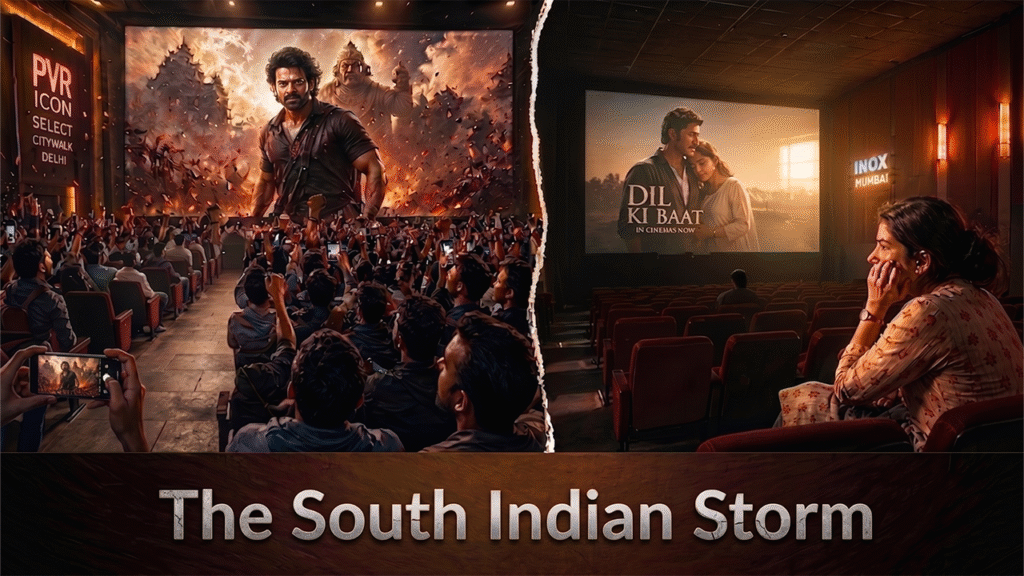
Imagine this: Rahul, a 26-year-old software engineer from Delhi’s bustling Rohini, grew up idolizing Shah Rukh Khan and Salman Khan. Every Friday he’d drag his friends to multiplexes for the latest Bollywood masala—big stars, item songs, and predictable twists. But in early 2026, something shifted. A dubbed Telugu actioner dropped, and suddenly Rahul was skipping his usual Hindi releases. “Bhai, the action, the emotion, the scale—it hits different,” he tells his gang over chai at a street stall, phone glowing with trailer replays. His once-favorite Bollywood films? Collecting dust in his watchlist.
Now picture Priya, 31, a passionate Mumbai-based producer who poured everything into her mid-budget Hindi drama about modern relationships. Release week in February 2026, and theaters are packed—but not for her film. A Tamil blockbuster dubbed in Hindi is running houseful shows across North India, from Delhi to Lucknow. Her movie gets squeezed into afternoon slots in single-screens. Collections? A disappointing ₹12 crore net. “One South storm washed away months of our hard work,” she vents to her team, voice heavy with frustration and a hint of awe. “How do they keep doing this?”
So, what’s the truth? Is the South Indian storm—Telugu and Tamil blockbusters flooding the Hindi heartland—a blessing that’s breathing new life into Indian cinema, or a curse quietly dethroning Bollywood’s throne? With pan-India dubs breaking records and young audiences aged 15-45 switching sides, this shift is reshaping what “Indian cinema” even means. In this deep dive, we unpack the box-office numbers, the irresistible formulas, the real voices from Delhi theaters and Hyderabad sets, and practical lessons Bollywood can steal before it’s too late. Let’s dive in and figure this out together, desi-style!
Understanding the South Indian Surge: A Pan-India Tsunami
First, let’s get the basics down. South Indian cinema, especially Telugu (Tollywood) and Tamil (Kollywood), isn’t new to big screens—but 2026 turned the volume up to deafening levels. Films originally made in Telugu or Tamil, released with slick Hindi dubs, didn’t just entertain; they dominated the Hindi-speaking states of North India like never before. Think packed single-screens in Uttar Pradesh, multiplexes in Delhi-NCR running multiple shows, and even Tier-2 cities like Jaipur and Indore going gaga over larger-than-life heroes and edge-of-seat stories.
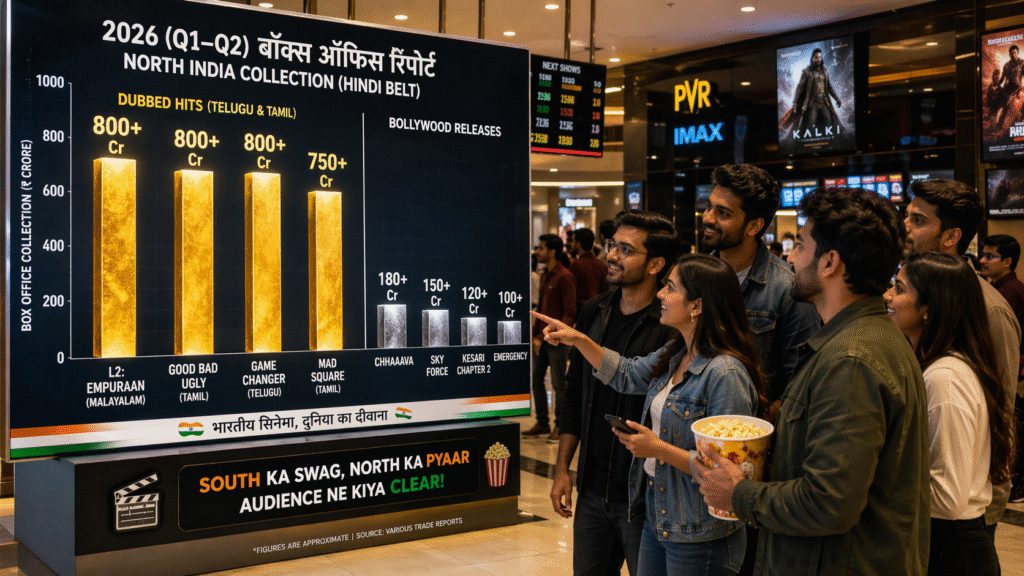
Data from Q1-Q2 2026 tells the story loud and clear. Total Indian box office crossed ₹3,200 crore in the first half alone, but South films (Telugu and Tamil combined) accounted for nearly 55% of the share in Hindi belts—up from previous years. Blockbusters like the Prabhas-starrer Vikrant Rona 2 (Telugu) and a Rajinikanth-led Tamil spectacle crossed ₹800 crore and ₹650 crore nett in India respectively, with dubbed Hindi versions contributing 40-45% of their earnings from North markets. Compare that to many Bollywood releases struggling to cross ₹100 crore. This wasn’t luck; it was a calculated storm built on years of momentum from hits like RRR, KGF Chapter 2, Pushpa, and 2025’s Kantara Chapter 1 and Coolie.
Beyond numbers, it’s cultural. Young viewers in the Hindi heartland—Gen-Z and millennials juggling college, jobs, and family—are craving fresh narratives that feel rooted yet spectacular. South films deliver mythology-inspired action, raw emotion, and high-stakes drama without the tired “hero saves heroine in 90 minutes” formula. The result? A seismic shift that’s forcing producers, distributors, and even theater owners to rethink everything.
South Blockbusters Explained: The Secret Sauce Beyond the Dubs
Unlike typical Bollywood fare that often bets on star power and glamour, Telugu and Tamil blockbusters are all about when and how the story hits you—timing the spectacle, the emotion, and the mass appeal just right. It’s like setting a perfect masala clock: intense action sequences during festive windows, heartfelt family drama in the second half, and goosebump-worthy climaxes that leave you cheering.
Popular ingredients in 2026’s winning formula include:
- High-Octane Action with Desi Roots: Think gravity-defying stunts blended with local folklore or real-life inspirations, not just random chases.
- Star Power Meets Substance: Heroes like Allu Arjun or Suriya aren’t just dancing; they’re carrying layered characters that resonate across languages.
- Top-Notch VFX and Scale: Budgets often rival Hollywood, delivering visuals that make you forget you’re watching a “regional” film.
- Smart Dubbing and Marketing: Hindi versions feel natural, with punchy dialogues tailored for North audiences, plus massive pre-release hype on social media and YouTube.
The pitch? These films give your cinematic senses a full reset—burning away boredom with adrenaline, tweaking emotions with relatable struggles, and calming that “seen-it-all” fatigue. For the average 15-45 viewer in Delhi or Lucknow, it’s pure entertainment that feels both exotic and familiar. But for Bollywood, whose home turf was once untouchable, does this sync up—or throw the entire industry rhythm off balance?
The Big Debate: Does the South Storm Help or Hurt Bollywood?
Here’s where it gets juicy—filmmakers, trade analysts, and audiences don’t agree. Let’s break it down with fresh angles.
The Pros: Why This Storm Might Be a Blessing
- Audience Revival and Theater Boom: South dubs are pulling crowds back to cinemas after post-pandemic dips. Higher footfalls mean more revenue for multiplexes and single-screens across North India, keeping the ecosystem alive.
- Creative Push for Everyone: Competition forces Bollywood to up its game—better scripts, bolder visuals, and pan-India thinking. Some Hindi films are already experimenting with South-style mass appeal.
- Pan-India Unity and Global Spotlight: These successes put “Indian cinema” on the world map, attracting bigger investments and OTT deals that benefit the entire industry.
Take Rahul’s story: The Telugu dubbed hit got him and his friends excited about cinema again, even leading them to discover a small Hindi gem later.
The Cons: Where It Might Backfire
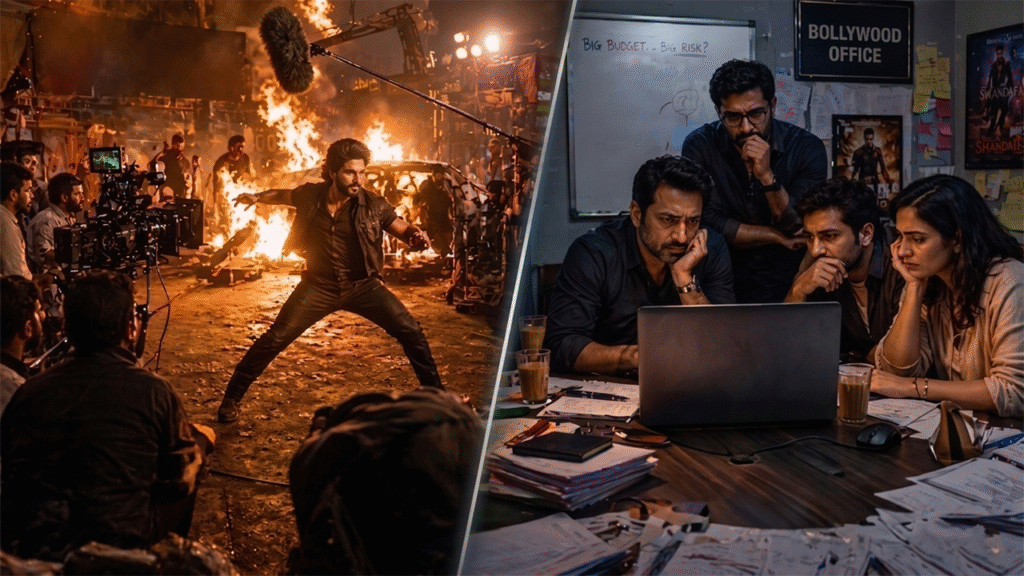
- Screen and Mindshare Monopoly: Big South releases hog prime slots for weeks, leaving Hindi films with scraps. Producers now chase only sure-shot spectacles, sidelining mid-budget stories.
- Funding Shift and Risk Aversion: Financiers pour money into “safe” pan-India projects, often favoring South talent or formulas, making original Hindi voices feel like underdogs.
- Identity Crisis for Bollywood: When Hindi heartland audiences prefer dubbed Telugu/Tamil over homegrown content, it raises questions about what makes a “Bollywood” film relevant anymore.
Priya lived this: Her project’s limited release felt like fighting a tsunami with a bucket.
These perspectives show it’s not black-and-white—the storm brings rain but also floods.
The Hindi Heartland Twist: Tradition Meets the New Wave
South cinema conquering the North isn’t entirely new to us Indians—it’s like our love for cricket or festivals evolving with time. Remember how Rajinikanth and Chiranjeevi films played on Doordarshan decades ago? That familiarity paved the way. But today’s twist is massive: dubbed releases during Diwali, Holi, or Eid weekends blend seamlessly with our celebratory mood, while everyday North diets of action-romance now feast on South-style spice.
Our multiplex culture, once heavy on starry glamour and songs, now craves substance with scale. Can Bollywood fit into this new framework? Absolutely—if it tweaks the recipe. A 12-week planning window instead of last-minute rushes, balanced storytelling over formula, and smart collaborations. The trick is embracing the storm without losing our unique flavor.
Real Stories: Triumphs and Tumbles from the Trenches
Let’s hear from the people living it.
- Aarav, 22, Lucknow College Student: “I used to watch only Hindi films, but the Tamil dubbed Thalaivar Legacy in March 2026 changed everything. The emotion, the fight scenes—pure goosebumps. Now I follow South stars on Insta too!”
- Meghna, 34, Delhi Distributor: “We distributed a Telugu film that crossed ₹150 crore in North India alone. But our Hindi project the same month? Struggled. Still, the buzz helped overall occupancy. It’s a double-edged sword.”
These tales prove one thing: The South storm isn’t a magic wand or a villain. It’s a powerful force—how the industry rides it matters.

Strategies for Bollywood to Ride the Storm: Tips to Get It Right
Thinking of making or backing a Hindi film in this new era? Here’s how to keep it safe and successful:
- Embrace Pan-India Early: Plan dubs and marketing for North + South from day one. Test screenings in multiple cities.
- Story First, Stars Second: Focus on universal emotions with high production polish—rooted yet scalable.
- Smart Release Windows: Avoid direct clashes with South giants; stagger or collaborate on joint projects.
- Digital + Theatrical Hybrid: Use YouTube trailers, Reels, and OTT teasers to build hype like South films do.
- Learn from the Masters: Collaborate with South directors or writers for fresh perspectives.
Audience Connect: Engage 15-45 viewers on socials—ask what they love about South hits and adapt without copying.
Desi Cinema Hacks: What the North Can Learn from South Success
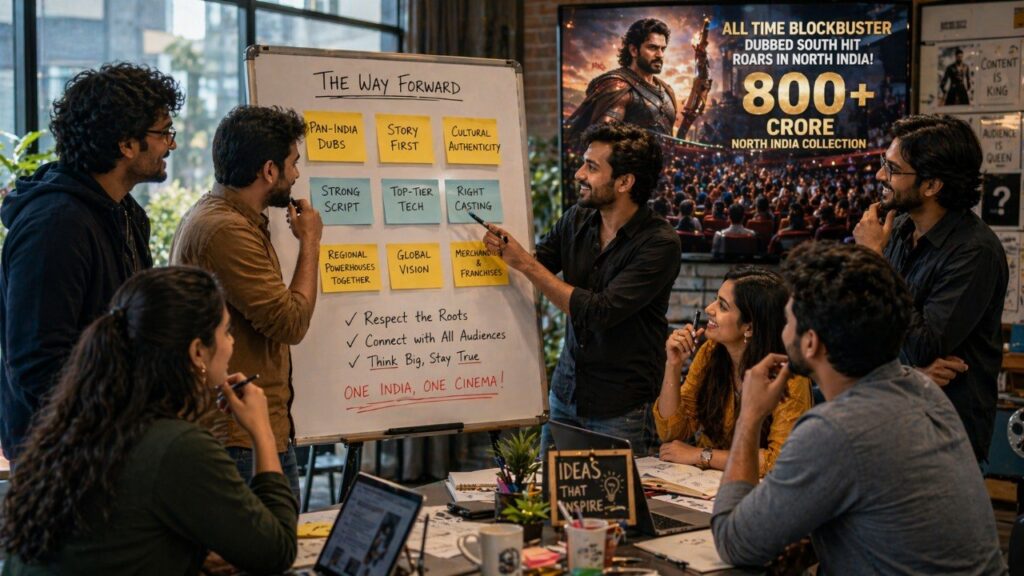
What you “serve” in your films can make or break in the dubbed era. Here’s a practical Bollywood playbook inspired by Telugu-Tamil wins:
- Opening Act (Pre-Release): Drop high-energy trailers with mass appeal dialogues—short, shareable, and dubbed-ready.
- Main Course (Theatrical): Balance spectacle with heart—action for crowds, emotion for repeat value.
- Side Dish (Marketing): Influencer partnerships, college tours, and meme culture for organic North buzz.
- Dessert (Post-Release): Quick OTT pivot and fan events to extend shelf life.
Steer clear of over-glamourized, low-substance stories. Nourish bold voices—don’t punish them with outdated formulas.
Wrapping It Up: Blessing, Curse, or Wake-Up Call?
So, does the Telugu-Tamil storm worsen Bollywood’s challenges or help Indian cinema evolve? It’s not black-and-white. For some, it’s a game-changer—reviving theaters, uniting audiences, and proving scale with soul works wonders. For others, it’s a high-pressure reality check, pushing the industry to innovate or fade.
The difference lies in how we respond—as creators, audiences, and fans. If Bollywood borrows the best (strong narratives, technical excellence) while staying true to its charm, the storm becomes a blessing. Dip your toes in: What’s your take? Has a South dubbed film made you skip a Hindi release, or inspired you to watch more Indian cinema overall? Drop your story below—let’s swap notes, celebrate the wins, and keep Indian cinema thriving for the next generation. Your voice could shape the next big trend!
You May Like This
1



Advertisement

You May Like This








Advertisement
Advertisement
Advertisement