

Advertisement

- Updated on May 9, 2026
- IST 8:17 am
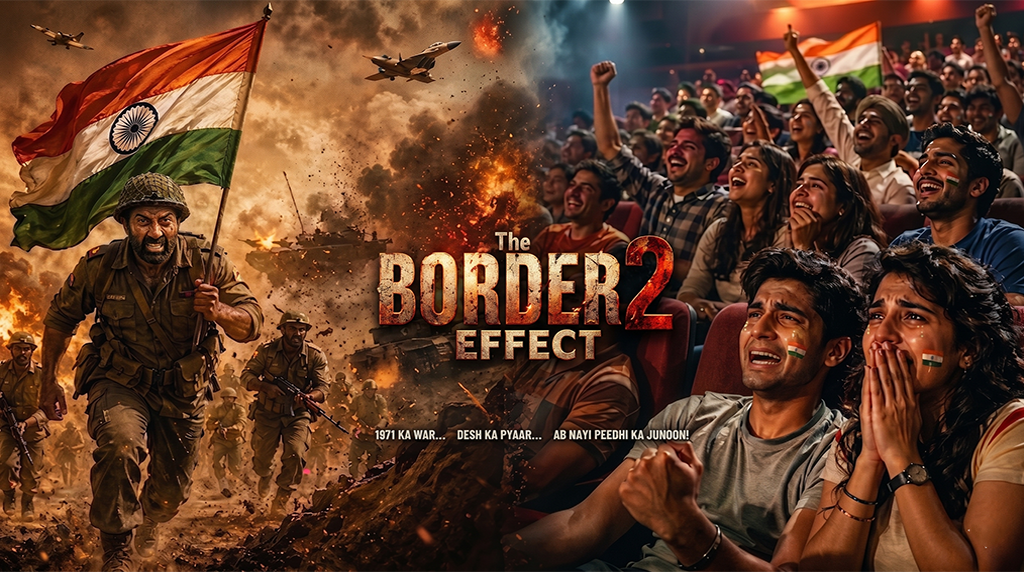
Imagine this: Arjun, a 22-year-old engineering student from Delhi, walked out of a packed multiplex on Republic Day weekend 2026, his chest swelling with unshakeable pride. He had just watched Border 2 with his college gang—Sunny Deol thundering across the screen, Diljit Dosanjh’s fighter jet roaring overhead, Varun Dhawan leading a charge that felt personal. As the credits rolled and the national anthem swelled, Arjun punched the air and joined the chorus of “Bharat Mata Ki Jai!” The theatre erupted. For him, it wasn’t just a movie; it was a shot of pure adrenaline, a reminder of the soldiers who guard our borders so we can chase our dreams. “This is why I love being Indian,” he later posted on Instagram, tagging the film’s trailer that already had millions of views.
Now, picture Meera, 28, a marketing executive from Mumbai, sitting in the same theatre with her family. She, too, was glued to the epic battles, the raw emotion, and the breathtaking VFX that made the 1971 desert outpost feel alive. But as the lights came on, she turned to her brother and whispered, “It was thrilling… but does every war film have to paint it so black-and-white? Where’s the complexity?” She appreciated the patriotism, yet something nagged at her—the fine line between inspiring unity and stirring division in an already polarised world.
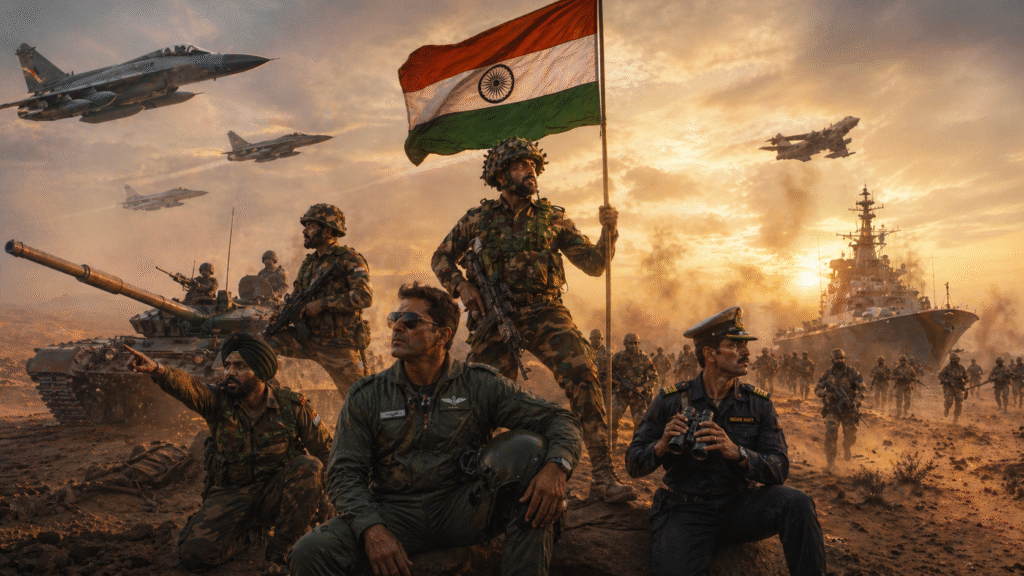
So, what’s the truth behind this Border 2 Effect? With a massive box-office haul of over ₹360 crore nett in India and nearly ₹485 crore worldwide, Border 2 didn’t just succeed—it cemented war films as Bollywood’s most reliable commercial juggernaut. Blending nationalism, high-octane spectacle, and heartfelt soldier stories, these movies are striking a deep chord with Indian audiences, especially the youth aged 15-45. In this blog, we’ll unpack the formula driving their success, why they resonate so powerfully today, the ongoing debate around patriotism versus propaganda, real-life impacts, and the exciting lineup of upcoming war films. Plus, we’ll explore how this trend fits into our desi cultural fabric. Let’s dive in and decode why war cinema is conquering hearts—and ticket counters—across India.
Understanding the 'Border 2' Phenomenon: From Sequel to Sensation
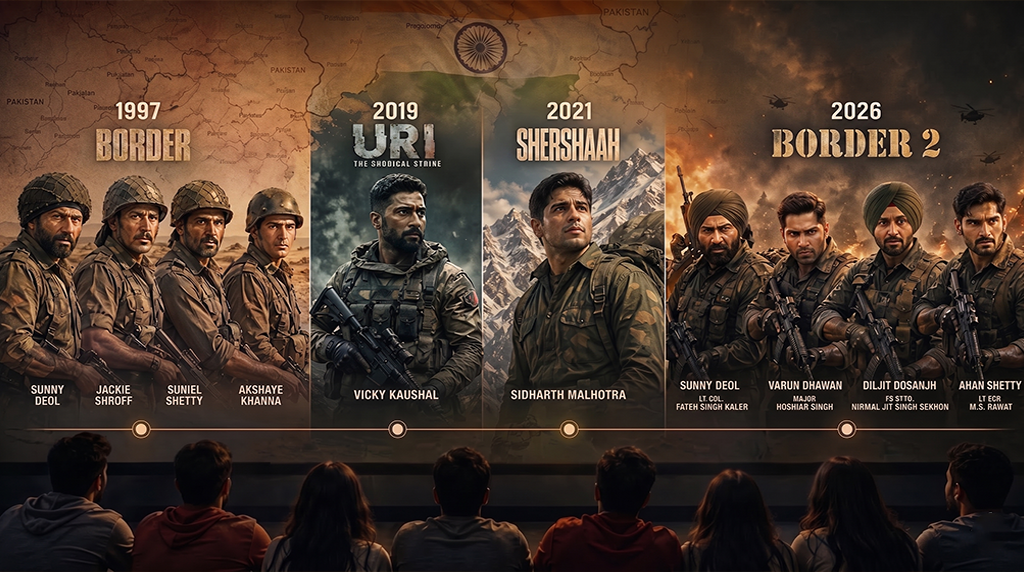
Border 2, directed by Anurag Singh and produced under J.P. Dutta’s banner, hits theatres as a standalone sequel to the 1997 classic Border. Set during the 1971 Indo-Pak War, it follows a new generation of Indian soldiers at a remote desert outpost: Sunny Deol as the steadfast Lt Col Fateh Singh Kaler, Varun Dhawan as Major Hoshiar Singh Dahiya (PVC), Diljit Dosanjh as Flying Officer Nirmal Jit Singh Sekhon (PVC), and Ahan Shetty as Lt Cdr Mahendra Singh Rawat. The film captures the grit, camaraderie, and sacrifice of troops cut off from reinforcements, facing overwhelming odds. Released strategically on January 23, 2026—just ahead of Republic Day—it opened to thunderous crowds, crossing ₹200 crore in the first five days alone and eventually delivering a superhit verdict despite a ₹275 crore budget.
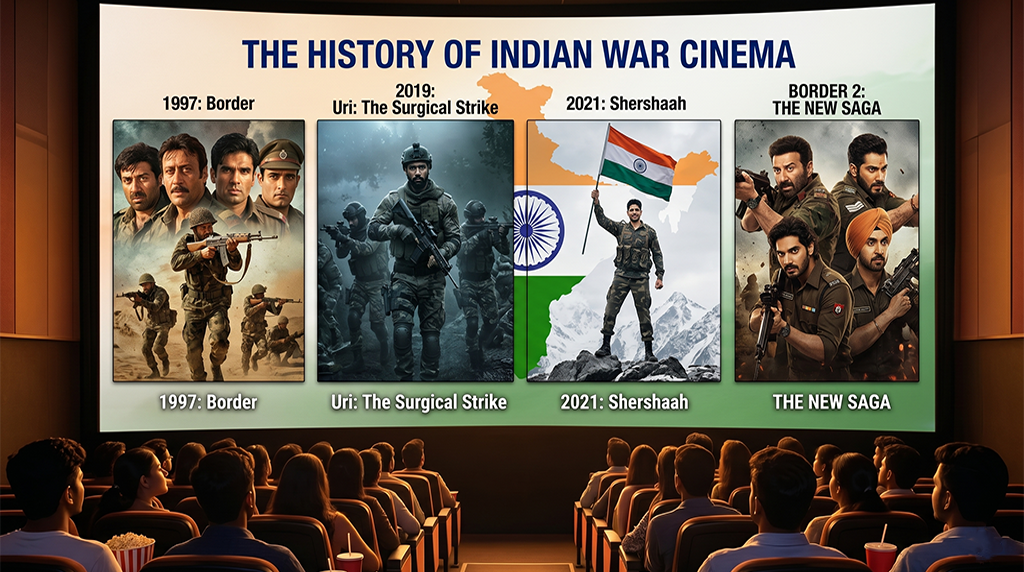
This isn’t a one-off. The Border 2 Effect builds on a wave: Uri: The Surgical Strike (2019) minted over ₹244 crore with its “How’s the josh?” war cry; Shershaah (2021) became a cultural phenomenon honouring Capt. Vikram Batra, Gadar 2 and spy thrillers like Dhurandhar kept the patriotic fire burning. What makes these films different from typical Bollywood fare? They tap into something primal—our collective memory of wars that shaped modern India, from 1962 and 1965 to 1971 and Kargil. In an era of streaming overload, theaters become temples of shared emotion, where families and friends cheer, clap, and sing along. For the 15-45 demographic—students, young professionals, and families—this genre offers escapism with purpose: spectacle that entertains, stories that inspire.
A Brief History: War Films in Indian Cinema’s DNA
War cinema in India isn’t new—it’s woven into our cinematic fabric like the threads of a tricolour flag. JP Dutta’s original Border (1997) remains a benchmark, glorifying the Longewala battle with Sunny Deol’s iconic “Ae watan…” roar. Earlier classics like Haqeeqat (1964) captured the 1962 China conflict’s raw pain. The 2000s brought ensemble epics like LOC: Kargil (2003). Then came the post-2014 surge: Uri, Kesari (2019), Shershaah, and now Border 2. These films evolved from sombre tributes to full-blown mass entertainers—high VFX, chart-topping songs, and multi-star casts.
The shift mirrors India’s rising global confidence. Post-liberalisation youth grew up on stories of military valour amid economic boom and social media patriotism. Releases timed with national days (Republic Day, Independence Day) turn theatres into patriotic carnivals. Border 2’s success proves the formula still works: real or inspired events + emotional depth + larger-than-life heroism = box-office gold.
The Winning Formula: Why These Films Are Box-Office Proof
War films have cracked a code that other genres envy. Here’s what makes them click:
- Rooted in Reality: Drawing from documented battles—like Border 2’s 1971 outpost or Uri’s surgical strikes—they lend authenticity. Audiences feel they’re honouring real heroes, not just watching fiction.
- Star Power with Substance: Sunny Deol’s return as the “Bharat ka veer” archetype, paired with Varun Dhawan’s intensity and Diljit’s charisma, creates mass pull. Newcomers like Ahan Shetty add fresh energy.
- Spectacle Meets Emotion: Jaw-dropping action sequences, aerial dogfights, and desert warfare blend with tear-jerking family letters, camaraderie, and soul-stirring music. Metaphorically, it’s like a desi thali—spicy action as the main course, emotional dal-rice for the soul.
- Nationalism as the X-Factor: In a diverse nation, these films offer a unifying narrative. “Bharat Mata Ki Jai” isn’t just dialogue; it’s a shared heartbeat.
- Strategic Timing and Scale: Republic Day releases, multi-language dubs, and pan-India appeal ensure footfalls. Border 2’s opening weekend proved timing is everything.
Critics note the reliance on VFX and length, but for audiences craving big-screen thrills, it delivers.
Why War Films Resonate Deeply with Indian Youth
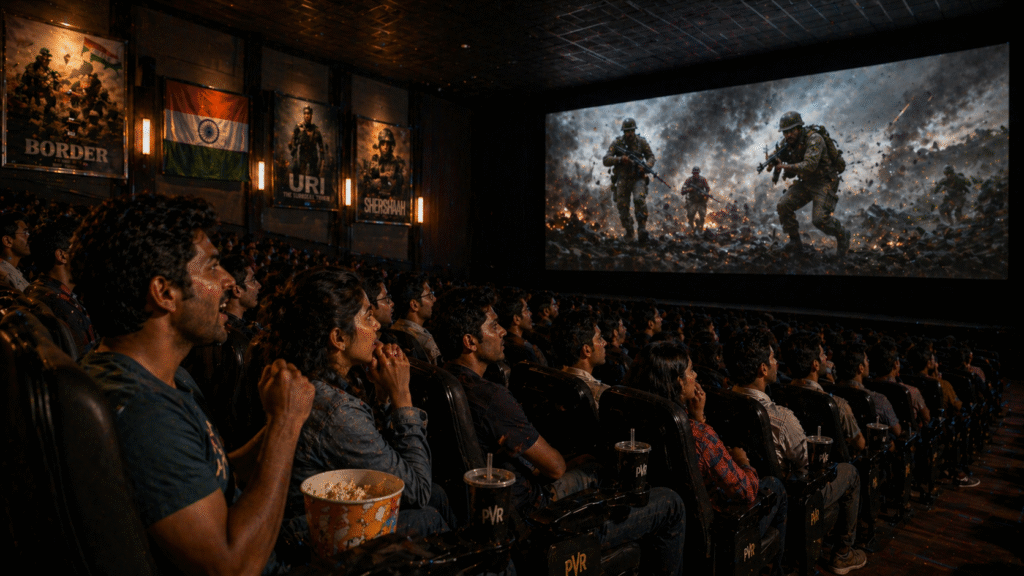
For the 15-45 crowd—digital natives juggling college, jobs, and aspirations—war films hit different. They provide identity and intensity in a fast-paced world. Arjun’s story isn’t unique; countless young viewers report feeling motivated, even considering defence careers or simply appreciating sacrifices. In an era of anxiety over jobs and geopolitics, these movies offer escapism laced with pride. Social media amplifies it: reels of theatre reactions go viral, turning individual viewings into collective movements. Youth love the community experience—friends debating battles over chai, families bonding over shared tears. It’s more than entertainment; it’s cultural glue.
The Big Debate: Patriotism, Nationalism, or Propaganda?
Here’s where it gets nuanced. Supporters argue these films honour unsung heroes, boost national morale, and educate youth on history. They foster respect for armed forces and unity amid diversity—vital in today’s India. Border 2’s emotional core, showing soldiers’ personal struggles alongside duty, adds layers.
Yet, critics raise valid points. Some films simplify conflicts, portraying adversaries in broad strokes, which risks jingoism or overlooking historical complexities and civilian costs. Questions arise about alignment with political narratives or potential for “othering.” Is it pure patriotism or subtle propaganda? Balanced view: Cinema reflects society’s mood. When nationalism surges, art follows. The key is critical consumption—celebrate valour without blind acceptance. Multiple perspectives enrich discourse: one viewer’s inspiration is another’s call for nuance. Ultimately, well-crafted films like Border 2 walk the tightrope admirably, inspiring without alienating.
Real Stories: Triumphs from the Frontlines of Cinema
Real women and men echo the on-screen drama. Take Rohan, 19, from Chandigarh: “After Shershaah, I joined NCC. Border 2 reignited that fire—Sunny Sir’s character reminded me of my uncle in the army.” Or Sneha, 31, from Hyderabad: “I cried during Diljit’s arc in Border 2. It humanised pilots and soldiers we take for granted.” These anecdotes, shared across forums and family WhatsApp groups, show impact beyond the box office. Families bond; youth discuss duty, sacrifice, and peace. It’s storytelling that transcends reels.
The Indian Twist: Fasting Meets Tradition? Wait—Fasting? No, Tradition Meets Theatre
Just as our festivals blend spirituality with feasting, war films merge patriotism with masala entertainment. Republic Day releases feel like extended celebrations—popcorn replacing laddoos, but the pride is the same. Desi audiences embrace multi-generational theatre outings: grandparents recounting 1971 tales, parents nodding along, kids wide-eyed at VFX. Songs like those in Border become anthems at weddings and rallies. This cultural resonance—rooted in our history of resilience—makes the genre distinctly Indian, turning cinema halls into modern akharas of national spirit.
Safe Viewing and Responsible Engagement: Tips to Get It Right
Thinking of catching the next big war epic? Here’s how to maximise the experience:
- Go with an Open Mind: Enjoy the spectacle, but reflect on history’s grey areas.
- Discuss with Family/Friends: Turn viewing into conversations about real sacrifices and peace.
- Support Quality Storytelling: Seek films balancing action with depth, like those honouring diverse services (Army, IAF, Navy in Border 2).
- Balance with Broader Cinema: Pair with international war classics or documentaries for perspective.
- Appreciate the Heroes Off-Screen: Donate to armed forces welfare funds or learn about current defence initiatives.
- Stay Critical Yet Appreciative: Celebrate art that unites while questioning oversimplifications.
Upcoming War Films: The Pipeline Looks Explosive
The Border 2 Effect is fueling more. Watch out for:
- Ikkis (2026): Agastya Nanda as Arun Khetarpal, the youngest PVC winner from 1971, directed by Sriram Raghavan.
- 120 Bahadur (recent/ongoing buzz): Farhan Akhtar’s take on the 1962 Rezang La battle.
- Maatrubhumi / Battle of Galwan (2026): Salman Khan in a gritty 2020 clash story.
- Fauji and potential Border 3: Prabhas-led or franchise expansions promising even grander scales.
These promise fresh stories, bigger budgets, and continued youth appeal.
Wrapping It Up: To Watch or Not to Watch? It’s a Movement
Does the Border 2 Effect make war films India’s most reliable box-office genre? Absolutely—for now. They blend nationalism with spectacle, inspiring millions while delivering profits studios crave. For some, they’re lifelines of pride; for others, prompts for deeper thought. The difference lies in how we engage: with hearts open and minds sharp. Border 2 proves the genre’s staying power, but its future depends on evolving beyond formulas—deeper characters, diverse perspectives, global appeal.
If these films tempt you, grab tickets, feel the rush, and discuss afterwards. What’s your favourite war film—Border, Uri, or the latest Border 2 moment? Tried watching with family? Drop your story in the comments below—let’s swap notes, celebrate our heroes, and keep the conversation alive. Jai Hind!
You May Like This
1



Advertisement

You May Like This








Advertisement
Advertisement
Advertisement