

Advertisement

Advertisement

- Updated on May 15, 2026
- IST 1:43 pm
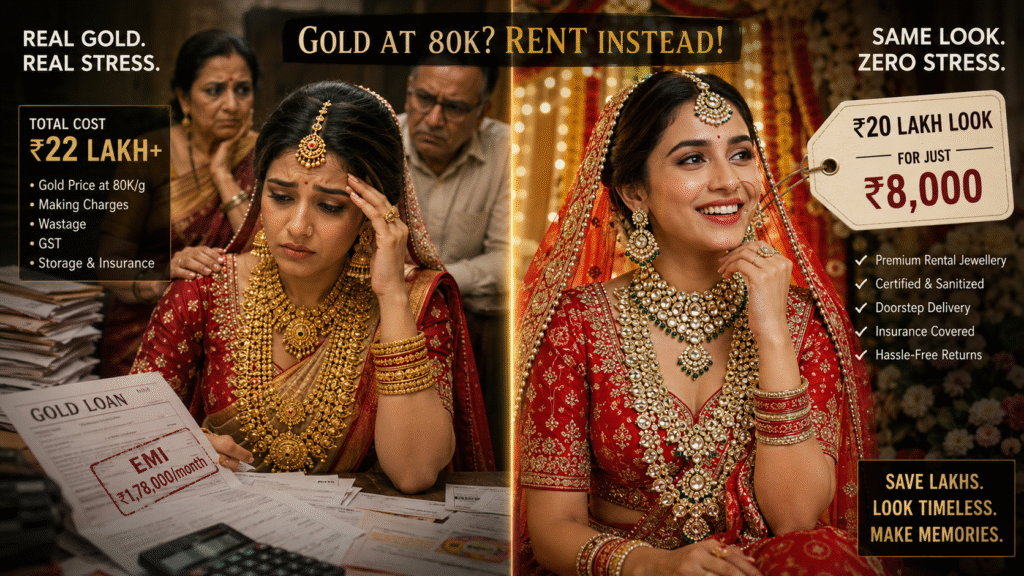
Imagine this: Neha, a 26-year-old software engineer from Bengaluru, had dreamed of her wedding day since she was a little girl. Her family scrimped and saved for years, pouring every rupee into a traditional 150-gram gold bridal set that cost nearly ₹22 lakhs when gold hit ₹80,000+ per 10 grams in early 2026. On her big day, she looked radiant—but the loan EMIs started the very next month. “We bought the gold for security,” her mother whispered during the reception, “but now we’re paying for it with sleepless nights.” The weight of that jewellery wasn’t just on her neck; it was on the entire family’s future.
Now picture Priyanka, 28, from Hyderabad. She too wanted to feel like a goddess in temple jewellery—those intricate polki sets with jadau work and goddess motifs that scream South Indian heritage. But instead of buying, she rented a stunning full bridal set for just ₹8,500 for the entire wedding weekend. It looked every bit as opulent as Neha’s ₹22-lakh heirloom. Her family redirected the saved lakhs toward a dreamy honeymoon and even a small emergency fund. “It felt liberating,” Priyanka later shared with her cousins. “Tradition didn’t have to mean debt.”
So what’s the truth? With gold prices skyrocketing in 2026, is renting temple, polki, and jadau jewellery a smart financial hack or a betrayal of centuries-old Indian wedding sentiment? In this deep dive, we’ll explore the economics, the eroding stigma, real stories from brides across India, and the top trusted rental platforms that are quietly revolutionizing the bridal jewellery game. Whether you’re a bride-to-be, a worried parent, or simply curious about how middle-class families are navigating “Big Fat Indian Weddings” without breaking the bank, you’ll walk away with fresh insights—and maybe a new perspective on what “forever” really means in 2026.
Understanding the Gold Price Crisis: When Tradition Meets Reality
Gold has always been more than metal in Indian culture—it’s stridhan, security, status, and sentiment rolled into one gleaming sovereign. But in May 2026, with prices hovering around ₹80,000 per 10 grams (and climbing higher in many markets), that shiny promise has turned into a heavy burden for millions of families. A modest 100-gram bridal set that cost ₹5-6 lakhs a few years ago now easily crosses ₹12-15 lakhs. Add in polki diamonds, jadau craftsmanship, and temple-style pieces, and you’re looking at ₹20-30 lakhs or more for a full wedding trousseau.
Why the surge? Global uncertainties, strong investor demand, and rupee fluctuations have pushed prices to record levels. For the average middle-class family planning a wedding, this isn’t just an expense—it’s a crisis. Many are delaying marriages, cutting guest lists, or quietly borrowing from relatives. Social media is flooded with viral posts: “Gold at 80K? Shaadi postpone kar do!” Yet weddings aren’t stopping; they’re evolving. Enter premium rental platforms offering high-quality temple jewellery, polki sets, and jadau replicas that deliver the exact luxurious optics without locking up lakhs in an asset you wear for three days.
This shift isn’t about skimping on tradition. It’s about redefining it for a generation that values experiences over ownership, financial freedom over frozen capital, and practicality over outdated pressure.
Temple Jewellery Rental Explained: Luxury Without the Lock-Up
Temple jewellery—those ornate, deity-inspired pieces with lotus motifs, peacocks, and goddess pendants—has long been a staple of South Indian and pan-Indian bridal looks. Polki (uncut diamonds in antique settings) and jadau (stones set in 22K gold) add that timeless royal gleam. Rental platforms have perfected the art of replicating these in lightweight, high-finish materials that look indistinguishable from real gold on camera and in person.
Unlike buying, renting is all about timing and flexibility. Most services work like this:
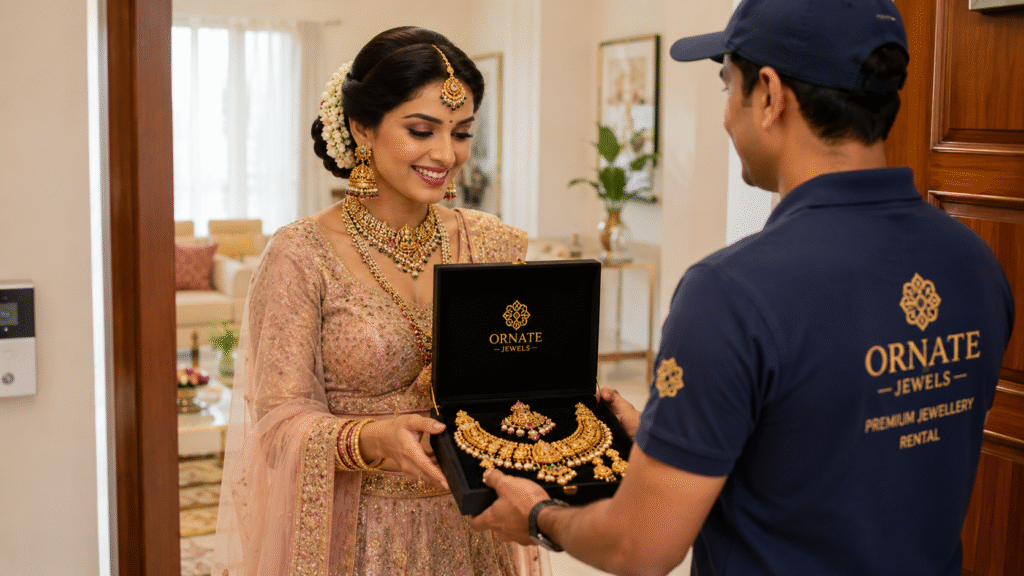
- Event-based rental: Book a full set for 3-7 days around your wedding functions. Prices typically range from ₹5,000 to ₹15,000 for premium temple/polki/jadau sets that mimic ₹15-25 lakh originals.
- Subscription or multi-function packages: Some platforms offer “wedding season passes” for multiple events—mehendi, sangeet, and reception—at a flat rate.
- Piece-by-piece customization: Mix and match necklace sets, maang tikka, earrings, bangles, and waist belts to suit your lehenga or saree.
The pitch? You get the wow factor without the “what if gold prices crash after my wedding?” anxiety. Platforms handle cleaning, insurance, and secure delivery. Many even offer virtual try-ons via app so you can visualize the look before committing. For 2026 brides juggling careers and rising living costs, this feels like a breath of fresh air.
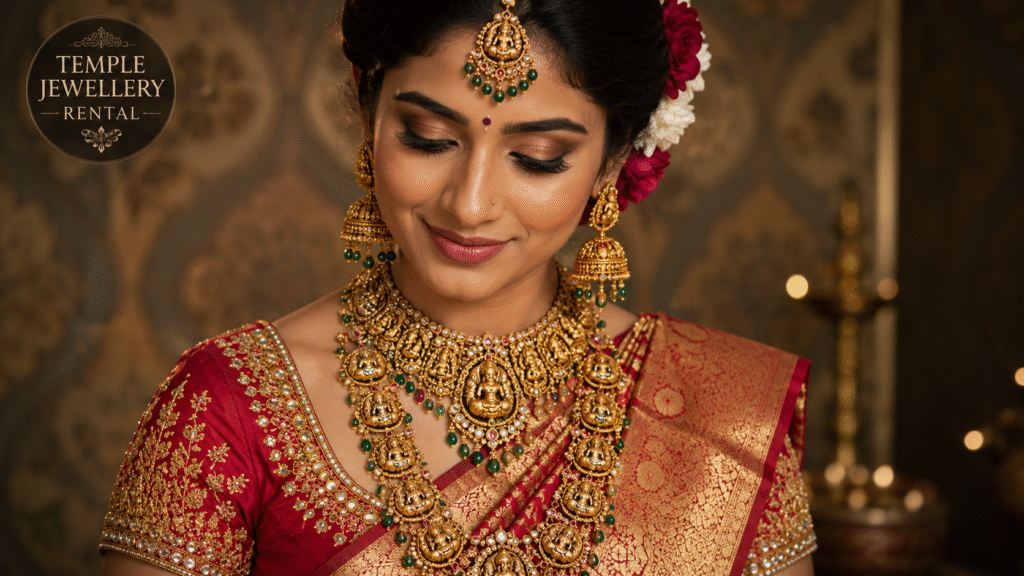
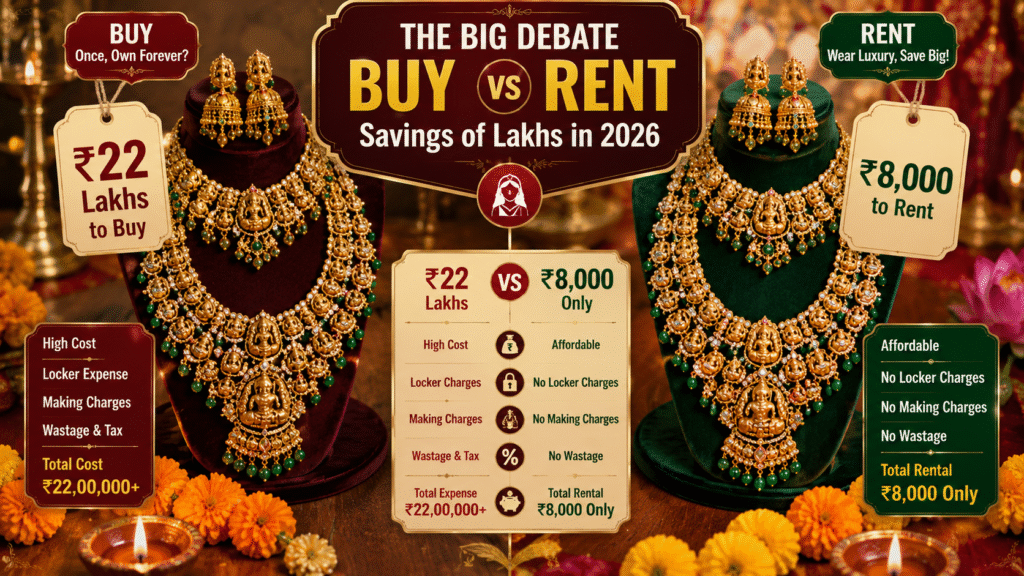
The Big Debate: Renting vs. Buying Bridal Jewellery
Experts, elders, and young couples are split—and that tension makes for fascinating dinner-table conversations.
The Pros: Why Renting is Winning Hearts (and Wallets) in 2026
- Massive Cost Savings: A ₹20-lakh look for ₹8,000? That’s not marketing hype—it’s reality on platforms like Josya and Little Fingers India. Families report saving 80-90% compared to buying.
- Capital Freedom: Instead of tying up money in jewellery that sits in a locker 99% of the time, couples are investing in mutual funds, home down payments, or even starting a small business. One couple in Mumbai used their savings to fund a startup—talk about turning tradition into tomorrow.
- Variety and Flexibility: Wear a different polki set for each function without repeating the same pieces. No more “same old gold” photos across albums.
- Lightweight Comfort: Rental pieces are engineered for all-day wear—perfect for dancing at sangeet or surviving humid Indian weddings without neck pain.
- Sustainability and Modern Values: Reusing high-quality pieces reduces demand for new mining and gold extraction. It’s a quiet eco-win that resonates with Gen-Z and millennial brides.
- Stigma Erosion: Thanks to influencers and viral wedding reels, renting is now seen as “smart” rather than “cheap.” Social media has normalized it—#RentalBridalJewellery is trending for good reason.
The Cons: Where Tradition Pushes Back
- Sentimental Value: For many mothers and grandmothers, gold represents lifelong security. “What will you pass on to your daughter?” is a common question. Renting feels temporary in a culture that values permanence.
- Perceived Quality Risks: Not all rentals are equal. Cheap imitations can tarnish or look fake under harsh wedding lights. Due diligence is non-negotiable.
- No Asset Building: Gold has historically appreciated. Renting means you don’t own the piece that could have grown in value.
- Logistics and Trust: Delivery delays, sizing issues, or damage clauses can add stress during an already chaotic wedding season.
The truth? It’s not black-and-white. Renting isn’t replacing sentiment—it’s evolving it. Many families now mix both: buy a few sentimental gold pieces (mangalsutra, bangles) and rent the heavy statement temple sets.
The Indian Twist: Tradition Meets 2026 Practicality
Fasting during Karva Chauth or wearing temple jewellery during muhurat isn’t new to us. Our culture has always balanced ritual with resourcefulness. But nuclear families, dual-income households, and skyrocketing wedding costs (average ₹25-40 lakhs now) have forced a reckoning. South Indian families, where temple jewellery originated, are leading the rental revolution—Chennai and Hyderabad platforms report 300%+ booking spikes in 2026.
Social media plays a huge role too. Brides share side-by-side photos: “Bought vs Rented—can you spot the difference?” The answer is usually “no,” sparking conversations about redefining stridhan for modern times. Elders who once frowned are now quietly approving when they see the financial relief it brings.
Real Stories: Triumphs, Tears, and Turning Points
Let’s hear from the women living it.
- Meena, 29, Chennai: “I rented a full Kemp temple set with polki work for ₹12,000. It looked identical to my aunt’s ₹18-lakh original. Saved enough to gift my husband a bike. My mom cried happy tears when she saw the photos—no more guilt about ‘not giving enough gold.’”
- Ritu, 25, Delhi: She bought gold under family pressure and regretted it when prices dipped post-wedding. “Next time? Rental all the way. The peace of mind was worth more than any sovereign.”
- Aarohi, 31, Mumbai: A working mom who opted for subscription rental across three functions. “I changed my entire look for each event without spending extra. My husband called it the ‘viral wedding hack’ of 2026.”
- Sneha, 27, Kolkata: Mixed approach—rented jadau for reception, bought lightweight gold for daily wear. “Best of both worlds. Tradition intact, bank balance safe.”
These stories prove one thing: renting isn’t giving up on heritage. It’s protecting it.
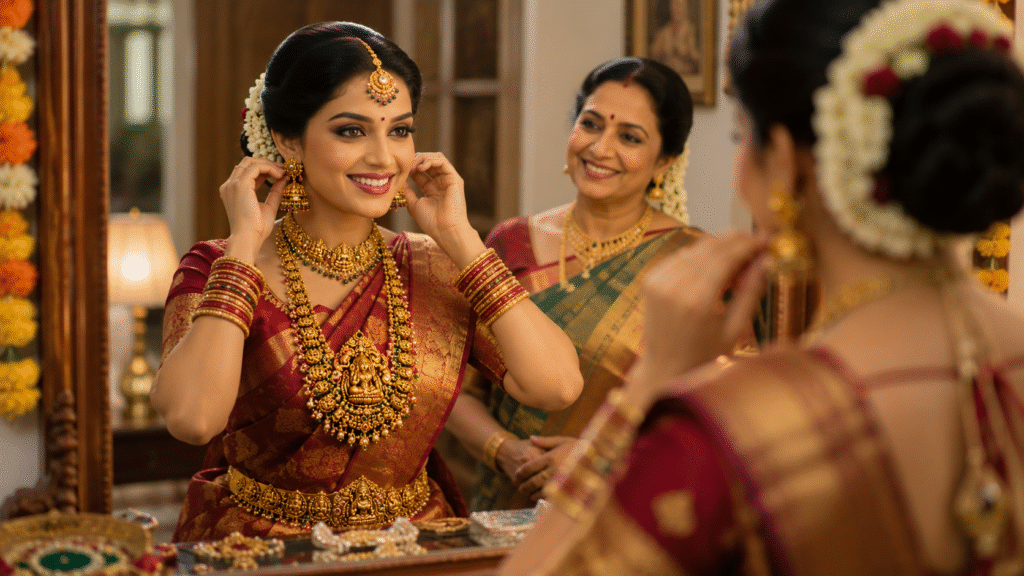
Top Trusted Rental Services for 2026 Brides
Here are platforms earning rave reviews for quality, reliability, and customer service:
- Josya.in: Specializes in Kundan, Polki, and temple sets. Nationwide shipping, excellent reviews for fit and finish.
- Little Fingers India (Chennai): Temple jewellery experts with authentic South Indian designs. Perfect for classic looks.
- Glamou Rental: Premium polki and jadau options with virtual try-on. Great for pan-India brides.
- Srishringarr and similar premium local players: Often praised for personalized service and insurance coverage.
- Emerging apps like Rent Jewels and Posh Wedding Rental: Offer subscription models and influencer collaborations.
Always check reviews, request videos of the exact set, and read return policies.
Safe Rental Tips: Do It Right, Stress-Free
- Start early—book 2-3 months ahead for peak wedding season.
- Verify authenticity: Ask for high-res photos/videos and material details (gold-plated vs premium alloy).
- Measure twice: Provide accurate neck, ear, and wrist sizes.
- Insurance and hygiene: Choose platforms that clean and insure pieces.
- Mix smartly: Rent heavy sets, buy small sentimental pieces.
- Read the fine print: Damage clauses, late fees, and pickup options.
- Pair with your outfit: Coordinate colors and motifs for that cohesive bridal glow.
Budget Hacks for Debt-Free Bridal Style
- Opt for “one gram” or lightweight gold for daily wear and rent the showstoppers.
- Sell or exchange old family gold to fund rentals/experiences.
- Group bookings with cousins or sisters for bulk discounts.
- Use wedding loans wisely or redirect savings to investments.
- Focus on what matters: memories over metal.
Wrapping It Up: To Rent or Not to Rent?
Gold at 80K doesn’t have to derail your dream wedding. For many 2026 brides, renting temple, polki, and jadau jewellery is proving to be the ultimate smart choice—delivering luxury looks, massive savings, and genuine peace of mind. It doesn’t erase tradition; it refreshes it for a generation that refuses to choose between beauty and financial sanity.
The decision is personal. Some will still buy that one meaningful piece. Others will go full rental and invest the difference wisely. Either way, your wedding should celebrate love, not create lifelong debt.
What’s your take? Have you rented bridal jewellery or stuck with buying? Are you a 2026 bride navigating these choices? Drop your story, tips, or questions in the comments below. Let’s build a community of smart, empowered brides who honor tradition without sacrificing their future. Share this with any wedding planning WhatsApp group—you might just save a family lakhs!
And remember: the most beautiful jewellery is the confidence you wear when you know you’ve made the right choice for your life.
You May Like This
1



Advertisement
Advertisement
You May Like This








Advertisement
Advertisement
Advertisement
Advertisement
Advertisement
Advertisement