

Advertisement

Advertisement

- Updated on May 15, 2026
- IST 12:34 pm
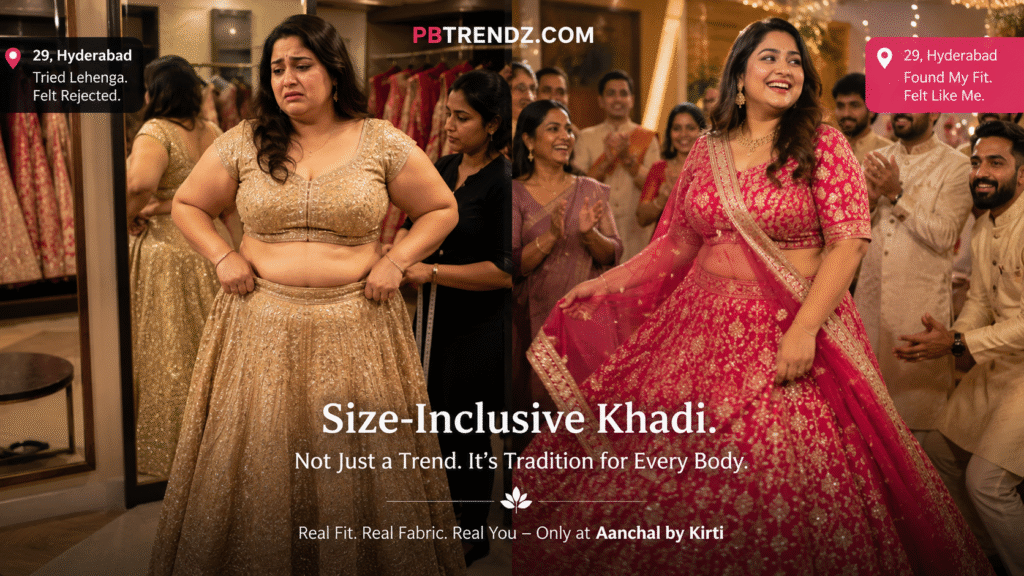
Imagine this: Priya, a 29-year-old teacher from Hyderabad, has dreamed of her cousin’s wedding for months. She knows exactly what she wants—a flowing chanderi lehenga in soft pastels with delicate zari work. But when she visits ten different designers, the response is the same: “Sorry, we don’t go beyond size 14.” One tailor even suggests she “lose a few kilos before the function.” Humiliated, she ends up in a borrowed salwar kameez that feels two sizes too small, tugging at the seams all night while smiling for photos. “I felt invisible in my own family celebration,” she later confides to her best friend, tears in her eyes. “Ethnic wear was supposed to celebrate me, not shame me.”
Now picture Neha, 31, from Mumbai. She walks into the same wedding in a stunning size-inclusive khadi lehenga from Reverie—custom-fitted up to 6XL, with breathable fabric that drapes beautifully over her curves, vibrant prints that pop, and zero alterations needed. She dances, laughs, and poses for endless photos without once worrying about seams or stares. The compliments pour in—not just on the outfit, but on how radiant and confident she looks. “This brand didn’t just sell me clothes,” she says later. “They gave me back my joy in dressing up.”
So, what’s the truth? Is size-inclusive ethnic wear India a blessing that’s finally making traditional fashion accessible for every body, or is it a passing trend that’s challenging centuries-old ideas of “ideal” bridal and festive silhouettes? With the bridal industry long accused of fat-shaming curvy women, can body positive ethnic brands like Aanchal by Kirti and Reverie truly shift the narrative—or do they risk diluting craftsmanship? In this blog, we’ll unpack the risks, the rewards, and the real-life experiences of plus-size Indian women navigating size inclusive 2026 fashion. Plus, we’ll share practical tips and desi styling ideas rooted in our heritage. Let’s dive in and figure this out together!
Understanding Size-Inclusive Khadi: A Movement Beyond Measurements
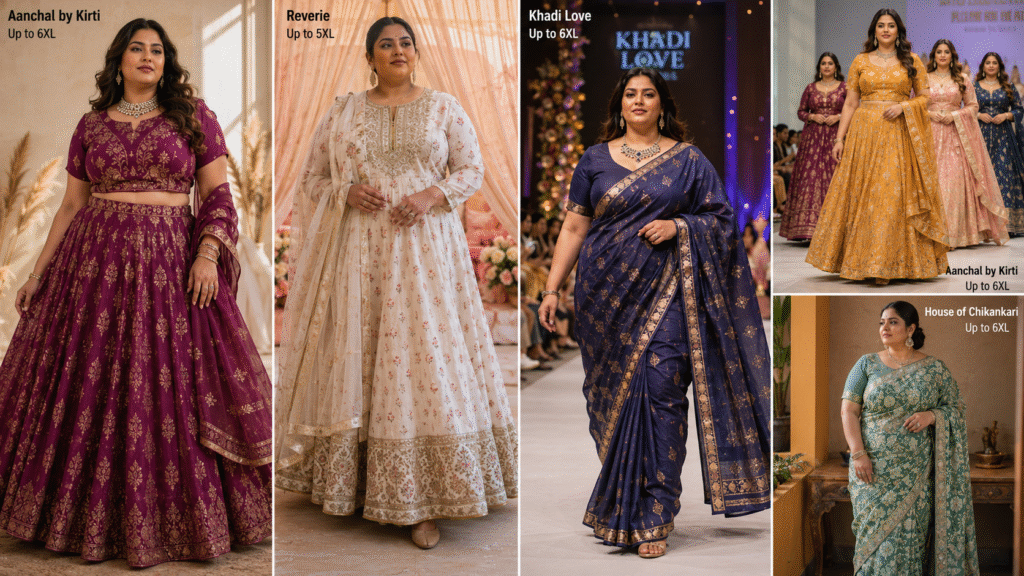
First, let’s get the basics down. For far too long, Indian ethnic wear—especially bridal lehengas, saris, and anarkalis—has been designed around a narrow beauty ideal. Think hourglass figures, tiny waists, and “flattering” cuts that left plus-size women scrambling for ill-fitting options or expensive alterations. But 2026 marks a landmark shift. Brands like Aanchal by Kirti and Reverie are centering size-inclusive fashion up to 6XL, using breathable khadi, chanderi, and handloom cottons that celebrate real bodies instead of hiding them.
This isn’t just about bigger sizes. It’s about thoughtful design: strategic darting that flatters without squeezing, fabrics that move with you during long wedding functions, and prints scaled beautifully across all silhouettes. The movement is sparking emotional conversations about how the bridal industry marginalized larger bodies for decades. Beyond aesthetics, it’s addressing deeper issues—self-worth, belonging, and the joy of wearing your culture proudly, no matter your size. For many plus-size women, shedding the emotional weight of “not fitting in” feels as liberating as any physical transformation.
Size-Inclusive Ethnic Wear Explained: Craft Meets Compassion
Unlike traditional ethnic wear that often stops at “standard” sizes and expects women to conform, size-inclusive 2026 collections are all about inclusivity from the drawing board. It’s like finally having a seat at the table—every curve, every roll, every height gets its own thoughtful pattern. Popular styles dominating this year include:
- Chanderi Lehengas with Elasticised Waists: Lightweight, flowy skirts paired with crop blouses or full-coverage cholis that offer support without restriction—perfect for dancing the night away.
- Khadi Saris with Pre-Pleated Options: Breathable, sustainable khadi in rich tones, designed with wider borders and adjustable pallus so no one feels tugged or tugged at.
- Anarkali Sets and Kurta-Pant Combos: Voluminous silhouettes with roomy sleeves and flared hems that flatter apple, pear, and hourglass shapes alike.
- Bridal Fusion Pieces: Modern takes on lehengas with mix-and-match separates that allow customisation without the guilt or extra cost.
The pitch? Fashion that works with your body, not against it. These pieces prioritise comfort during humid Indian weddings, long pujas, and photo marathons while maintaining the elegance and craftsmanship our culture is known for. For plus-size women juggling work, family, and social expectations, it’s a quiet revolution that says your body is already worthy of celebration.
The Big Debate: Does Size-Inclusive Fashion Help or Hurt the Industry?
Here’s where it gets juicy—designers, customers, and traditionalists don’t always agree. Let’s break it down.
The Pros: Why This Movement Is Changing Lives
- Emotional Liberation and Confidence: Women who once dreaded shopping now feel seen. A well-fitted plus-size lehenga can transform how you show up—at weddings, festivals, even in daily life.
- Realistic Representation: Campaigns featuring diverse bodies are going viral, inspiring younger girls to embrace their curves instead of hiding them. It’s dismantling fashion industry bias one billboard at a time.
- Sustainability and Craft Revival: Khadi and handloom brands are thriving by serving a larger customer base, supporting artisans while promoting body positivity, and saree culture.
- Economic Impact: Inclusive collections are selling out fast, proving there’s massive demand—and profit—in designing for all bodies.
Take Neha’s story: Her Reverie lehenga didn’t just fit; it made her the star of the wedding album. “For the first time, I felt beautiful in my own skin,” she shares.
The Cons: Where Critics Raise Valid Questions
- Perceived Dilution of Craft: Some worry that scaling patterns to larger sizes might compromise the intricate detailing or drape that defines heritage pieces.
- Production Challenges: Sourcing enough premium khadi and training tailors for diverse fits takes time and investment, potentially raising prices for everyone.
- Internalised Bias: Even with inclusive options, societal fat-shaming can make some women hesitant to embrace the trend publicly.
- Not One-Size-Fits-All: Inclusivity still needs to address height, proportions, and regional preferences to truly serve everyone.
Priya experienced the old reality painfully: “I was made to feel my body was the problem, not the clothes.” Balanced view? This movement isn’t perfect, but it’s a necessary step toward equity in an industry long overdue for change.
The Indian Twist: Tradition Meets Body Positivity
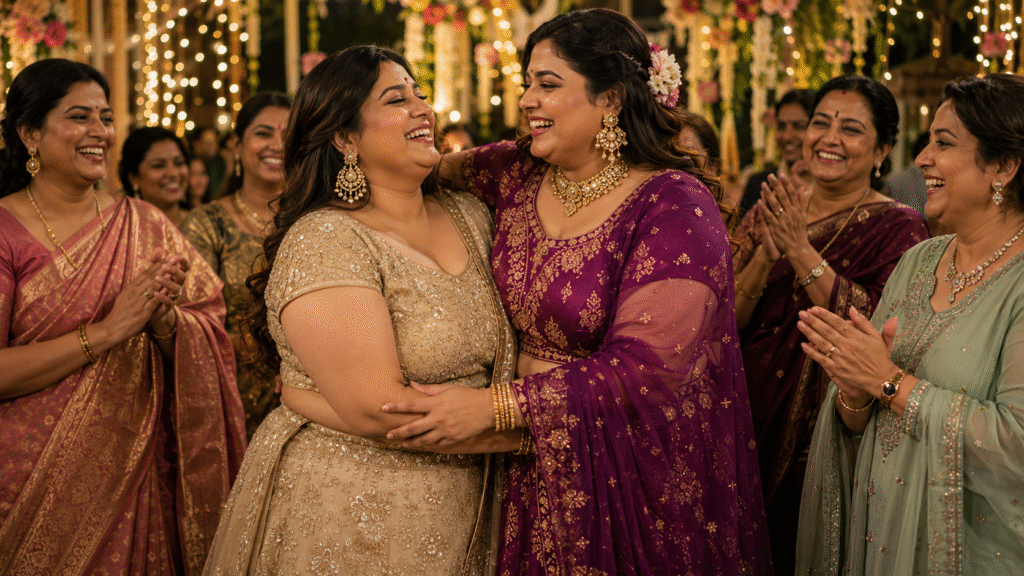
Body positivity isn’t new to us Indians—it echoes ancient temple sculptures celebrating voluptuous forms and folk songs praising abundant beauty. Yet modern bridal fashion somehow narrowed that celebration. 2026’s size-inclusive khadi brands are reconnecting us to that inclusive heritage while embracing today’s realities.
Our festivals, weddings, and family functions are all about togetherness. Why should half the guests feel excluded from the joy of dressing up? Brands like Aanchal by Kirti are weaving in regional motifs—Banarasi-inspired borders on chanderi, Rajasthani block prints scaled generously—so plus-size women can honor their roots without compromise. It’s like updating grandma’s classic recipes to nourish every family member: same love, better fit for modern tables.
Real Stories: Triumphs and Tumbles
Let’s hear from the women living the change.
- Meera, 27, Delhi: After years of custom alterations that never quite worked, she found Aanchal by Kirti’s 5XL sari. “I wore it to my best friend’s wedding and cried happy tears in the mirror. My aunt even asked for the link!”
- Riya, 34, Bangalore: Struggled with plus size lehenga options until Reverie’s campaign. “Their team measured me virtually and delivered perfection. I finally felt like the bride’s sister, not the ‘plus-size auntie.’”
- Anika, 25, Pune: Faced rejection from mainstream designers but became a brand ambassador after going viral in a size-inclusive campaign. “What started as pain became power.”
These tales prove one thing: size-inclusive ethnic wear isn’t a trend. It’s a tool—how brands and women wield it together matters most.
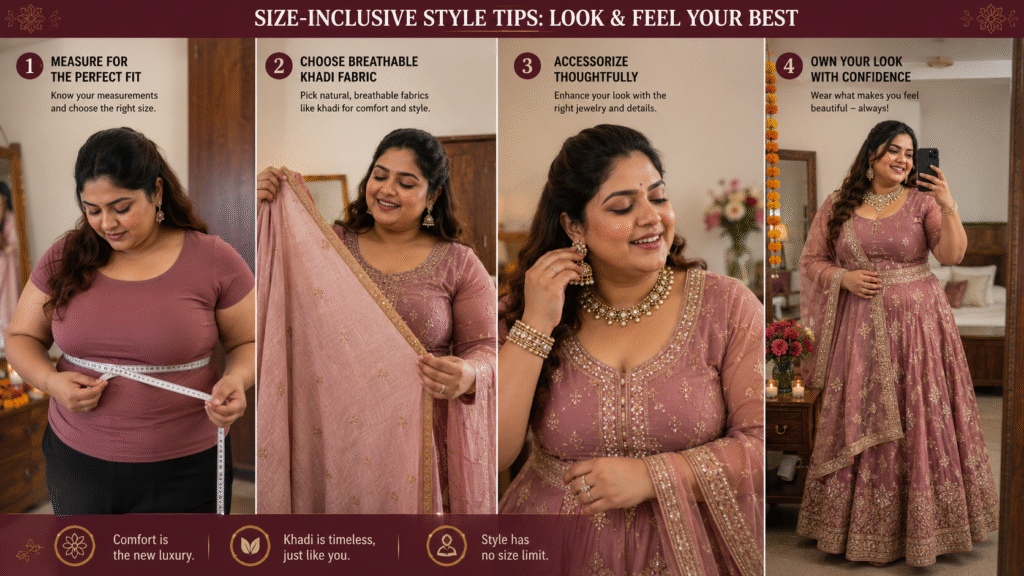
Size-Inclusive Style Tips: Get It Right with Confidence
Thinking of embracing the movement? Here’s how to shop and wear with joy:
- Know Your Measurements: Use brand size charts honestly—many offer virtual consultations for perfect fits.
- Fabric Matters: Prioritize breathable khadi, chanderi, or cotton blends that drape naturally over curves without clinging.
- Play with Proportion: Balance volume with structured blouses or belts to create flattering lines without restriction.
- Accessorize Boldly: Statement jewelry, vibrant dupattas, and comfortable footwear let your personality shine.
- Seek Expert Eyes: Work with inclusive stylists or brand teams who understand diverse bodies.
Chill Out on Perfection: Embrace slight “imperfections”—a soft roll here, a natural sway there. They’re part of your story.
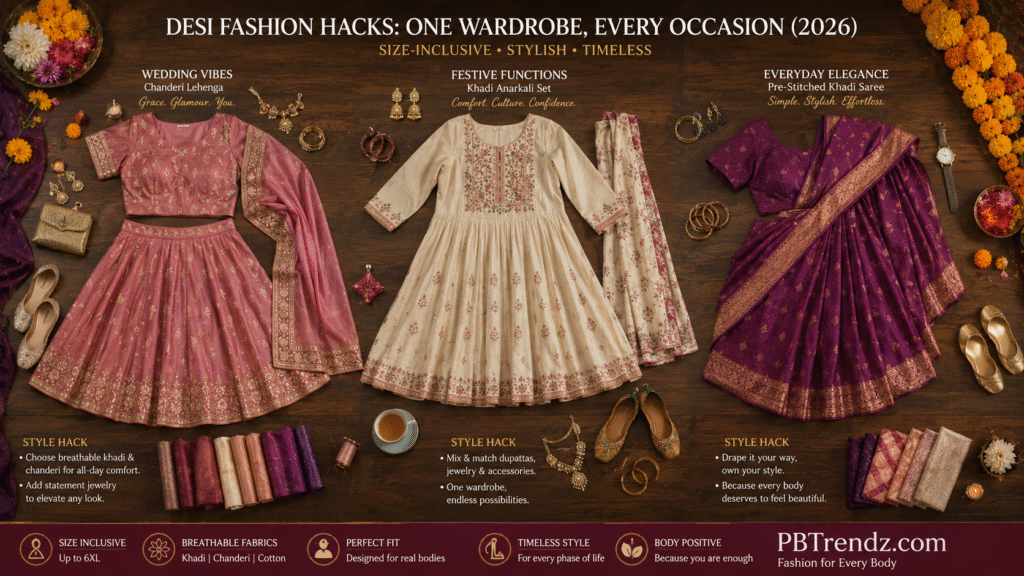
Desi Fashion Hacks: Shopping and Styling for Every Body
What you choose in your size-inclusive journey can transform how you experience ethnic wear. Here’s a practical guide for curvy Indian women:
- Wedding Guest Ready: A full-circle chanderi lehenga with side slits for easy movement, paired with a supportive blouse and minimal jewelry.
- Festive Family Functions: Relaxed khadi anarkali with palazzo pants—comfortable for sitting on the floor during pujas.
- Everyday Ethnic: Pre-stitched saris or kurta sets in soft pastels for office-to-temple transitions.
- Bridal or Big Occasion: Custom 6XL lehengas with built-in shapewear options and breathable linings.
Steer clear of brands that still use “flattering” as code for restrictive. Nourish your wardrobe with pieces that celebrate you—mix, match, and repeat with pride.
Wrapping It Up: From Fat-Shaming to Full Embrace
So, does size-inclusive khadi in 2026 dismantle fat-shaming or simply highlight how far we still have to go? It’s not black-and-white. For countless plus-size women, it’s a game-changer—restoring confidence, reviving joy in heritage fashion, and proving that every body deserves to shine in a lehenga or sari. For the industry, it’s a wake-up call to design with empathy, not exclusion.
If these stories and styles inspire you, take the first step. Explore brands like Aanchal by Kirti and Reverie, share your own experiences, and support creators pushing realistic representation. You deserve to feel beautiful in your culture’s finest threads—today, tomorrow, and always. What’s your take? Faced fat-shaming in ethnic shopping? Found your perfect size-inclusive piece? Drop your story below—let’s swap tips, lift each other up, and keep this body positive ethnic wear revolution growing. Tag us @PBTrendz with your looks—we can’t wait to celebrate you!
You May Like This
1



Advertisement
Advertisement
You May Like This


Advertisement
Advertisement
Advertisement
Advertisement
Advertisement
Advertisement