

Advertisement

Advertisement

- Updated on May 15, 2026
- IST 2:11 pm
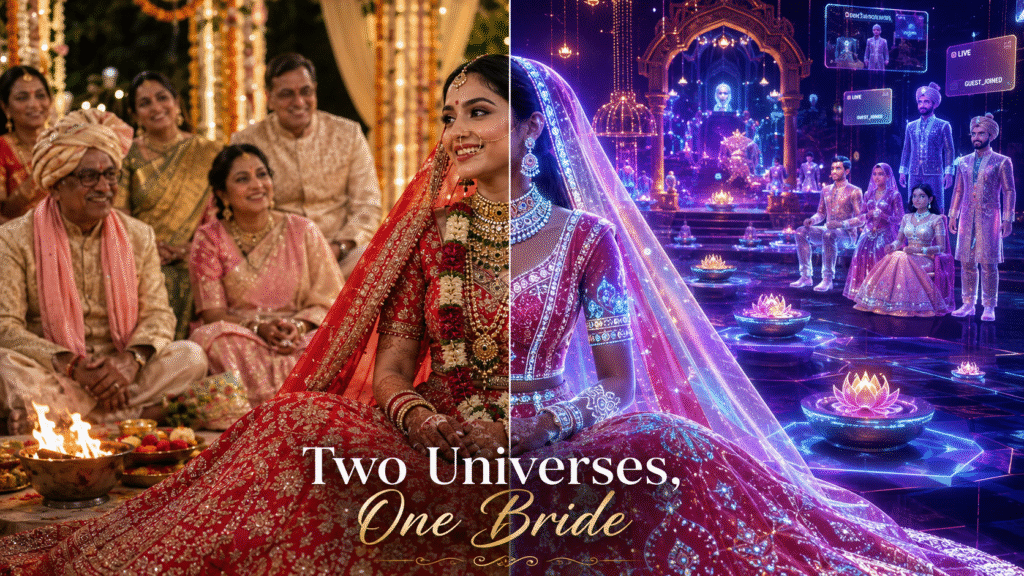
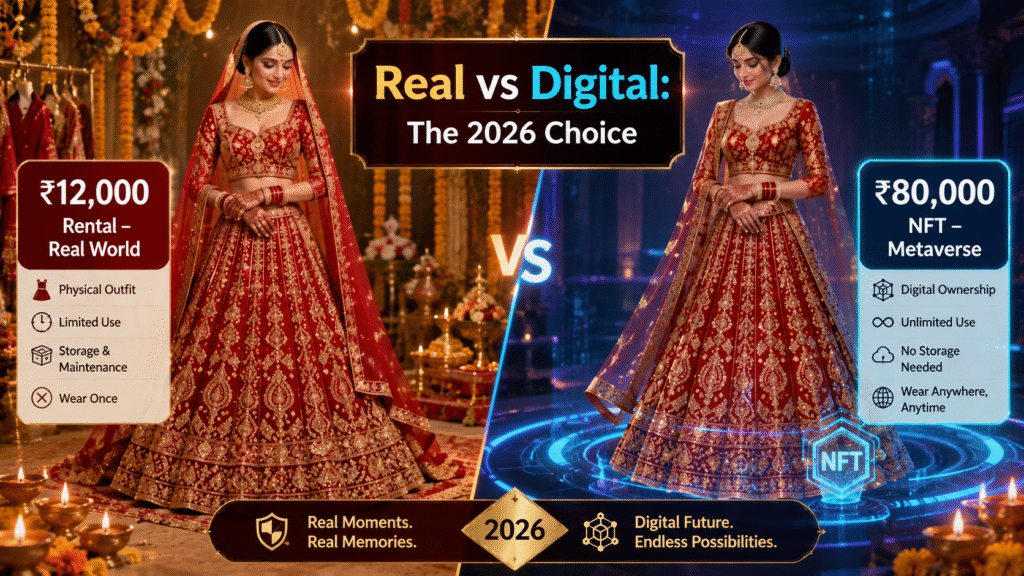
Imagine this: Priya, a 28-year-old IT consultant from Pune, had her dream wedding planned down to the last marigold garland. For the real-life pheras at a scenic resort outside Mumbai, she rented a stunning red silk lehenga for ₹12,000—gorgeous zardozi work that looked every bit as lavish as a ₹5 lakh designer piece. Family from across India and the US flew in, but her grandparents in a small village near Coimbatore couldn’t make the journey due to health issues. So, the couple hosted a parallel “metaverse mehendi” on a popular virtual platform. Priya’s avatar showed up in a basic free digital outfit. “It felt flat,” she later confessed to her cousins over chai. “Everyone was there digitally, but my mehendi look had no sparkle. I saved money but missed that ‘wow’ moment in both worlds.”
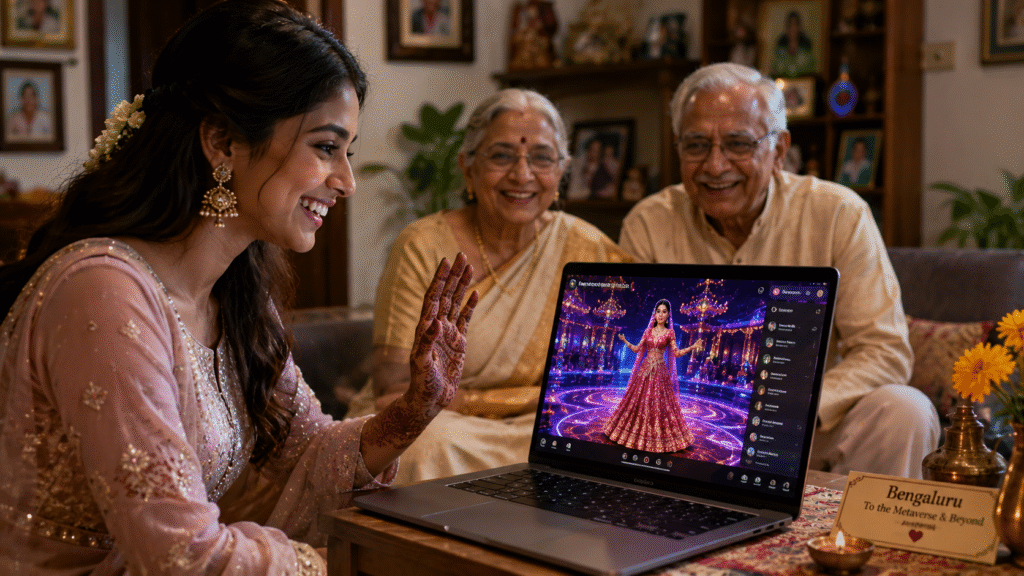
Now picture Anjali, 27, from Bengaluru, a content creator who approached her 2026 wedding differently. She rented a beautiful physical lehenga for the actual ceremonies to keep costs sane and avoid storage hassles. But for the metaverse mehendi—attended by 200+ relatives spread from Sydney to Surat—she splurged ₹80,000 on a limited-edition NFT lehenga designed by a leading digital fashion house. Her avatar twirled in hyper-realistic digital silk with animated jhumkas that caught virtual light perfectly. “It was proof I was really there,” she beamed in a family group call. “My grandparents couldn’t travel, but they saw me in that custom NFT outfit and cried happy tears. It felt like tradition, just upgraded.”
So, what’s the truth? As Indian weddings go hybrid in 2026—with physical events for close family and metaverse gatherings for the extended clan—are brides smartly embracing NFT lehengas as the new digital trousseau, or is paying real money for pixels that you’ll never physically touch just the latest tech-fueled wedding hype? With global families, rising costs, and blockchain making digital ownership feel legit, this trend is splitting opinions faster than a viral wedding reel. In this blog, we’ll unpack the rise of metaverse mehendis, the real economics of NFT bridal wear, the emotional highs and practical lows, and how desi traditions are finding a surprising home in the virtual world. Plus, we’ll share tips for brides curious about dipping their avatars’ toes into digital couture. Let’s explore this two-universe wedding revolution together!
Understanding the Metaverse Wedding Boom: Two Ceremonies, One Bride
Weddings in India have always been about bringing people together—sometimes thousands of them. But in 2026, distance, visas, flight prices, and busy careers mean not everyone can attend in person. Enter metaverse platforms where families host parallel virtual events: a digital mandap glowing with holographic diyas, live virtual mehendi artists applying animated henna, and avatars dancing to remixed Bollywood beats. Early pioneers like the 2022 Tamil Nadu couple who threw Asia’s first metaverse wedding (complete with Harry Potter-themed NFTs) paved the way. Today, it’s mainstream for tech-savvy Gen Z and millennial couples.
The appeal? Inclusivity without the carbon footprint of mass travel. Grandma in Kerala can “attend” her granddaughter’s mehendi from her living room sofa. Cousins in Dubai join the sangeet without leaving their jobs. And for the bride? It means curating not one, but two looks: a rented physical lehenga for the real world and a bespoke NFT version for the digital one. These digital outfits aren’t just screenshots—they’re unique blockchain tokens proving ownership, tradable on NFT marketplaces, and wearable across metaverse spaces like Decentraland, Roblox, or emerging Indian platforms.
It’s not replacing tradition; it’s extending it to a world without borders.
NFT Lehengas Explained: Digital Couture That Lives on the Blockchain
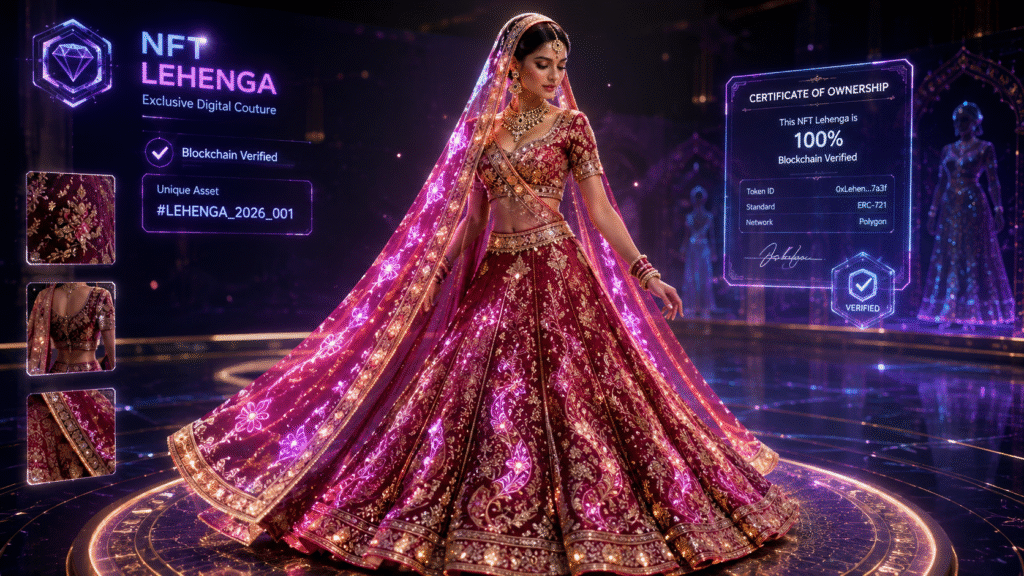
Unlike your physical lehenga that hangs in a cupboard gathering dust, an NFT lehenga is a one-of-a-kind digital asset. Think of it as a virtual garment minted on the blockchain—each thread, motif, and shimmer is coded to be yours forever. Leading digital fashion houses (and even some traditional Indian designers experimenting with the space) create hyper-detailed 3D models: flowing digital silk that moves realistically with your avatar, intricate zardozi patterns that catch light dynamically, and customizable elements like your name embroidered in glowing Devanagari script.
How it works in simple terms: You connect a crypto wallet, browse collections on platforms, and buy the NFT. Boom—your avatar now owns that exclusive mehendi-ready outfit. Some come with perks like resale rights, metaverse event access, or even AR filters to try on your real-life selfies. Prices? Entry-level digital bridal sets start around ₹15,000-30,000, while limited-edition pieces from top creators hit ₹70,000-1,50,000 or more, especially those tied to exclusive virtual wedding drops.
The pitch? In a world where physical weddings cost lakhs anyway, an NFT lehenga gives you bragging rights, collectible value, and a way to stand out in crowded virtual halls. It’s fashion that never fades, never needs dry cleaning, and can be “worn” to multiple events across platforms.
The Big Debate: Luxury Upgrade or Expensive Illusion?
Experts, brides, and tech skeptics are split right down the middle on whether NFT bridal wear makes sense in 2026.
The Pros: Why Forward-Thinking Brides Are Saying Yes
- Emotional Ownership and Status: That NFT isn’t just code—it’s proof you attended your own virtual mehendi in style. Many brides describe it as “digital stridhan,” something they can pass to future generations via blockchain.
- Global Reach Without Limits: Renting one real lehenga covers the physical day; owning an NFT lets you shine across time zones and events. No packing, no alterations.
- Creative Freedom and Collectibility: Designers offer wild customizations—neon mandala patterns, animated peacocks, or fusion looks impossible in real silk. Plus, rare NFTs can appreciate in value if resold.
- Sustainability Angle: One physical rental + one digital outfit means fewer resources wasted on fast-fashion dupes for every function.
- Community and FOMO-Proofing: Virtual guests notice details. Anjali’s NFT lehenga went viral in her family’s metaverse group, sparking connections that real weddings sometimes miss.
The Cons: Where the Skeptics (and Elders) Push Back
- High Cost for Pixels: ₹80,000 for something you can’t touch or wear in real life feels absurd when real rentals solve the physical need.
- Tech Barriers and Scams: Wallets, gas fees, and fake marketplaces have burned early adopters. Not everyone wants to learn blockchain just to plan a mehendi.
- Digital Divide: Grandparents often feel left out or confused—“Beta, yeh computer ki shaadi kya hai?”—creating emotional gaps even in virtual spaces.
- Environmental and Hype Concerns: While greener than some crypto past, energy use in minting still raises eyebrows. Critics call it speculative bubble fashion.
- Loss of Tangible Tradition: Some brides miss the weight of real jewellery and fabric, worrying that digital versions dilute cultural depth.
Priya’s “it felt flat” moment echoes many who tried hybrid without full investment. The truth? It depends on your family’s tech comfort and what “memories” mean to you.
The Indian Twist: Tradition Meets the Metaverse Mandap
Fasting for Karva Chauth or applying mehendi isn’t new—but doing it with avatars in a virtual temple? That’s pure 2026 desi innovation. Indian weddings have always blended ritual with resourcefulness, and metaverse events are the latest chapter. Families recreate haldi ceremonies with digital turmeric paste that “stains” avatars golden, or virtual pheras around a glowing 3D fire. NFT lehengas often incorporate classic motifs—lotus flowers, peacocks, or goddess embroidery—but with animations that make them come alive.
Yet the cultural clash is real. Elders who grew up saving for gold jewellery scratch their heads at paying for pixels. “Hamare time mein shaadi mein kapde pehen ke photo khinchte the, ab toh computer mein hi shaadi ho rahi hai!” one grandmother joked in a family video. Still, many are warming up when they see their grandchildren’s avatars looking radiant. South Indian families in the US or NRIs in the Middle East are leading the charge, using virtual events to include distant relatives without visas. It’s tradition 2.0: rooted in rituals but powered by code.
Real Stories: Triumphs, Tumbles, and Avatar Adventures
Let’s hear from the brides living the two-universe life.
- Meera, 26, Chennai: “I rented a simple physical lehenga and went all-in on a ₹65,000 NFT set for the metaverse sangeet. My Singapore-based cousins joined and raved about the details. It bridged the gap my grandparents couldn’t cross physically.”
- Riya, 29, Delhi: Skeptical at first, she bought a basic NFT outfit and regretted skimping. “The free avatar clothes looked cheap next to everyone else’s digital couture. Lesson learned—invest or skip the virtual event.”
- Aarohi, 25, Mumbai: A budget-conscious bride who mixed both worlds perfectly. “Rented real for the mandap, NFT for mehendi. Saved lakhs overall and created memories my entire family could share, no matter where they were.”
- Sneha, 31, Hyderabad: Her grandparents finally joined a metaverse event wearing simple digital sarees. “They laughed the whole time but felt included. The NFT lehenga made me feel like a digital queen—and brought the family closer than any flight could.”
These stories show NFT lehengas aren’t just fashion—they’re connection tools.
Safe Steps for Your Metaverse Mehendi: Tips to Get It Right
Thinking of adding a digital lehenga to your trousseau? Here’s how to do it without stress:
- Start Small: Begin with a free trial avatar on a beginner-friendly platform to test the waters.
- Research Platforms: Look for reputable NFT marketplaces with Indian creators—check reviews, community feedback, and resale history.
- Wallet Wisdom: Use secure, beginner-friendly crypto wallets and enable two-factor authentication. Never share seed phrases!
- Customize Thoughtfully: Choose designs that match your real wedding theme for that seamless hybrid vibe.
- Budget Smartly: Treat NFT spend like any wedding expense—allocate after covering physical priorities.
- Involve Family: Do a test run with grandparents so they feel part of the excitement.
Backup Your Memories: Screenshot, record virtual events, and store them safely—digital heirlooms need care too.
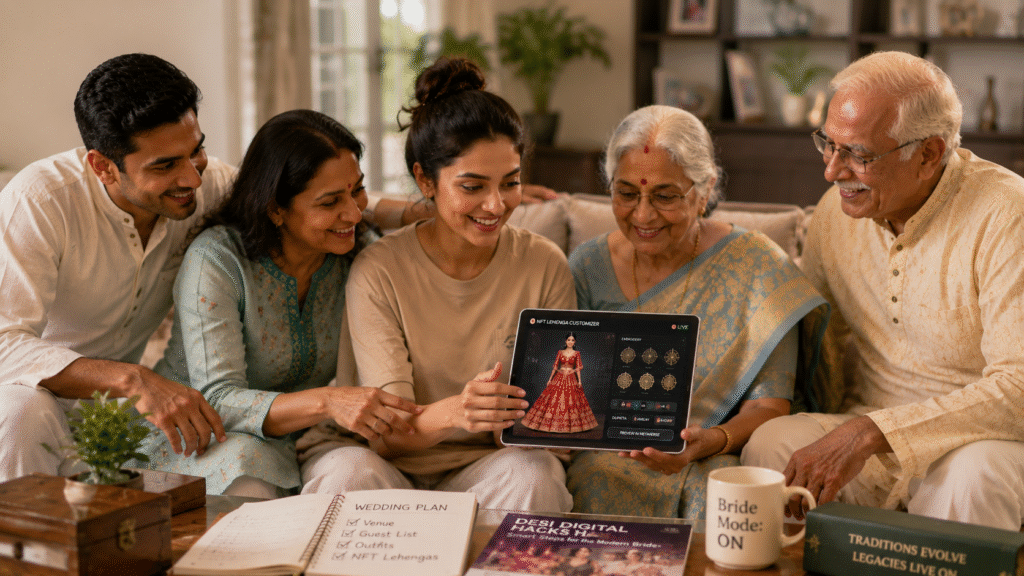
Desi Digital Hacks: Making Virtual Weddings Feel Truly Indian
Blend the best of both worlds with these practical ideas: Pair your NFT lehenga with AR filters for real-life photos, host virtual games like digital antakshari, or mint family NFTs of group photos. Some couples even serve “virtual thalis” via delivery coordination so everyone eats together across screens. The key? Keep the heart desi—laughter, blessings, and love—while the tech handles the logistics.
Wrapping It Up: To NFT or Not to NFT Your Mehendi?
Metaverse mehendis and NFT lehengas aren’t replacing the magic of real weddings—they’re multiplying it. For some 2026 brides, renting the physical look keeps things practical while an NFT outfit adds digital sparkle and inclusivity. For others, it feels like unnecessary hype in an already expensive celebration. The difference lies in your family’s needs, your comfort with tech, and what “forever” means in a blockchain world.
If you’re curious, start exploring gently. Your wedding can honor centuries of tradition while embracing tomorrow’s possibilities. Whether your lehenga is silk or pixels, the real glow comes from love shared across universes.
What’s your take? Planning a hybrid wedding in 2026? Have you bought (or considered) an NFT outfit, or are you team traditional all the way? Drop your stories, tips, or questions in the comments below—let’s swap notes and help each other navigate this exciting new chapter. Share this with your wedding WhatsApp group; you might just inspire the next metaverse mehendi queen!
You May Like This
1



Advertisement
Advertisement
You May Like This








Advertisement
Advertisement
Advertisement
Advertisement
Advertisement
Advertisement