

Advertisement

- Updated on April 18, 2026
- IST 3:16 am
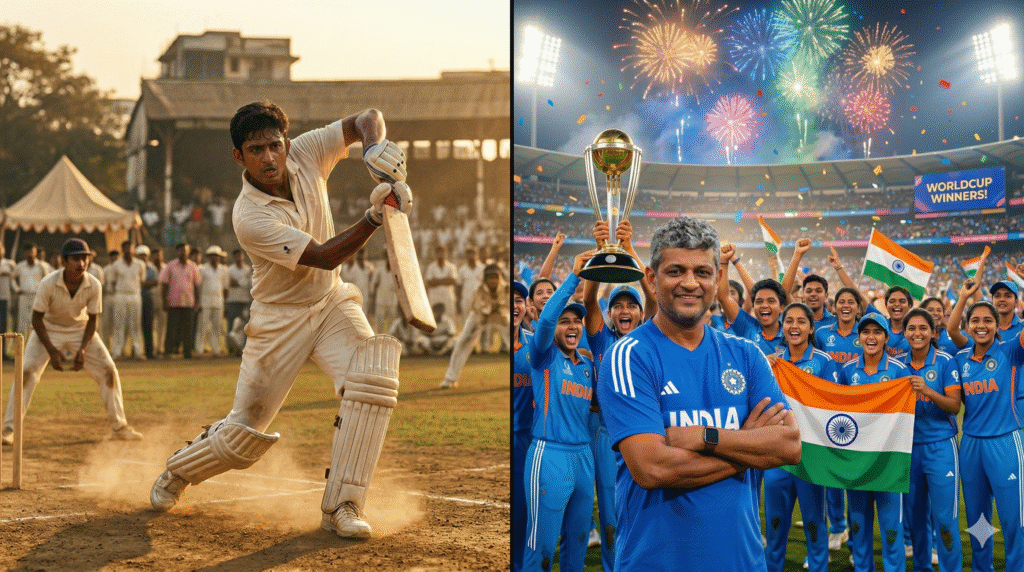
Imagine this: It’s a humid November evening in 2025 at DY Patil Stadium in Navi Mumbai. The crowd is a sea of blue and tricolor flags, hearts pounding as the Indian women’s team needs just 52 more runs to stop South Africa. Captain Harmanpreet Kaur looks to the dugout, where a calm, bespectacled man in a simple India polo stands with folded arms. One final wicket falls. The stadium erupts. India has just won its maiden ODI World Cup. Fireworks light up the sky, and the man—Amol Muzumdar—wipes a quiet tear. No bat in hand, no India cap on his head, yet he has given the nation what he himself never got to chase on the biggest stage.
Now, picture young Rohan, a 17-year-old from Shivaji Park in Mumbai, the same maidan where Muzumdar once trained alongside Sachin Tendulkar and Vinod Kambli. Rohan grew up hearing stories of “the greatest Indian cricketer never to play for India”—11,167 first-class runs, a jaw-dropping 260 on Ranji debut, and still no Test call-up. “If he couldn’t make it, what chance do I have?” Rohan once wondered. But on that November night in 2025, as he watched Muzumdar lift the trophy with the women in blue, something clicked. “Coach sir showed us the real game isn’t just about wearing the cap—it’s about leaving a legacy that lasts longer than any score.”
So, what’s the truth behind this remarkable redemption arc? Is Amol Muzumdar’s story proof that unfulfilled potential can bloom into something even greater? In this blog, we unpack the Ranji Trophy legend’s incredible journey, the heartbreak of missed opportunities, the bold leap into women’s cricket, and how his calm, belief-driven coaching turned India’s women into world champions in 2025. Rooted in Mumbai’s gritty maidans and India’s evolving cricket culture, this is more than a sports tale—it’s a masterclass in resilience, patience, and rewriting endings. Let’s dive deep into the unplayed legend who finally played the greatest innings of all.
Amol Muzumdar: The Ranji Royalty Who Never Wore Blue
Let’s rewind to the 1990s. Mumbai’s Shivaji Park nets are buzzing. A lanky teenager named Amol Muzumdar steps in after watching his idols bat. In the 1993-94 Ranji Trophy pre-quarterfinal against Haryana, he walks out at number three and crafts an unbeaten 260—still one of the highest scores on first-class debut anywhere in the world. The press dubs him “the next Tendulkar.” Over the next two decades, he piles up 11,167 first-class runs in 171 matches, with 30 centuries and a batting average hovering around 48. He captains Mumbai to the Ranji Trophy title in 2006-07 and reclaims the all-time Ranji runs record multiple times.
Yet, for all the domestic glory, the India cap eludes him. He played for India A alongside Rahul Dravid and Sourav Ganguly, but the senior team? Never. His contemporaries—Sachin Tendulkar, Rahul Dravid, Sourav Ganguly, and VVS Laxman—formed one of cricket’s most formidable middle orders. Every time a spot opened, someone else was already there, scoring centuries on debut or saving Tests abroad. Muzumdar’s story became a metaphor for the ultimate domestic warrior: respected, feared in the Ranji circuit, yet forever on the fringes of international glory.
Think of it like a perfectly timed cover drive that finds the fielder’s hands instead of the boundary rope—brilliant execution, wrong timing. But Muzumdar never complained publicly. He kept scoring, kept mentoring younger Mumbai players, and kept showing up. That quiet dignity would later become his greatest coaching asset.
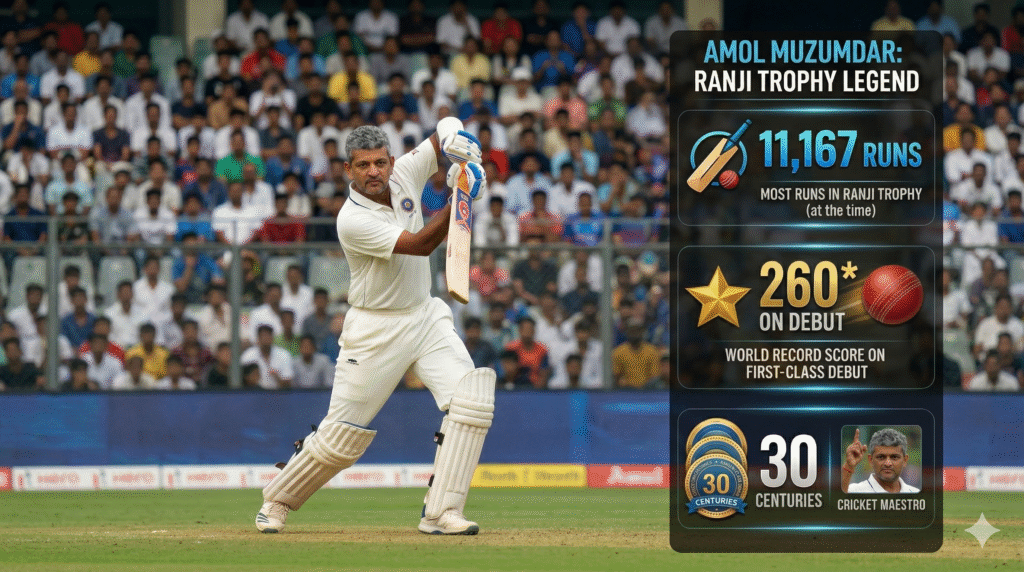
The Golden Era That Kept Him Out: Cricket’s Cruelest Irony
The 1990s and early 2000s were India’s golden batting era. With Tendulkar at the peak, Dravid’s rock-solid defense, Ganguly’s aggression, and Laxman’s wristy magic, selectors had luxury of riches. Experts still debate: “Was Muzumdar unlucky or simply not in the same league?” Some say his technique was classical but lacked the explosive flair needed for limited-overs cricket emerging then. Others argue he was a pure red-ball specialist in an era when India prioritized all-round utility.
Multiple perspectives paint a fuller picture. Former teammates recall Muzumdar’s hunger in nets—practicing late into the evening while stars rested. Mumbai coach Pravin Amre once said he was “the most consistent run-machine we ever had.” Yet, in a star-studded lineup, consistency alone wasn’t enough for that one big break. It’s a story that resonates with millions of Indian aspirants who dream big but face systemic barriers—whether in cricket, exams, or careers. Muzumdar’s unplayed Test cap became a symbol of unfulfilled potential, but it also planted the seeds for his later triumph. As the saying goes in Mumbai maidans, “Every dropped catch teaches the next fielder how to hold on tighter.”
From Player to Mentor: A New Chapter Begins
Retiring in 2014 after a glittering domestic career, Muzumdar didn’t fade away. He coached Mumbai’s senior and junior teams, served as batting coach for Rajasthan Royals in the IPL, and guided India’s U-19 side. His philosophy was simple yet profound: cricket is 90% mental, 10% skill. He emphasized process over results—focusing on shot selection, mental toughness, and enjoying the grind.
Unlike flashy coaches who scream from the boundary, Muzumdar was the quiet strategist. He drew from his own Ranji battles: how to bat long hours on dusty pitches, how to stay hungry when rewards are delayed. This domestic-first approach made him the perfect fit when the BCCI took a bold step in October 2023—appointing him head coach of the India women’s national team. Many raised eyebrows: “A man who never played for India coaching our women?” But the BCCI saw what others missed—pure cricket wisdom untainted by international stardom baggage.
Crafting Champions: Muzumdar’s Coaching Blueprint in Women’s Cricket
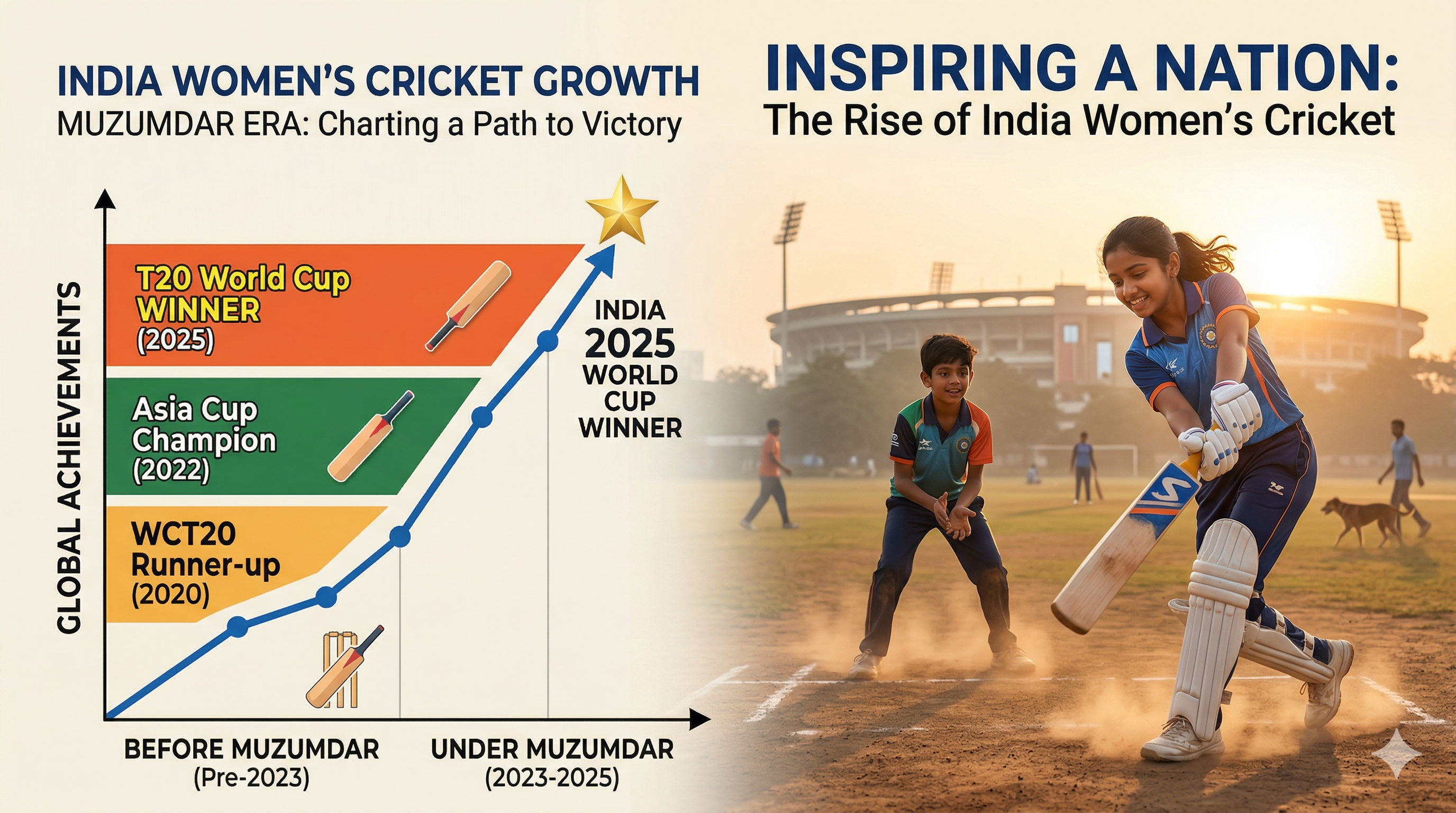
India’s women’s team had talent but needed structure. Muzumdar arrived with a “Chak De! India” mindset—building belief brick by brick. He simplified the game for players juggling domestic duties, studies, and family expectations. Training sessions in Mumbai and Bengaluru focused on fitness, nutrition tailored to Indian diets (think protein-packed dals and mindful carbs), and visualization techniques drawn from his own long innings.
He encouraged open conversations about pressure—something women cricketers face uniquely in a male-dominated ecosystem. “Your dreams are not small,” he would tell them, echoing the sentiment that later became a viral line. By 2025, the team had transformed: stronger mentally, sharper tactically, and united like never before.
The 2025 World Cup Odyssey: From Rocky Start to Historic Glory
The 2025 ICC Women’s ODI World Cup in India and Sri Lanka started shakily for Harmanpreet Kaur’s side—three group-stage losses, including a heartbreaking one to England. Critics questioned Muzumdar’s methods. But he stayed calm, cutting out noise and reinforcing focus: “We finish well.”
The turnaround was electric. Key wins against New Zealand and others propelled them to the final at DY Patil Stadium. On November 2, 2025, India posted 298/7, powered by Shafali Verma’s explosive 87 and Deepti Sharma’s all-round brilliance (58 runs and 5/39). South Africa fell 52 runs short. As the trophy was lifted, Muzumdar stood beaming—redemption complete. Deepti Sharma later credited his “quiet confidence” for keeping the team grounded during the rocky phase. It wasn’t just a win; it was India’s first-ever Women’s ODI World Cup title, a watershed for women’s cricket in Asia.
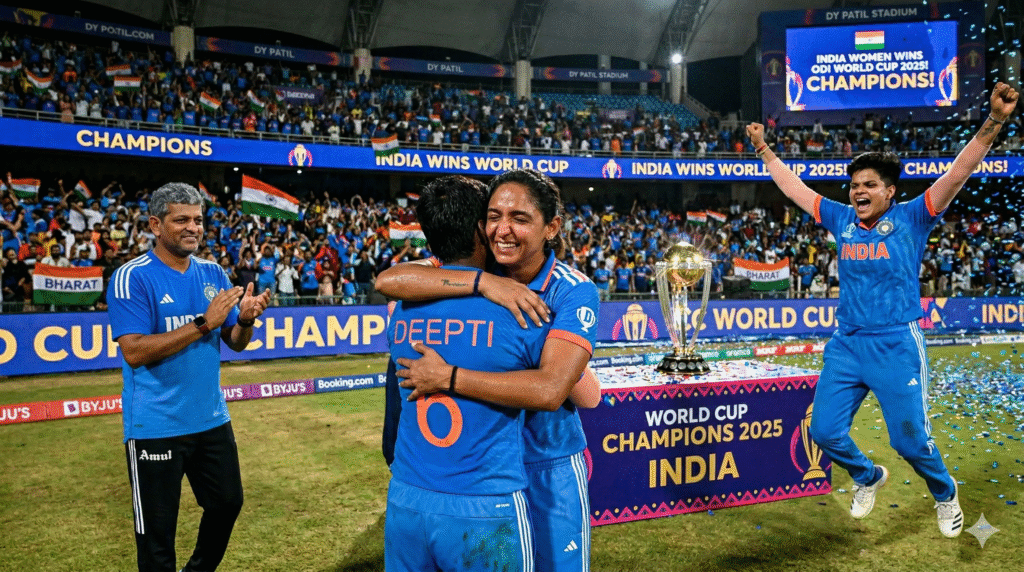
The Great Debate: Does Playing Experience Guarantee Coaching Success?
Here’s where it gets juicy—does lacking international caps make a coach better or worse? Traditionalists argue playing at the highest level gives unmatched insight. But look at Muzumdar’s success: his Ranji grind taught him resilience that translates across genders and formats. Compare him to other non-Test coaches who excelled—his story proves domestic expertise can breed empathy and innovation. For women’s cricket, his outsider perspective avoided ego clashes, allowing fresh ideas to flourish. Perspectives vary, but results speak louder: a world title in just two years.
Real Voices: What Players and Peers Say About the Unplayed Legend
Harmanpreet Kaur touched Muzumdar’s feet post-final, calling him “the father figure we needed.” Shafali Verma shared how his one-on-one batting sessions unlocked her power game. Jemimah Rodrigues, a Mumbai girl herself, said, “Coach sir’s stories of grinding in Ranji gave us perspective—international cricket isn’t the end, it’s the beginning of bigger impact.”
Even former India men’s players like Rahul Dravid praised the appointment, noting Muzumdar’s “cricket IQ is second to none.” Fans on social media flooded timelines with #MuzumdarRedemption, sharing how his journey inspires girls from small towns to pick up bats.
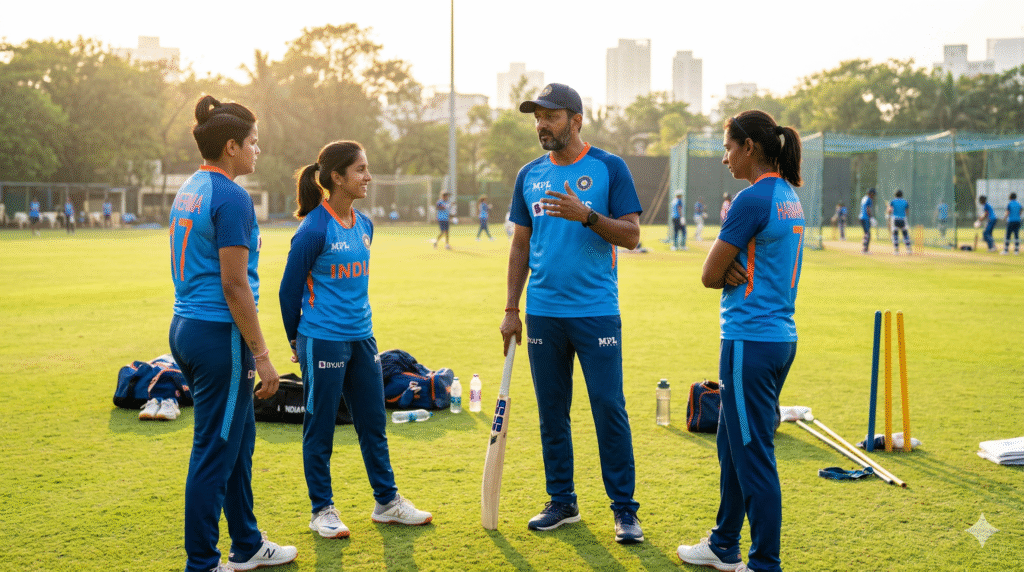
The Mumbai Touch: How Desi Roots Fueled a Global Triumph
Mumbai cricket isn’t just a system—it’s a culture of sweat, maidan rivalries, and unbreakable bonds. Muzumdar brought that ethos to the women’s setup: early morning nets, street-smart tactics, and family-like support. He incorporated simple desi elements—post-training ginger tea chats, yoga for mental clarity, and balanced meals echoing Indian households. In a country where women’s cricket battles for visibility, his Mumbai DNA helped bridge the gap, making the team feel rooted yet world-class.
Timeless Lessons from the Unplayed Legend: What Every Aspiring Cricketer Can Learn
- Patience Pays Off: Like Muzumdar’s wait for recognition, trust the process—your time will come, perhaps in unexpected ways.
- Grind Builds Character: Domestic cricket’s tough pitches teach lessons international glamour can’t.
- Belief Over Hype: Stay calm when the world doubts you; results follow inner conviction.
- Mentor with Empathy: Understand struggles—whether gender barriers or personal doubts—and lift others.
- Rewrite Your Story: No cap? No problem. Legacy is measured by impact, not stats alone.
- Adapt and Evolve: From player to coach, embrace new roles with the same hunger.
These aren’t just cricket tips—they apply to any young Indian chasing dreams in exams, startups, or sports.
Wrapping It Up: Redemption in Cricket’s Grand Design
So, does Amol Muzumdar’s journey from unplayed legend to World Cup-winning coach prove that some stories simply need more time to reach their perfect ending? Absolutely. In 2025, at DY Patil Stadium, he didn’t just coach a team to glory—he reminded every Indian fan, especially the youth aged 15-45 dreaming on maidans across the country, that potential never truly dies. It transforms.
If his story moved you, dip your toes into the game—whether as player, coach, or passionate follower. Support women’s cricket, share your own redemption tales, and keep believing. What’s your take on Amol Muzumdar’s incredible arc? Have you faced a similar “unplayed” moment in life? Drop your story in the comments below—let’s celebrate the grind and lift each other up, one run, one win at a time.
You May Like This
1



Advertisement

You May Like This







Advertisement
Advertisement
Advertisement