

Advertisement

Advertisement

- Updated on May 15, 2026
- IST 8:12 am
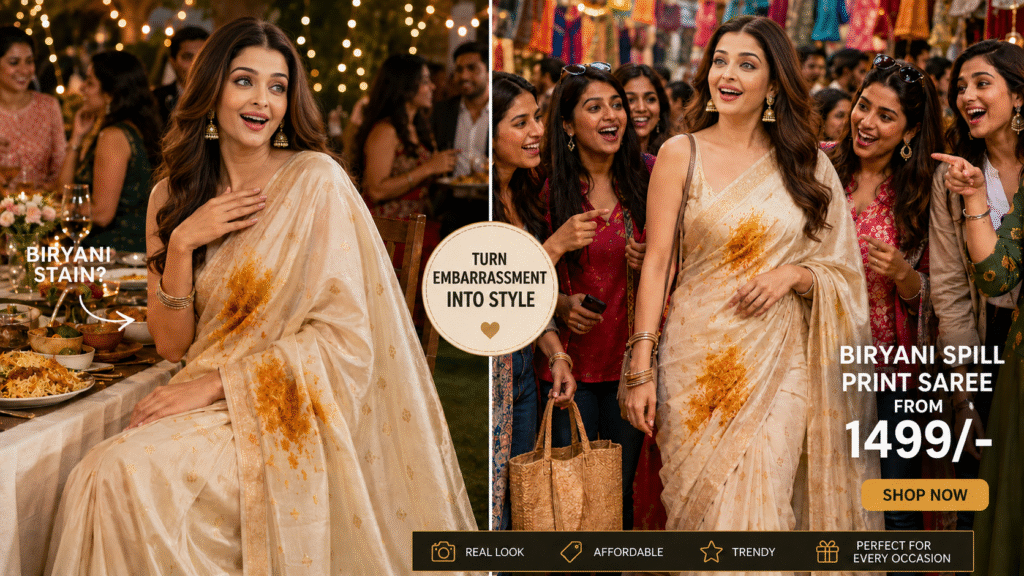
Imagine this: It’s a lavish pre-wedding dinner in Mumbai in March 2026. The air is thick with the aroma of saffron-infused biryani, laughter echoes off the marble floors, and Bollywood’s latest heartthrob, actress Kiara Sharma, is draped in a breathtaking ₹1 lakh Chanderi saree—handwoven silk-cotton perfection from Madhya Pradesh, with delicate zari borders that catch the light like whispers of heritage. One playful bite goes wrong. A generous spoonful of fragrant yellow rice and gravy tumbles straight onto the pallu. Instead of panic, Kiara snaps a quick selfie, stains and all, and captions it with a wink: “Biryani won this round 😂 Who else has wardrobe malfunctions at desi functions? Tag your spill stories!” The post explodes overnight—millions of likes, shares, and memes flooding Instagram and X.
Now picture Priya, a 29-year-old marketing executive in Bangalore. She scrolls through the feed during her metro ride, rolls her eyes at the “waste of a beautiful saree,” and moves on. But then, just seven days later, she spots it: an affordable fast-fashion brand has replicated the exact spill pattern—those irregular saffron blotches, tiny rice-grain flecks, and gravy streaks—on a budget Chanderi-style saree priced at ₹1,499. Priya’s jaw drops. The waitlist hits 50,000. Within a week, 100,000 pieces fly off virtual shelves. “This is genius marketing or total madness?” she texts her group chat.
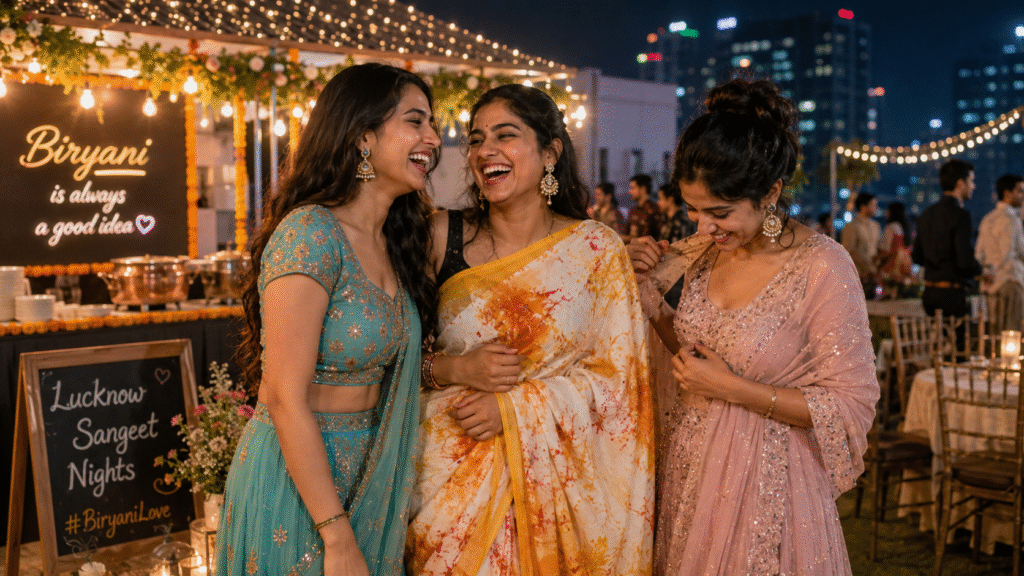
Contrast that with Anjali, 34, a schoolteacher in Lucknow who embraces the chaos. She orders two—one for herself and one for her sister’s upcoming sangeet. “It’s fun, relatable, and I can actually afford it,” she beams in a follow-up Reel. For her, the biryani stain isn’t a disaster; it’s a badge of India’s messy, joyful reality.
So, what’s the real story behind the ₹1 lakh biryani saree that became a ₹1,499 bestseller? Was this a spontaneous celebrity mishap turned viral goldmine, or a calculated masterstroke blurring the lines between accident, art, and opportunism? In this blog, we’ll unravel the saga, dive into the cultural clash of tradition versus trend, explore the ethics of turning a food spill into fashion, and share how everyday Indian women are reacting. Plus, we’ll look at what this means for Bollywood influence, fast fashion, and the future of desi style. Let’s dig in—pass the chutney, because this one’s spicy.
The Fateful Spill: How a Bollywood Dinner Turned into a Fashion Phenomenon
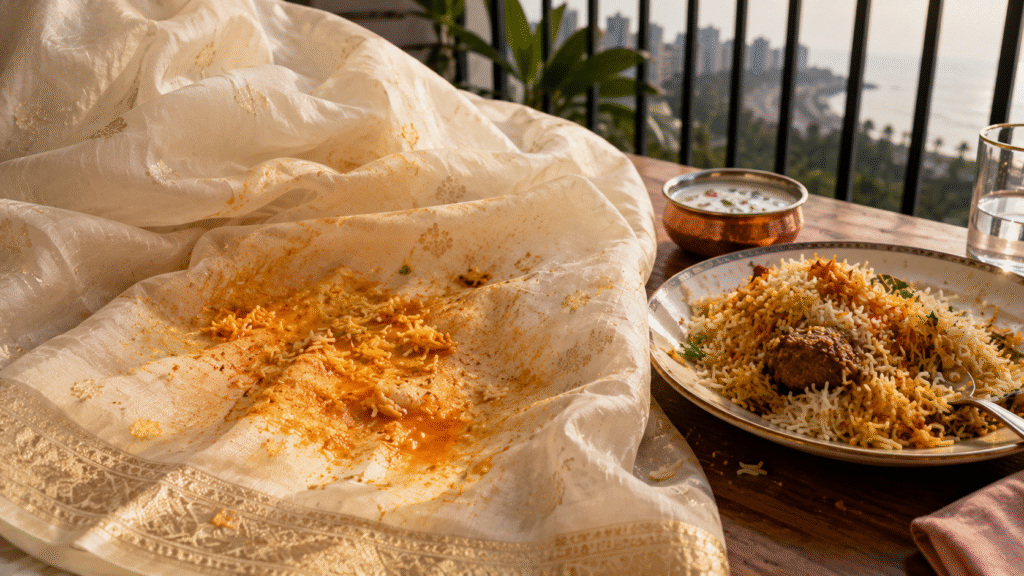
It started innocently enough at a star-studded pre-wedding bash in a Mumbai seaside villa. Kiara Sharma, fresh off a blockbuster hit and known for her down-to-earth social media vibe, was rocking a custom Chanderi saree worth a small fortune. Chanderi weaves, with their signature sheer texture, subtle motifs of peacocks, coins, and florals, have been prized since the 13th century by Koli weavers in Madhya Pradesh. These sarees blend fine cotton weft with silk warp, often finished with intricate gold or silver zari—lightweight enough for humid Indian evenings yet luxurious enough to turn heads.
One enthusiastic scoop of aromatic mutton biryani—complete with turmeric-stained rice, ghee, and spices—landed smack on the fabric. Instead of rushing to the washroom in embarrassment, Kiara leaned into it. Her Instagram story captured the moment perfectly: close-up of the stain, a laughing emoji, and a casual poll asking followers if they’d wear a “biryani print.” By morning, the clip had racked up over 10 million views. Fashion bloggers, meme pages, and even rival celebs joined the frenzy, recreating the spill with their own plates of biryani for laughs.
But the real plot twist came from a fast-fashion label—let’s call it “ViralVibe Fashions,” a rising Indian brand known for lightning-fast trend drops. Within 48 hours, their design team had scanned the exact pattern from Kiara’s photo, digitized the irregular saffron splotches, rice flecks, and gravy trails, and printed it onto affordable polyester-cotton sarees mimicking Chanderi’s drape. Priced at ₹1,499 with free shipping for the first 10,000 buyers, the “Biryani Spill Saree” launched with a cheeky campaign: “Wear your desi disasters proudly.” The result? Sold out in days, with a waitlist longer than a Delhi wedding baraat. Social media shopping craze hit fever pitch—#BiryaniSareeViral trended for weeks.
Understanding Chanderi: The Heritage Behind the Stain
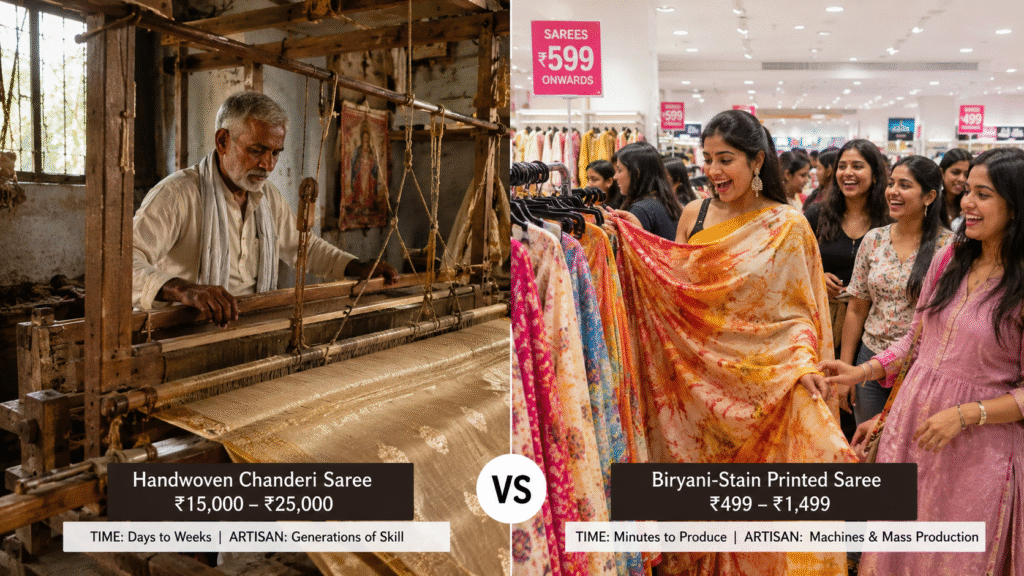
To grasp why this moment struck a nerve, we need to understand the saree at the center of it all. Chanderi isn’t just fabric; it’s a living piece of Indian craftsmanship. Originating from the ancient town in Madhya Pradesh, these sarees emerged around the 13th century, blending influences from Malwa and Bundelkhand regions. Traditional weavers—often from Momen and Koli communities—create them on handlooms using a mix of silk and cotton for that signature translucent, feather-light feel. Motifs draw from nature and history: lotus flowers, peacocks, and geometric coins that once symbolized royal patronage.
A genuine handwoven Chanderi can set you back ₹30,000 to over ₹1 lakh, especially with heavy zari work. They’re staples at weddings, festivals, and red-carpet events, prized for their breathability in India’s scorching summers and timeless elegance. For many families, owning one is a generational investment—a symbol of pride, passed down from mother to daughter. So when biryani gravy met this heritage piece, it wasn’t just a stain. It was a collision between everyday Indian chaos (who hasn’t spilled food at a feast?) and elite luxury. The viral post humanized the unattainable, turning a high-end garment into a relatable punchline.
Intermittent Fashion? No—This Was Instant Virality
Unlike slow-burn trends that simmer on runways, this biryani saree was fast fashion at its most literal: born from a single social media moment and replicated at warp speed. ViralVibe didn’t copy the entire saree; they isolated the “stain” as a bold, abstract print—irregular yellow-orange blots fading into the fabric like modern art. It tapped into India’s love for imperfection: the same way we celebrate quirky street food or last-minute mehendi designs, this print celebrated the messiness of real life.
The brand’s marketing was pure genius. They partnered with micro-influencers from Tier-2 cities, ran targeted ads during prime biryani delivery hours on Swiggy and Zomato, and even dropped limited “stained” variants with subtle rice-grain textures. Sales data (shared in their victory post) showed 60% of buyers were women aged 18-35 in metros and smaller towns—exactly the demographic chasing affordable Bollywood glamour.
The Big Debate: Homage, Opportunism, or Pure Marketing Gold?
Here’s where opinions split faster than a plate of biryani at a family gathering. Experts, designers, and netizens don’t agree on whether this was a brilliant innovation or a opportunistic cash grab. Let’s break it down fairly.
The Pros: Why the Biryani Print Struck Gold
- Democratizing Luxury: Traditional Chanderi is beautiful but out of reach for most. This print brought the aesthetic to the masses without the price tag, letting young women feel glamorous at office parties or college fests. One study on Indian fashion trends notes that value-driven affordable premium segments are exploding in 2026, with consumers craving style at honest prices.
- Celebrating Imperfection: In a world of filtered perfection, the stain print felt refreshingly real. It flipped a mishap into empowerment—“Own your spills!”—echoing body-positive movements and resonating with Gen Z’s anti-perfection vibe.
- Viral Marketing Mastery: Kiara’s post generated free publicity worth crores. The brand turned a celebrity food spill into influencer marketing gold, proving social media shopping crazes can birth million-dollar trends overnight.
- Cultural Fusion Fun: Biryani is as Indian as it gets— a melting pot of Mughal, Persian, and local flavors. Pairing it with Chanderi motifs created a fresh, meme-worthy nod to our food-obsessed culture.
Anjali’s story captures this perfectly. “I wore mine to a friend’s haldi and got more compliments than my designer lehenga ever did,” she shared. “It sparked conversations about how fashion can be playful.”
The Cons: Where Critics See Red Flags
- Exploiting a Mishap: Turning someone’s embarrassing moment into profit without clear permission raised eyebrows. Traditionalists argued it reduced centuries of weaving artistry to a gimmick, potentially disrespecting the Koli weavers whose livelihoods depend on authentic handlooms.
- Fast Fashion Fallout: Mass-printed versions use synthetic blends that lack the breathability and durability of real Chanderi. Environmental concerns loom large—polyester production isn’t exactly eco-friendly, and quick trends fuel overconsumption.
- Blurring Homage and Opportunism: Is replicating a stain “inspired by” or straight-up commodifying a private celebrity moment? Some designers called it lazy opportunism, arguing it cheapens the slow, skilled labor behind heritage crafts.
- Cultural Dilution Risk: With Bollywood already influencing everything from pre-draped sarees to fusion wear in 2026, this trend might accelerate the shift away from authentic handlooms, hurting rural artisans.
Priya, our skeptical friend from Bangalore, voiced this side: “It’s clever, sure, but it feels like profiting off someone else’s oops. What about the weavers who actually make Chanderi?”
The Indian Twist: Food, Fashion, and Festivals Collide
Fasting or feasting, Indians do everything with passion—and this trend perfectly mirrors our cultural DNA. Biryani isn’t just food; it’s a celebration staple at weddings, Eid, and family reunions. Spilling it on a saree? That’s peak desi relatability. Our festivals have always blended the sacred and the chaotic—think Holi colors staining clothes or Diwali sweets leaving sticky marks. The biryani saree took that everyday reality and made it wearable.
Bollywood amplifies it all. From wardrobe malfunctions that become memes to celebrity-endorsed drops, stars like Kiara shape trends faster than a Mumbai local train. In 2026, with Gen Z driving ₹930 billion in consumer spending, a single post can launch industries. Fast-fashion brands are capitalizing on this “meme fashion merchandise” wave, blending street-smart speed with desi storytelling.
Real Stories: Triumphs, Tumbles, and Takeaways from Indian Women
Let’s hear from the women living the trend.
- Meena, 27, Hyderabad: A software engineer who bought the saree on launch day. “I paired it with minimal jewelry for a casual office event. Everyone asked where I got the ‘unique print.’ Sold my old plain sarees to buy more!” She lost nothing but gained confidence and compliments.
- Ritu, 42, Kolkata: A homemaker and saree collector who was horrified. “My grandmother’s Chanderi is sacred. Printing stains feels like mocking our legacy.” She started a petition for brands to credit and compensate weavers, gaining traction among heritage enthusiasts.
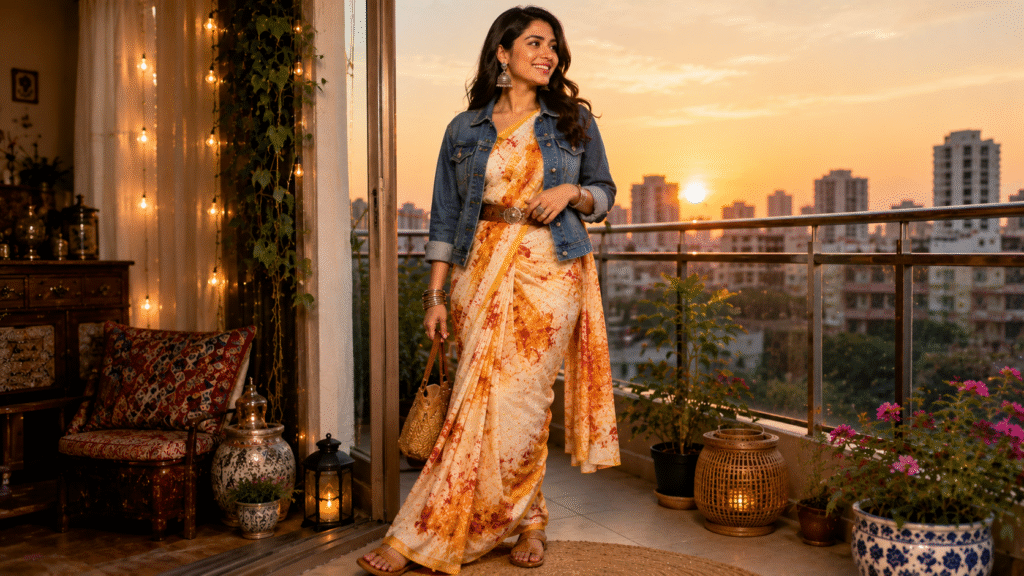
- Sneha, 31, Jaipur: A content creator who styled the biryani print with modern twists—denim jacket over it for a fusion look. “It went viral on my page. Now I’m collaborating with local tailors to customize similar prints sustainably.” Her take? Fun, but with responsibility.
These tales prove the biryani saree isn’t just clothing—it’s a conversation starter about identity, class, and creativity in modern India.
Safe Styling for Viral Trends: Tips to Get It Right
Thinking of jumping on the stain-print bandwagon? Here’s how to do it smartly and stylishly:
- Choose Quality Over Hype: Opt for brands using breathable fabrics that mimic Chanderi’s drape. Check for ethical sourcing—some now partner with handloom cooperatives.
- Pair Thoughtfully: Balance the bold print with simple blouses, minimal accessories, or fusion elements like a statement belt. Avoid over-accessorizing; let the “stain” be the hero.
- Occasion Check: Perfect for sangeets, casual brunches, or college events. Skip formal pujas or conservative family gatherings unless you’re ready for auntie side-eyes.
- Sustainability First: Look for recycled polyester blends or limited drops to reduce waste. Support labels that give back to weavers.
- Personalize It: Add your own twist—embroider tiny motifs or layer with a traditional dupatta for a hybrid vibe.
Listen to Your Vibe: If it makes you smile and feel confident, wear it. Fashion should empower, not stress.
Desi Styling Hacks: Making the Biryani Print Your Own
Elevate the trend with these quick Indian hacks:
- Breakfast-to-Biryani Look: Pair with a plain silk blouse and jhumkas for a brunch-ready vibe.
- Lunch Special: Drape it with a modern crop jacket and kolhapuri chappals for effortless fusion.
- Dinner Drama: Add heavy kohl, statement earrings, and a clutch—suddenly the stain becomes high fashion.
- Snack-Proof Bonus: Carry a small safety pin or fabric guard for real spills!
Steer clear of clashing colors that fight the saffron tones. Embrace the print’s playful energy instead.
Wrapping It Up: To Spill or Not to Spill?
The ₹1 lakh biryani saree saga isn’t black-and-white. For some Indian women, it’s a joyful, accessible way to join the fashion conversation—slimming the gap between celebrity glamour and everyday budgets. For others, it’s a stark reminder of how fast fashion can overshadow slow-crafted heritage. The difference lies in perspective: one person’s viral victory is another’s cultural loss.
What started as a clumsy bite at a pre-wedding dinner became a mirror to our times—where social media turns accidents into assets, Bollywood dictates desires, and fast fashion feeds our craving for the new and now. As India’s fashion market surges toward value-driven growth in 2026, trends like this will keep popping up. The question is: will we demand more ethical, respectful innovation?
If this story has you craving your own biryani print (or rethinking your next online haul), dip your toes in thoughtfully. Shop mindfully, support artisans when you can, and celebrate the chaos that makes us uniquely Indian. What’s your take? Have you bought a viral fashion piece inspired by a celeb moment? Dropped your own food spill story in the comments? Share below—let’s swap notes, laugh at our mishaps, and keep the conversation (and the trends) flowing. Who knows? Your next “oops” might just become the next bestseller!
You May Like This
1



Advertisement

Advertisement
You May Like This






Advertisement
Advertisement
Advertisement
Advertisement
Advertisement
Advertisement