

Advertisement

- Updated on May 13, 2026
- IST 6:36 am
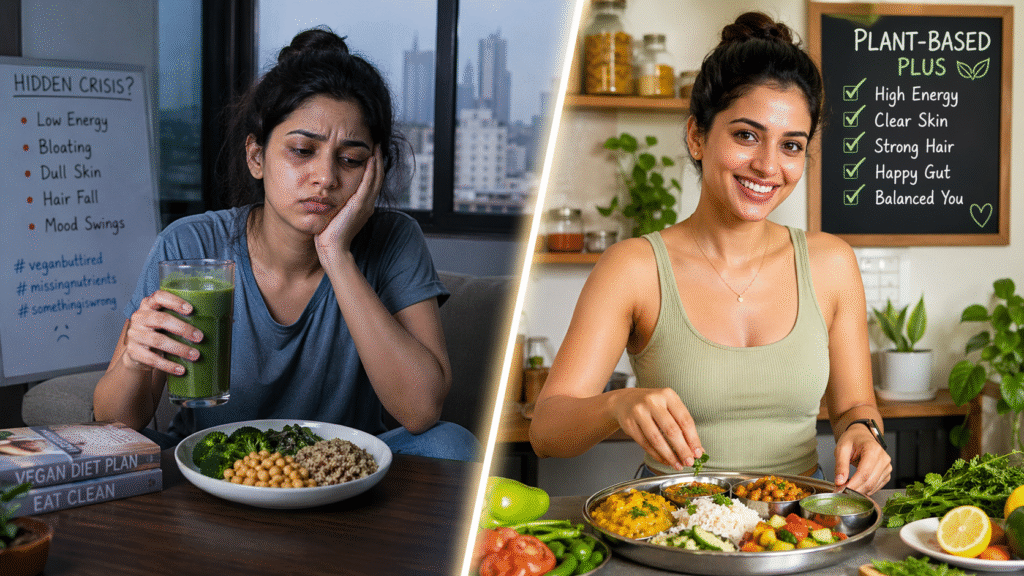
Imagine this: Three popular vegan influencers from Mumbai, Delhi, and Bengaluru were rushed to the hospital last month. Their symptoms? Extreme fatigue, tingling in their hands and feet, dizzy spells that wouldn’t stop, and blood reports screaming severe B12 deficiency and anemia. They had been posting glowing reels about “pure plant power,” green smoothies, and ethical living for years. But behind the filters? Their bodies were waving red flags. One even admitted in a private story, “I thought vegan was foolproof—turns out my bloodwork disagreed.”
Now picture Aarti, a 26-year-old content creator from Pune. She went full vegan two years ago, chasing the same dream of animal-free living and glowing skin. Her energy crashed, her periods became irregular, and doctors diagnosed early signs of bone density loss. “I felt betrayed by the trend I helped promote,” she later shared.
Contrast that with Priya, 31, a software engineer from Hyderabad. She too embraced veganism but took a smarter route—what experts are now calling the “Plant-Based Plus” approach. She paired her desi-inspired meals with targeted supplements, regular blood checks, and mindful variety. Eighteen months later, she’s running half-marathons, her labs are perfect, and she feels stronger than ever. “Veganism didn’t break me—it made me rethink how I fuel my body,” she says with a smile.
So, what’s the real story behind India’s exploding vegan movement in 2026? Is it the ethical and environmental win everyone claims, or is a silent nutrient crisis brewing in our kitchens? With hospitals reporting more cases of B12 deficiency, anemia, and bone issues among young vegans, it’s time to cut through the hype. In this blog, we’ll explore the risks, the rewards, real Indian experiences, and a practical “Plant-Based Plus” roadmap that honors ethics without sacrificing health. Let’s dig in—your body (and your values) will thank you.
Understanding the Vegan Boom in India
Veganism is no longer a niche Western trend—it’s exploding across India. Market reports show the Indian vegan food sector was valued at around ₹1,200–1,600 crore in 2024–2025 and is racing toward ₹3,000–3,800 crore by 2033, with a compound annual growth rate of 9–14%. Searches for “vegan recipes” and plant-based alternatives have skyrocketed since 2017, especially among urban millennials and Gen Z aged 15–35.
Why the surge? For many, it’s ethics—ahimsa in action, avoiding all animal products in a country already home to one of the world’s largest vegetarian populations (around 30–40% identify as vegetarian). Add climate anxiety, lactose intolerance awareness, and influencer-driven aesthetics, and you have a perfect storm. Young Indians in metros like Mumbai, Delhi, Bengaluru, and Hyderabad are ditching dairy, eggs, and honey faster than ever. Apps, cafes, and even big FMCG brands are flooding shelves with oat milk, vegan paneer, and jackfruit “meat.”
But here’s the catch: traditional Indian vegetarianism often includes dairy (curd, ghee, paneer), which provides some natural B12 and calcium. Strict veganism removes that safety net entirely. And with our carb-heavy staples—rice, roti, dal—many new vegans unknowingly create nutrient gaps. It’s not that plants aren’t powerful; it’s that without strategy, the “pure” vegan plate can leave you running on empty.
The Hidden Nutrient Crisis: What Doctors Are Seeing
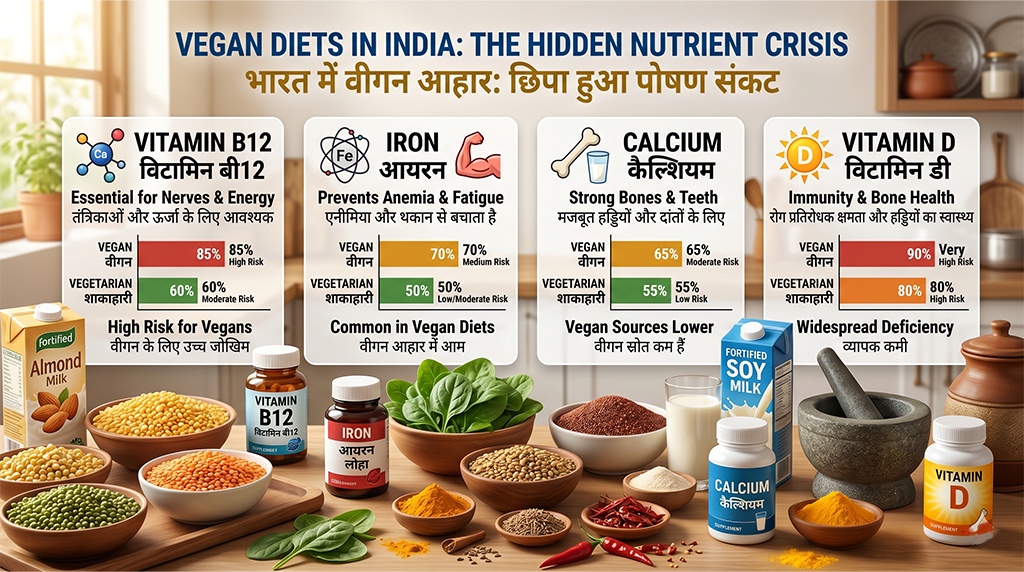
Let’s talk facts, not fear-mongering. Multiple studies across India reveal a troubling pattern. Vitamin B12 deficiency affects 32–51% of the general population, but rates skyrocket among vegetarians and vegans—often hitting 65–80% in strict plant-only groups. B12 is almost exclusively found in animal products; plants simply don’t make it. Deficiency leads to megaloblastic anemia, nerve damage, fatigue, brain fog, and even mood disorders.
Iron deficiency anemia is another red flag. Plant-based iron (non-heme) is far less absorbable than the heme iron from animal sources. Young women—already at higher risk due to menstruation—are particularly vulnerable. Hospitals report spikes in cases among 20–40-year-olds who went vegan without planning.
Then there’s bone health. Long-term vegans show higher risks of lower bone mineral density and osteoporosis, linked to calcium, vitamin D, and protein shortfalls. Chronic low B12 and inflammation can worsen this. Omega-3s (especially DHA for brain health) and zinc are also harder to get in optimal forms from plants alone.
This isn’t anti-vegan propaganda—it’s science meeting real life. A well-planned vegan diet can be healthy, but the “hidden crisis” no one discusses is what happens when enthusiasm outpaces education. Influencers rarely show their blood reports. Parents worry as teens copy TikTok challenges. And busy professionals skip the planning.
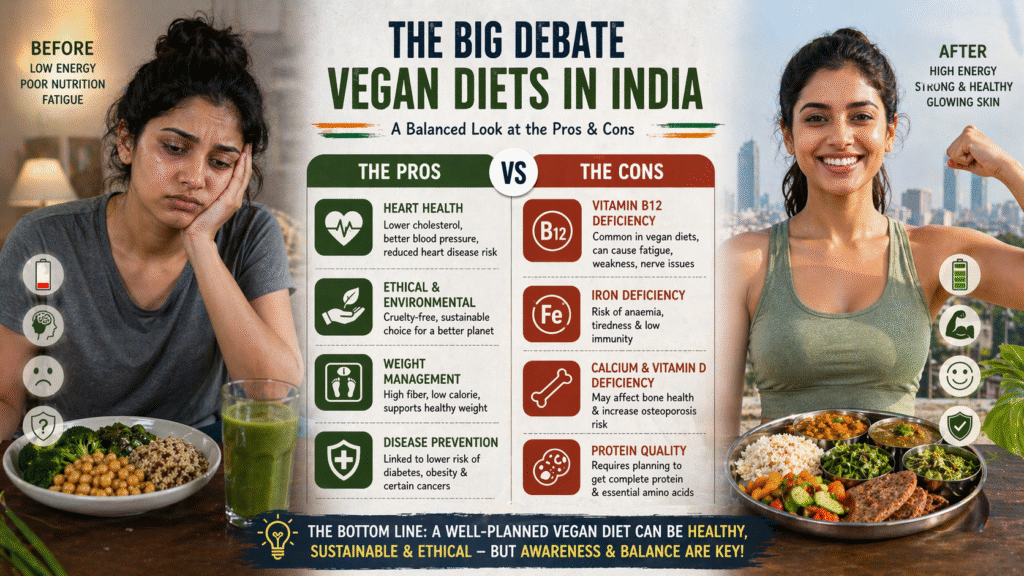
The Big Debate: Does Veganism Help or Hurt?
The evidence cuts both ways—let’s explore multiple angles fairly.
The Pros: Why Millions Are Thriving
- Ethical and Environmental Wins: Zero animal harm aligns with Indian values of ahimsa. Plant-based eating slashes your carbon footprint—huge in a country facing climate challenges.
- Heart and Metabolic Health: Lower saturated fat and cholesterol intake often means better blood pressure, reduced diabetes risk, and easier weight management. Studies link well-planned plant diets to lower inflammation.
- Gut and Longevity Boost: Fiber-rich Indian staples (millets, lentils, greens) feed good bacteria. Many report clearer skin, steady energy, and better digestion when done right.
Priya’s story fits here—she lost stubborn weight, stabilized hormones, and feels ethically aligned without compromise.
The Cons: Where It Backfires
- Nutrient Gaps: B12, bioavailable iron, calcium, vitamin D, omega-3s, and complete proteins can dip dangerously without supplements or fortification.
- Hormonal and Energy Chaos: Women in reproductive years often see irregular cycles, hair loss, or extreme tiredness. Stress from busy Indian lifestyles (work, traffic, family duties) amplifies cortisol and worsens absorption.
- Sustainability Over Time: Initial “glow” fades if meals lack variety. Long-term vegans (10+ years) show higher fracture risks in some research.
Critics argue the movement ignores India’s unique context—high baseline vegetarianism already strains B12 levels in many families. The crisis isn’t veganism itself but “unplanned veganism” sold as effortless.
The Indian Twist: Veganism Meets Tradition and Modernity
Fasting, festivals, and family meals make India uniquely placed for plant-forward eating. Navratri, Jain practices, and temple diets have always leaned vegetarian. But veganism demands ditching even ghee, curd, and honey—breaking some cultural norms.
Our everyday plates are carb-forward: white rice, maida rotis, sugary chai. Swap to brown rice, millets, and ragi without balancing proteins and fats, and blood sugar and nutrient absorption suffer. The good news? Indian kitchens are goldmines for plants—lentils, chickpeas, spinach, sesame, almonds, coconut, and spices like turmeric (anti-inflammatory bonus).
The challenge is bioavailability. Pairing iron-rich palak with vitamin C from amla or lemon works wonders. Fortified plant milks and nutritional yeast are slowly entering urban homes. Yet rural or lower-income families face access barriers—supplements cost money, and awareness lags.
Real Stories: Triumphs, Tumbles, and Lessons
Meera, 24, Bengaluru: Switched to vegan for animal rights and dropped 10 kg initially. Six months later, constant tiredness and low hemoglobin landed her in the ER. “I ignored the supplements because influencers said ‘whole foods are enough.’ Lesson learned the hard way.” Her doctor prescribed B12 shots and a balanced plan. She’s back on track but now advocates testing.
Rahul, 29, Delhi: A fitness enthusiast who combined veganism with gymming. He tracked macros, took algal omega-3 and B12, and built muscle with soy, paneer alternatives, and nuts. “I feel sharper mentally and ethically proud,” he says. His secret? Quarterly blood work and a “Plant-Based Plus” mindset.
These stories show veganism isn’t one-size-fits-all. Genetics, lifestyle, and planning make the difference.
Safe Plant-Based Plus: Tips to Protect Your Health
“Plant-Based Plus” means staying 100% vegan while adding smart layers—supplements, fortified foods, variety, and monitoring—to keep ethics and health intact. Here’s how:
- Prioritize B12: It’s non-negotiable. Take a reliable supplement (250–500 mcg daily or 2,000 mcg weekly). Fortified nutritional yeast or plant milks help too.
- Master Iron and Anemia Prevention: Eat lentils, spinach, pumpkin seeds daily. Pair with vitamin C sources (guava, lemon, bell peppers). Avoid tea/coffee with meals. Women: get ferritin tested.
- Bone and Calcium Support: Ragi, sesame seeds (til), almonds, fortified plant yogurt, and calcium-set tofu. Aim for 1,000–1,200 mg daily; add vitamin D if sunlight is low.
- Omega-3s and Protein: Flaxseeds, chia, walnuts, algal DHA supplements. Use tofu, tempeh, dals, and quinoa for complete proteins.
- Listen to Your Body: Track energy, mood, periods, and hair. Get blood tests every 6 months (B12, iron, vitamin D, homocysteine).
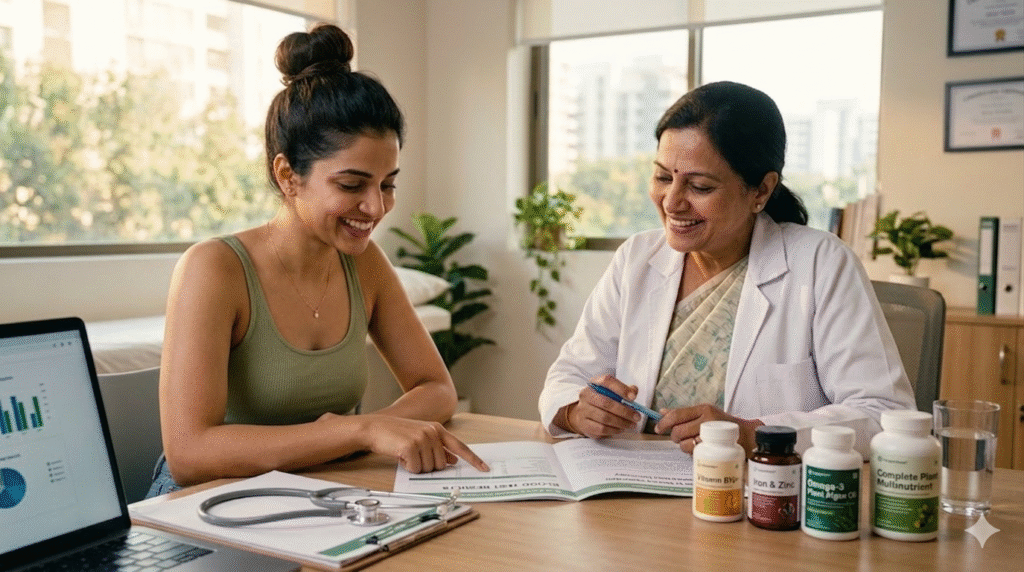
- Consult Pros: See a doctor or registered nutritionist—especially if pregnant, breastfeeding, or active. PCOS, thyroid, or anemia history needs extra care.
- Stress Less, Move More: Yoga, walks, and meditation keep cortisol in check, aiding absorption.
Ease in gradually—start with 12-hour “vegan windows” if transitioning.
Desi Diet Hacks: Vegan Meals That Actually Work
What you eat in your Indian kitchen can make or break veganism. Here’s a practical, PCOS-friendly, nutrient-dense day (approx. 1,800–2,200 calories, adjustable):
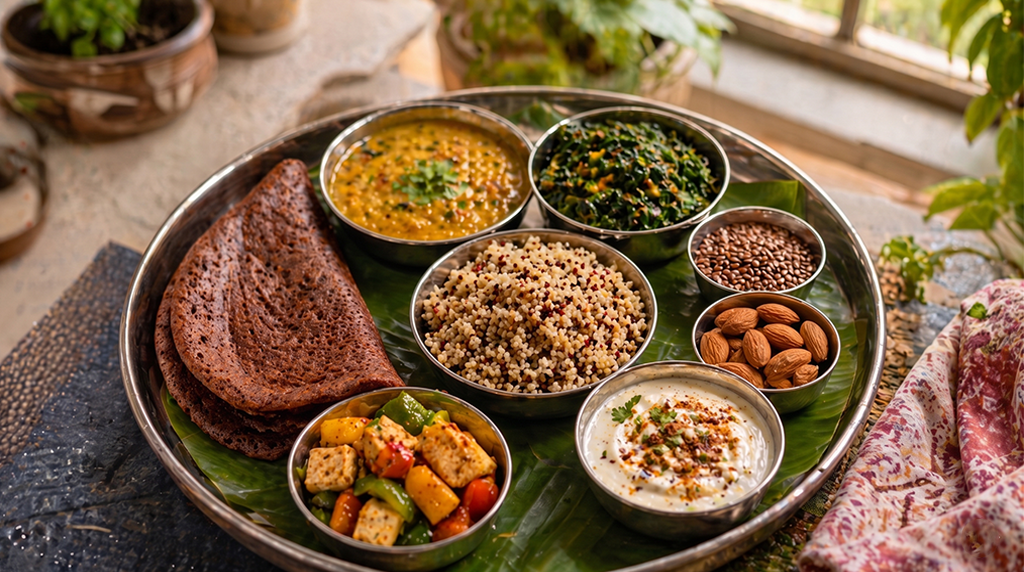
- Breakfast (Breaking the Fast): Ragi dosa with sambar (made sans ghee) and coconut chutney, or overnight chia-oats with almond milk, berries, and pumpkin seeds. Protein-packed and blood-sugar steady.
- Mid-Morning: A handful of roasted chana or almonds with an orange—iron + vitamin C boost.
- Lunch: Brown rice or millet khichdi with mixed dal, spinach sabzi, and a side of curd alternative (coconut yogurt). Add flaxseed powder for omega-3s.
- Evening Snack: Besan cheela with mint chutney or a smoothie with banana, spinach, peanut butter, and fortified plant milk.
- Dinner (Light and Early): Vegetable stir-fry with tofu or soya chunks, quinoa, and a salad of cucumber, tomatoes, and sprouts. Season with turmeric, cumin, and ginger for gut health.
Steer clear of processed vegan junk, excessive oil, and refined carbs. Hydrate with lemon-ginger water or herbal teas. Weekend treat: vegan biryani with jackfruit and cashew “raita.” Variety is key—rotate greens, legumes, and grains weekly.
Wrapping It Up: Ethics and Health Can Co-Exist
The ‘Vegan India’ debate isn’t black-and-white. For some, it’s liberating—aligning values with vibrant health. For others, especially without guidance, it becomes a hidden crisis of fatigue, anemia, and long-term risks. The difference? Intention plus intelligence. The “Plant-Based Plus” way proves you don’t have to choose between compassion for animals and compassion for your own body.
If you’re vegan or thinking about it, start smart: test your levels, supplement wisely, and build meals rooted in our rich Indian pantry. Veganism done right can be sustainable, energizing, and deeply fulfilling. But ignoring the science helps no one—not the animals, not the planet, and certainly not you.
What’s your experience? Have you faced a nutrient scare or found a winning Plant-Based Plus formula? Drop your story in the comments below—let’s learn from each other, support one another, and keep the conversation honest. Share this with a vegan friend who needs the full picture. Your health journey matters. Stay informed, stay balanced, and here’s to thriving—not just surviving—on plants.
You May Like This
1



Advertisement

You May Like This




Advertisement
Advertisement
Advertisement