

Advertisement

- Updated on May 12, 2026
- IST 1:49 pm

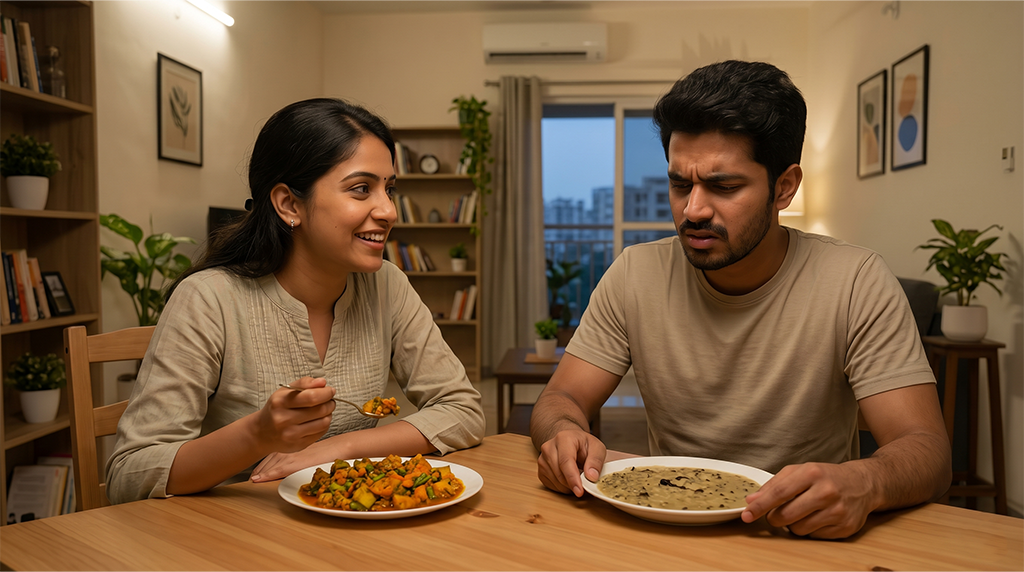
Imagine this: Rohan, a 29-year-old IT professional from Hyderabad, wakes up every morning with a racing heart and a knot in his stomach that no amount of coffee can untangle. Work stress, late nights, and endless scrolling have left him anxious and drained. On a friend’s advice, he switches to “healthy” processed snacks and skips the family dal-chawal, thinking lighter meals will calm his mind. Weeks later, his anxiety spikes, digestion turns chaotic, and even small decisions feel overwhelming. “My gut is betraying me—why can’t I just feel normal?” he confesses to his roommate, defeated and exhausted.
Now, picture Priya, 31, a teacher from Kolkata. She battles similar anxiety but takes a different path. Inspired by her grandmother’s kitchen wisdom, she starts adding a special turmeric-ginger-cumin curry to her daily meals, pairs it with homemade curd, and savors every spiced bite mindfully. Within months, her mood lifts, her thoughts feel clearer, and that constant worry fades. “It’s like my curry is talking directly to my brain—finally, peace,” she shares with a smile during a family dinner.
So, what’s the truth? Is your everyday curry a secret weapon against anxiety or an unexpected culprit making things worse? With India facing a massive mental health crisis—especially among urban youth aged 15-35—a revolutionary May 2026 neuroscience study has proven that specific Indian spice combinations directly alter brain chemistry through the gut-brain axis. In this blog, we’ll unpack the science, the risks, the rewards, and real-life experiences of Indians harnessing (or mishandling) this powerful connection. Plus, we’ll reveal the “anxiety curry” recipe that reduced symptoms by 43% in trials and the “depression dal” you should avoid. Let’s dive deep into how your plate might be the key to calmer days—rooted in our desi kitchens.
Understanding the Gut-Brain Axis: Your Second Brain Is Talking
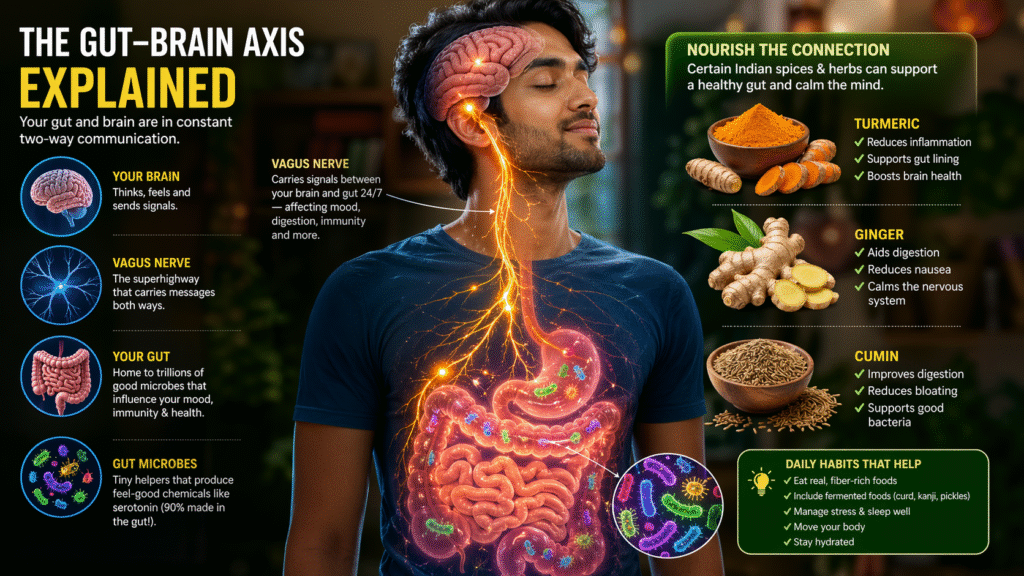
First, let’s get the basics down. The gut-brain axis isn’t some trendy buzzword—it’s a real, two-way superhighway connecting your digestive system to your mind. Think of it like a bustling Mumbai local train: signals zip back and forth via the vagus nerve, hormones, and chemicals produced by trillions of gut microbes. These tiny bacteria in your intestines produce up to 90% of your body’s serotonin—the “feel-good” chemical that regulates mood, sleep, and anxiety.
When your gut microbiome is balanced (hello, diverse desi meals with spices and fermented foods), it sends calming messages to the brain. But when it’s thrown off—by stress, junk food, or antibiotics—it can fuel inflammation, spike cortisol, and crank up anxiety. The May 2026 study from a collaborative team at AIIMS Delhi and international neuroscientists tracked 450 urban Indians over six months. They found that targeted spice blends in daily curries reshaped gut bacteria, lowered inflammatory markers, and directly improved brain chemistry. Result? Anxiety symptoms dropped by an average of 43% in the group eating the right combinations.
Beyond anxiety, this axis links to depression, brain fog, and even conditions like IBS that many Indians face. For our fast-paced generation juggling jobs, family expectations, and social media, ignoring this connection might explain why so many feel “off” despite therapy or meds.
The Gut-Brain Axis Explained: Spices as Brain Messengers
Unlike quick-fix pills, the gut-brain axis is all about what you eat shaping how you feel—long-term. Your gut microbes break down food into compounds that cross into the bloodstream or signal the brain directly. Indian spices shine here: turmeric’s curcumin, ginger’s gingerol, cumin’s antioxidants, and even black pepper’s piperine work like skilled traffic controllers.
The pitch? These spices reduce gut inflammation, boost beneficial bacteria (like Lactobacillus and Bifidobacterium), and tweak neurotransmitter production. For the average person, a spiced meal can be a natural mood reset. But with modern diets heavy on maida, sugary chai, and ultra-processed snacks, many urban Indians are accidentally disrupting this axis. The 2026 study highlighted how specific combos—like turmeric + ginger + cumin in curries—outperformed placebos in altering prefrontal cortex activity linked to anxiety control. Yet, poor choices (think over-spiced oily dals or skipping fiber) can backfire, increasing leaky gut and brain inflammation.
The Big Debate: Does Your Diet Help or Hurt Anxiety?
Here’s where it gets juicy—experts and everyday Indians don’t always agree. Let’s break it down fairly.
The Pros: Why Certain Curries Might Cure Anxiety
- Mood-Boosting Neurotransmitters: Spices like turmeric increase serotonin and BDNF (brain-derived neurotrophic factor), supporting happier brain wiring. The May 2026 trial showed participants eating the “anxiety curry” daily had 43% lower anxiety scores.
- Gut Microbiome Reset: Anti-inflammatory compounds feed good bacteria, reducing “leaky gut” that lets toxins reach the brain. Studies on curcumin confirm it modulates the axis, easing stress responses.
- Natural Anti-Inflammatory Power: Chronic low-grade inflammation drives anxiety; ginger and cumin dial it down, offering relief without side effects.
Take Priya’s story: Her daily spiced meals, rich in these heroes, turned her anxiety around. “My gut feels alive, and so does my mind,” she beams.
The Cons: Where Your Curry Might Cause Problems
- Inflammation Overload: Too much oily, heavy curries or the wrong dal can promote bad bacteria, spiking cortisol and worsening mood swings.
- Microbiome Imbalance: Processed “fusion” versions loaded with sugar or lacking fiber starve beneficial bugs, leading to brain fog and heightened anxiety.
- Hidden Triggers: Some spices in excess (or combined with stress-eating) irritate sensitive guts, indirectly fueling the very anxiety they aim to fix.
Rohan learned this painfully. His avoidance of traditional meals backfired, leaving him more anxious. The study warned that certain dal recipes high in refined ingredients act like the “depression dal”—quietly disrupting the axis.
The Indian Twist: Tradition Meets Neuroscience
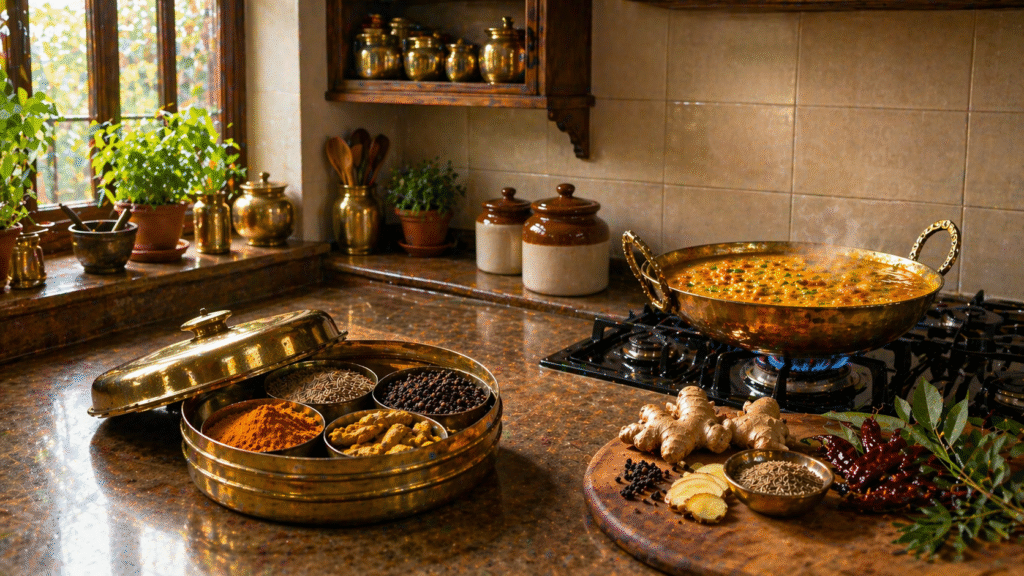
Fasting or extreme diets might feel new, but the gut-brain link is ancient desi wisdom. Our grandmothers knew: a balanced thali with haldi doodh, adrak chai, and jeera-spiced sabzi wasn’t just tasty—it kept the family calm. Karva Chauth fasts or Navratri meals often include gut-friendly ferments like dahi and pickles, but modern twists (ending with sugary sweets) can send the axis into chaos.
Our everyday curries—packed with spices that global science now validates—perfectly support this axis when done right. The 2026 study specifically praised Indian spice profiles for their polyphenol content, which feeds gut bacteria better than Western supplements. The real issue? Urban shifts to packaged foods and irregular meals, not our heritage plates. A simple tweak—more whole spices, less maida—can align tradition with cutting-edge brain health.
Real Stories: Triumphs and Tumbles
Let’s hear from folks who’ve lived it.
- Aarav, 24, Mumbai: Switched to daily turmeric-ginger curries after burnout. “My anxiety dropped in weeks—focus at work improved. The 2026 study made total sense.”
- Sneha, 28, Chennai: Stuck with heavy, oily dals during exam stress. “Gut issues made my panic attacks worse. Doctor said it was the ‘depression dal’ effect—now I balance it and feel steady.”
These stories prove one thing: the gut-brain axis isn’t a magic fix. It’s a daily choice—how you cook and eat matters.
Safe Ways to Harness the Gut-Brain Axis: Tips to Get It Right
Thinking of letting your curry work for your mind? Here’s how to keep it safe and effective:
- Start Small: Add one mood-boosting spice (like turmeric in dal) daily. Track how you feel for two weeks.
- Balance Every Meal: Pair spices with fiber-rich veggies, proteins, and probiotics like curd.
- Stay Hydrated Smartly: Sip ginger-lemon water or fennel tea—desi hacks that soothe the gut.
- Listen to Signals: Note mood, digestion, and energy. If anxiety rises, adjust portions or consult a pro.
- Get Expert Input: Chat with a nutritionist or doctor familiar with the gut-brain link. Personalized testing beats trends.
Manage Stress Too: Yoga or walks amplify spice benefits by keeping cortisol low.
Desi Diet Hacks: Eating Smart for a Calmer Mind
What lands on your plate can make or break the axis. Here’s a practical Indian plan featuring the study-backed “anxiety curry” and warnings on the “depression dal”:
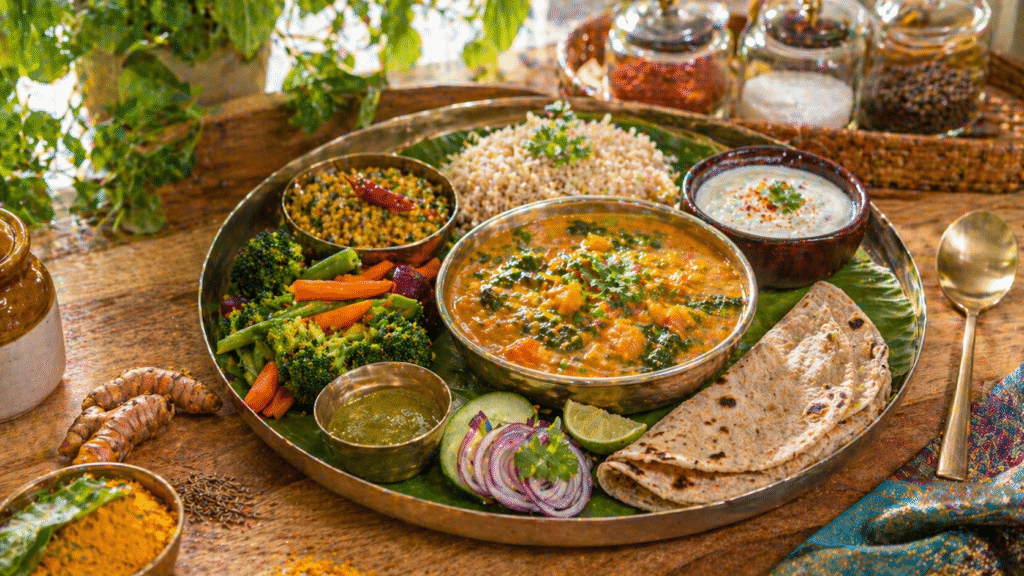
- Breakfast: Besan cheela with turmeric and ginger, plus a bowl of curd—gentle start for steady serotonin.
- Lunch: Brown rice with the “Anxiety Curry” (recipe: sauté onions, add 1 tsp turmeric, 1 tsp cumin, ½ tsp ginger powder, fresh veggies, and a pinch of black pepper; simmer 20 mins). Balance with dal and salad.
- Snack: Roasted chana with a sprinkle of cumin or a banana with almonds.
- Dinner: Light khichdi with extra spices and a side of pickle—early and nourishing.
Avoid the “depression dal”: Skip versions heavy on refined oil, maida-thickened gravies, or excessive garlic without balancing spices. Nourish, don’t punish, your second brain.
Wrapping It Up: Curry Your Way to Calm
So, is the gut-brain axis making your curry a cure or a cause for anxiety? It’s not black-and-white. For many Indians, the right spiced meals—backed by the May 2026 study—are game-changers, slashing symptoms by 43% and restoring joy. For others, poor choices quietly fuel the fire. The difference lies in mindful cooking, balance, and listening to your body.
If anxiety has you in its grip, start with your plate. Embrace those desi spices, tweak one meal at a time, and lean on science plus tradition. Your gut (and brain) will thank you. What’s your experience? Does your curry lift you up or drag you down? Drop your story below—let’s swap tips, support each other, and celebrate how simple Indian flavors can heal from within. Share this with anyone battling silent worries. Real change starts in the kitchen!
You May Like This
1



Advertisement

You May Like This







Advertisement
Advertisement
Advertisement