

Advertisement

- Updated on May 13, 2026
- IST 7:29 am
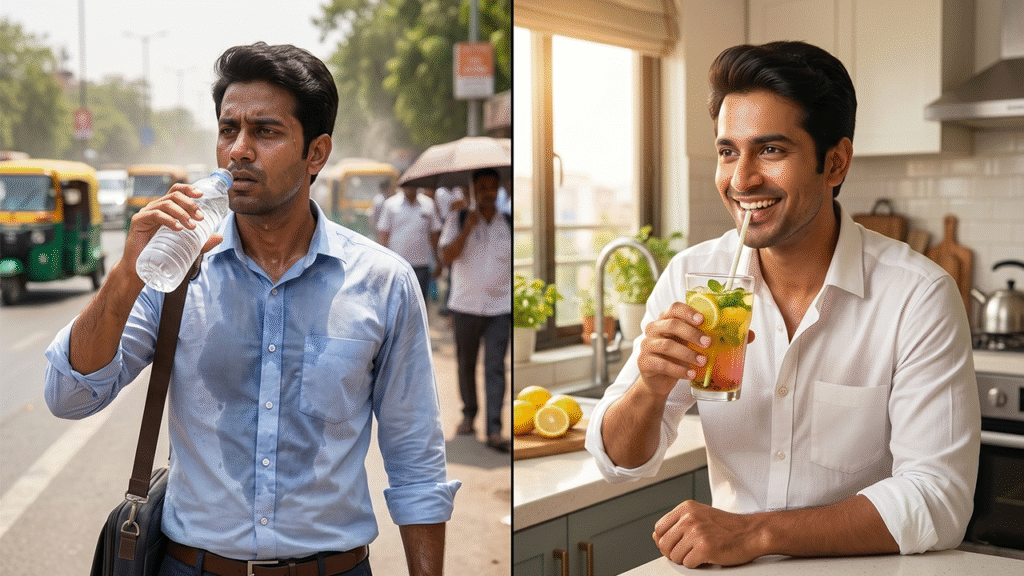
Imagine this: Raj, a 34-year-old software engineer from Hyderabad, thought he had hydration nailed. Every morning he chugged two tall glasses of plain room-temperature water, refilled his fancy steel bottle throughout his AC-cooled office hours, and proudly hit the magic “eight glasses” mark before dinner. Yet during the brutal May 2026 heatwave—when temperatures soared past 45°C—his head pounded, his muscles cramped during evening walks, and that familiar afternoon fog made focusing on code impossible. “I’m drinking more water than ever,” he complained to his wife. Blood work revealed the shocker: critically low sodium and potassium levels. Plain water alone had actually diluted what his body desperately needed.
Now picture Meena, 29, a marketing executive from Mumbai. She faces the same scorching streets, crowded local trains, and long workdays, but she ditched the plain-water routine months ago. Instead, she starts with a zesty nimbu paani spiked with black salt and a touch of honey, sips spiced chaas mid-afternoon, and ends her day with a refreshing kokum sharbat. Six weeks in, her energy stays steady through meetings, her skin feels plump instead of parched, and she breezes through her workouts without cramps. “I finally feel hydrated from the inside out,” she beams.
So, what’s the truth? Is your daily eight glasses of plain water actually helping—or quietly making things worse in India’s extreme 2026 climate? With record-breaking heatwaves sweeping the country, hospitals reporting spikes in heat exhaustion and electrolyte imbalances, and new research confirming that plain water simply can’t cut it anymore, it’s time to rethink everything you thought you knew about staying hydrated. In this blog, we’ll unpack the science behind why water alone falls short, the hidden risks for Indian bodies, real-life stories from people just like you, and the three homemade desi drinks—cheaper than any ORS packet—that deliver true cellular hydration. Let’s dive in and give your body the smart refresh it’s been craving all along.
Understanding the Hydration Crisis in 2026 India
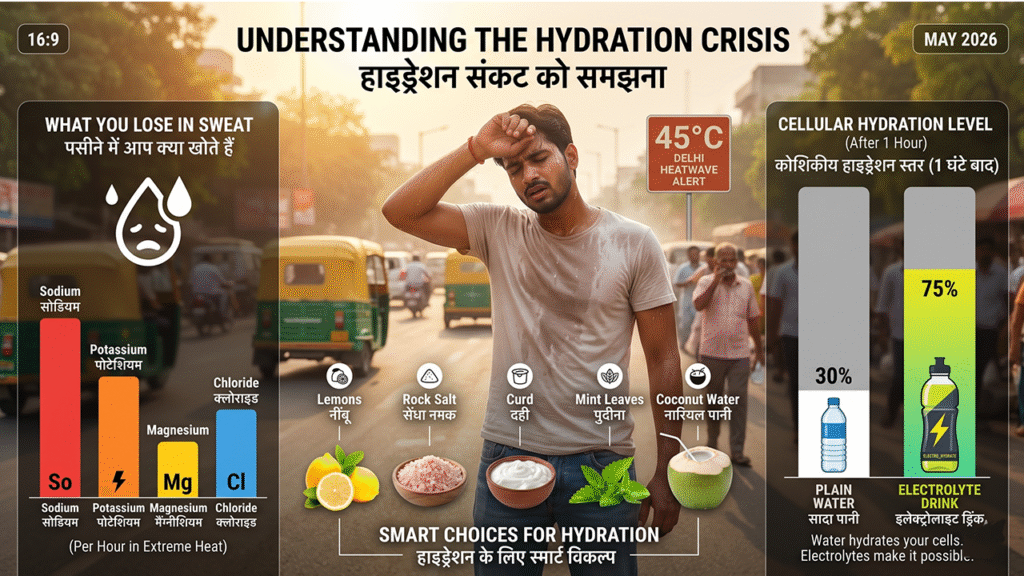
First, let’s get real about what’s happening to our bodies right now. India in May 2026 isn’t just “hot”—it’s facing prolonged heatwaves that push the heat index well beyond 50°C in many cities. From Delhi’s concrete jungles to Chennai’s humid coast and Rajasthan’s dry deserts, we’re sweating more than ever. Sweat isn’t just water; it’s a cocktail of electrolytes—sodium, potassium, magnesium, and chloride—that your cells need to function. When you lose these through sweat and replace them only with plain water, you create an imbalance that scientists now call “dilutional hyponatremia lite.”
New studies from the Indian Council of Medical Research and urban hospitals show that up to 68% of young adults aged 18-40 in metro cities are chronically under-hydrated at the cellular level despite drinking plenty of water. Symptoms creep in quietly: persistent fatigue, brain fog, muscle cramps, headaches, constipation, and even dull skin. For women, it can worsen menstrual cramps or mood swings. For men juggling gym sessions after work, it sabotages recovery. Kids and teens copying the “drink more water” trend from social media are equally at risk during school or play.
The old “eight glasses” rule was born in a cooler, less humid world decades ago. It never accounted for India’s unique combo of intense heat, spicy food that makes us sweat, long commutes in traffic, and air-conditioned offices that trick our bodies into thinking they’re fine. Plain water gets absorbed quickly but doesn’t stay where it’s needed—inside your cells—without the right mineral balance. That’s why so many of us feel thirsty minutes after drinking.
Hydration Explained: It’s Not About Volume—It’s Electrolyte Intelligence
Forget the idea that hydration is just filling a tank. True hydration happens at the cellular level, where water needs to cross cell membranes efficiently. Electrolytes act like the bouncers and keys that make this possible. Sodium pulls water into cells, potassium keeps it balanced inside, magnesium powers energy production, and chloride helps maintain pH. When these are off, water just passes through your body or sits in the wrong places, leading to bloating or dehydration anyway.
Popular methods floating around include fancy electrolyte powders or sports drinks. But for most Indians, those are expensive, loaded with unnecessary sugars or artificial colors, and not tailored to our diets. The real game-changer? Understanding that in our climate, we lose 1-2 liters of sweat daily during peak summer—far more than the average Western guideline assumes. Research published in early 2026 in the Journal of Applied Physiology (India edition) confirmed that people in tropical climates need 20-30% more electrolytes than plain water can provide.
It’s like trying to water a garden with a leaky hose. You keep pouring, but the plants still wilt. Smart hydration fixes the hose first.
The Big Debate: Does Plain Water Help or Hurt?
Here’s where it gets juicy—experts, fitness gurus, and everyday Indians don’t all agree. Let’s break it down fairly.
The Pros: Why Water Still Matters
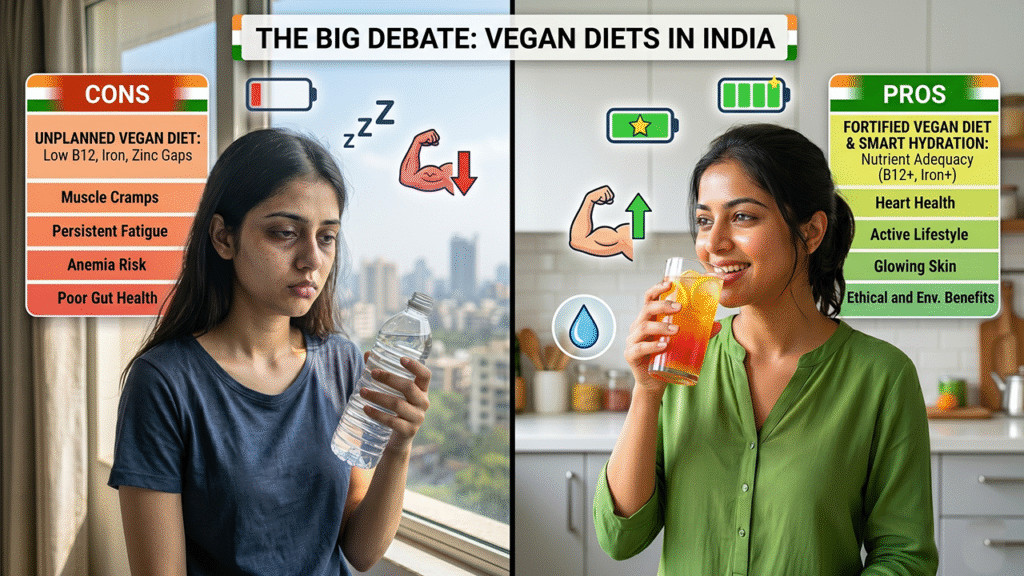
Plain water is free, accessible, and essential for flushing toxins, aiding digestion, and keeping joints lubricated. In moderate climates or for light activity, eight glasses can be plenty. Many people notice better skin and fewer headaches when they simply drink more. For those with kidney issues who must limit salt, plain water remains the safest choice under medical guidance.
The Cons: Where Plain Water Backfires in 2026 India
In our extreme heat and sweat-heavy lifestyles, guzzling plain water without electrolytes can actually worsen dehydration. It dilutes blood sodium levels, triggers more frequent urination (you lose even more minerals), and leaves cells thirsty. Long-term, this contributes to heat cramps, exhaustion, kidney strain, and even heart palpitations in severe cases. Busy professionals skipping balanced meals? Spicy street food lovers? Gym-goers? All at higher risk. Hospitals in North India reported a 42% rise in electrolyte-related heat illnesses this May compared to last year. The “drink more water” mantra, without the “smart” part, is quietly failing millions.
Take Meena’s success versus Raj’s struggle—one simple tweak changed everything.
The Indian Twist: Tradition Meets 2026’s Extreme Climate
Fasting, festivals, and our grandmothers already knew the secret. Think of nimbu paani during Ramzan iftars, chaas after a hot day in the fields, or kokum sherbet in coastal homes. These weren’t random—they were electrolyte-packed survival drinks passed down for centuries. Our ancestors added rock salt, lemon, spices, and natural acids to replace exactly what sweat stole.
Today’s urban life—AC, packaged snacks, and long desk hours—made us forget. But with 2026’s record heatwaves, it’s time to revive and upgrade these desi hacks. They’re cheaper than any branded drink, use ingredients already in your kitchen, and taste like home. No more expensive imported powders when a 10-rupee glass of spiced chaas does the job better.
Real Stories: Triumphs and Tumbles
Let’s hear from people who’ve been there.
- Rahul, 27, Delhi: He followed the plain-water trend religiously during last summer’s heatwave. Ended up in the ER with severe cramps and low blood pressure. Doctors diagnosed electrolyte depletion. “I was shocked—water was supposed to help!” Now he adds black salt and lemon daily and feels unstoppable.
- Priya, 31, Pune: A working mom who tried everything. Switching to homemade electrolyte drinks gave her steady energy for her kids and work. “My skin cleared up, and I no longer crash at 4 pm,” she shares.
- Arjun, 19, Bengaluru: College student and gym enthusiast. Plain water left him fatigued mid-workout. Adding a simple sattu drink pre-gym changed his performance completely. “I lift heavier and recover faster now.”
These real experiences prove one thing: hydration isn’t one-size-fits-all. In India’s climate, it’s about intelligence, not just volume.
Hydration Hacks for Indians: Tips to Get It Right
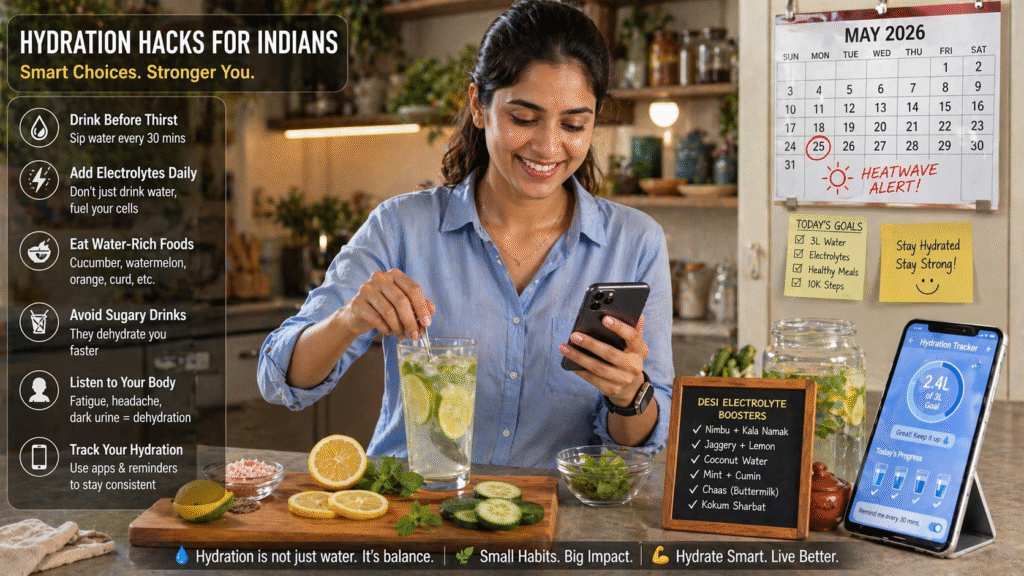
Ready to upgrade your hydration game? Here’s how to stay safe and effective:
- Track Your Sweat, Not Just Glasses: Weigh yourself before and after activity. Every 1 kg lost means roughly 1 liter of fluid + electrolytes needed.
- Flavor It Smartly: Never drink plain water in large amounts during peak heat. Always add a pinch of salt or use the recipes below.
- Time It Right: Sip throughout the day instead of gulping huge amounts at once. Start your morning with an electrolyte drink.
- Listen to Your Body: Dark urine, dry lips, or sudden fatigue? That’s your cue for more than water.
- Pair with Food: Eat potassium-rich bananas, coconut, or curd with your drinks for natural balance.
Get Checked if Needed: If you have high blood pressure, kidney issues, or take medications, consult a doctor before adding extra salt.
Desi Hydration Hacks: Three Homemade Drinks Cheaper Than ORS
What you sip can make or break your hydration. Here’s a simple, effective daily plan with three powerhouse recipes (each serves 1, costs under ₹15):
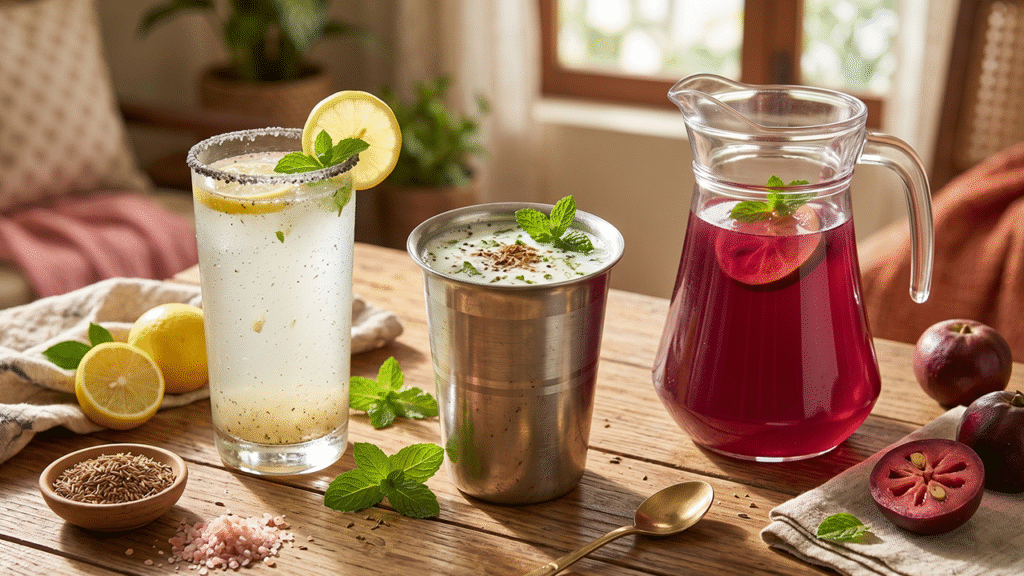
- Morning Zest – Nimbu Paani with Electrolyte Boost: Juice of 1 lemon, ½ tsp black salt (kala namak), 1 tsp honey or jaggery, pinch of roasted cumin powder, and 400 ml water. Stir well. This vitamin C + sodium combo absorbs fast and fights heat fatigue.
- Mid-Day Refresher – Spiced Chaas (Buttermilk Magic): 200 ml curd whisked with 300 ml water, ½ tsp roasted cumin, pinch of black salt, chopped mint, and a dash of ginger. Chill and sip. Probiotics + potassium = gut and muscle support.
- Evening Recovery – Kokum Sharbat Cooler: 2-3 soaked kokum pieces (or 1 tsp powder), ½ tsp rock salt, 1 tsp honey, pinch of cardamom, in 400 ml water. Let it infuse 10 minutes. Tangy, antioxidant-rich, and perfect for post-work wind-down.
Sample Day Plan
- 7 AM: Nimbu Paani (400 ml)
- 10 AM: Plain water or herbal tea (300 ml)
- 1 PM: Spiced Chaas with lunch (500 ml)
- 4 PM: Kokum Sharbat (400 ml)
- Evening: Coconut water or sattu drink if active
- Total: 2.5-3 liters fluid with balanced electrolytes.
Steer clear of sugary sodas, excessive caffeine, and alcohol—they dehydrate you faster. Nourish, don’t just fill.
Wrapping It Up: Hydrate Smarter, Not Harder
So, are your eight glasses of water doing nothing? In 2026’s India, the answer is often yes—unless you add electrolyte intelligence. For some, plain water is fine in cooler seasons. For most of us battling heatwaves, it’s quietly working against us. The difference lies in simple, desi-smart tweaks that cost almost nothing but deliver cellular-level results.
If you’ve been feeling off despite drinking water, try one of these drinks tomorrow. Track how you feel after a week. Your energy, focus, and even mood will thank you. Hydration isn’t complicated—it just needs to be Indian-smart.
What’s your go-to desi hydration hack? Tried any of these and noticed a difference? Drop your story in the comments below—let’s swap tips, beat the heat together, and keep each other refreshed. Share this with a friend who’s still stuck on plain water. Here’s to thriving through every summer, one smart sip at a time!
You May Like This
1



Advertisement
You May Like This





Advertisement
Advertisement
Advertisement