

Advertisement

Advertisement

- Updated on May 15, 2026
- IST 10:08 am
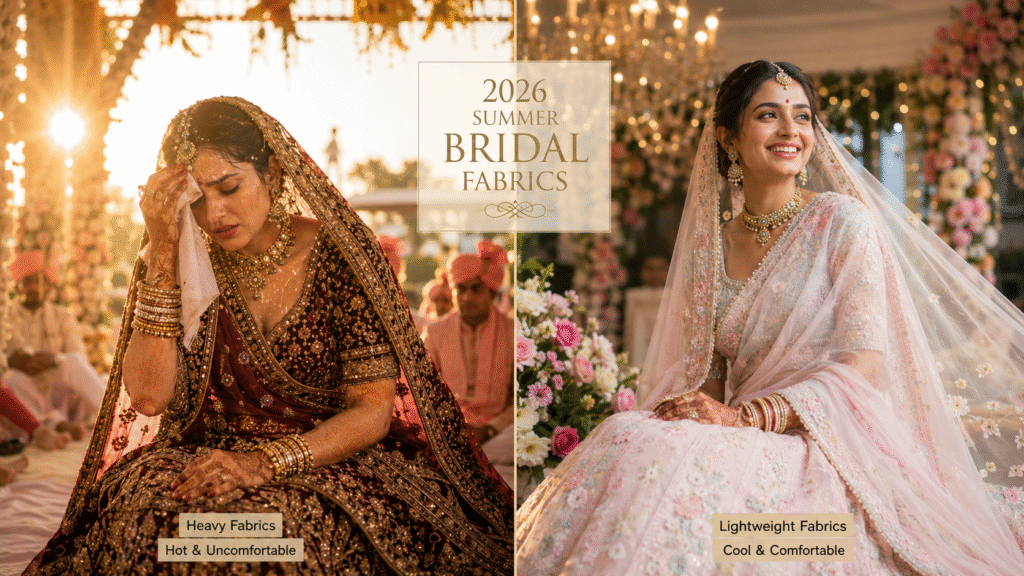
Imagine this: It’s May 2026, and the mercury in Delhi has shattered records yet again. Meher, a 27-year-old bride from Jaipur, steps into her mandap wearing a traditional heavy velvet lehenga she dreamed of since childhood. Within minutes of the pheras, sweat beads on her forehead, the fabric clings like a second skin, and she feels faint under the weight of layers and zari. Her photographer captures the moment, but the smile is forced. “I looked like a princess in the mirror, but I felt like I was melting,” she later confides to her bridesmaids.
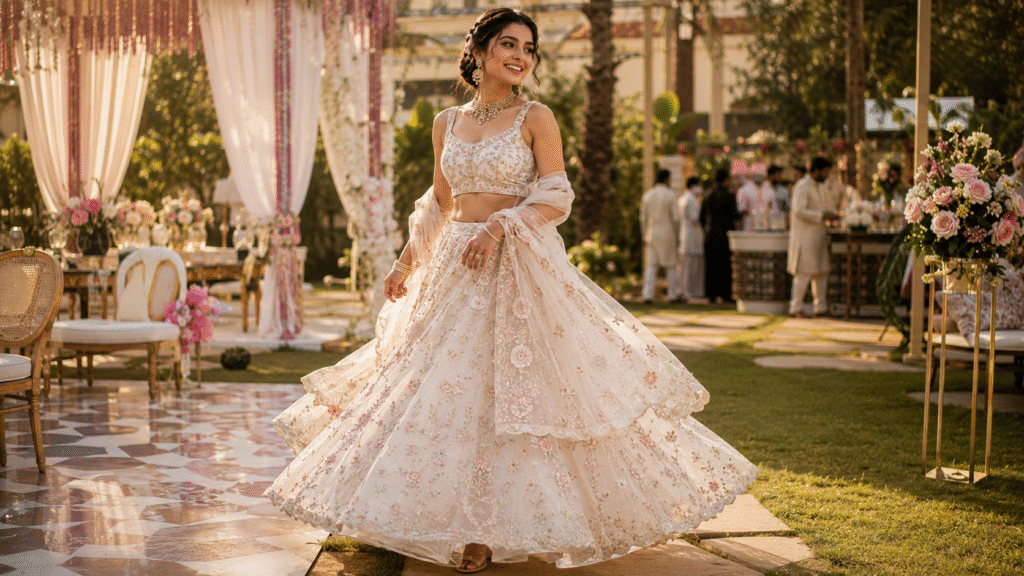
Now picture Priya, 29, from Mumbai. She chose a feather-light Kota Doria lehenga with delicate threadwork and a flowing organza dupatta. The same scorching heat, the same long rituals—but Priya twirls effortlessly during the sangeet, her skin stays fresh, and every photo radiates joy. “It felt like wearing a cloud that still looked like a crore bucks,” she laughs. “No more choosing between tradition and comfort.”
This year’s brides are refusing to faint under layers of velvet—they’re walking down the phera in feather-light fabric that still looks like a crore bucks. With May 2026 temperatures breaking records, summer wedding fabrics 2026 have shifted dramatically. Heavy velvets and thick silks are out; handloom Kota Doria, tissue silk, and organza are in. Sourced straight from top bridal stylists and leading designers like Anamika Khanna, this guide dives into the most photogenic, sweat-resistant ethnic fabrics transforming real wedding trousseaus. We’ll explore why they work, how to style them without losing that royal aesthetic, and practical tips rooted in our desi realities. Whether you’re planning a destination wedding in India or a heatwave reception in your hometown, these lightweight bridal lehenga options are your summer survival secret. Let’s unpack the trend that’s making Indian brides glow—from the inside out.
Why Heavy Fabrics Are No Longer the Summer Bridal Default
Indian weddings have always celebrated grandeur—think kilos of zari, heavy embroidery, and multi-layered silhouettes that scream royalty. But in 2026, with climate change turning May and June into full-blown heatwaves, that legacy comes at a cost. Brides report discomfort, skin irritation, dehydration, and even ruined photos from visible sweat patches.
The good news? You don’t have to sacrifice the dream lehenga for comfort. Lightweight ethnic fabrics offer the perfect balance: breathability that keeps you cool during marathon rituals, fluid drape that photographs like a dream in natural light, and enough structure to hold intricate handwork. These materials move with you, not against you. They wick moisture, resist creasing in humidity, and feel luxurious against the skin. Top stylists confirm: the shift isn’t just practical—it’s empowering. Modern brides want to dance, laugh, and actually enjoy their big day instead of enduring it.
What Makes a Fabric Summer-Bridal Ready?
Not every light fabric qualifies as bridal. The best ones for Indian summer weddings combine several must-haves: ultra-low weight (under 300-400 grams per meter for lehengas), natural breathability, a subtle sheen that catches golden-hour light, compatibility with zari and threadwork, and cultural authenticity. They should drape beautifully for sarees and lehengas yet hold volume for that dramatic entry. Sweat-proof? Even better. Photogenic under harsh sunlight? Non-negotiable. And yes—they must feel like heritage while looking contemporary. That’s exactly what these 10 fabrics deliver.
The 10 Lightweight Ethnic Fabrics Indian Brides Are Raving About in 2026
Here’s the definitive list, handpicked from current bridal trends and real trousseau feedback. Each one has been battle-tested in 40°C+ heat and styled by leading designers.
Kota Doria: Kota Doria, the handwoven cotton-silk beauty from Rajasthan, tops every stylist’s list for summer wedding fabrics 2026. Its signature square-check weave creates tiny air pockets that make it incredibly breathable—like wearing a gentle breeze. The fabric is feather-light yet sturdy enough for heavy gota-patti or zari borders. Brides love it for lehengas because it flows naturally during the bidaai without clinging. Anamika Khanna has masterfully incorporated Kota Doria into modern silhouettes with minimal embellishment that still feels opulent. Pair it with pastel shades like ivory, blush pink, or mint for daytime parties. Real brides swear by its sweat-resistant quality—perfect for those long outdoor ceremonies.
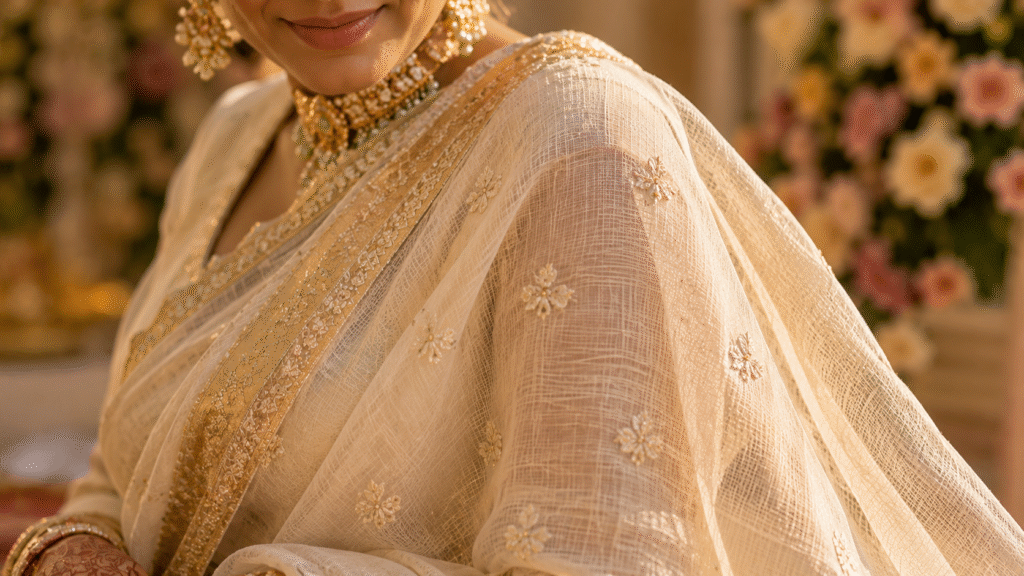
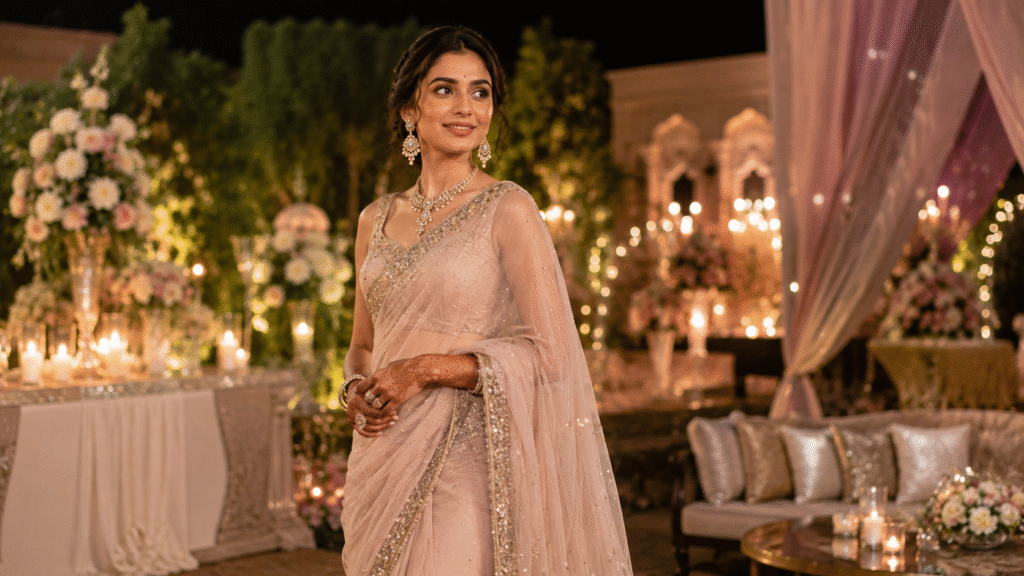
Tissue Silk: Tissue silk brings that signature glossy sheen without the weight of heavier silks. Woven with fine metallic threads, it catches light beautifully for evening receptions while staying cool in the day. Designers are using it for dramatic sarees and layered lehenga skirts that move like liquid. It’s ideal for destination weddings in India because it packs light and recovers quickly from creases. The subtle shimmer makes every photo pop, even in harsh sunlight. Stylists recommend tissue silk for brides who want traditional drape with modern lightness—think a red tissue silk saree paired with minimal jewellery for a sleek yet regal look.
Organza: Organza has exploded in popularity for 2026 bridal lehengas. This sheer, crisp fabric adds volume and drama without bulk. Pure silk organza or silk-cotton blends offer incredible breathability and a soft hand-feel. It’s perfect for multi-tiered skirts or flowing dupattas that create ethereal movement in photos. Leading designers layer organza over lighter bases for that “floating” effect brides adore. In summer heat, it prevents that trapped-heat feeling common with heavier materials. Photogenic? Absolutely—organza photographs like a dream with backlighting at sunset mandaps.
Chiffon: Chiffon remains a summer staple for its floaty, lightweight nature. The fine weave allows maximum airflow, making it ideal for long hours under the sun. Bridal stylists use silk chiffon for anarkalis, sarees, and lehenga overlays that create soft, romantic silhouettes. It drapes like a dream and pairs beautifully with intricate embroidery that doesn’t weigh it down. Anamika Khanna’s collections often feature chiffon-georgette blends for their effortless elegance. Choose pastel or jewel tones—chiffon makes every hue look luminous.
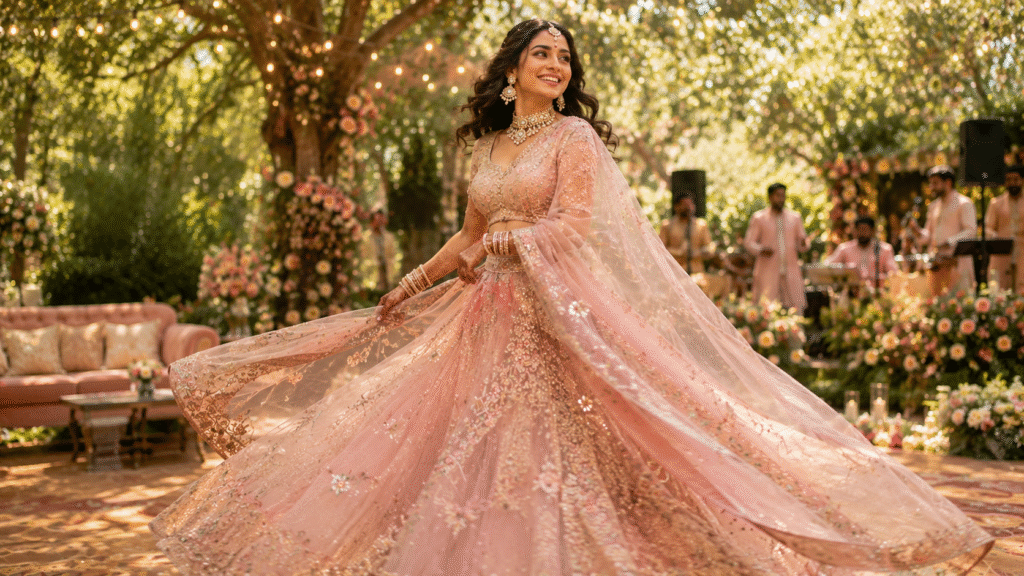
Georgette: Georgette offers a matte finish with incredible drape and breathability. Slightly heavier than chiffon but still lightweight, it’s perfect for structured yet comfortable lehengas. The fabric resists wrinkles and holds its shape during energetic sangeets. Many real brides in 2026 are choosing georgette for its versatility—great for both daytime and evening functions. It absorbs minimal moisture and dries quickly, a lifesaver in humid cities.
Mulmul (Malmal Cotton): Mulmul brings pure desi comfort to bridal wear. This ultra-soft, handwoven cotton is a revelation for modern brides seeking sustainable luxury. Extremely breathable and gentle on sensitive skin, mulmul lehengas are trending for daytime rituals and fusion looks. Designers are elevating it with delicate mirror work or thread embroidery for that high-fashion twist. It’s the ultimate sweat-proof ethnic wear choice—light enough to forget you’re wearing it.
Chanderi Silk: Chanderi from Madhya Pradesh combines silk and cotton for a luminous yet airy fabric. Its subtle sheen and lightweight texture make it perfect for summer bridal sarees and lehengas. The fabric’s natural gold border options add heritage without extra weight. Stylists love how Chanderi photographs in natural light, giving brides a warm, glowing aura. It’s a heritage fabric reimagined for 2026 heatwaves.
Silk Crepe: Silk crepe offers a textured, matte elegance with superb drape and breathability. It’s less shiny than tissue but incredibly comfortable for full-day wear. Designers use crepe for sleek, modern lehengas that skim the body beautifully. The fabric moves with you and recovers shape effortlessly—ideal for a destination wedding in India.
Muslin Silk: Fine muslin silk blends tradition with extreme lightness. Soft, airy, and slightly sheer, it’s perfect for layered looks or minimalist bridal ensembles. Brides rave about its skin-friendly feel during long mehendi sessions. It takes embroidery beautifully while staying cool.
Lightweight Ethnic Net / Tulle with Handwork: Modern ethnic net adds volume and drama without weight. When paired with hand-embroidered motifs, it creates show-stopping lehengas that feel weightless. Stylists recommend it for reception looks where movement and photography take centre stage. Breathable and photogenic, it’s the secret weapon for summer brides who want that fairy-tale entrance.
The Indian Twist: Tradition Meets Modern Comfort
These fabrics aren’t new to Indian heritage—Kota Doria, Chanderi, and tissue silk have roots in royal wardrobes—but 2026 brides are reinterpreting them with contemporary silhouettes. No more sacrificing comfort for culture. From Rajasthan’s handlooms to Kolkata’s ateliers like Anamika Khanna’s, designers are proving that lightweight doesn’t mean less luxurious.
Real Stories: Triumphs from the Heat
Meher switched mid-planning after her trial lehenga left her exhausted. “The Kota Doria changed everything—my photos looked fresh, and I actually enjoyed my wedding,” she shares. Priya’s tissue silk saree for her sangeet became the talk of the town. “I danced for hours without a single discomfort,” she says. Another bride from Bangalore chose organza for her outdoor destination wedding and called it “life-changing.”
Safe Styling Tips for Summer Bridal Perfection
- Start with a 12-hour “wear test” in similar heat.
- Pair with breathable blouses and petticoats in cotton blends.
- Choose pastel or bright shades that reflect heat.
- Opt for minimal, lightweight jewellery—statement pieces can be heavy.
- Schedule outdoor shoots during golden hour.
- Carry a portable fan or mist spray for touch-ups.
- Consult your designer for custom breathable linings.
Desi Hacks: Making Lightweight Fabrics Work in Real Weddings
Layer strategically—use net or organza dupattas over lighter bases. Choose open-back blouses for ventilation. Pre-wash delicate fabrics gently to soften them further. Store in breathable garment bags. And remember: hydration isn’t just for your body—keep your fabrics happy too with proper care.
Wrapping It Up: Your Summer Bridal Fabric Awaits
2026 summer bridal fabrics prove you can have it all—heritage grandeur, royal aesthetics, and genuine comfort. Whether you fall for the airy charm of Kota Doria or the dramatic flow of organza, the right lightweight ethnic fabric will let you shine through every ritual without compromise.
If you’re a bride-to-be navigating heatwave wedding fashion, start by exploring these options with your designer. What’s your favourite summer wedding fabric so far? Have you tried any of these in your trousseau? Drop your stories and real bride tips 2026 in the comments below—let’s build a community of comfortable, confident brides who look and feel their absolute best. Your dream lehenga is waiting, and this year, it’s lighter than ever. Share this guide with your fellow brides and tag us on socials with your fabric choices!
You May Like This
1



Advertisement
Advertisement
You May Like This



Advertisement
Advertisement
Advertisement
Advertisement
Advertisement
Advertisement