
Advertisement

- Updated on April 14, 2026
- IST 1:13 pm
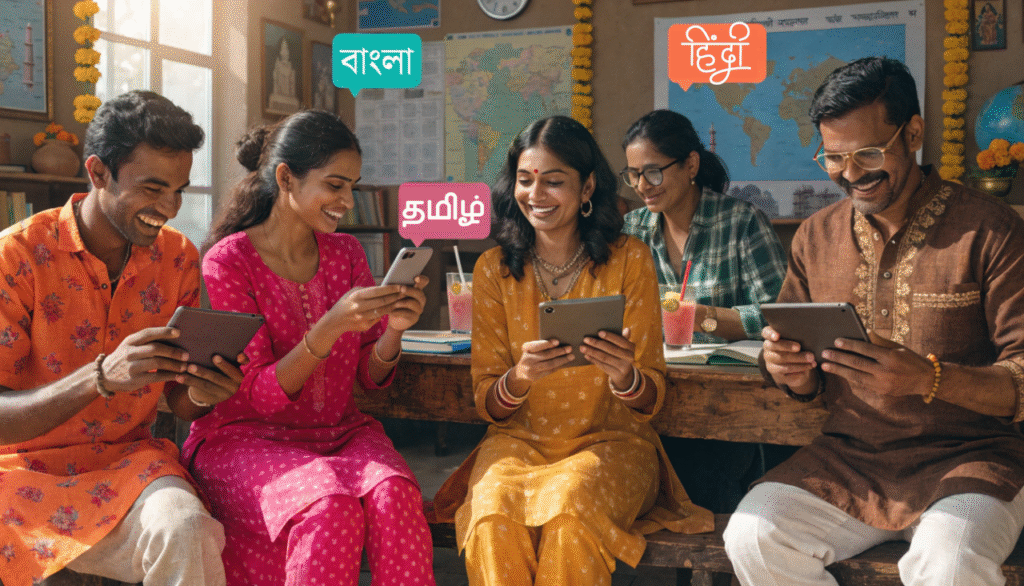
Imagine Raj, a 22-year-old from a small village in Bihar, dreaming of cracking the UPSC exam. He’s sharp, dedicated, but English textbooks and online courses feel like climbing Everest without oxygen—confusing terms, alien accents, and concepts that slip away because they’re not in his native Hindi. Frustrated, he almost gives up. Then, he discovers an EdTech app offering full UPSC prep in Hindi, complete with local examples and simple explanations. Fast-forward six months: Raj clears his prelims, confidence soaring. “It’s like the knowledge finally spoke my language,” he shares with a grin.
Now, meet Lakshmi, 35, from rural Tamil Nadu. As a homemaker turned entrepreneur, she wants to learn digital marketing to boost her handmade crafts business. English-heavy platforms leave her overwhelmed, but a Tamil-based EdTech site changes everything. With videos in her mother tongue, she masters SEO and social media, turning her hobby into a thriving online store. “Learning in Tamil felt like chatting with an old friend—it made complex ideas click instantly,” she says, her eyes lighting up.
These aren’t just stories; they’re the reality for millions in India where language barriers once locked doors to quality education. In 2025, regional language EdTech is shattering those barriers, bringing elite knowledge to Hindi, Tamil, Bengali, Telugu, and more speakers. This revolution isn’t about replacing English—it’s about inclusivity, empowering the 90% of Indians who think, dream, and learn best in their vernacular. We’ll explore the boom, the platforms leading the charge, success tales, and how this trend is fostering national pride. Ready to see how mother tongue education is rewriting India’s learning landscape? Let’s jump in!
Understanding the Language Barrier: Why English Isn’t Enough for All
Let’s start with the elephant in the room: India’s linguistic diversity is a superpower, but it’s also a stumbling block in education. With 22 official languages and over 19,500 dialects, English—spoken fluently by only about 10% of the population—has long dominated elite learning spaces. For the rest, especially in rural and semi-urban areas, this creates a vicious cycle. Kids drop out of school because textbooks feel foreign; adults skip skill-building courses fearing embarrassment over pronunciation or comprehension.
Think about it like this: If you’re explaining quantum physics to a child in a language they barely grasp, how much sticks? Research from UNESCO backs this—learning in one’s mother tongue boosts comprehension by up to 40%, improves retention, and builds self-esteem. Yet, until recently, most EdTech focused on English, leaving non-English speakers sidelined. In 2025, that’s changing fast. The National Education Policy 2020 emphasized vernacular mediums, and now EdTech is catching up, making education truly democratic.
This barrier isn’t just academic; it’s emotional and economic. Non-English speakers often earn 20-30% less, as per studies from the World Bank, because high-paying jobs demand global skills taught in English. Regional EdTech bridges this gap, offering courses in local languages that align with cultural contexts—like using Diwali festivities to explain economics or Mahabharata analogies for leadership lessons. It’s not about rejecting English; it’s about building a foundation in what feels natural first.
The Rise of Regional Language EdTech: A 2025 Revolution
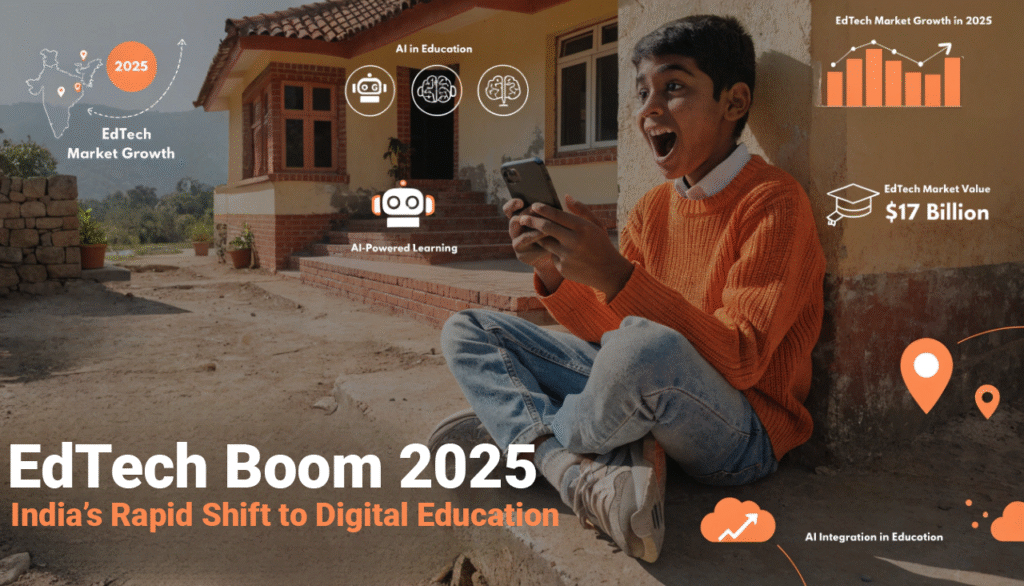
Flash to 2025: The EdTech sector in India is booming, valued at over $4 billion, with vernacular content growing at 50% year-on-year, according to reports from KPMG and Google. Why now? Blame (or thank) the pandemic for accelerating digital adoption, coupled with affordable smartphones and cheap data—Jio’s revolution made internet accessible to 800 million Indians. Add AI-powered translations and voice tech, and suddenly, creating high-quality regional content is feasible and scalable.
Regional language EdTech isn’t just dubbing English videos; it’s curating from scratch. Platforms use local educators who speak the dialect, incorporate regional folklore, and tailor curricula to state boards or local job markets. For instance, Hindi content dominates with 40% market share, followed by Tamil (15%), Bengali (10%), and Telugu (8%). This explosion is breaking barriers by reaching tier-2 and tier-3 cities, where English proficiency is low but ambition runs high.
But let’s get real— this trend ties into national pride. In a post-colonial era, reclaiming education in mother tongues feels empowering. It’s like saying, “Our languages aren’t second-class; they’re vehicles for world-class knowledge.” From coding in Kannada to finance in Marathi, EdTech is making “elite” subjects everyday accessible.
The Pros: How Mother Tongue Learning Unlocks Potential

Let’s dive into why this shift is a game-changer. First off, better comprehension leads to deeper learning. When concepts are explained in your native tongue, you grasp nuances faster—no mental translation fatigue. A study by the Azim Premji Foundation found that students in vernacular mediums score 25% higher in subjects like math and science compared to English-only peers.
Second, it boosts inclusivity. Women in conservative households, like Lakshmi, often face restrictions on English-medium classes, but regional apps allow learning from home in a familiar language. This is huge for gender equality—EdTech in languages like Urdu or Punjabi is empowering girls in underrepresented communities.
Third, cultural relevance makes learning sticky. Imagine studying history through Bengali folktales or biology via Tamil proverbs. It evokes emotion, making dry facts memorable. Plus, it preserves languages—UNESCO warns 40% of Indian dialects are endangered; EdTech revives them by modernizing content.
Economically, it’s a win. Vernacular skilling programs are creating job-ready talent. For example, platforms offering IT courses in regional languages have seen placement rates jump 35%, as learners apply skills confidently without language hurdles.
And let’s not forget accessibility for diverse ages. Teens prepping for exams, young adults upskilling for jobs, or mid-career folks pivoting—all benefit. It’s like democratizing Ivy League knowledge for the masses.
The Cons: Challenges in the Vernacular EdTech Space
No revolution is flawless, right? One big hurdle is quality control. Not all platforms maintain high standards—some translations are clunky, leading to misinformation. For instance, technical terms in medicine or engineering don’t always have direct vernacular equivalents, causing confusion.
Scalability is another issue. Creating content in 22 languages requires massive investment; smaller dialects like Bodo or Santali get left behind. AI helps, but it’s not perfect—accents and idioms can get lost in translation.
Then there’s the digital divide. While data is cheap, not everyone has smartphones or stable internet in remote areas. Plus, older generations (say, 35-45) might resist tech, preferring traditional gurukuls.
Critics argue it could fragment education, making transitions to English-heavy higher studies tougher. “Will vernacular learners compete globally?” they ask. Fair point, but hybrid models—starting in mother tongue and layering English—are emerging solutions.
Finally, monetization woes: Free content is great for access, but sustainability? Ads or freemium models help, but piracy in regional spaces is rampant.
Despite these, the pros outweigh the cons, especially with government pushes like DIKSHA portal expanding vernacular resources.
The Indian Twist: Blending Tradition with Tech
India’s love for languages runs deep—think Sanskrit shlokas or regional poetry slams. EdTech is weaving this heritage into modern learning. For example, platforms incorporate festivals: Learning accounting during Durga Puja in Bengali or environmental science via Onam stories in Malayalam.
This cultural fusion makes education relatable. In a country where 70% live in villages, using local metaphors—like comparing algorithms to a farmer’s crop cycle in Hindi—bridges urban-rural gaps.
But it’s not without twists. Traditionalists worry tech dilutes guru-shishya bonds, while modernists celebrate the scale. Balance is key: Many apps include live mentor sessions in regional languages, mimicking old-school wisdom with new-age tools.
Real Stories: Triumphs from the Ground

Let’s hear from those living it. Take Amit, 18, from Kolkata. Struggling with English NEET prep, he switched to a Bengali EdTech app. “Explanations with local examples made biology fun, not frightening,” he says. Result? He scored 650/720 and is now in med school.
Or Priya, 28, a teacher in Hyderabad. She upskilled in pedagogy via Telugu courses. “It helped me connect better with students—now my classes are interactive, not rote,” she beams.
Then there’s Vikram, 42, from Punjab. Laid off during economic dips, he learned e-commerce in Punjabi. “From zero to running an online farm produce store—it saved my family,” he shares emotionally.
These tales highlight transformation: From dropouts to achievers, EdTech in mother tongues is rewriting destinies.
Top EdTech Platforms Leading the Regional Revolution
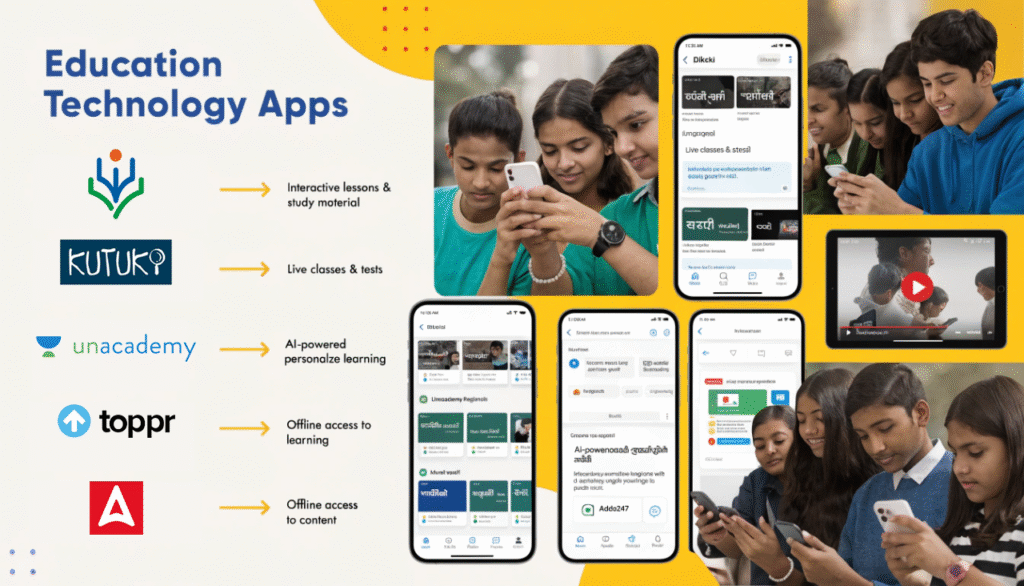
Here are the frontrunners shaping 2025:
● Diksha: Government-backed, offering K-12 content in 15+ languages. It’s free, interactive, with AR features for engaging lessons.
● Adda247: Hindi-heavy for competitive exams like SSC, banking. Millions use its live classes and quizzes, tailored to regional syllabi.
● Kutuki: For kids, in Tamil, Hindi, etc., using songs and stories. It’s gamified, making early education playful.
● Toppr (now Byju’s regional arm): Vernacular in Bengali, Telugu for school subjects. AI adaptive learning personalizes paths.
● Unacademy Regional: Exploded with Kannada, Marathi courses for IAS, tech skills. Celebrity educators draw crowds.
These platforms aren’t just apps; they’re ecosystems with communities, certifications, and job links.
Breaking Barriers: Inclusivity in Action
At its core, this trend is about equity. It’s empowering marginalized groups—Dalits, tribals, women—who historically faced language discrimination. By 2025, projections show 100 million new learners via vernacular EdTech, per Nasscom.
It’s also fostering innovation: Startups like Pratilipi turn stories into learning modules in regional languages, blending entertainment with education.
Critically, it addresses mental health—learning without stress builds confidence, reducing dropout rates from 14% to potentially single digits.
Future Outlook: What’s Next for Mother Tongue EdTech?
Looking ahead, AI will supercharge this. Imagine voice assistants teaching in your dialect or VR classrooms simulating real-world scenarios in Odia.
Government tie-ups will expand reach, with budgets like ₹10,000 crore for digital education focusing on vernacular.
Challenges like standardization remain, but collaborations between Big Tech (Google’s Bhashini) and locals promise solutions.
Tips for Learners: Making the Most of Regional EdTech
Ready to dive in? Here’s how:
- Assess Your Needs: Pick platforms matching your goals—exams, skills, or hobbies.
- Start Small: Try free trials; mix with English for balanced growth.
- Engage Actively: Join forums, quizzes; don’t just watch videos.
- Track Progress: Use app analytics to see improvements.
- Seek Community: Connect with peers for motivation.
- Stay Updated: Follow trends; new content drops weekly.
Wrapping It Up: Embrace the Mother Tongue Wave
In 2025, regional language EdTech isn’t a trend—it’s a movement breaking barriers, igniting minds, and fueling India’s growth story. From Raj’s UPSC win to Lakshmi’s business boom, it’s proving that knowledge thrives in the language of the heart. Whether you’re a teen chasing dreams or an adult reinventing yourself, vernacular learning opens doors once shut.
What’s your story? Tried a regional app? Share in the comments—let’s build a community of learners. And if this sparked curiosity, subscribe to PBTrendz for more insights on education, tech, and trends. Your journey starts now—go explore!
You May Like This
1



Advertisement

You May Like This








Advertisement
Advertisement
Advertisement