
Advertisement
- Updated on April 15, 2026
- IST 1:23 am
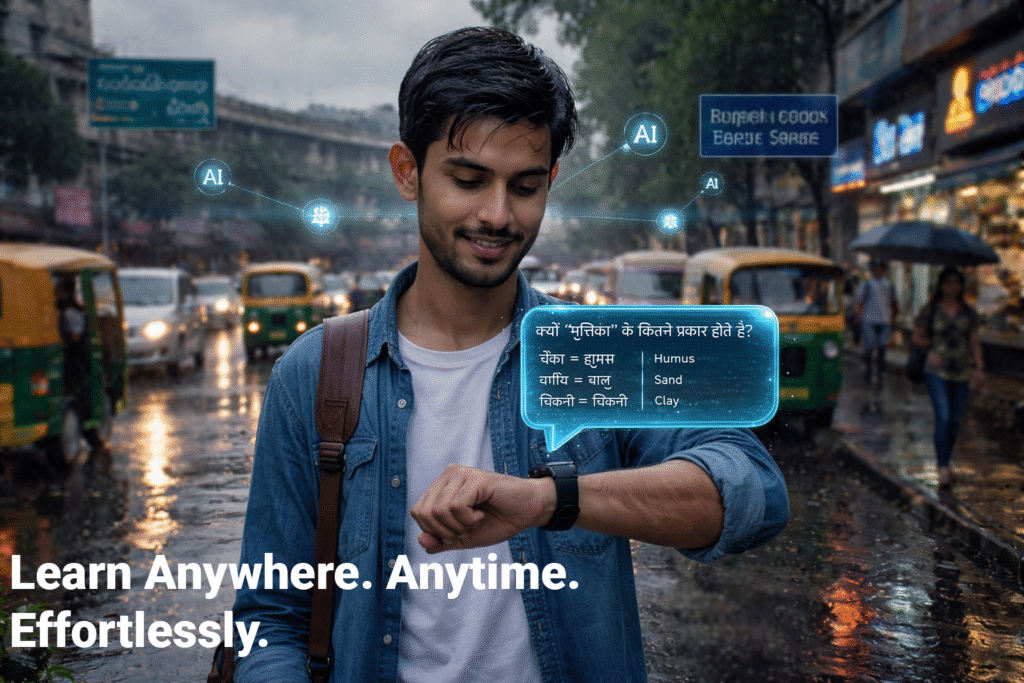
Picture this: Arjun, a 24-year-old software engineer from Bengaluru, is stuck in traffic on his way to work. Instead of mindlessly scrolling through social media, his smartwatch vibrates gently. “Quick tip: In Python, use list comprehensions for efficient data filtering,” it prompts, followed by a 30-second audio snippet explaining the concept with a real-world example from app development. By the time he reaches the office, he’s nailed a new coding trick—without opening a book or app. “It’s like having a guru on my wrist,” Arjun chuckles, crediting his promotion to these bite-sized boosts.
Now, meet Priya, a 38-year-old homemaker and aspiring entrepreneur from Lucknow. While prepping dinner, her smart glasses flash a subtle overlay: “Market insight: Did you know masala exports grew 15% last year? Here’s how to price your homemade spice blends.” A quick micro-lesson on e-commerce basics pops up, tailored to her interest in starting an online business. Six months later, her small venture is thriving. “Learning used to feel like a chore; now it’s just part of my day,” she says, beaming.
These aren’t sci-fi fantasies—they’re the reality of ambient learning in 2026, where wearable tech like smartwatches and smart glasses turns everyday moments into educational opportunities. No more cramming sessions or forgotten resolutions; education weaves seamlessly into your routine, powered by AI that anticipates your needs. In India, with over 1.4 billion people juggling hectic lives, this trend is exploding, making lifelong learning accessible and effortless. We’ll unpack what ambient learning really means, how wearables make it happen, the upsides and pitfalls, real Indian stories, and tips to jump in. Curious how your wrist could unlock your potential? Let’s explore!
Understanding Ambient Learning: Education Without the Effort
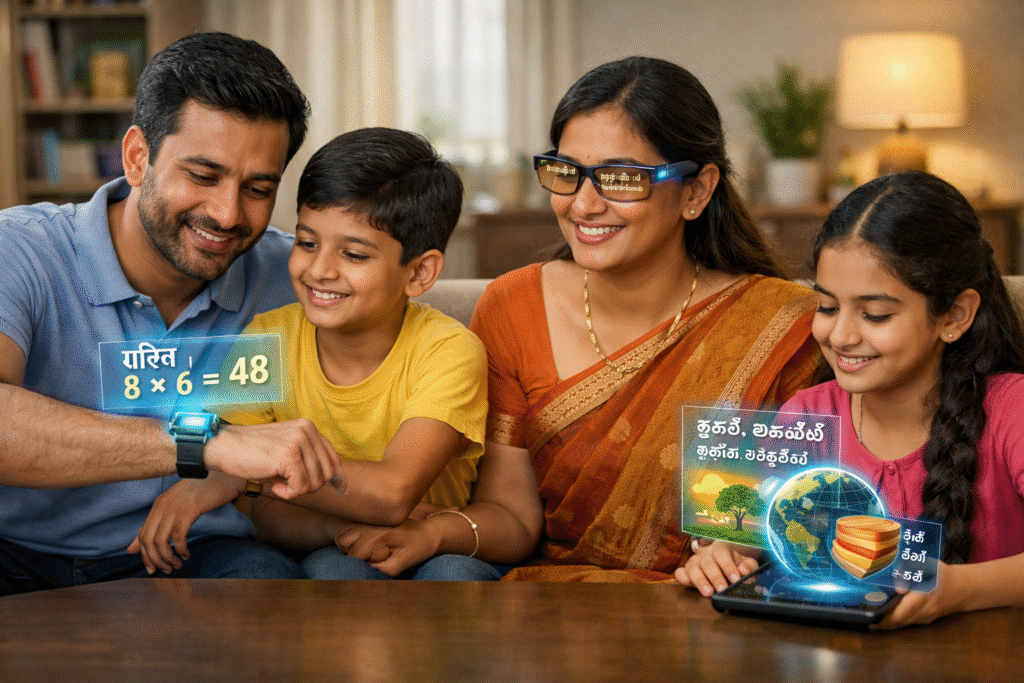
Let’s break it down: Ambient learning isn’t about structured classes or apps you actively open—it’s knowledge that surrounds you, delivered in the background like ambient music in a café. Think of it as osmosis for the brain; information seeps in through subtle cues, prompts, and micro-lessons integrated into your environment. Coined in tech circles around ambient intelligence (AmI), this concept uses AI, sensors, and connected devices to make learning proactive and contextual.
In 2026, with India’s digital economy booming—projected to hit $1 trillion by 2028, per KPMG—ambient learning addresses a key pain point: time scarcity. Traditional education demands dedicated hours, but ambient style fits into “N.E.T. time” (No Extra Time), as motivational guru Tony Robbins calls it—those idle moments in commutes, queues, or chores. UNESCO reports that learning in short bursts boosts retention by 20-30%, as it aligns with how our brains process info amid distractions.
But why now? The pandemic accelerated remote learning, and with 900 million smartphone users in India (Statista, 2026), wearables are the next frontier. Devices track your habits, location, and even mood via biometrics, then serve personalized nuggets. It’s not replacing schools; it’s augmenting them, turning passive downtime into active growth. For our diverse nation—from urban millennials to rural youth—it’s a democratizer, bridging gaps in access and making “elite” skills like coding or finance everyday attainable.
Ambient Learning Explained: The Tech Behind the Magic
Unlike traditional e-learning platforms that require logging in, ambient learning leverages “invisible” tech to deliver education on the fly. At its core is AI-driven personalization: Your smartwatch or glasses use sensors (accelerometers, GPS, heart rate monitors) to understand context. Walking past a historical site? A quick AR overlay via glasses shares facts in Hindi. Struggling with a work email? A wrist prompt suggests vocabulary enhancements.
Key methods include:
- Micro-lessons: Bite-sized content, 1-5 minutes, like Duolingo’s gamified language bites or Brilliant’s quick math puzzles, pushed via notifications.
- Learning Prompts: AI-generated nudges, e.g., “Recall: What’s the capital of France?” during a lull, reinforcing memory through spaced repetition.
- Vocabulary Builders: Apps like Memrise integrate with wearables to flash words in context—say, “Entrepreneur” while you’re brainstorming business ideas.
- IoT Integration: Your watch syncs with home devices; cooking triggers nutrition tips, or exercising prompts fitness science.
The pitch? It’s a “metabolic reset” for your mind—constant, low-effort inputs build habits without burnout. Research from ABI Research (2026) shows wearables market hitting $265 billion globally, with AI features driving 50% growth. For Indians, it’s culturally apt: Like how we absorb traditions through festivals, ambient tech embeds knowledge into daily rituals.
The Big Debate: Does Ambient Learning Help or Hinder Growth?
Experts are buzzing, but opinions split. Let’s weigh the scales.
The Pros: Why Ambient Learning Might Revolutionize Your Life
- Effortless Skill Building: No more “I’ll study later”—it happens now. Studies from Deloitte’s Tech Trends 2026 show ambient tech boosts productivity 25% by turning dead time into growth zones. For students like Arjun, it’s career acceleration without extra hours.
- Personalized and Inclusive: AI adapts to your pace, language (Hindi, Tamil, etc.), and interests. A World Bank report notes it could close India’s education gap, helping 200 million non-English speakers access global knowledge. Women like Priya, balancing home and ambition, find it empowering—flexible and private.
- Better Retention and Engagement: Micro-doses align with brain science; UNESCO data shows 40% higher recall vs. long sessions. Gamification adds fun—think badges for daily streaks—reducing dropout rates from 30% in traditional apps.
Take Vikram, a 42-year-old farmer from Punjab: His smartwatch delivers crop management tips via voice in Punjabi during fieldwork. “Yields up 15%—it’s like a virtual kisan advisor,” he shares. Ambient learning fosters lifelong habits, turning passive consumers into active learners.
The Cons: Where Ambient Learning Might Fall Short
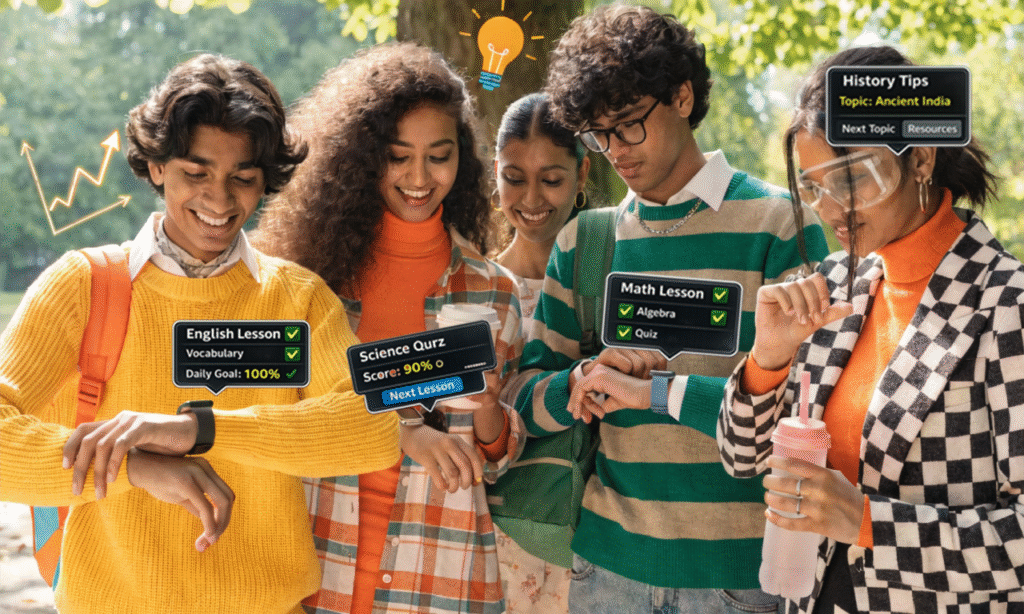
- Overload and Distraction: Constant prompts could overwhelm; a Counterpoint Research CES 2026 report warns of “notification fatigue,” reducing focus by 20%. In India’s noisy urban life, is more buzz helpful or harmful?
- Privacy Nightmares: Wearables collect data—location, biometrics—raising hacks or misuse fears. Nasscom 2026 highlights 30% Indians wary of AI surveillance, especially in education where kids’ data is sensitive.
- Superficial Knowledge: Critics argue micro-lessons skim surfaces; deep mastery needs immersion. An Azim Premji Foundation study shows ambient users score 15% lower on complex problem-solving vs. structured learners.
Neha, a 19-year-old student from Delhi, tried it: “Fun at first, but I missed discussions—felt like snacking without a meal.” Quality varies; not all AI content is accurate, risking misinformation in unregulated apps.
The Indian Twist: Ambient Learning Meets Desi Hustle
In India, ambient learning isn’t imported—it’s evolving with our vibe. Think Karva Chauth fasts teaching discipline; now, wearables add layers, like health tips during Navratri. Our carb-heavy diets and festival feasts? Apps prompt mindful eating mid-celebration.
Daily life here is chaotic—traffic jams, family duties, power cuts—making dedicated study tough. Ambient fits like a jigsaw: Commuting on Mumbai locals? Language lessons via earbuds. Rural entrepreneurs? Business prompts in regional dialects. With Jio’s data boom, 800 million connected (2026 stats), it’s scalable.
But twists abound: Cultural resistance—elders might see it as “lazy learning.” Affordability? Entry-level smartwatches cost ₹2,000, but data plans add up. Government pushes like DIKSHA app integrate ambient elements, blending tradition with tech—e.g., folklore-based math prompts.
Real Stories: Triumphs and Tumbles
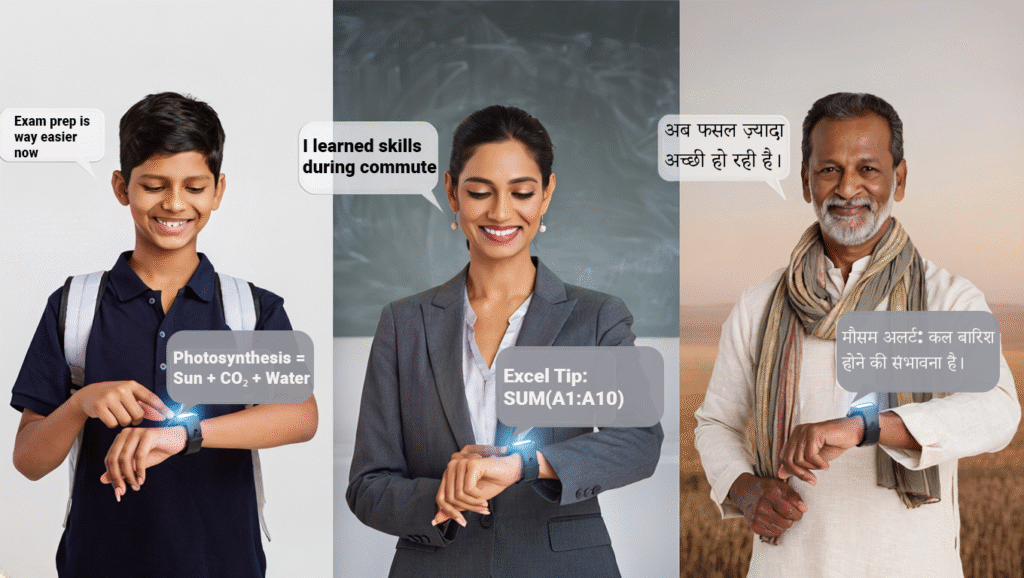
From the trenches, here’s proof.
- Rohan, 17, Kolkata: Struggling with exams, his watch’s micro-quizzes boosted scores 20%. “Like a pocket tutor—turned boring bus rides into study wins,” he grins.
- Sneha, 29, Hyderabad: As a working mom, ambient vocab builders helped her learn English for promotions. “No guilt over skipped classes; it just happened.” Now, she’s team lead.
- Amit, 45, Jaipur: Tried for finance tips but quit—too many irrelevant prompts. “Felt intrusive during family time,” he admits.
These show ambient’s power: Tailored right, it’s transformative; mismatched, it’s noise.
Top Wearables and Apps Leading the Ambient Revolution
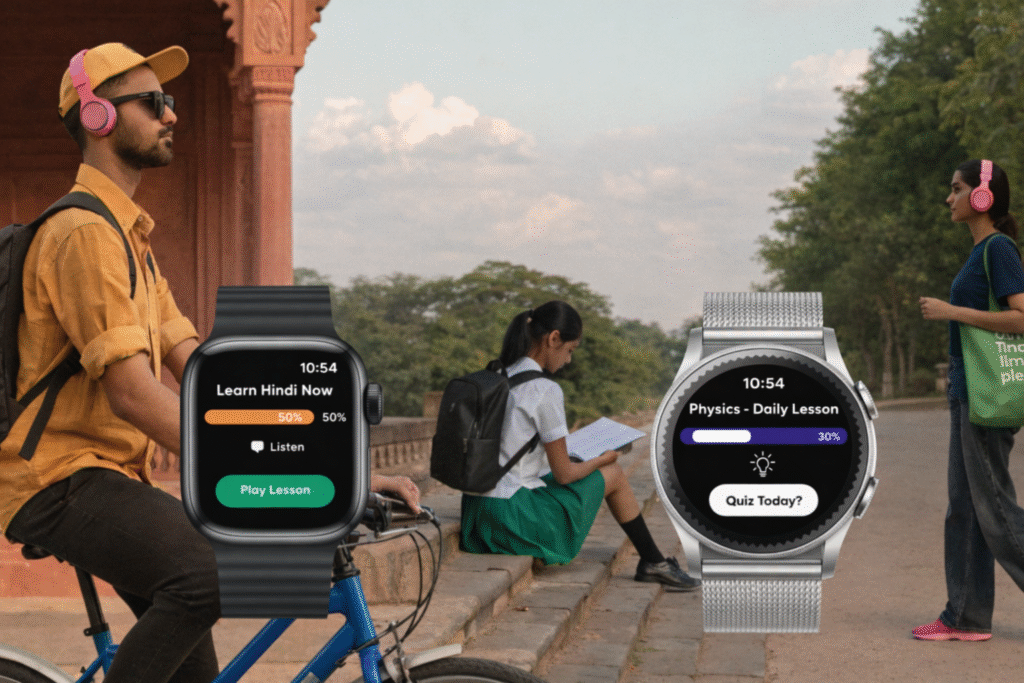
2026 frontrunners:
- Apple Watch Series 11: AI prompts via Siri, integrates with Duolingo for language, Brilliant for STEM. Health ties to learning—low energy? Motivational quotes.
- Google Pixel Watch 3: Ambient mode with Gemini AI; micro-lessons from Khan Academy, personalized via Fitbit data.
- Samsung Galaxy Watch 8: Bixby-driven, strong in India with Hindi support; apps like Elevate for brain games.
- Indian Gems: Boat Storm with local integrations; apps like Nibble for curiosity bites, SmartyMe for 15-min skills.
These aren’t gadgets—they’re ecosystems, with communities and certifications.
Safe Ambient Learning: Tips to Get It Right
Diving in? Here’s how:
- Start Small: Pick one app like Headway for book summaries; set daily limits to avoid overload.
- Customize Wisely: Use privacy settings; opt for offline modes in spotty networks.
- Balance with Depth: Pair ambient with weekly deep dives—e.g., online courses.
- Track Impact: Monitor mood, retention; apps like Elevate have analytics.
- Involve Family: For kids, parental controls; discuss data sharing.
- Stay Grounded: Combine with real-world practice—learn coding? Build a mini-project.
Desi Hacks: Ambient Learning the Indian Way
Adapt to our flavors: Break prompts with chai-time reflections. Use for competitive exams—UPSC facts during walks. Integrate with traditions: Yoga sessions trigger mindfulness lessons. Avoid during pooja—set “do not disturb” for sacred times. For budget folks: Free apps like Duolingo on basic watches. Nourish mind like body—balance with offline pursuits.
Wrapping It Up: Embrace the Wrist Revolution
In 2026, ambient learning via wearables isn’t hype—it’s here, turning smartwatches into silent teachers and daily life into a classroom. For some Indians, it’s a game-changer: Effortless upskilling amid chaos. For others, a distraction if unchecked. The key? Intentional use—slowly, with awareness.
Tempted? Grab a wearable, try a micro-lesson app. Watch your growth signals; you’re tougher than tech glitches. What’s your take? Tried ambient nudges? Share below—let’s swap stories and level up together! Subscribe to PBTrendz for more future-tech insights. Your learning journey awaits—tap that wrist!
You May Like This


Advertisement
You May Like This






Advertisement

Advertisement
Advertisement