

Advertisement

Advertisement

- Updated on May 15, 2026
- IST 3:29 am
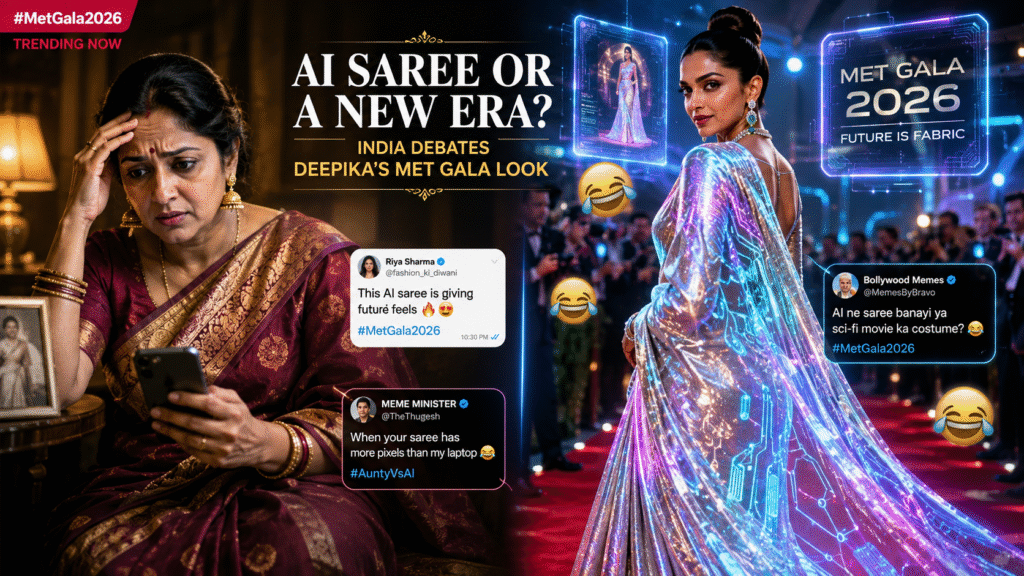
Imagine this: 24-year-old Priya from Bengaluru, a budding fashion influencer who grew up stitching Kanjeevaram borders on her mother’s old sarees, stays up till 4 AM scrolling the Met Gala 2026 live stream. When Deepika Padukone appears in a shimmering saree whose digital embroidery morphs from Mughal florals into pulsing neural networks right before her eyes, Priya’s jaw drops. “This is it! AI breathing life into our heritage – I need this for my next reel!” She tags her squad and dreams of 3D-printed dupattas for her own wedding.
Now picture 38-year-old Raj from Varanasi, a fourth-generation Banarasi weaver whose fingers still remember the rhythm of the loom. He watches the same clip on a cracked phone screen during a power cut and mutters, “Arre, yeh kya tamasha hai? My grandmother’s pallu had real gold zari, not some software update.” Within minutes, his frustrated tweet joins thousands of others, turning the red carpet into a battlefield of memes and heated family debates across India.
So, what’s the real story? Is the Met Gala 2026 theme “Digital Renaissance: Art Reimagined” the glorious next chapter for Indian fashion, or did our biggest stars simply become walking billboards for Silicon Valley? With Deepika Padukone’s AI-generated saree and Ranveer Singh’s scannable QR-coded tuxedo leading the charge, the internet exploded into meme wars within hours. In this deep dive, we’ll decode the seven most talked-about futuristic looks, unpack the explosive Indian social media reactions, explore the heritage-versus-hyper-tech clash, and ask what this means for our desi wardrobes. Let’s step onto the digital red carpet together and separate the hype from the heritage.
Understanding the Met Gala 2026 Theme: Digital Renaissance – Art Reimagined
The Met Gala has always been fashion’s biggest stage – a place where celebrities don’t just wear clothes, they wear ideas. But the 2026 theme, “Digital Renaissance: Art Reimagined,” took things to another level. Inspired by the 15th- and 16th-century European Renaissance – that explosion of art, science, and humanism – this year’s event fused it with today’s tech revolution: AI, 3D printing, augmented reality (AR), and interactive digital fabrics.
Think of it as Michelangelo’s David meeting a neural network, or Leonardo da Vinci sketching on an iPad. Designers were challenged to reimagine classic artworks, historical silhouettes, and cultural motifs through modern technology. For Indian celebrities, the brief hit close to home: how do you blend centuries-old craftsmanship like zardozi, bandhani, and ikat with code, pixels, and algorithms? The result? A red carpet that felt less like a fashion show and more like a living, breathing art installation.
Yet for many Indian viewers, the theme stirred mixed emotions. On one hand, it celebrated innovation – the same spirit that once turned humble cotton into world-renowned textiles. On the other, it raised questions: when does “reimagining” cross into erasing the very soul of what makes Indian fashion special? This tension fueled the meme wars and turned the night into one of the most debated events in recent celebrity fashion history.
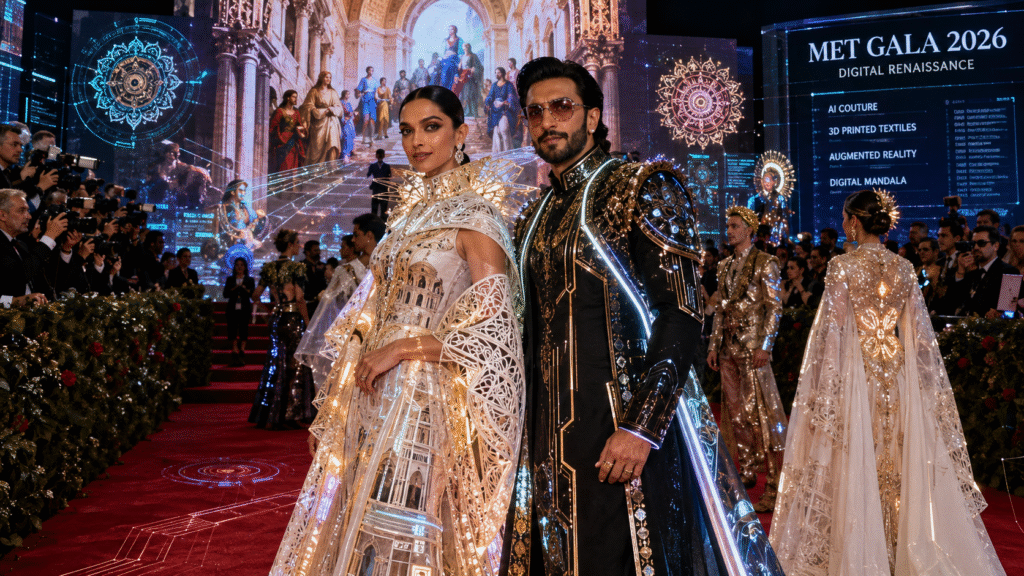
The 7 Futuristic Looks That Ignited the Meme Wars
Let’s break down the seven standout ensembles that dominated timelines, group chats, and late-night debates. Each one pushed boundaries and, in true 2026 style, invited everyone to scan, swipe, or meme.
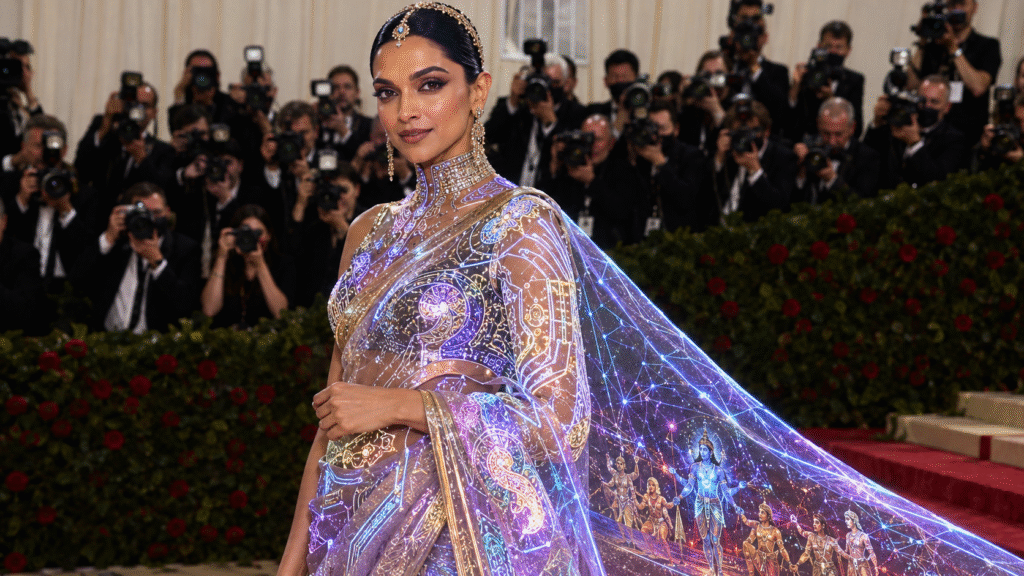
- Deepika Padukone’s Live AI Saree: Deepika’s six-yard wonder wasn’t just silk – it was a canvas powered by real-time AI. The border featured digital embroidery that shifted patterns based on ambient light, viewer proximity via AR filters, and even her own biometric data (heart rate influencing floral blooms). Traditional paisleys morphed into circuit-board mandalas, then exploded into virtual firework motifs when cameras flashed. The pallu projected subtle holographic scenes from Indian mythology reimagined in neon cyberpunk. The internet lost it. Memes flooded in: “Deepika’s saree buffering… 87% loaded” and “When your outfit has better Wi-Fi than your house.” Traditionalists called it “a saree that forgot its roots,” while tech lovers hailed it as the future of sustainable fashion (no repeated physical embroidery needed). Deepika later shared that the piece was a collaboration with an Indian AI startup and a Paris-based designer, calling it “a love letter to every woman who’s ever felt her story evolving.”
2. Ranveer Singh’s Scannable QR-Coded Tuxedo: Never one to play safe, Ranveer turned up in a tailored black tuxedo embedded with thousands of micro-QR codes that, when scanned, unlocked an AR experience: his life story as a video game, complete with Bollywood dance battles and cricket highlights. The jacket lapels displayed rotating digital artwork – everything from Raja Ravi Varma paintings to pixelated versions of his own film posters. Meme gold: “Ranveer became a walking QR code – scan to unlock chaos” and “Even his suit has more personality than my ex.” Critics joked it was less fashion, more marketing stunt, but supporters loved the interactivity. Ranveer grinned in post-event interviews: “Why wear history when you can let people play with it?”
3. Priyanka Chopra Jonas’s Holographic Renaissance Lehenga: Priyanka’s lehenga fused Victorian ball-gown structure with Indian mirror work, but the mirrors were actually miniature projectors displaying reimagined Mughal miniatures in 3D. As she moved, the skirt appeared to float with levitating digital elephants and dancing peacocks. Indian Twitter erupted with “Priyanka’s lehenga is doing more than my PowerPoint” and affectionate roasts about “desi Disney princess meets Matrix.”
4. Zendaya’s 3D-Printed AR Armour Gown: Though global, her look – a sculpted gown resembling Renaissance armour but printed with flexible, lightweight bio-materials and overlaid with AR filters showing evolving historical battle scenes – sparked Indian comparisons to warrior queens like Rani Lakshmibai. Memes compared it to “what if Draupadi had Iron Man tech.”
5. Alia Bhatt’s Interactive LED Anarkali: Alia’s anarkali featured embedded LEDs synced to a soundtrack of reimagined classical ragas mixed with electronic beats. The hemline displayed scrolling Sanskrit verses that translated in real-time via phone cameras. The reaction? “Alia’s outfit is smarter than my JEE prep” – pure meme fuel that highlighted the playful side of the tech trend.
6. Bad Bunny’s Cyber-Sherwani Fusion: The Puerto Rican superstar wore a sherwani reimagined with glowing circuit patterns and AR tattoos visible only through filters. Indian fans went wild, creating crossover edits with Bollywood songs.
7. Doja Cat’s Pixelated Padmavati-Inspired Cape A dramatic cape with pixel-art versions of epic Indian historical scenes that animated when viewed through the official Met Gala app. It triggered debates on cultural appreciation versus appropriation – and thousands of “POV: You tried explaining this to your nani” memes.
Each look wasn’t just clothing; it was a conversation starter that forced us to ask: Where does tradition end and technology begin?
The Big Debate: Heritage vs Hyper-Tech – Does Innovation Honour or Erase Our Roots?
The pros were loud and clear. Supporters argued these looks celebrated sustainability (less physical waste through digital overlays), accessibility (anyone with a phone could experience the art), and global relevance. Indian designers pointed out that tech could revive dying crafts – imagine AI helping weavers sell directly or AR preserving ancient techniques for future generations. Insulin sensitivity parallels? No, but the weight loss of outdated production methods felt refreshing.
Yet the cons hit hard for many. Long “fasts” from tradition risked nutrient gaps in cultural identity. Elevated “cortisol” from seeing sacred motifs turned into pixels left some feeling stressed and disconnected. Priya’s excitement met Raj’s concern head-on in the comment sections: was this progress or just another form of colonisation – this time by algorithms?
Balanced voices emerged, too. Fashion historians noted that Indian textiles have always evolved – from Persian influences to colonial fusions. The real question wasn’t whether tech belonged, but how thoughtfully it was used.
The Indian Twist: When Fasting Meets Tradition – No, Wait, When Pixels Meet the Pallu
Fasting? No – but our culture has always embraced transformation. Just like Karva Chauth or Navratri fasts blend devotion with celebration, the Met Gala 2026 asked us to fast from convention and feast on possibility. Our diets of heavy carbs (think heavy zari and gold) met lighter, smarter digital alternatives. The trick, as always, was balance – not replacing heritage, but enhancing it. A 12-hour “fast” from old mindsets opened doors to new expressions rooted in desi kitchens of creativity.
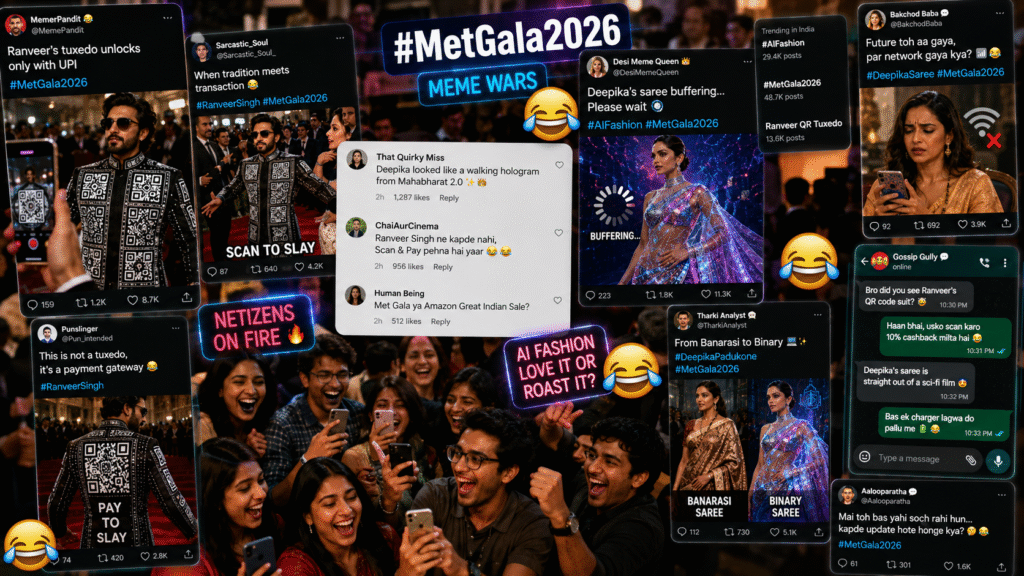
Real Stories: Triumphs, Tumbles, and Viral Moments from Indian Fans
Meera, 27, from Hyderabad, created a viral reel recreating Deepika’s saree using free AI apps and won local praise for democratizing high fashion. Riya, 30, from Bangalore, organized a college debate that ended in laughter and new friendships. But not everyone smiled – some older relatives shared stories of canceled family functions over “disrespect to culture.” These personal tales proved one thing: the Met Gala didn’t just dress stars; it dressed up conversations in every Indian household.
Safe Steps Toward Digital Fashion: Tips for Embracing the Future Without Losing Your Roots
- Ease In: Start small – try AR filters on your next festive outfit via free apps.
- Fuel Up Right: Pair tech with real craftsmanship – support hybrid pieces from Indian labels blending handloom and smart fabrics.
- Hydrate Your Heritage: Stay connected to stories behind motifs; let tech amplify, not replace.
- Listen Up: Track how it makes you feel – proud, inspired, or uneasy? Adjust accordingly.
- Get Expert Eyes: Consult local artisans and modern designers for thoughtful collaborations.
- Chill Out: Remember, fashion should spark joy, not stress. Yoga for the soul, filters for the gram.
Desi Diet Hacks: Eating Smart with Tech and Tradition
In your own wardrobe “eating window,” mix it up: a traditional cotton kurta with a digital print dupatta, or a simple lehenga upgraded with LED accents for Diwali. Steer clear of pure gimmicks – nourish your style with meaning, not just pixels.
Wrapping It Up: To Fast or Not to Fast – The Choice Is Yours
So, does Met Gala 2026’s digital renaissance worsen our connection to heritage or help it evolve? It’s not black-and-white. For some, it’s a game-changer that makes Indian fashion globally unstoppable. For others, it’s a flashy distraction from what truly matters. The difference lies in how we embrace it – mindfully, creatively, and with deep respect for our roots.
If these looks tempted you, dip your toes in. Start small, watch how it feels, and lean on the incredible community of Indian designers and artisans guiding the way. Fashion is a marathon, not a sprint, and you – with your stories, your culture, your creativity – are tougher and more beautiful than any algorithm.
What’s your take? Did Deepika’s AI saree win you over, or are you team traditional all the way? Tried any tech-fashion experiments yourself? Drop your story, favorite meme, or hot take in the comments below – let’s keep the conversation (and the memes) alive! Share this with your fashion-forward friends and tag us on socials with #MetGala2026Decoded. Your voice matters in shaping the future of Indian style.
You May Like This
1


Advertisement

Advertisement
You May Like This

Advertisement
Advertisement
Advertisement
Advertisement
Advertisement
Advertisement