

Advertisement

- Updated on April 16, 2026
- IST 2:27 am

Imagine this: Arjun, an 18-year-old first-year engineering student from a bustling Delhi suburb, starts his day glued to his phone. Late-night BGMI marathons with friends turn into all-nighters. He skips meals, complains of nagging wrist pain and throbbing headaches, and watches his grades tumble. His parents call it “just a phase,” but Arjun feels trapped—irritable when offline, lying about study hours, and using games to escape exam stress. One day, the physical pain hits hard: back spasms from slouching for hours. “Gaming is ruining me,” he confesses to a college counselor, defeated.
Now picture Priya, 19, from a quiet Chennai college. She games too—Valorant sessions after lectures—but keeps it to a strict 90-minute window. She pairs it with yoga, tracks her screen time, and chats openly with her family about wins and losses. Her studies stay strong, friendships bloom offline, and she feels energized, not drained. For her, gaming is a fun break, not a chain.
So, what’s the truth? Is gaming just harmless fun for Indian students, or is it quietly becoming a public health crisis? With a new 2026 study revealing that 5.3% of students suffer from Internet Gaming Disorder (IGD)—one in every 20—and physical pain emerging as a real consequence, the numbers are shocking. In this blog, we’ll unpack the study’s key findings, the science behind gaming disorder, the risks and rewards, and real-life stories from Indian campuses. Plus, we’ll share practical tips and desi hacks to game smart without losing control. Let’s dive in and figure this out together—because awareness today can protect tomorrow’s leaders.
Understanding Internet Gaming Disorder: More Than Just “Too Much Gaming”
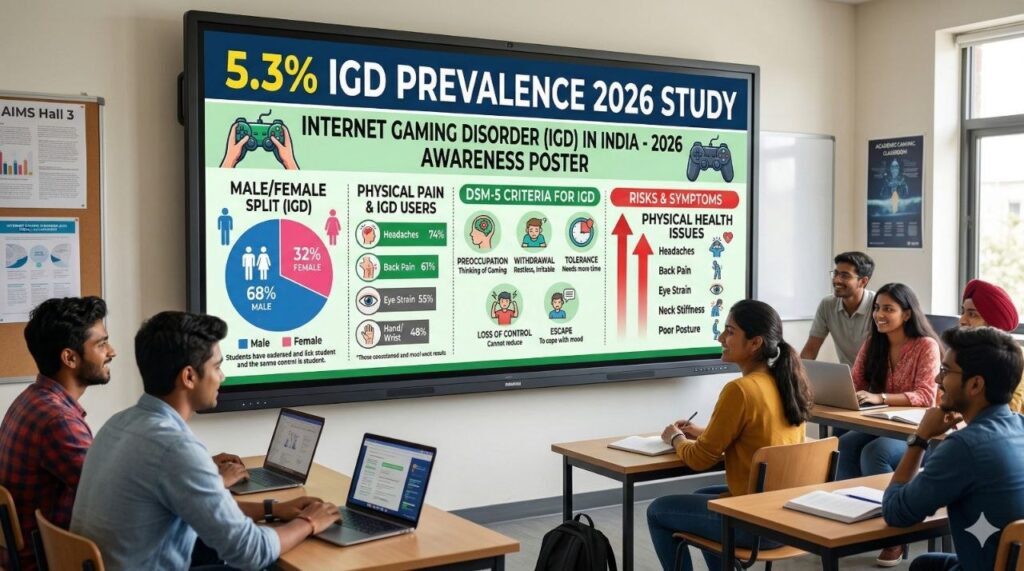
First, let’s get the basics straight. Internet Gaming Disorder isn’t about enjoying a quick round of Free Fire after class. It’s a clinically recognized pattern of excessive gaming that causes significant impairment or distress, as outlined in the DSM-5 criteria. Think of it like a seesaw tipped too far: what starts as fun tilts into compulsion, where gaming takes priority over studies, sleep, relationships, and even health.
The nine key signs include preoccupation (can’t stop thinking about the next match), withdrawal (irritability or anxiety when forced offline), tolerance (needing longer sessions for the same thrill), unsuccessful attempts to cut back, loss of interest in hobbies, continuing despite problems, deception about time spent, using games to escape negative moods, and jeopardizing education or relationships. You need five or more of these persisting for at least 12 months to meet the threshold.
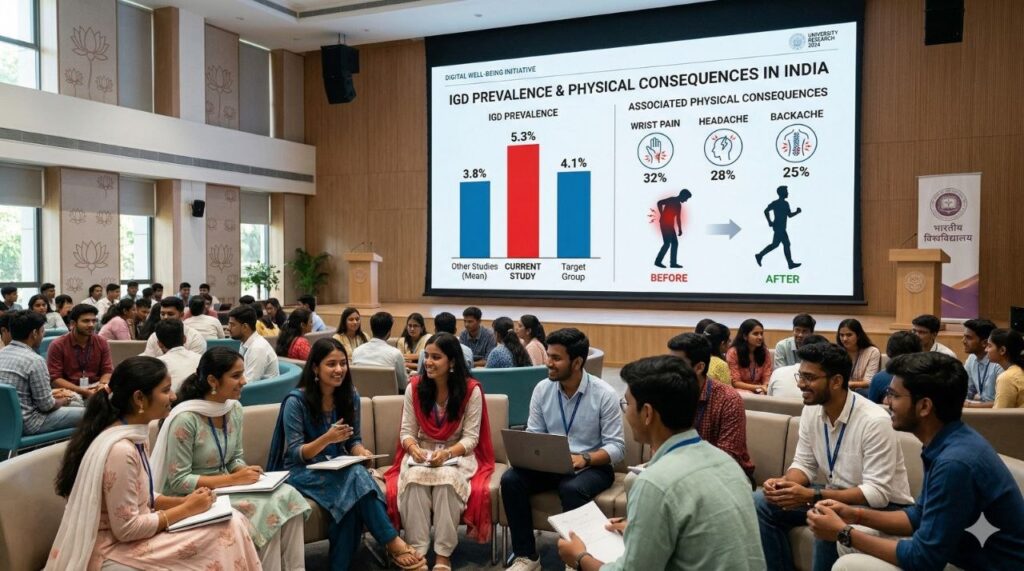
For Indian students—already juggling JEE dreams, parental expectations, and the digital boom—this hits close to home. With over 500 million gamers nationwide and mobile gaming exploding post-cheap data, the line between passion and problem blurs fast. Beyond mental fog, physical fallout is real: repetitive strain leading to wrist pain, backaches, migraines, poor posture, and disrupted sleep. The 2026 study spotlights this—physical pain isn’t a side note; it’s a red flag that gaming is harming young bodies.
The 2026 Study Explained: Shocking Numbers from the Frontlines
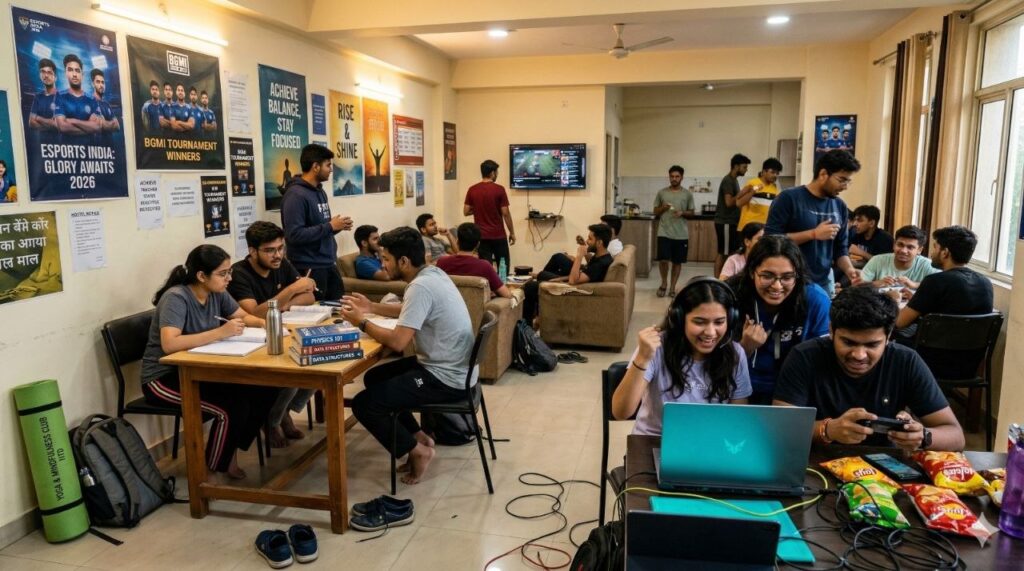
The research, published in early 2026 in the National Library of Medicine, surveyed students around age 18 and found a 5.3% prevalence of IGD. That’s not tiny—millions across India’s colleges and schools could be affected. Males were hit harder (over half the cases), and the average participant was younger than in medical-student-focused studies, pointing to broader risk in general college crowds.
Key findings? Students spending heavy hours on online games were far more likely to develop IGD. Physical pain stood out as a major consequence—think carpal tunnel-like symptoms, headaches, and back issues from marathon sessions in cramped hostel rooms or study desks. Comparisons with earlier Indian data show variability: 3.5% in Andhra Pradesh, 3.6% in New Delhi, and 4.25% in Tamil Nadu, but this 5.3% underscores a rising trend amid post-pandemic screen surges.
Experts note the study’s strength in linking behavior to tangible harm. It’s not alarmist; it’s data-driven, echoing the Economic Survey 2026’s warnings on digital addiction’s toll on youth mental health and productivity. Gaming disorder correlates with anxiety, depression, sleep loss, and academic dips—issues amplified in India’s high-pressure education system.
The Big Debate: Does Gaming Help or Harm Students?
Here’s where it gets nuanced—experts and students don’t all agree. Gaming isn’t pure villain or hero. Let’s break it down fairly.
The Pros: Why Moderate Gaming Can Be a Win
- Cognitive Boosts: Strategy games sharpen quick thinking, teamwork, and problem-solving—skills prized in tech careers.
- Social Connections: Online squads build friendships across cities, reducing loneliness for hostellers far from home.
- Stress Relief: A short session can unwind after tough lectures, offering an escape without substances.
- Skill-Building: Esports pathways (now more structured) can lead to careers in streaming, coaching, or analysis.
Take Priya’s balanced approach: gaming enhanced her focus and social circle without derailing life.
The Cons: Where It Backfires Hard
- Physical Toll: Hours hunched over screens cause real pain—neck strain, eye fatigue, wrist issues—as the study highlights. Sedentary habits raise risks for obesity and poor posture.
- Mental Health Hits: Withdrawal, anxiety, depression, and mood swings. Escapism can mask deeper issues like exam stress.
- Academic and Social Fallout: Missed classes, lower grades, isolation from family. Deception erodes trust.
- Addiction Cycle: Tolerance pushes longer play, worsening everything.
Arjun’s story mirrors the cons: pain, grades slipping, and family tension. The debate? Moderation is key, but for 5.3%, it spirals out of control.
The Indian Twist: Academic Pressure Meets the Gaming Boom
Gaming isn’t new to India—lan cafes in the 2000s, mobile explosions during lockdowns. But our culture adds twists. Intense competition (think NEET or UPSC prep) makes games a tempting escape. Parents often label it “timepass,” yet Economic Survey 2026 flags how digital addiction fuels youth anxiety and aggression.
Desi diets and lifestyles complicate it: late-night Maggi during raids, skipped exercise, and chai-fueled all-nighters. Rural-urban gaps matter too—stronger signals in cities fuel more play, while smaller towns see hidden addiction without support. Gender plays a role: boys report higher rates, but girls face extra stigma. With 65% of India under 35, unchecked IGD risks national productivity. Yet, positive shifts like school esports clubs and PROGA regulations offer hope for safe channels.
Real Stories: Triumphs, Tumbles, and Turning Points
Real voices make it hit home.
- Arjun, 18, Delhi: As in our opener, endless sessions led to wrist pain and failing midterms. Therapy helped him set limits; now he games weekends only. “I thought it was control—turns out, it controlled me.”
- Priya, 19, Chennai: Her structured play boosted reflexes and friendships. “Gaming is my recharge, not my ruler,” she says.
- Rahul, 17, Mumbai: Hostel life spiraled into 6-hour nights, causing migraines and isolation. A college awareness drive and family pact turned it around—he now mentors peers.
- Meera, 20, Bangalore: As a girl gamer, she faced judgment but found women-only communities. Moderate play helped her destress without pain or guilt.
These tales show IGD isn’t inevitable—it’s manageable with awareness.
Signs of Trouble and Safe Gaming Tips: How to Stay in Control
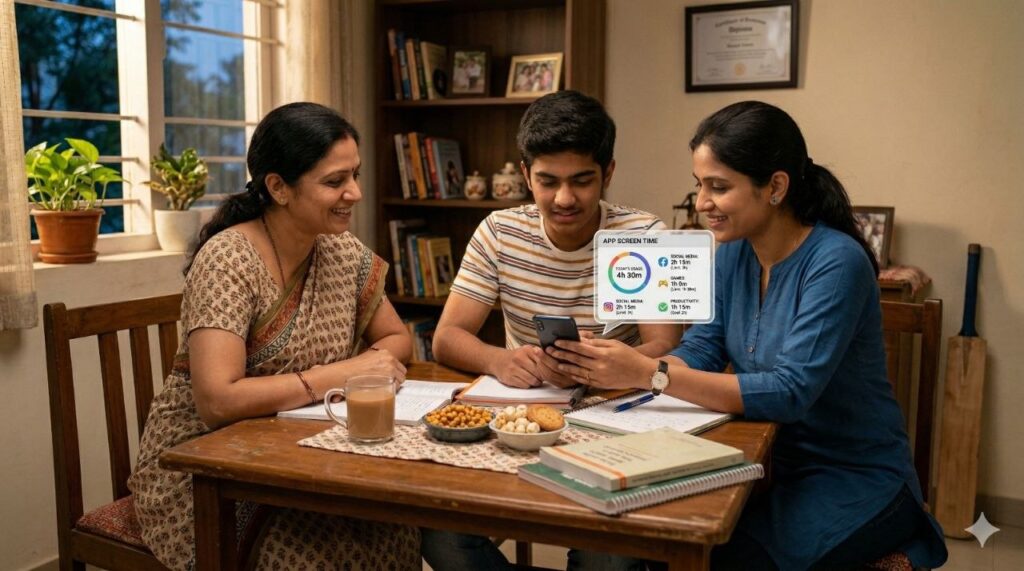
Spotting issues early changes everything. Watch for persistent pain, mood swings, or neglected studies. Thinking of gaming responsibly? Here’s how:
- Set Boundaries: Cap at 1-2 hours daily; use phone timers.
- Prioritize Health: Stand every 30 minutes, stretch, and maintain posture to dodge pain.
- Balance Life: Schedule gaming after studies and exercise—treat it like a reward.
- Track and Reflect: Apps for screen time; journal how you feel post-game.
- Seek Support: Talk to parents, counselors, or college wellness cells.
Choose Wisely: Opt for skill-building titles; avoid endless loops.
Desi Hacks: Family-Friendly Ways to Game Smart in Indian Homes
Our homes demand clever tweaks. Involve family—demo a match to show it’s skill, not addiction. Tie it to routines: game only post-homework, like tuition time. Use affordable setups wisely—shared family devices in living rooms, not bedrooms. Popular desi-friendly mobile games shine when limited.
For parents: Set “no-device dinner” rules and encourage outdoor cricket alongside digital play. Schools can add digital wellness modules. Rural families: leverage community centers for supervised sessions. Women gamers: join safe online groups. The secret? Consistency, open talks, and viewing gaming as a tool, not the goal.
Wrapping It Up: Awareness Over Alarm – Your Next Move
So, does the 5.3% prevalence mean gaming is doomed for Indian students? Not at all. It’s a wake-up call—the study shows risks like physical pain are real, but balanced play brings joy and skills. For some, it’s harmless fun; for others, it spirals under pressure. The difference? Mindful habits, family support, and timely help.
If gaming feels off-balance, start small: audit your time today, chat with a trusted adult, or explore college resources. India’s youth are digital natives—let’s harness the power without the pain. What’s your take? Experienced gaming highs or lows as a student? Drop your story below—let’s share, learn, and build healthier habits together!
You May Like This
1


Advertisement
You May Like This








Advertisement
Advertisement
Advertisement