

Advertisement

- Updated on April 15, 2026
- IST 3:56 pm
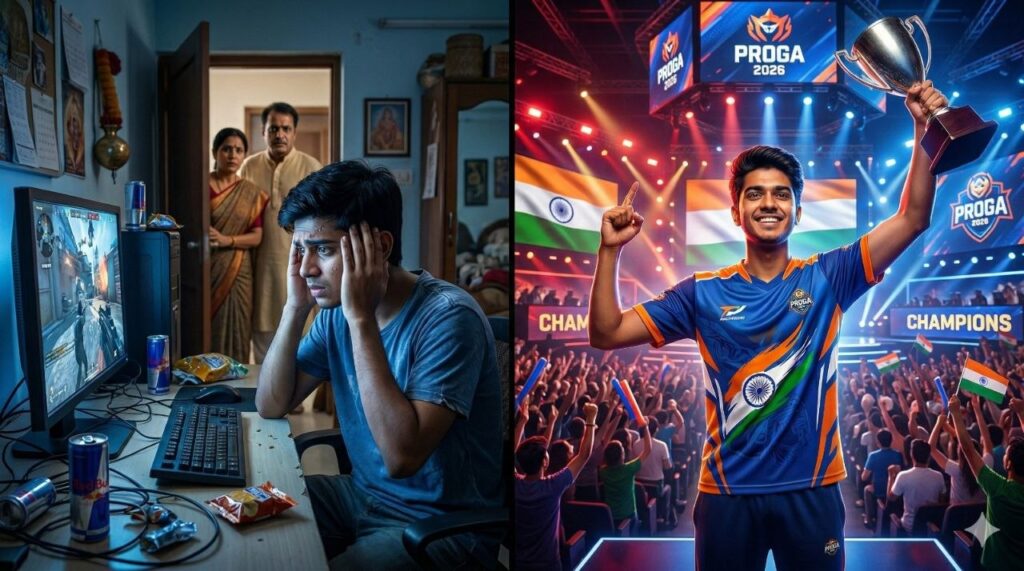
Imagine this: Rohan, a 19-year-old from a small town in Uttar Pradesh, has poured his heart into gaming for years. Late-night sessions on his budget smartphone, dodging parental lectures about “wasting time on screens,” and dreaming of turning his skills into something real. But pre-PROGA, it was chaos—unregulated platforms, shady tournaments, constant fear of addiction headlines, and zero support from schools or states. His parents saw only the risks, not the potential. Frustrated and stuck, Rohan felt like his passion was a dead-end hobby.
Now picture Priya, 22, from Hyderabad. In early 2026, with PROGA fully kicking in at the street level, she joins her college’s official esports league backed by state incentives. Structured training sessions, mentorship from pros, and a clear pipeline from campus tournaments to national events. Six months later, she’s competing in a Khelo India-affiliated event, balancing studies with sponsorship talks, and inspiring her younger siblings. “It finally feels legit—like gaming isn’t just fun, it’s a real path,” she beams.
So, what changed? PROGA—the Promotion and Regulation of Online Gaming Act—is here, and 2026 might finally be the year Indian esports comes of age. With the Act shifting from statute books to real-world implementation, we’re seeing accelerated state-level adoption, grassroots circuits in schools and colleges, and structured youth leagues. In this blog, we’ll unpack the transformative potential of PROGA for India’s esports ecosystem. From the regulatory shake-up to real-life stories, safe entry points, and desi-specific hacks, let’s explore how 2026 could mark India’s esports adulthood.
Understanding the Indian Esports Landscape: From Niche Hobby to National Hope
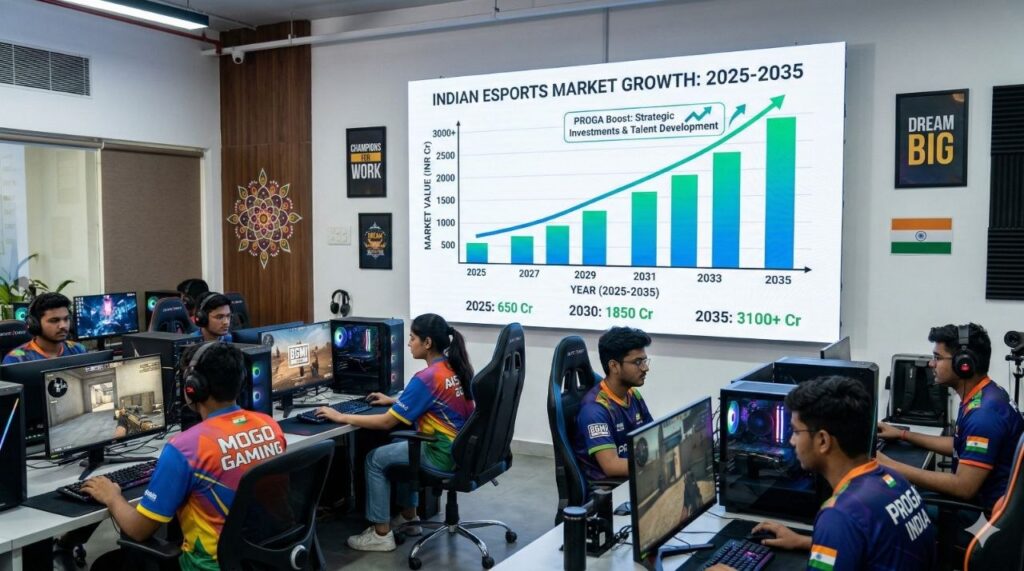
Esports in India isn’t new, but for the longest time, it operated in the shadows. With over 500 million gamers and a market that hit around USD 240 million in 2025, the potential was always massive—especially mobile-first, thanks to affordable data and smartphones. Titles like BGMI, Valorant, and Free Fire drew lakhs of players, with teams like S8UL and GodLike making international waves. Yet, challenges loomed large: parental skepticism (“Beta, padhai karo”), fragmented state rules, lack of infrastructure in Tier-2 and Tier-3 cities, and the shadow of unregulated real-money gaming that blurred lines between skill and addiction.
Think of it like a talented young cricketer in the 1980s before the BCCI professionalized everything—raw passion, but no clear path from local maidan to international glory. Mental health concerns, digital divide, and gender gaps held it back. Women players faced extra scrutiny, and rural talent often stayed hidden. But post-2025, with PROGA’s framework, the narrative is flipping. Esports is being recognized not as a distraction, but as a skill-building sport demanding strategy, teamwork, quick thinking, and resilience—exactly the traits India’s youth need in a digital economy.
PROGA Explained: The Game-Changer Moving from Paper to Play
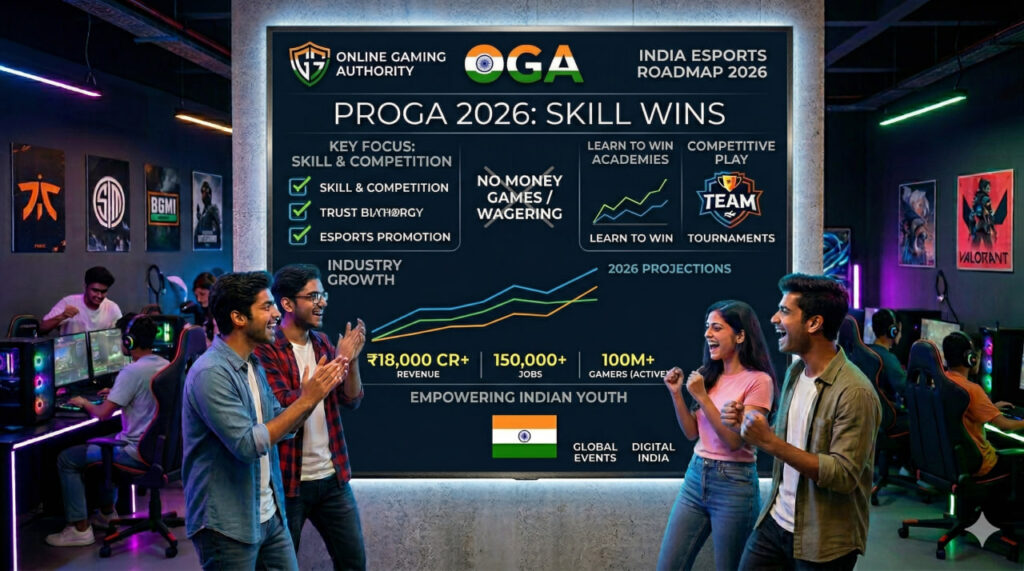
Passed in August 2025, the Promotion and Regulation of Online Gaming Act (PROGA) is India’s bold step toward a uniform national framework. It draws a clear line: it promotes and regulates esports, educational games, and social gaming while imposing a strict ban on online money games involving bets or real stakes. No more grey areas that fueled addiction fears.
At its core, PROGA establishes the Online Gaming Authority of India (OGAI) for oversight—registering permissible titles, enforcing guidelines, and protecting users, especially youth. Esports gets official recognition as a legitimate competitive sport under the National Sports Governance Act, 2025. Outcomes depend purely on skill (dexterity, strategy, mental agility), with entry fees allowed only for admin costs and performance-based prizes okay. The Central Government is tasked with building academies, research centers, incentive schemes, and awareness drives. Coordination with states and sports federations is key for integration.
In simple terms, PROGA is the referee stepping onto the field, blowing the whistle for fair play, and handing out jerseys to serious players. By 2026, rules are operationalized, state adoption is ramping up, and the focus shifts to building pipelines—from school clubs to pro circuits.
2026: PROGA Hits the Ground Running – Transformative Potential Unleashed
This year feels like the tipping point. State-level adoption is accelerating, with tournaments in Maharashtra, Tamil Nadu, Rajasthan, and beyond. Grassroots circuits are popping up in colleges—KRAFTON’s 128-campus tour is just one example, engaging thousands of students. Esports debuted in Khelo India Youth Games, blending it with traditional sports like kabaddi. Youth leagues are structuring talent pipelines, turning passionate players into professionals.
The market is projected to grow at 18-23% CAGR, potentially hitting over a billion dollars in the coming decade. Investments are flowing into infrastructure, training, and IP creation. Brands are sponsoring without the old regulatory haze. For India’s 15-35 demographic—tech-savvy, ambitious, and hungry for careers beyond IT or medicine—this means esports is becoming a viable path: streamer, analyst, coach, or pro athlete.
But it’s not all smooth. Critics worry about uneven implementation across states, digital access gaps in rural areas, and pressure on young minds. Balanced perspectives matter: while PROGA curbs harms from money games, it must not stifle innovation. Multiple voices—from players to policymakers—agree that success depends on execution, stakeholder collaboration, and inclusive growth.
The Indian Twist: Esports Meets Desi Dreams, Education, and Culture
Fasting isn’t new to Indians, and neither is competitive gaming—think lan cafes in the 2000s or mobile battles during lockdowns. But PROGA aligns perfectly with our values: skill over chance, discipline, and community. Parents who once frowned on “timepass” now see parallels with cricket academies or coaching classes. Esports builds the same focus, teamwork, and strategic thinking taught in schools.
The education angle is huge. Colleges are adding esports clubs, some even integrating it into extracurricular credits. States are rolling out youth leagues tied to school curricula, teaching digital literacy alongside soft skills. In a country where 65% of the population is under 35, this creates structured pipelines: school → college → state nationals → international. It’s desi innovation at its best—leveraging our massive youth base and digital boom while addressing cultural concerns like work-life balance and family approval.
Real Stories: Triumphs, Turning Points, and Grassroots Heroes
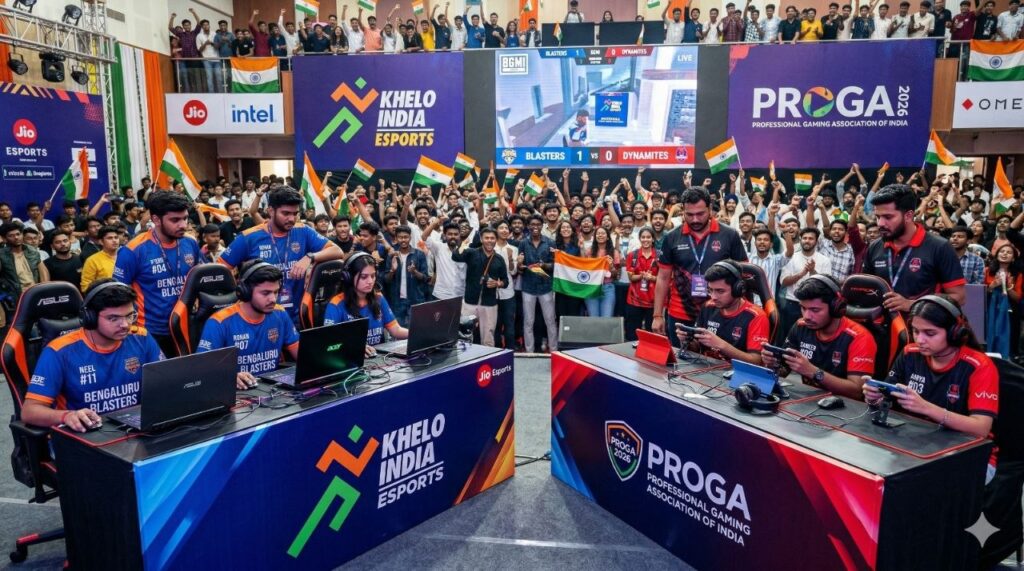
Let’s hear from the players living it.
- Rohan, 19, Lucknow (post-PROGA pivot): Before 2026, Rohan grinded solo, burning out from unregulated matches. After his college joined a state-backed league, he trained with mentors, balanced JEE prep, and placed in a regional qualifier. “PROGA gave me structure—I’m not just gaming; I’m building a future,” he says. His parents now cheer him on.
- Priya, 22, Hyderabad: As mentioned, she’s thriving in a women’s circuit. “The Authority’s guidelines made tournaments safe and fair. I’ve gained confidence, friends across states, and even internship offers from gaming firms.”
- Arjun, 17, rural Rajasthan: A hidden talent spotted in a Khelo India school event. With state incentives, he got a basic setup and coaching. “From village internet struggles to state-level play—2026 changed everything.”
- Meera, 24, Bangalore (team perspective): Part of a pro org, she notes, “Post-PROGA, sponsorships are cleaner. We focus on skill development, not quick cash. It’s sustainable now.”
These stories prove PROGA isn’t just policy—it’s empowerment.
Getting Started with Esports in the PROGA Era: Practical Tips for Aspiring Players
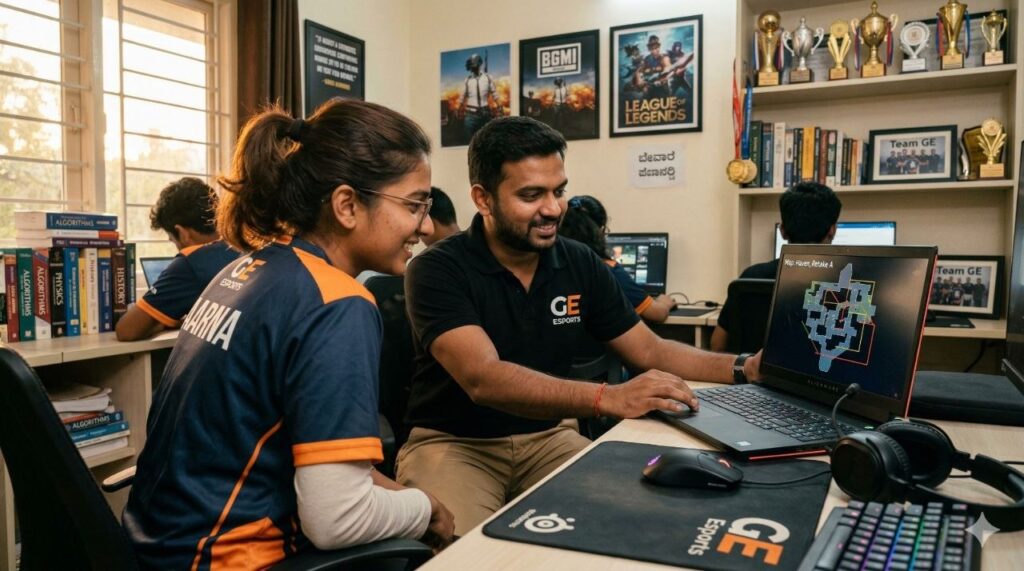
Ready to level up? Here’s how to do it right:
- Start Smart: Join registered school/college clubs or state youth leagues—check OGAI-approved platforms.
- Build Skills Holistically: Practice 2-3 hours daily, focus on one game (mobile or PC), analyze replays, and work on teamwork via Discord or local meetups.
- Balance Life: Maintain academics, exercise, and sleep. Esports pros emphasize mental health—use apps for focus and breaks.
- Gear Up Affordably: Begin with a good smartphone/laptop; invest in peripherals as you progress. Free resources like YouTube tutorials abound.
- Seek Guidance: Talk to parents, coaches, or counselors. Many states now offer awareness programs.
- Network Safely: Attend offline events, follow verified orgs, and aim for registered tournaments only.
Desi Esports Hacks: Making PROGA Work in Our Homes and Communities
Our context demands clever tweaks. Involve family—host demo matches at home to show the skill side. Use free or low-cost setups: public cyber cafes for practice or community centers. Popular desi-friendly titles with strong skill elements thrive under the new rules. Tie it to festivals—imagine esports during Diwali gaming nights or college fests.
For rural players: Leverage government digital initiatives for better connectivity. Parents can set “gaming study pacts” like tuition schedules. Women can join growing all-girls communities for safe spaces. The key? Consistency over hype, community over isolation.
Wrapping It Up: To Fast-Track or Not? 2026 Is Your Year
So, does PROGA implementation in 2026 make Indian esports grow up? It’s not overnight magic, but a powerful catalyst—legitimizing passion, building pipelines, and creating safe, structured opportunities. For some, it’s a game-changer unlocking careers and national pride. For others, challenges like access and mindset shifts remain. The difference lies in how we embrace it: thoughtfully, inclusively, and with eyes on long-term growth.
If esports calls to you, start small—join a local league, talk to your school, or explore PROGA resources. India’s digital warriors are ready to shine globally. What’s your take? Tried esports in the new era? Drop your story in the comments—let’s build this community together and cheer the next generation to victory!
You May Like This
1


Advertisement
You May Like This






Advertisement
Advertisement
Advertisement