

Advertisement

- Updated on May 13, 2026
- IST 10:27 am
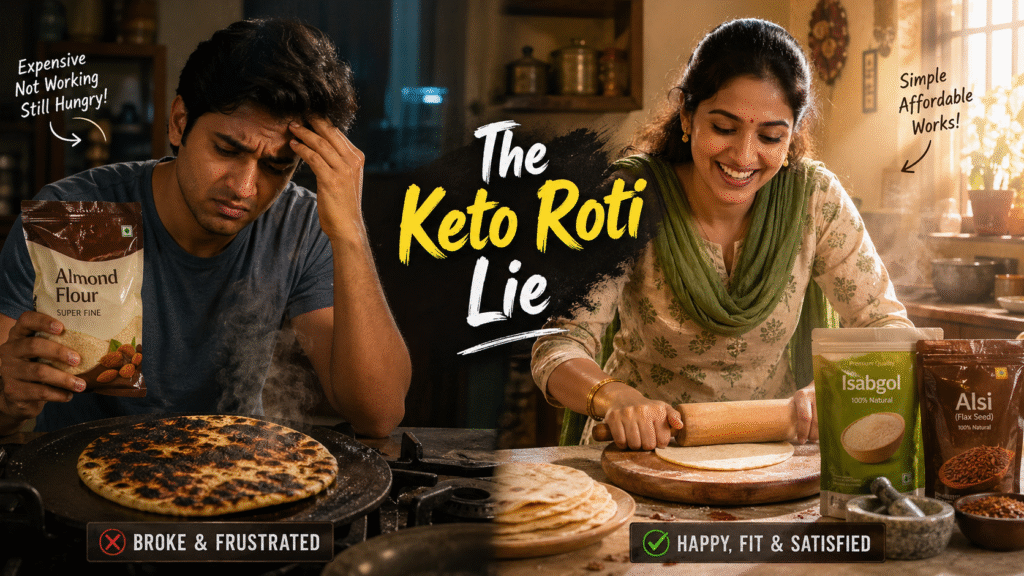
Imagine this: Rahul, a 34-year-old software engineer from Pune, has been grinding through his keto journey for six months. Irregular energy, stubborn belly fat that just won’t shift, and the constant craving for a proper roti with his dal or sabzi—he’s tried every “hack” the fitness influencers swear by. Then he discovers those viral “keto roti” reels on Instagram: almond flour, psyllium husk, a bit of hot water, and boom—supposedly only 4 net carbs per piece. He buys the expensive almond flour (₹600 a kilo, ouch), rolls out his first batch, and feels like a keto king. “Finally, I can eat like a real Indian without breaking ketosis!” he posts proudly. But three weeks later? The scale hasn’t moved. His bank balance is lighter. And worst of all, those “healthy” rotis leave him bloated, craving more, and secretly wondering why he’s not glowing like the influencers promised. “This keto roti is ruining my diet,” he mutters to his wife one night, defeated.
Now, picture Sneha, 29, a busy homemaker from Hyderabad juggling two kids and a side hustle. She’s battling the same post-pregnancy weight and hormonal rollercoaster but refuses to blow the grocery budget on imported flours. One evening in her local WhatsApp mom group, she sees a simple 3-ingredient desi hack that costs just ₹10 for an entire batch. No almond flour drama. She tries it that same night—mix, roll, cook. The rotis come out soft, pliable, and fragrant, just like her amma’s chapatis. Within weeks, her energy stabilizes, the kilos start dropping, and she’s back in ketosis without the guilt or the grocery guilt. “It’s not a lie anymore,” she tells her friends. “It’s freedom.”
So, what’s the truth? Is that “healthy keto roti” you’re so proud of actually helping your Indian keto goals—or is it quietly sabotaging them with a massive scientific misunderstanding? With almond flour flooding Instagram and every second reel promising low-carb chapati magic, millions of us are wasting money and stalling progress. In this blog, we’ll unpack the lie, dive into the science, explore the real risks and rewards, hear from Indian keto warriors like you, and—most importantly—reveal the cheap, true desi 3-ingredient hack that actually works. Rooted in our kitchens, not fancy imports. Let’s separate fact from filter and get you the rotis you deserve. Ready? Let’s dig in.
Understanding Keto in the Indian Context: Rotis, Rice, and Reality
First, let’s set the stage. Keto isn’t just a trendy diet—it’s a metabolic shift where your body burns fat for fuel instead of carbs, typically keeping daily net carbs under 20-50g. For most Indians, that’s revolutionary because our meals revolve around carb-heavy staples: rice, dal, sabzi, and, yes, the humble roti or chapati. One regular whole-wheat roti packs 12-20g of carbs. Eat two with dinner? You’ve blown your entire keto limit before the main course even hits the plate.
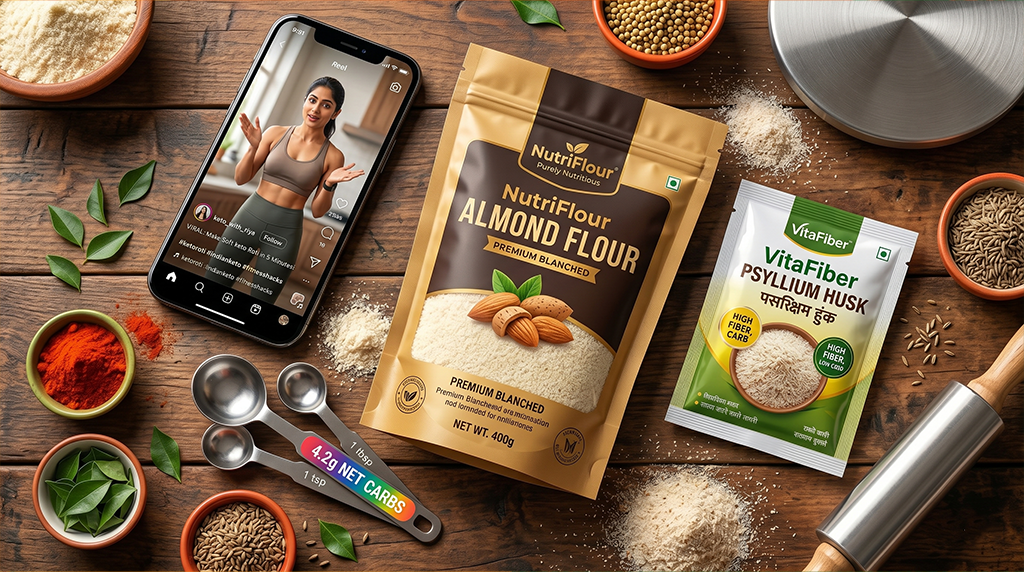
That’s why “keto roti” exploded online. Influencers promised a way to keep our desi thali intact while staying in ketosis. The star ingredient? Almond flour—naturally low in carbs (about 10g net per cup after fiber) and gluten-free. Mixed with psyllium husk (that magical fiber that mimics dough), it supposedly creates soft, foldable flatbreads with just 2-4g net carbs each. Sounds perfect, right? But here’s where the massive scientific misunderstanding creeps in. Many recipes ignore total calories, hidden fillers, or how our bodies actually process these “keto-friendly” swaps in a spice-heavy Indian meal. Plus, at Indian prices, almond flour turns a simple dinner into a luxury expense. The result? You feel virtuous scrolling Instagram, but your ketosis, wallet, and waistline suffer.
The Keto Roti Trend Explained: Timing, Hype, and Hidden Carbs
Unlike traditional rotis that rely on wheat gluten for stretch, these keto versions use fiber and fat to fake the texture. Popular Instagram recipes call for 1 cup almond flour, 2-3 tbsp psyllium husk, hot water, and salt. Roll it thin, cook on a tawa like normal. The pitch? “Tastes exactly like mom’s chapati—only keto!” And yes, lab numbers look good on paper: one roti might clock 4g net carbs versus 15g+ in wheat. But dig deeper and the lie unravels. Many viral versions add extra flours or binders that spike effective carbs. Almond flour itself is calorie-dense (around 600 calories per 100g), so even “small” rotis pack a punch that can stall fat-burning if you overeat. Plus, in real Indian kitchens, we slather ghee or pair with rich gravies—turning a “low-carb” swap into a high-calorie trap.
The trend hit peak frenzy around early 2026 when keto diet news went viral in India. Fitness pages, YouTube shorts, and even big health apps pushed “low-carb chapati” as the ultimate desi hack. But behind the filters? A misunderstanding of net carbs versus how fiber and fats behave in our uniquely spiced, high-fat Indian cooking style. It’s not that almond flour is evil—it’s that it’s being sold as a magic bullet when it’s often just an expensive detour.
The Big Debate: Does “Keto Roti” Help or Hurt Indian Keto Goals?
Here’s where it gets juicy—nutritionists, keto coaches, and real home cooks are split. Let’s break it down with facts.
The Pros: Why It Might Seem Like a Win
- Carb Control: Properly made versions slash net carbs dramatically. Studies on low-carb flours show almond + psyllium blends can keep blood sugar steadier than wheat, helping insulin sensitivity—huge for the 1 in 5 Indians dealing with prediabetes or PCOS.
- Texture Satisfaction: That psyllium gives genuine pliability. Many report finally enjoying sabzi-roti again without derailing ketosis.
- Gluten-Free Bonus: Perfect for the growing number of Indians with wheat sensitivity who still crave flatbreads.
Take Sneha’s story: Her 3-ingredient hack (we’ll reveal it soon) helped her drop 6 kg in two months while eating the same Hyderabadi curries she loves. “It felt like home, not diet food,” she beams.
The Cons: Where It Quietly Sabotages You
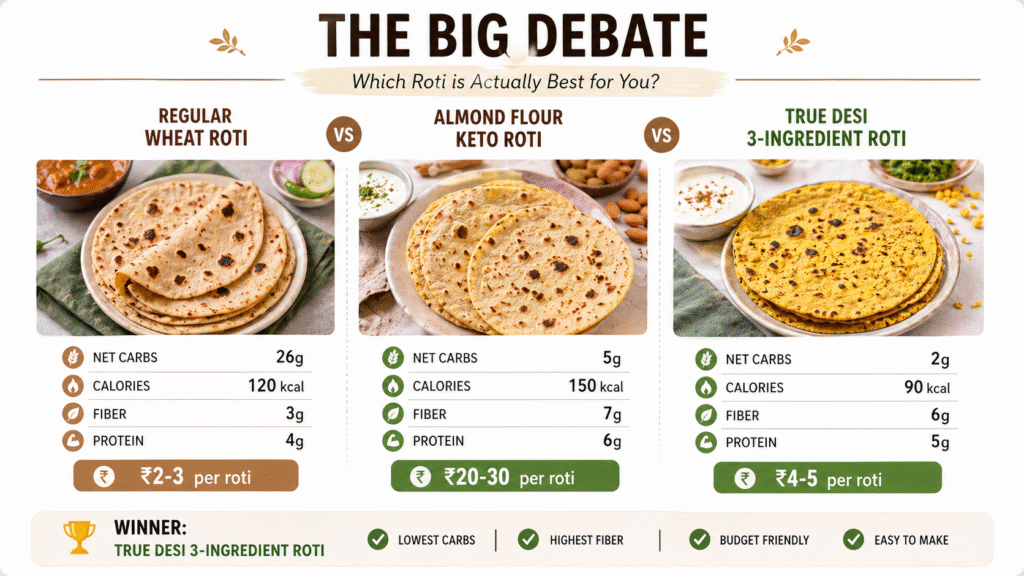
- The Almond Flour Scam: At ₹500-700 per kg in India, one batch can cost more than a week’s worth of regular atta. You’re not saving money—you’re paying a premium for hype.
- Calorie Creep and Overeating: Even with low net carbs, the high fat content means easy overconsumption. Research on LCHF baking shows these rotis can be 200+ calories each, leading to stalled weight loss despite “perfect macros.”
- Digestive Drama and Sustainability: Psyllium overload without proper hydration can cause bloating—the exact opposite of the “light and energetic” keto promise. For busy Indian lifestyles (office tiffins, family dinners, festivals), it’s hard to sustain.
Rahul learned this the hard way. His almond-flour obsession left him frustrated and broke. “I thought I was being healthy, but my body and budget disagreed,” he admits.
The Indian Twist: Keto Meets Tradition and Tight Budgets
Keto isn’t new to India—think of our grandmothers’ fasting days or pure ghee-laden meals. But our culture is built on abundance: hot rotis straight off the tawa, shared family thalis, and festive feasts. Imported keto trends clash hard here. Almonds aren’t everyday pantry staples like alsi (flaxseeds) or isabgol (psyllium, sold for pennies in every Ayurvedic shop). Our diets already lean on fiber-rich spices and dals, so swapping wheat for pricey nut flours feels disconnected and unsustainable.
The real sabotage? The lie convinces you that only expensive imports work, ignoring cheaper, time-tested desi ingredients that deliver true low-carb magic without the markup. A 12-rupee packet of isabgol from your local kirana store can make dozens of rotis. That’s the cultural fix we’ve been missing.
Real Stories: Triumphs, Tumbles, and Taste Tests from Indian Kitchens
Let’s hear from folks who’ve lived it.
- Vikram, 38, Bengaluru: Swore by almond flour keto roti for his corporate health kick. Lost 4 kg initially but plateaued hard. “It tasted okay but cost me ₹300 weekly. Switched to the desi hack and dropped another 8 kg—plus my wife loves it now.”
- Meena, 26, Mumbai: Tried every IG recipe during her PCOS struggle. “The rotis were expensive and made me constipated. The ₹10 hack changed everything—soft, cheap, and my hormones finally stabilized.”
- Arjun, 31, Chennai: “I called it the keto roti lie after my third failed batch. Now I make the real version in 10 minutes. No more influencer FOMO.”
These stories prove one thing: the popular version isn’t a total myth, but it’s not the hero we were sold. The right tool—simple, desi, affordable—makes all the difference.
The Truth Revealed: Safe Keto Roti Hack – Your 3-Ingredient Desi Recipe for ₹10
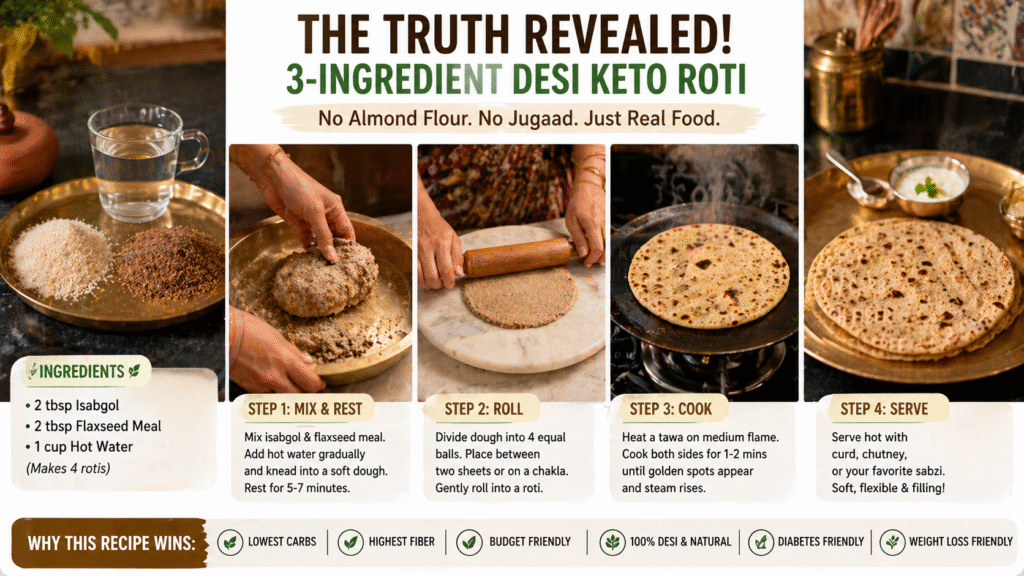
Ready to ditch the lie? Here’s the verified, budget-friendly 3-ingredient desi keto roti that actually delivers: isabgol (psyllium husk powder), alsi ka atta (flaxseed meal), and hot water (with optional salt). Total cost for 8-10 rotis? Under ₹10. Net carbs? Around 1-2g per roti. Soft, tasty, and authentically Indian.
The 3-Ingredient Masala Base (for 8-10 rotis):
- 4 tbsp isabgol (psyllium husk powder) – the binding hero
- 3 tbsp alsi ka atta (roasted and ground flaxseeds) – for nutty flavor and omega-3s
- ½ cup hot water + pinch of salt (and 1 tsp ghee for rolling, optional but desi-approved)
Step-by-Step Guide:
- Mix the dry ingredients in a bowl.
- Slowly add hot water and knead into a soft, non-sticky dough (it firms up fast thanks to psyllium). Rest 5 minutes.
- Divide into balls, roll thin between plastic sheets (no tearing!).
- Cook on medium-hot tawa—30 seconds per side, brush with ghee if desired.
- Serve hot with paneer bhurji, egg curry, or your favorite low-carb sabzi.
Pro tip: Roast the flaxseeds lightly for that fresh desi aroma. The dough behaves like wheat once you get the water ratio right—practice once and you’re golden.
Desi Diet Hacks: Pairing Your New Keto Roti Like a Pro
What you eat alongside matters. Here’s a full day of Indian keto meals built around your new rotis:
- Breakfast: Keto roti with scrambled eggs, spinach, and green chilies.
- Lunch: Roti + chicken curry or soya chunks masala + cucumber raita.
- Snack: A small roti with paneer bhurji or roasted alsi chutney.
- Dinner: Light roti with dal tadka (made creamy with cream, not water) and bhindi fry.
Steer clear of sugary chai, deep-fried sides, or overdoing ghee if calories are your focus. Nourish smart—don’t punish.

Wrapping It Up: To Roti or Not to Roti?
So, is the “keto roti” you’ve been making a lie or a lifeline? It’s neither black nor white. For some, almond flour versions offer a convenient entry point. For most Indian homes, though, they’re an expensive misunderstanding that sabotages budgets, stalls progress, and leaves you craving authenticity. The real game-changer is simple, local, and ridiculously cheap—the 3-ingredient desi hack that brings real rotis back to your keto table without the drama.
If this story has you fired up (or hungry), head to your kitchen tonight. Grab that packet of isabgol and alsi from the shelf, give the hack a shot, and watch what happens. You deserve rotis that work with your life, not against it. What’s your take—have you fallen for the keto roti hype? Tried a desi hack yet? Drop your stories, tweaks, and wins in the comments below. Share this with that one friend still buying almond flour by the kilo, and subscribe for more myth-busting desi health hacks that actually deliver. Your thali—and your goals—will thank you.
You May Like This
1



Advertisement

You May Like This








Advertisement
Advertisement
Advertisement