

Advertisement

- Updated on April 15, 2026
- IST 3:33 pm
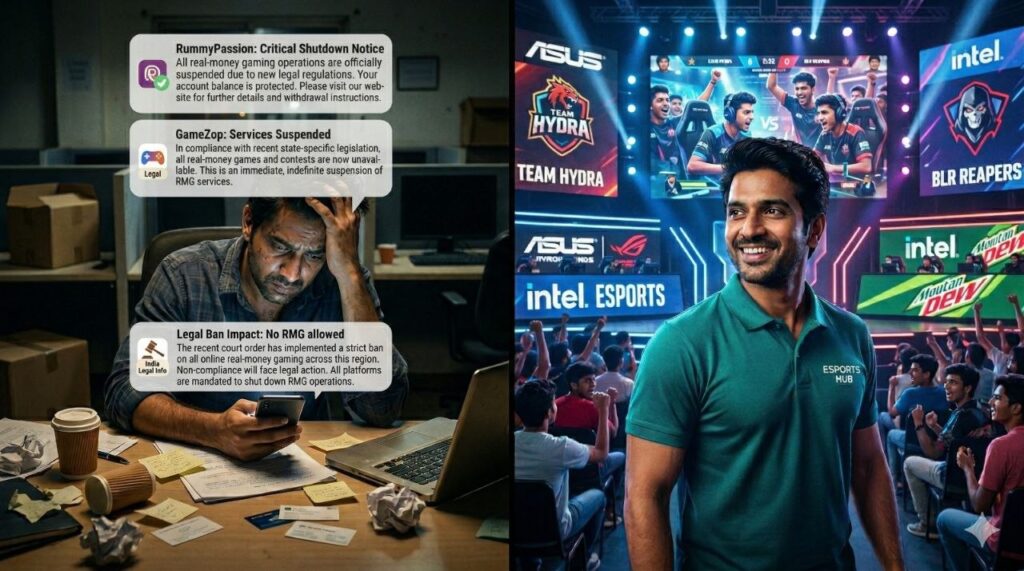
Imagine this: Vikram, a 34-year-old founder of a once-thriving fantasy cricket app in Hyderabad, had built his startup from a small garage team into a platform with over two million users. Real-money contests during IPL season were pouring in lakhs every week. Then came the PROGA crackdown in late 2025. Overnight, cash games vanished. His investors pulled out, the team of 45 was slashed to 12, and Vikram sat in his empty office staring at withdrawal requests flooding in. “We were building an empire on skill and excitement,” he later told a close friend over chai, voice heavy with exhaustion. “Now it feels like the game ended before the final over.”
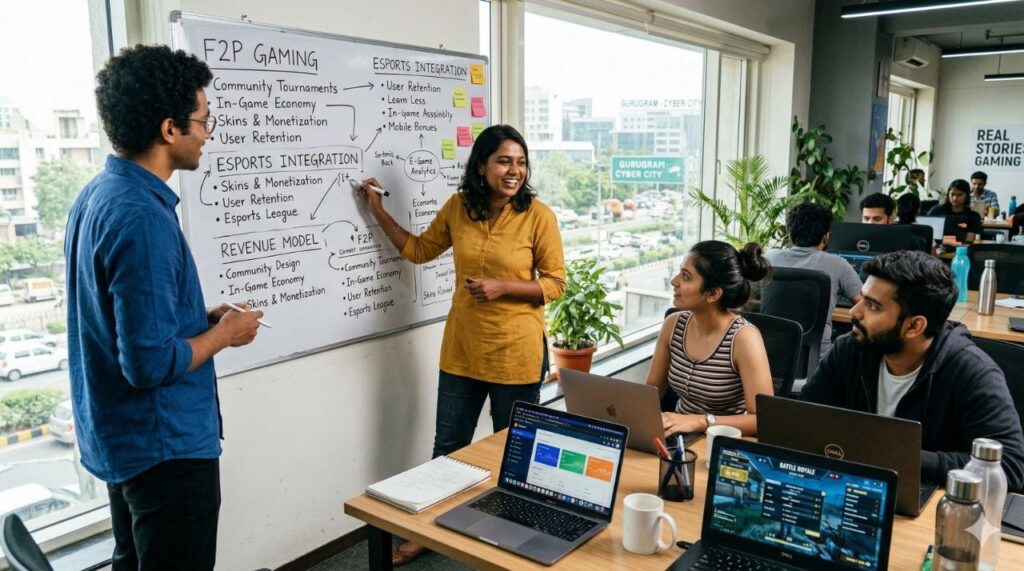
Now, picture Priya, 29, a sharp entrepreneur from Bengaluru who ran a similar skill-based gaming platform. When the ban hit, she didn’t panic. Instead, she quickly rebranded to a free-to-play esports hub, partnered with local colleges for tournaments, and added in-app purchases for cosmetics and leaderboards. Six months later, her daily active users have doubled, brands are lining up for sponsorships, and she’s even eyeing global esports leagues. “The ban didn’t kill gaming—it forced us to get creative,” she says with a spark in her eyes. “We’re building communities now, not just cash pools.”
So, what’s the real story? Real-money gaming is dead — here’s how Indian gaming companies are reinventing themselves to survive. With the Promotion and Regulation of Online Gaming Act (PROGA) 2025 enforcing a complete real-money gaming ban India, operators have had to scramble. This blog unpacks the gaming business pivot, the PROGA compliance strategy, the rise of skill-based gaming India and esports business model, real-life adaptations in the Indian gaming industry 2026, and practical ways companies (and even gamers) can thrive in this new era. We’ll explore the challenges, the opportunities, and desi-inspired strategies that are reshaping digital entertainment. Let’s dive in and see how the game is changing.
Understanding the PROGA Ban: The End of an Era
First, let’s set the stage. The online gaming regulation impact hit hard in August 2025 when Parliament passed PROGA. This central law draws a firm line: no more real-money games online—whether they’re based on skill, chance, or a mix. Fantasy sports, rummy, poker, casual cash contests—everything involving entry fees and cash prizes got the axe. The Act bans not just the games but also advertising, promotion, and any financial transactions tied to them. Banks and payment gateways were told to block related flows, and platforms faced hefty penalties for non-compliance.
The goal? Protect young Indians (especially the 15-45 crowd glued to phones) from addiction, huge financial losses, cyber fraud, and the darker side of Indian cyber crime links. But here’s the smart part: PROGA didn’t ban gaming itself. Non-monetary games, pure skill-based formats without cash stakes, educational titles, and esports got the green light. The government even set up an Authority to promote and regulate safe digital play. Think of it like a referee blowing the whistle on high-stakes betting while keeping the stadium open for friendly matches and pro leagues.
For companies, this was a seismic shift. An industry once worth billions suddenly saw its core revenue model outlawed. Many platforms had to shut down paid contests almost overnight, leading to massive revenue drops—some reported losses of up to 95%. Yet, as the dust settled, the survivors started rewriting the rules of engagement.
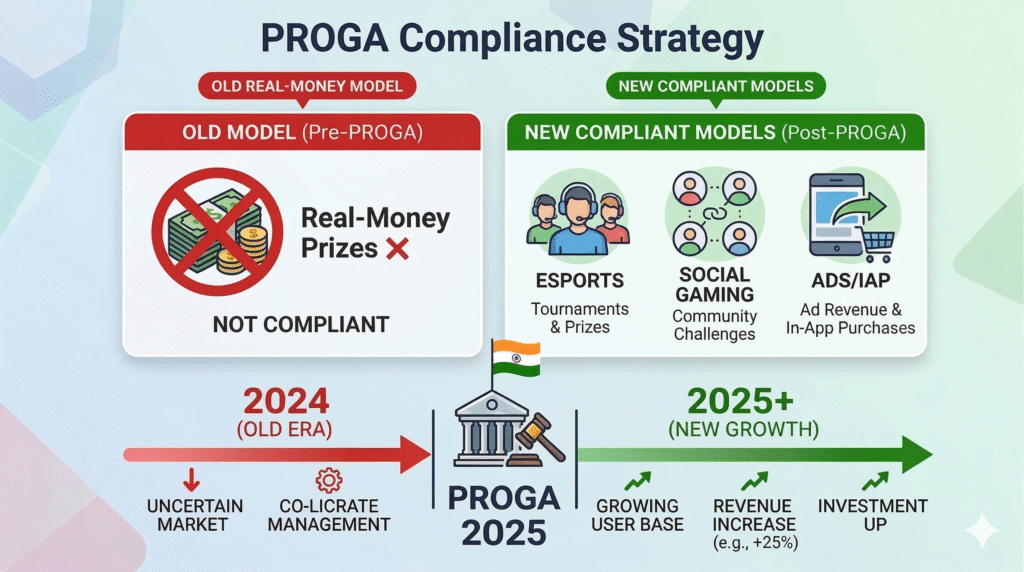
The Pivot Playbook: Reinventing the Business Model
Unlike the old days when entry fees funded everything, today’s successful companies are betting on engagement, community, and new streams. Popular strategies include:
- Free-to-Play (F2P) with Smart Monetization: No cash prizes, but in-app purchases for skins, boosts, or premium passes. Ads from brands targeting young gamers bring in steady income.
- Esports and Competitive Leagues: Turning casual players into spectators and pros. Tournaments with sponsor-backed prize pools (non-entry-fee) are booming.
- Social and Educational Gaming: Fun, shareable games focused on friends, learning, or cultural twists—like desi mythology quizzes or cricket strategy simulators.
- Global Expansion and Diversification: Some moved operations to markets like the US or Southeast Asia where rules are friendlier, while others branched into fintech, content creation (micro-dramas, streaming), or even AI-powered game development.
The pitch? Gaming is no longer about quick wins but long-term loyalty. It’s like shifting from a street-side matka game to a full-blown cricket academy—building skills, fans, and sustainable growth.
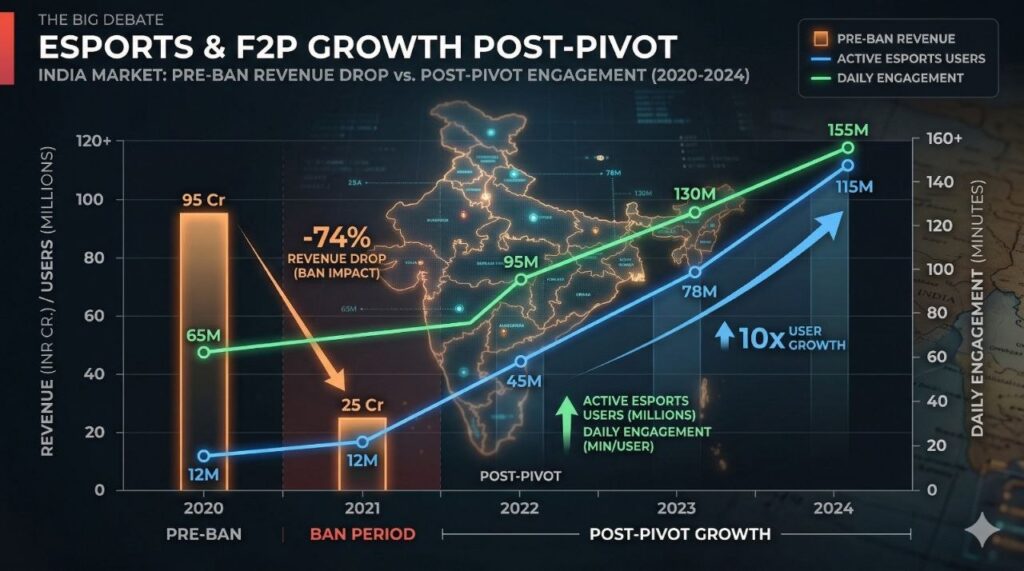
The Big Debate: Innovation Booster or Industry Killer?
Here’s where opinions clash—founders, investors, and experts don’t all see eye to eye.
The Pros: Why This Pivot Could Spark a Golden Era
- Safer, More Sustainable Growth: Without the addiction risks of real-money stakes, platforms can focus on genuine fun. User retention is rising as trust builds. Early data shows esports viewership and F2P engagement climbing fast.
- Creative Explosion: Companies are innovating like never before—AI-driven personalized games, vernacular content in Hindi, Tamil, or Bengali, and crossovers with Bollywood or cricket stars.
- Esports Boom: Recognized as a sport, it’s attracting big sponsors, creating jobs in coaching, streaming, and event management. India could soon export talent globally.
Take Priya’s story: her esports pivot not only saved her company but created 20 new roles in content and community management.
The Cons: Where the Pain Is Real
- Massive Disruption and Job Losses: Thousands were laid off across Hyderabad, Bengaluru, and Gurugram hubs. Revenue evaporated for many, forcing shutdowns or drastic cuts.
- Talent and Investor Flight: Top developers and marketers are moving abroad or switching industries. Venture capital that once flooded in has dried up, making funding tougher.
- Underground Risks: Some users shifted to offshore illegal sites, potentially worsening the very problems PROGA aimed to fix.
Vikram’s experience highlights this: “We lost good people and years of momentum. The pivot feels like starting from scratch.”
The truth lies somewhere in the middle. While short-term pain is undeniable, long-term potential for a healthier, more innovative gaming entrepreneurship India looks promising—if companies adapt wisely.
The Indian Twist: Gaming Meets Desi Roots
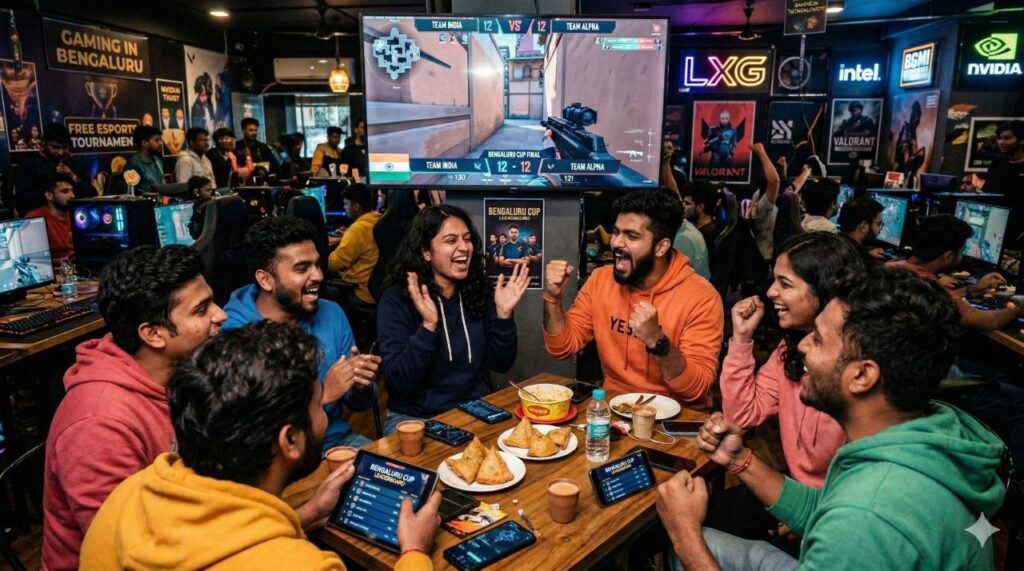
Gaming isn’t new to us Indians. From Ludo nights during festivals to friendly IPL predictions and even traditional carrom or gilli-danda, play has always been part of our culture. The digital boom supercharged it with mobile-first access and UPI ease. But PROGA enforcement is pushing a return to the joy of play without the financial sting.
Our young audience loves cricket, Bollywood, and regional stories—perfect for new formats. Companies are weaving in local flavours: fantasy teams without cash, esports tournaments tied to festivals like Diwali or Pongal, or games celebrating Mahabharata strategy. It feels less like a foreign import and more like an extension of our vibrant street-play culture, now scaled to millions via apps.
Real Stories: Triumphs and Tumbles
Let’s hear from those in the trenches.
- Dream Sports (Dream11): The fantasy giant shut all paid contests overnight. They pivoted hard to free-to-play social formats and even piloted wealth management tools. Users stayed for the community, and brand tie-ups kept the lights on.
- WinZO: Removed real-money elements quickly, expanded to international markets like the US, and added micro-drama content alongside casual games. Their user base stabilized through fun, non-stake play.
- Smaller Startups in Bengaluru: One team rebranded as an esports academy, partnering with colleges for free tournaments. Another focused on AI educational games for school kids—turning regulation into opportunity.
These tales show one thing: the ban isn’t the end. It’s a reset button—how you press it decides your future.
Smart Pivots for Gaming Companies: Tips to Get It Right
Thinking of adapting your platform or starting fresh? Here’s how to stay in the game:
- Start Small and Test: Launch F2P versions of your hit games first. Track engagement metrics like session time before scaling.
- Focus on Community First: Build loyalty programs, leaderboards, and social features. Turn players into fans who stick around.
- Embrace Esports Early: Host or sponsor non-cash tournaments. Partner with streamers and colleges to grow talent pipelines.
- Monetize Creatively: Use ads, sponsorships, in-app cosmetics, and premium subscriptions. Avoid anything that smells like wagering.
- Go Vernacular and Local: Create content in regional languages. Tie into Indian festivals, cricket, or mythology for instant connect.
- Seek Expert Guidance: Consult legal pros on PROGA compliance and explore government support for esports development. Diversify into related areas like content or fintech if needed.
Desi Innovation Hacks: Thriving in the New Gaming Landscape
What works best in India’s unique setup? Here are practical, homegrown strategies:
- Cricket-to-Esports Bridge: Turn IPL passion into free fantasy leagues or strategy simulators with rewards like virtual badges or merch.
- Festival Gaming Drops: Launch limited-time events around Diwali or Holi with shareable, non-monetary challenges—perfect for viral growth.
- Mobile-First AI Twists: Use affordable tech for personalized games in Hindi or Tamil that teach skills while entertaining.
- Brand and Influencer Alliances: Team up with cricket stars or YouTubers for sponsor-backed free tournaments instead of cash pools.
- Community Hubs: Create in-app or offline meetups (cafes, colleges) blending digital and real-world play.
Steer clear of any grey-area workarounds. Focus on value, fun, and trust—nourish your audience, don’t chase quick bucks.
Wrapping It Up: A New Chapter for Indian Gaming
So, is the real-money gaming ban India a death sentence or a rebirth for the industry? It’s not black-and-white. For some companies, it’s been a brutal wake-up call with tough losses and tough choices. For others, it’s the spark that ignited fresh ideas, stronger communities, and a more sustainable digital entertainment pivot. The difference lies in agility, creativity, and a willingness to put players first.
As we move through 2026, the Indian gaming industry is proving resilient. Esports is rising, innovation is flowering, and young Indians are discovering gaming as pure joy again. If you’re a founder, gamer, or just someone who loves a good match, now’s the time to get involved—responsibly and excitedly.
What’s your take? Has the ban affected your favourite apps, or have you discovered cool new free-to-play or esports experiences? Drop your story in the comments below—let’s swap notes, celebrate the wins, and build a brighter gaming future together. Your insights could inspire the next big pivot!
You May Like This
1


Advertisement
You May Like This








Advertisement
Advertisement
Advertisement