Advertisement

- Updated on April 15, 2026
- IST 3:18 am
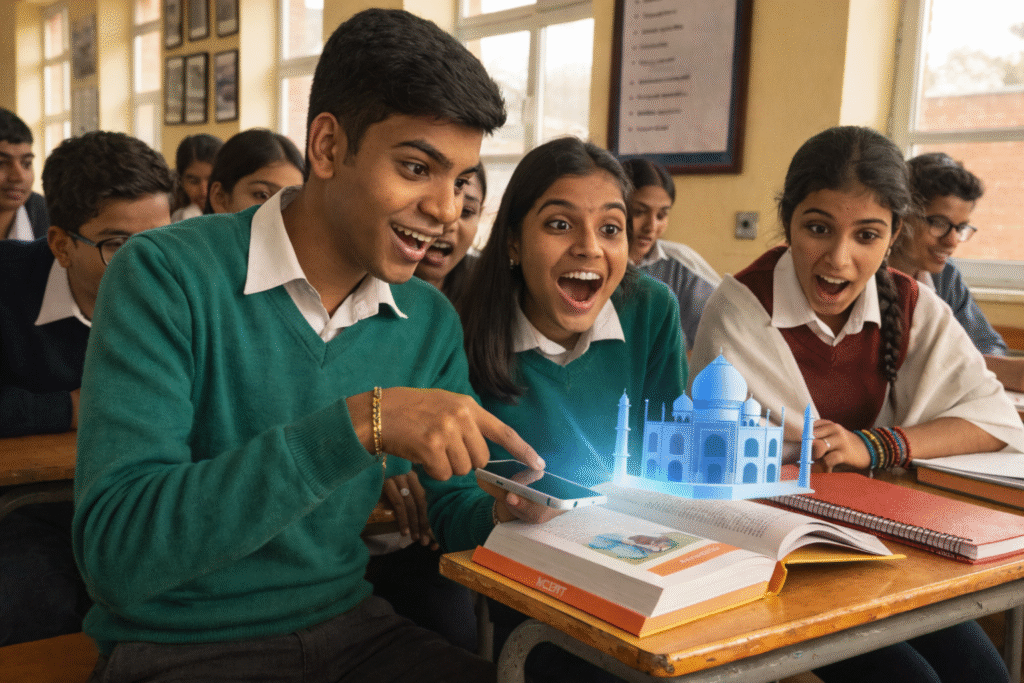
Imagine this: Ravi, a 15-year-old from a small town in Uttar Pradesh, sits hunched over his Class 10 science textbook, staring at a flat diagram of the human heart. No matter how many times he reads the description, the chambers and valves just don’t click. He’s frustrated, doodling in the margins, wondering if biology is just meant to be memorized and forgotten. Fast forward a few months, and Ravi points his smartphone at the same page. Suddenly, a 3D model of the heart pops up on his screen, beating in real time. He rotates it, zooms in on the aorta, and watches blood flow through animations. “This is like magic!” he exclaims to his sister, finally grasping how the circulatory system works.
Now, picture Priya, 22, a college student in Bengaluru preparing for her teaching certification. She remembers her own school days filled with rote learning from NCERT books, but now she’s excited about the future. As part of a pilot program, she scans a history page on ancient Indus Valley civilizations, and virtual ruins appear, letting her “walk” through Mohenjo-Daro with interactive labels on artifacts. “This changes everything,” she thinks. “Kids won’t just read about history—they’ll live it.”
So, what’s the deal? Is augmented reality (AR) about to turn those familiar NCERT textbooks into portals of interactive wonder? With the Indian government’s ambitious push under the National Education Policy (NEP) 2020, yes—it is. By 2026, millions of students could be experiencing augmented reality in education, where AR NCERT markers embedded in pages bring static content to life. This isn’t sci-fi; it’s the future of textbooks, a government EdTech initiative blending Digital India with interactive learning. In this blog, we’ll explore the plan, its game-changing potential, the hurdles ahead, and real insights from those on the ground. Whether you’re a student, parent, or educator aged 15-45, let’s unpack how this CBSE news 2026 could reshape learning in our desi classrooms.
Understanding Augmented Reality: Beyond the Buzzword
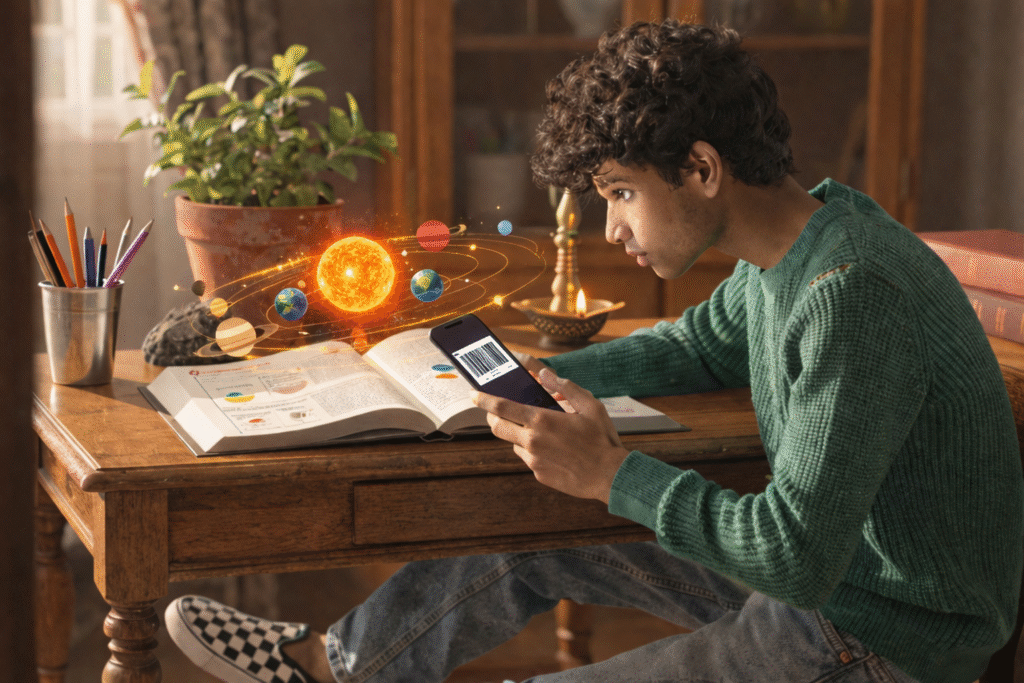
Let’s start with the basics, shall we? Augmented reality isn’t some fancy gadget from a Bollywood sci-fi flick—it’s technology that overlays digital elements onto the real world. Think Pokémon GO, but for education. In simple terms, AR uses your phone’s camera to detect markers (like QR codes or special images) in a book and superimposes 3D models, videos, or animations on top. For NCERT books, this means pointing your device at a diagram of the solar system, and voilà—planets orbit right before your eyes.
Why does this matter for Indian students? Traditional textbooks have served us well since independence, but in a world dominated by smartphones and apps, they’re starting to feel outdated. Remember cramming formulas for physics exams? AR turns passive reading into active exploration. It’s like having a personal tutor in your pocket, explaining concepts through visuals that stick. Research from global studies, like those from Harvard’s Graduate School of Education, shows that immersive tech boosts retention by up to 75% because it engages multiple senses. In India, where over 250 million students rely on NCERT curricula, this could bridge gaps in understanding complex subjects like math, science, and history.
But AR isn’t new to education worldwide. Countries like the US and Singapore have integrated it for years—think apps that let kids dissect virtual frogs without the mess. Here in India, the government’s plan builds on early experiments. The NCERT’s e-Pathshala app, launched under the Ministry of Education, already offers AR features for select books, energizing pages with animations. Now, with NEP 2020 emphasizing experiential learning, the scale is exploding. This isn’t just about tech; it’s about making education equitable and exciting for our diverse, young population.
The Government's Grand Plan: AR Markers in Every NCERT Page
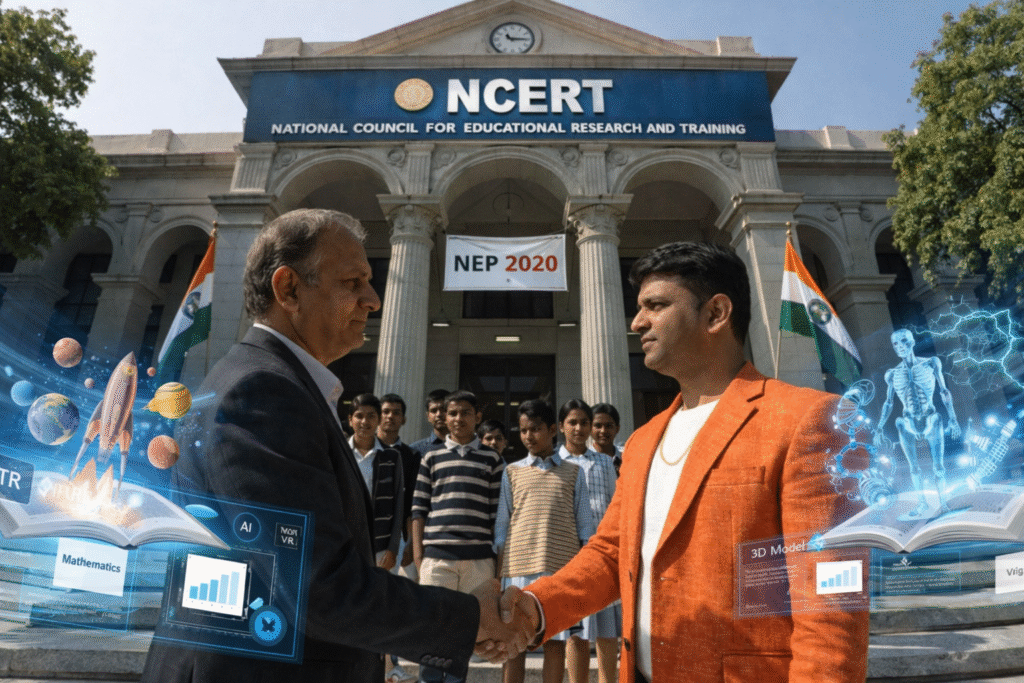
Here’s where it gets exciting—the Indian government’s blueprint to embed AR in NCERT textbooks by 2026. Announced as part of Digital India and NEP 2020, this initiative aims to transform static books into dynamic tools. The big news? A landmark partnership between NCERT and EON Reality, a global leader in XR (extended reality) tech. Signed recently, this MoU plans to convert NCERT content into immersive lessons for 89 million students initially, scaling to 265 million K-12 learners nationwide.
How does it work? By 2026, new NCERT editions will include AR markers—subtle codes or images printed on pages. Students download a free app (like an upgraded e-Pathshala), scan the marker, and access 3D models, interactive simulations, and even quizzes. For instance, in a Class 8 geography book, a map of the Himalayas could trigger a virtual tour, showing tectonic plates shifting in real time. Science diagrams? Animated chemical reactions. History timelines? Pop-up videos of freedom fighters narrating their stories.
The government isn’t stopping at books. Virtual labs for AR/VR are being developed, approved in the 2025-26 budget under Samagra Shiksha. This ties into broader EdTech pushes, like PM e-Vidya, which promotes digital content. Multilingual support is key—content in Hindi, Tamil, Bengali, and more regional languages ensures no one is left behind, aligning with India’s linguistic diversity. The Ministry of Education envisions this as a “revolutionary effort” to turn passive listeners into active learners, with pilots already reaching thousands in demonstration schools.
Critics might wonder: Is this feasible by 2026? The timeline is ambitious, but with NEP’s roadmap, it’s gaining momentum. NCERT’s director has highlighted how this supports skill-building for Viksit Bharat 2047. Plus, collaborations with tech firms ensure scalability. Imagine rural kids in Rajasthan using affordable smartphones to explore quantum physics— that’s the dream.
The Big Debate: Does AR Revolutionize Learning or Create New Hurdles?
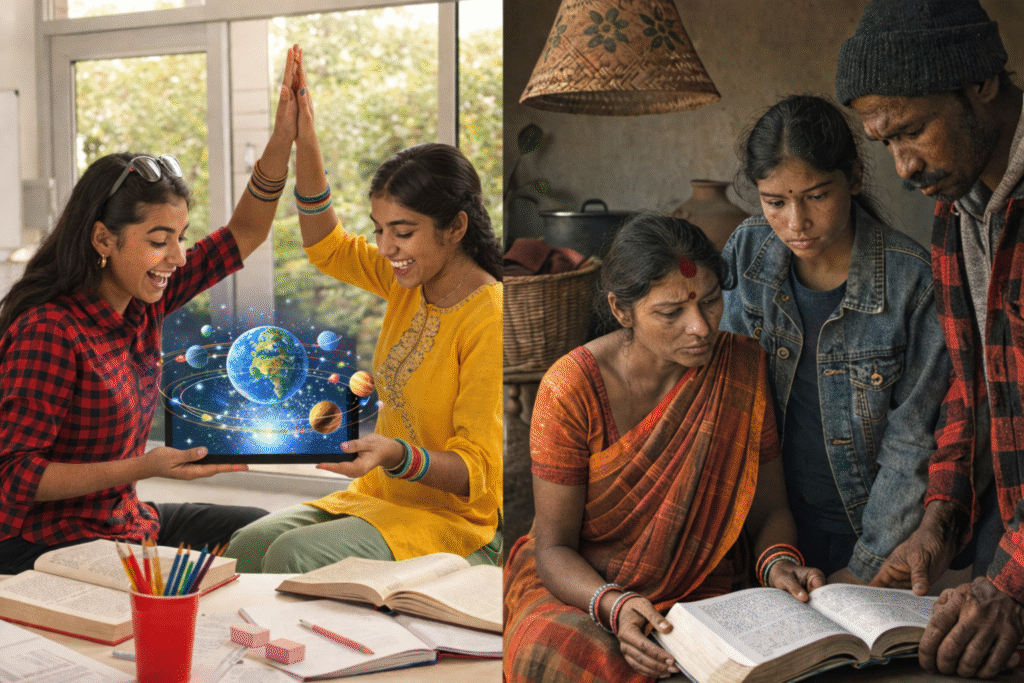
Like any innovation, AR in NCERT books sparks debate. Let’s weigh the pros and cons, drawing from expert views and early trials.
The Pros: A Leap into Interactive Learning
- Enhanced Engagement: Boredom begone! AR makes lessons fun, like turning a biology class into a safari. Studies from UNESCO show interactive tools reduce dropout rates by 20% in developing nations. For Indian teens juggling exams and extracurriculars, this could make studying addictive.
- Better Comprehension: Visual aids help with abstract concepts. A PwC report on EdTech notes AR improves STEM understanding by 35%. Think of dyslexic students or visual learners—3D models level the playing field.
- Personalized Pace: Apps track progress, offering tailored quizzes. This supports NEP’s focus on competency-based education, helping slow learners catch up without embarrassment.
Take the case of a pilot in Kerala schools: Students using AR for math reported 40% better scores in geometry, as rotating shapes made angles intuitive. Parents raved about kids voluntarily “studying” via phones.
The Cons: Challenges in a Diverse India
- Digital Divide: Not everyone has a smartphone. In rural areas, where 65% of Indians live, internet access is spotty. A 2025 ASER report highlights only 45% of households have reliable data—could AR widen inequalities?
- Teacher Training: Educators need upskilling. Many in government schools aren’t tech-savvy; without workshops, AR could flop. Plus, over-reliance on tech might erode critical thinking if not balanced.
- Privacy and Cost: Apps collect data—how secure? Initial setup might burden schools, though the government promises free access.
In a balanced view, experts like those from IIT Delhi argue AR’s benefits outweigh risks if implemented inclusively. The plan includes subsidies for devices via Digital India, but execution is key.
The Desi Twist: AR Meets India's Cultural Mosaic
India’s education isn’t one-size-fits-all—it’s a tapestry of languages, traditions, and challenges. AR fits beautifully here. Think festivals: Scanning a page on Diwali could show virtual rangoli designs with cultural explanations. Or Sanskrit texts coming alive with animated epics from the Mahabharata, resonating with our storytelling heritage.
Under NEP 2020, this ties into “Indian Knowledge Systems,” blending ancient wisdom with modern tech. For urban millennials in Mumbai or Gen Z in Delhi, it’s a cool fusion—learning about Vedic math via AR simulations. But in villages, where electricity flickers, community centers with shared tablets could democratize access. The government’s multilingual approach honors our diversity, making AR feel homegrown, not imported.
Real Stories: Triumphs and Tumbles from Early Adopters
Let’s hear from those testing the waters. In a Delhi government school pilot, 16-year-old Aarav shared: “I hated chemistry until AR showed molecules bonding like a dance. Now, I top the class!” His teacher added, “Kids who zoned out are now asking questions—it’s transformative.”
Contrast with Sunita, a 35-year-old parent in Bihar: “My daughter loves the animations, but our phone is old, and data costs eat our budget. We need better support.” A teacher in Tamil Nadu echoed: “Training helped, but slow internet frustrates everyone.”
These anecdotes, from NCERT’s VR labs reaching millions, show promise amid teething issues. As one educator put it, “AR isn’t a wand—it’s a tool we must wield wisely.”
Safe AR Adoption: Tips to Make It Work for You
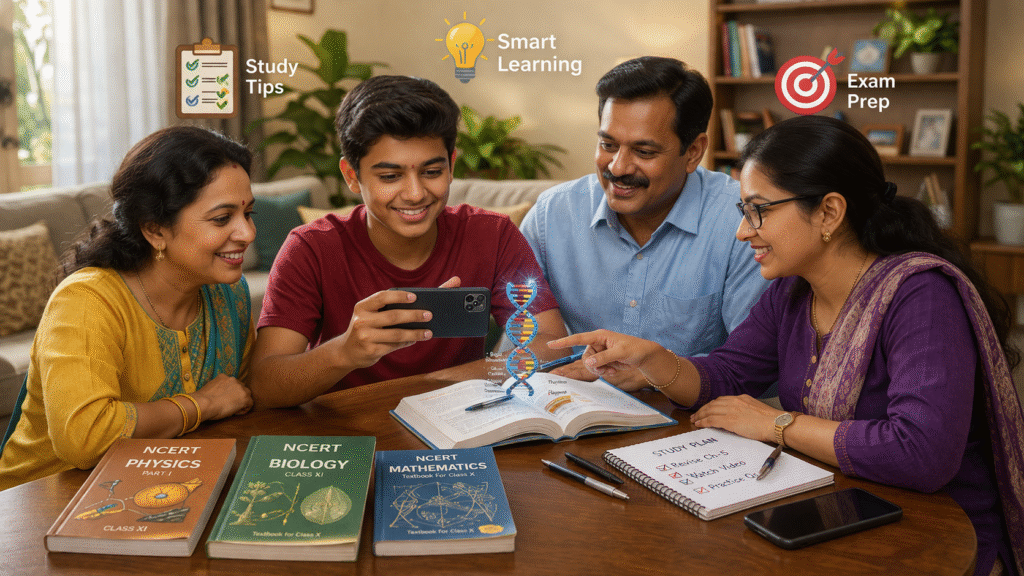
Ready to embrace this? Here’s how students, parents, and teachers can prepare:
- Start Simple: Download e-Pathshala now and try existing AR features. Familiarize yourself before the 2026 rollout.
- Device Check: Ensure a basic smartphone with camera. Apps like Google Lens can simulate AR for practice.
- Stay Connected: Join Digital India portals for free resources. Parents, monitor screen time to avoid fatigue.
- Upskill Together: Teachers, attend NEP workshops. Students, explore free AR apps on Play Store for subjects like history.
- Bridge Gaps: Advocate for school tech clubs. If rural, push for community hotspots.
- Balance Act: Use AR as a supplement, not replacement. Combine with group discussions for holistic learning.
EdTech Hacks: Integrating AR into Daily Study
What does a day with AR NCERT look like? For breakfast reading, scan a poem and hear it recited with visuals. Lunch break? Simulate physics experiments safely. Evening revision: Interactive quizzes with instant feedback.
Steer clear of overdependence—mix with notebooks and debates. Nourish curiosity, don’t overload screens.
Wrapping It Up: A Bold Step into Tomorrow's Classrooms
So, does the government’s AR plan revolutionize NCERT textbooks or stumble on realities? It’s not black-and-white. For many Indian youth, it’s a game-changer—unlocking interactive learning, fueling curiosity under Digital India. For others, it highlights divides we must bridge. The difference? Thoughtful rollout by 2026.
If this excites you, start exploring today. Parents, chat with schools about prep. Students, share your AR experiments below. Teachers, what’s your take? Drop a comment—let’s discuss and shape this future together!
You May Like This


Advertisement

You May Like This







Advertisement

Advertisement

Advertisement