
Advertisement

- Updated on April 15, 2026
- IST 2:51 am

Imagine this: Rohan, a 17-year-old from Delhi, used to love flipping through his science textbooks under the warm glow of his study lamp. But ever since classes went fully online post-pandemic, his days blur into endless Zoom sessions, assignment deadlines, and late-night cramming on his laptop. “I feel like a robot plugged into a socket,” he confides to a friend over WhatsApp. His eyes sting from screen glare, his motivation has tanked, and lately, he’s been skipping meals just to keep up. One day, the pressure snaps—he logs off mid-class, curls up in bed, and wonders if he’ll ever feel “normal” again.
Now, contrast that with Aisha, 22, from Bengaluru. She’s pursuing her engineering degree through a hybrid model, but the online component has been a game-changer for her. With flexible timings, she squeezes in yoga breaks and family time, turning potential burnout into balanced productivity. “Online learning lets me pace myself,” she shares in a Reddit thread. Her grades are up, and she’s even started a small side hustle designing apps. For her, the digital shift feels empowering.
So, what’s the real story? Is constant online learning a silent killer draining the mental health of Indian students, or could it be a tool for resilience if handled right? In a country where over 250 million kids are in school and EdTech platforms like Byju’s and Unacademy dominate, this “always-on” education is reshaping young minds—but not always for the better. Reports from the National Mental Health Survey and recent studies paint a grim picture: nearly 70% of Indian students report moderate to high anxiety levels, with online fatigue playing a starring role. In this blog, we’ll unpack the symptoms of digital learning burnout, explore its deep impacts on mental health, and share practical, desi-flavored strategies for a much-needed digital detox. If you’re a student, parent, or educator feeling the strain, let’s navigate this together and reclaim that spark.
Understanding the Rise of Online Learning in India: A Double-Edged Sword
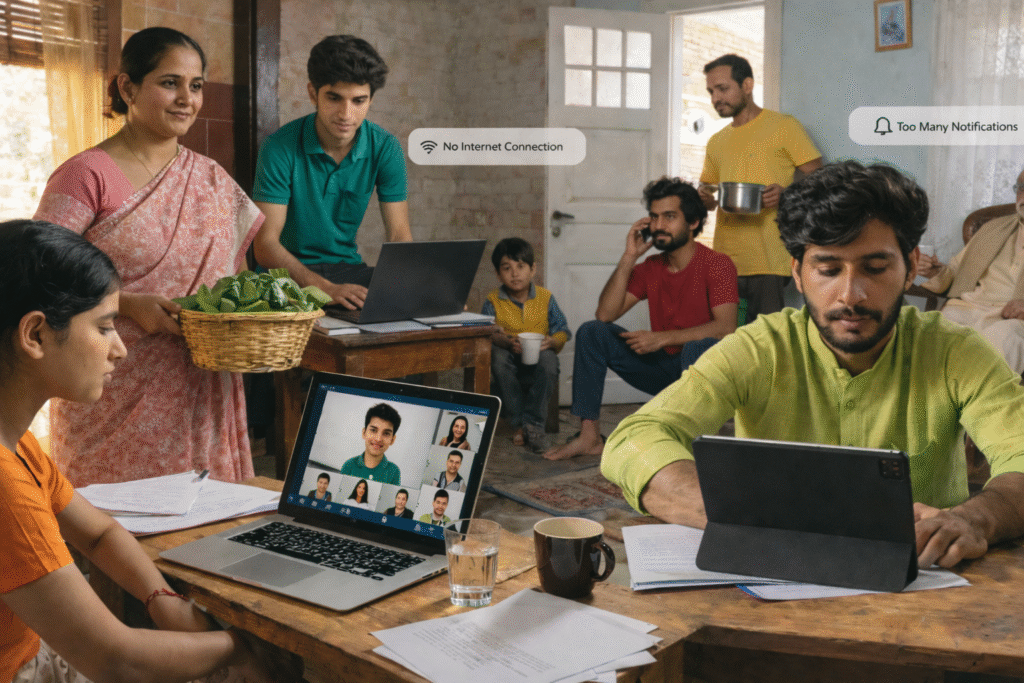
Let’s start at the basics. Online learning exploded during the COVID-19 pandemic, with schools shutting down and over 247 million children shifting to virtual classrooms almost overnight, as per UNICEF data. What began as a temporary fix has evolved into a permanent fixture—think live classes on Google Meet, recorded lectures on YouTube, and endless quizzes on apps like Kahoot. For many, it’s convenient: no commuting through Mumbai’s traffic or battling Delhi’s pollution. But beneath the surface, it’s creating a hormonal and emotional rollercoaster, much like how PCOS disrupts balance in the body.
In India, where education is often seen as the golden ticket out of poverty, the pressure is amplified. Students from rural areas juggle spotty internet on shared mobiles, while urban kids deal with back-to-back sessions that leave no room for play. A 2024 study in Procedia Computer Science analyzed 428 Indian students and found that factors like irregular class timings, teacher-centric lectures, and disrupted daily routines were major stressors. Add to that the lack of physical interaction—no cafeteria chats or playground banter—and you’ve got a recipe for isolation. It’s like being stuck in a virtual bubble, where the only “break” is scrolling Instagram, which often worsens the fatigue.
But why does this matter for mental health? Our brains aren’t wired for constant screen time. The blue light disrupts sleep cycles, leading to insomnia, while the barrage of notifications triggers dopamine hits that mimic addiction. Over time, this leads to “digital burnout”—a state of chronic exhaustion where students feel overwhelmed, cynical about studies, and detached from their goals. According to a 2025 report by the Indian Psychiatric Society, nearly 40% of adolescents cite stress and anxiety as top concerns, with online learning contributing significantly. It’s not just about feeling tired; it’s about a deeper erosion of well-being that can spiral into serious issues like depression or even suicidal thoughts, as evidenced by rising student suicide rates linked to academic pressure (NCRB 2023 data shows students account for a notable share).
The Hidden Toll: Symptoms of Digital Learning Fatigue and Burnout
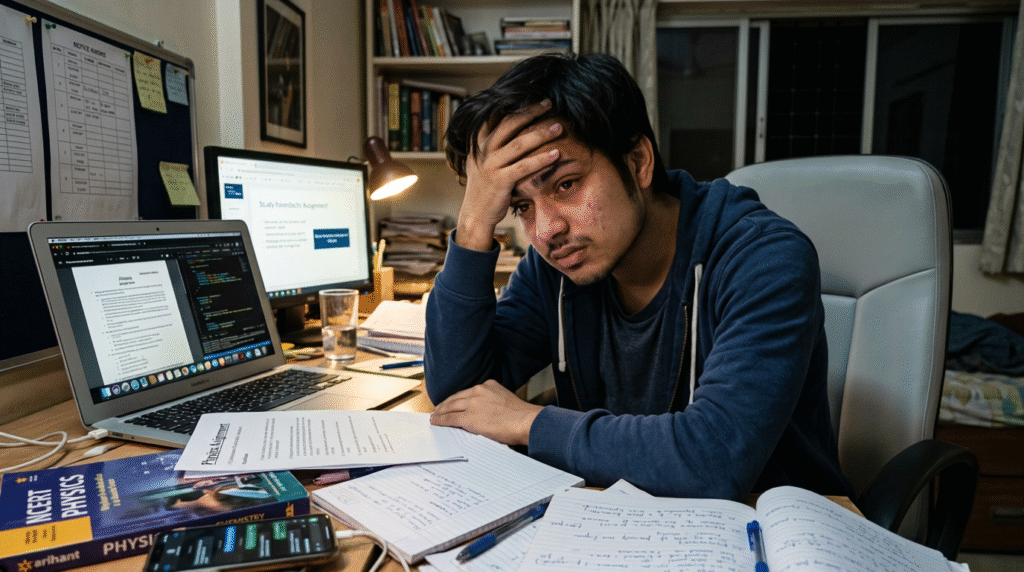
Picture your mind as a smartphone battery—online learning is like running multiple apps without charging. Eventually, it drains. Digital learning fatigue manifests in subtle ways at first, but if ignored, it builds into full-blown burnout. Here’s a breakdown of the red flags, drawn from real experiences and research.
First, the physical signs: Headaches from staring at screens, eye strain (hello, dry eyes and blurred vision), and backaches from slouching over laptops. A survey in the International Journal of Environmental Research and Public Health noted that students attending over four hours of online classes daily reported higher risks of depression and physical discomfort. In India, where many use mobiles for classes, this is exacerbated—think neck pain from hunching over a 6-inch screen.
Then come the emotional symptoms: Irritability, like snapping at your mom over small things, or a constant sense of dread before logging in. Anxiety creeps in—worrying about missing a deadline or freezing during a virtual presentation. Depression follows, with feelings of hopelessness: “What’s the point of all this studying if I can’t even focus?” A 2023 PMC study found 56.7% of Indian adolescents experiencing depression post-COVID, often tied to online isolation.
Burnout’s hallmark is emotional exhaustion—feeling drained even after a full night’s sleep. Students describe it as “running on empty,” with motivation plummeting. You might procrastinate on assignments, leading to guilt cycles. Social withdrawal is common too; without face-to-face interactions, friendships fade, amplifying loneliness. In extreme cases, it leads to “learned helplessness,” where students feel powerless, as highlighted in psychological theories during the pandemic.
But it’s not all doom. Some students thrive, using online tools to learn at their own pace. The key? Recognizing these symptoms early. If you’re nodding along, know you’re not alone—millions are in the same boat.
The Big Debate: Does Online Learning Help or Harm Mental Health?
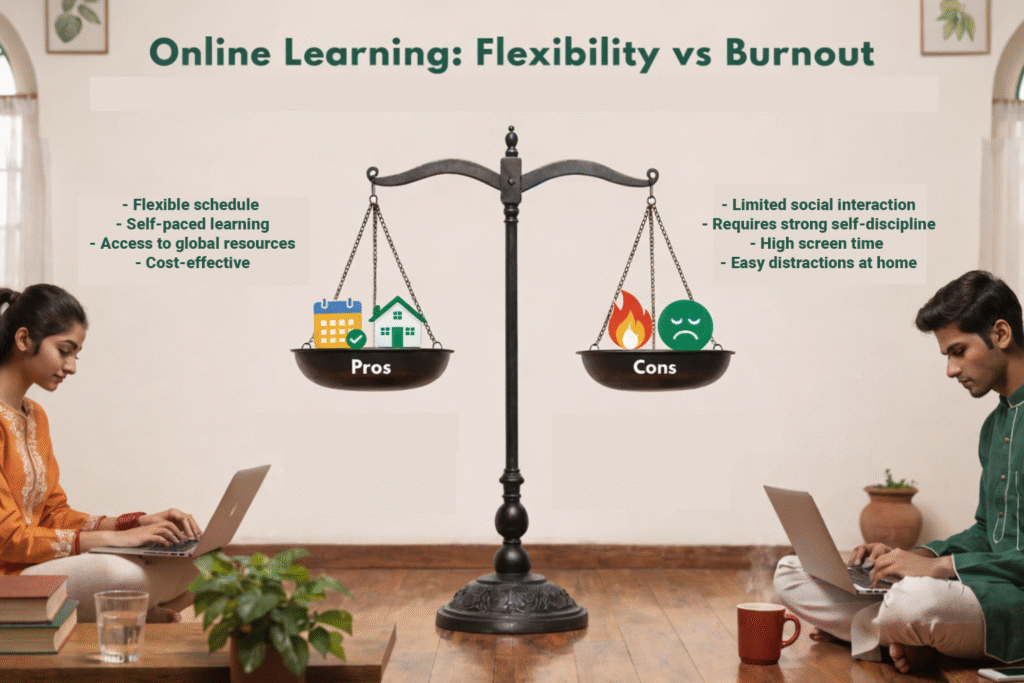
Experts and students are divided, but the evidence leans toward caution. Let’s weigh the pros and cons, backed by studies and real insights.
The Pros: When It Works Like a Charm
- Flexibility and Accessibility: For rural students or those with disabilities, online learning breaks barriers. A 2021 AJPOR survey of Indian university students praised it for allowing self-paced study, reducing commute stress. Imagine a girl from a small Rajasthan village accessing IIT-level lectures—empowering, right?
- Skill-Building: It fosters digital literacy, crucial in today’s job market. Some report better time management, leading to less overall stress. In Aisha’s case, blending online classes with hobbies kept her energized.
- Community Support: Platforms like Discord study groups can build virtual bonds, combating isolation for introverts.
Research from Semantics Scholar shows that when supported with good infrastructure, online education can lower perceived stress compared to rigid traditional setups.
The Cons: Where It Backfires Badly
- Overload and Isolation: Constant connectivity means no “off” switch. The same AJPOR study highlighted health issues like eye strain (common in 60% of respondents), headaches, and mental stress from poor internet. For many, it’s “social media fatigue” on steroids—endless pings erode focus.
- Inequality Amps Up Stress: Not everyone has a quiet study space or high-speed Wi-Fi. Students from low-income families juggle shared devices, leading to frustration and burnout. A Zenodo report from 2026 noted higher psychological distress in underprivileged groups during lockdowns.
- Psychological Strain: Elevated cortisol from stress disrupts sleep and mood. PMC data links prolonged online classes to 47.3% anxiety rates among teens. Burnout here isn’t just tiredness—it’s cynicism toward education, dropping grades, and in severe cases, dropout risks.
Rohan’s story echoes this: His 16-hour screen days left him irritable and detached, mirroring findings from Nature’s 2024 study on academic burnout factors like unclear expectations and lack of peer support.
Overall, while online learning has merits, its harms dominate for many Indian students, especially without balanced implementation.
The Indian Twist: Cultural Pressures Meet Digital Demands
In India, education isn’t just learning—it’s a family legacy, a societal badge. “Beta, padhai karo, warna life barbaad,” rings in many ears. Combine this with online learning, and it’s a pressure cooker. Traditional festivals like Diwali once meant breaks, but now, assignments loom even during holidays. Our carb-heavy diets and late-night chai sessions don’t help—poor nutrition fuels fatigue.
Kota’s coaching hubs exemplify this: Thousands cram for JEE/NEET online, facing isolation in PG rooms. Brut India stories highlight teens with “FOMO from social media,” comparing notes online and spiraling into burnout. Urban kids face “EdTech fatigue”—apps promising success but delivering overload. Rural students? Spotty networks mean missed classes, adding guilt.
Yet, there’s a silver lining in our culture: Community. Joint families offer emotional buffers, unlike Western individualism. Tweak online learning with desi wisdom—like incorporating pranayama for stress—and it could harmonize.
Real Stories: Triumphs and Tumbles from the Trenches
Let’s hear from those living it. These anonymized tales, inspired by Buzzfeed, YouTube, and PMC reports, show the spectrum.
- Karan, 19, Mumbai: Dove into online MBA prep with 10-hour sessions. Initial excitement faded into panic attacks. “I felt like failing every mock test,” he says. His doc advised breaks; now, he limits screens and runs marathons. “Burnout taught me balance.”
- Priya, 15, Chennai: School online classes plus tuition left her exhausted. “No friends, just screens,” she shares. Depression hit hard—skipping meals, withdrawing. Therapy and family talks turned it around; she now schedules “no-tech” evenings.
- Vikram, 24, Kolkata: Thrived in hybrid law classes. “Online lets me work part-time,” he beams. But he admits early burnout from ignoring sleep. Yoga helped; lost 5 kg stress weight, gained focus.
- Sneha, 16, Kota: In a YouTube doc, she describes suicidal thoughts from online coaching pressure. “Everyone’s competing virtually—it’s endless.” Counseling saved her; she switched to balanced study apps.
These prove: Burnout isn’t inevitable. It’s how you respond that counts.
Strategies for Digital Detox: Reclaiming Your Mental Space

Ready to fight back? Here’s a practical guide to detox and thrive.
- Set Boundaries: Treat online classes like office hours—log off post-class. Use apps like Forest to block distractions.
- Prioritize Self-Care: Sleep 7-9 hours; eat balanced meals with dal, veggies, and fruits. Avoid late-night scrolling—try chamomile tea instead.
- Move Your Body: Desk yoga or a quick walk combats stiffness. Studies show 30 minutes daily reduces anxiety by 20%.
- Build Connections: Schedule video calls with friends or join offline clubs. Combat isolation with real talks.
- Mindful Tech Use: Blue-light glasses for eyes; Pomodoro technique (25-min study, 5-min break) for focus.
- Seek Help: Talk to counselors—many schools offer free sessions. Apps like YourDOST provide anonymous support.
- Parental Involvement: Moms and dads, encourage hobbies over grades. Create “family unplug” times.
Desi Wellness Hacks: Indian-Flavored Tips for Student Well-Being
Make detox fun with cultural twists:
- Morning Ritual: Start with surya namaskar and tulsi tea—boosts energy without caffeine.
- Meal Plan: Breakfast like poha with nuts (steady blood sugar); lunch of roti-sabzi; evening snack of roasted chana. Ditch junk for homemade khichdi on tough days.
- Stress Busters: Listen to bhajans or Bollywood playlists during breaks. Meditation apps with Hindi guides work wonders.
- Community Vibes: Join local study groups or temple youth circles for offline bonding.
Steer clear of comparison traps on Insta—focus on your journey.
Wrapping It Up: Breaking the Silence on Student Burnout
So, is constant online learning worsening mental health for Indian students? Often yes— with stats showing 50-70% facing anxiety and depression amid digital fatigue. But it’s not hopeless. By recognizing symptoms, balancing tech with life, and seeking support, we can turn the tide. You’re not just a student; you’re a human deserving joy beyond screens.
If this resonates, try one tip today. Shared a burnout story? Drop it in comments—let’s build a supportive community. Together, we can make education empowering, not exhausting. What’s your first detox step?
You May Like This



Advertisement

You May Like This








Advertisement

Advertisement

Advertisement