
Advertisement

- Updated on April 15, 2026
- IST 7:20 am

Imagine this: Arjun, a 32-year-old senior developer from Bengaluru, has spent the last eight years buried in code. Late-night debugging sessions, flawless algorithms, and a stack of certifications from Coursera—he’s the guy who fixes what others can’t. Yet, when promotion season rolled around in early 2025, he watched his junior colleague leap ahead. “I don’t understand,” he told his wife over filter coffee, “I write better code than anyone on the team.” Burnout crept in, appraisals turned lukewarm, and the layoff wave in IT giants left him updating his LinkedIn with a heavy heart. His technical brilliance? Undeniable. His career growth? Stuck in neutral.
Now, picture Neha, 28, a data analyst from Hyderabad who started exactly like Arjun—deep in SQL queries and Python scripts. But she noticed something the others missed: meetings where clients spoke in business jargon, not tech terms. She began joining cross-functional calls, learning to translate code into rupees and ROI. She practiced presenting in front of her mirror, joined Toastmasters on weekends, and even shadowed the product manager during lunch breaks. By mid-2025, Neha wasn’t just analyzing data—she was leading strategy sessions. Her salary jumped 65%, she now mentors juniors, and her calendar includes investor pitches instead of all-night deployments. “Code got me the job,” she smiles, “but these other skills got me the career.”
So, what’s the truth? In India’s booming yet brutally competitive tech industry—home to over 5 million professionals and counting—pure coding prowess is no longer enough. With AI automating routine tasks, global clients demanding more than deliverables, and companies slashing middle layers, non-tech skills have become the real differentiator. Is your LinkedIn profile screaming “expert coder” while your career quietly plateaus? Or are you quietly building the human edge that turns good engineers into indispensable leaders? In this blog, we’ll unpack the five must-have non-tech skills every Indian tech professional needs in 2025. We’ll dive into real-life stories from Pune cubicles to Gurgaon boardrooms, the Indian twists that make these skills uniquely challenging (and rewarding), and practical, desi-friendly ways to master them without quitting your day job. If you’re 15 to 45 and dreaming of that promotion, startup exit, or even switching to a product role, this is your wake-up call. Let’s get you future-proofed.
Understanding the Shifting Tech Landscape in India
First, let’s set the stage. India’s IT sector is a beast—projected to hit $350 billion by 2026, powering everything from global outsourcing to homegrown unicorns. But 2025 brought a reality check. AI tools like GitHub Copilot and low-code platforms started eating entry-level coding jobs. Layoffs at Infosys, TCS, and even product giants showed that “technical only” roles are shrinking. Meanwhile, clients in the US and Europe aren’t just asking for bug-free apps; they want solutions that drive revenue, comply with ethics, and adapt to market shifts overnight.
Think of it like a cricket match: your coding skills are the bat, but non-tech skills are the strategy, fielding, and captaincy that win the game. Without them, you’re just swinging hard in the nets while others score centuries. Research from NASSCOM and Deloitte in 2025 highlighted a glaring gap—over 70% of tech hires fail not because of weak code, but weak collaboration, poor business understanding, or inability to handle ambiguity. For young engineers fresh out of tier-2 colleges and mid-career folks juggling family expectations, these skills aren’t optional—they’re survival gear in a world where one wrong stakeholder meeting can cost a project.
The good news? These skills are learnable, affordable, and perfectly suited to our Indian context of jugaad, family support, and relentless ambition. Let’s break them down.
The 5 Non-Tech Skills That Separate Coders from Leaders

1. Business Acumen: Speaking the Language of Profit, Not Just Python

Business acumen is the ability to see how your code impacts the bottom line—revenue, customer retention, market expansion. In 2025, companies stopped treating tech teams as cost centers and started demanding ROI from every sprint.
Arjun’s turning point? After his promotion miss, he enrolled in a free LinkedIn Learning course on “Tech for Business” and began reading quarterly reports of his company. He started asking in stand-ups, “How does this feature affect churn rate?” Within four months, he proposed a dashboard tweak that saved his team’s client ₹18 lakh annually. He’s now in line for tech lead. “I finally stopped being the ‘code guy’ and became the ‘business guy who codes,’” he laughs.
Pros: Makes you promotion-ready; opens doors to product management roles.
How to start: Read one business case study weekly (Harvard Business Review India or YourStory); attend one cross-department meeting as observer.
Desi hack: Use UPI transaction data or Swiggy/Zomato reports to practice—real Indian numbers feel less intimidating.
2. Communication & Storytelling: Turning Complex Code into Clear Narratives

No more “it works on my machine” excuses. In 2025, you must explain technical decisions to non-tech stakeholders in 60 seconds—using stories, not jargon.
Neha mastered this by recording 2-minute Loom videos explaining her data insights in simple Hinglish. Her first client presentation went viral internally, leading to a shoutout from the CEO. Today she trains entire squads. “Code is silent,” she says. “Stories make it sing.”
Pros: Boosts visibility; essential for remote client calls across time zones.
How to start: Join Toastmasters or practice on Clubhouse/LinkedIn Live.
Watch out: Over-explaining kills attention—focus on “so what?” for the listener.
3. Stakeholder Management: Navigating the Human Side of Projects
Stakeholders include your manager, client, QA team, and even the intern. In 2025’s agile world of shifting priorities, keeping everyone aligned is pure gold.
Take Rohan, 35, from Pune, who once lost a project because he ignored the marketing head’s feedback. He learned active listening via free YouTube workshops and started weekly syncs with a shared Notion dashboard. His retention rate soared; he now handles multimillion-dollar accounts. “It’s not about winning arguments—it’s about winning trust,” he shares.
Pros: Reduces escalations; builds your internal brand.
How to start: Map your stakeholders in a simple Excel and note their goals.
Indian twist: Respect hierarchy but use chai breaks for informal alignment—classic desi diplomacy.
4. Emotional Intelligence & Adaptability: Thriving Amid Chaos and Change
AI won’t replace coders, but it will replace rigid ones. EQ means reading the room, managing your own stress, and pivoting when requirements flip mid-sprint.
Sneha, 26, from Chennai, was known for her short fuse during crunch time. After a burnout scare, she started daily 10-minute meditation via the Headspace app (Indian version) and journaling wins/losses. Her team feedback flipped from “difficult” to “inspiring leader.” She led a hybrid team through a major pivot in Q3 2025.
Pros: Essential in high-pressure WFH+office hybrid setups.
How to start: Practice empathy mapping in every retro meeting.
Pro tip: Use family dinner table debates to sharpen emotional reading—desi households train this naturally.
5. Ethical Reasoning & AI Governance: Doing the Right Thing in the Age of Automation
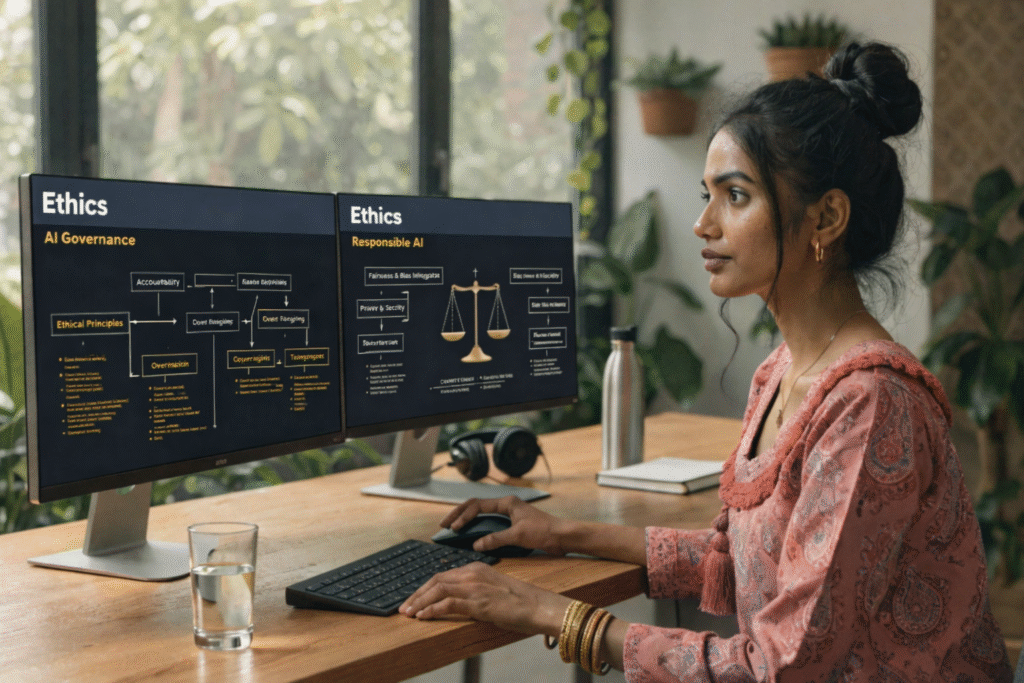
With India’s Data Protection Bill and global AI ethics scrutiny, 2025 demanded techies who could spot bias in algorithms or privacy red flags before launch.
Vikram, 31, from Noida, flagged an unfair loan-approval AI model at his fintech firm. His ethical audit saved the company from regulatory heat and earned him a seat on the ethics committee—plus a 40% hike. “Code without conscience is dangerous,” he warns.
Pros: Positions you as forward-thinking; opens consulting or policy roles.
How to start: Free courses on Coursera like “AI Ethics” by IIT professors.
Desi angle: Tie it to Indian values—dharma in tech decisions resonates deeply.
The Indian Twist: Non-Tech Skills Meet Family, Traffic, and Jugaad
These skills aren’t new to us Indians—we’ve been negotiating with autowallas, balancing joint-family expectations, and turning limited resources into magic for generations. But in tech hubs like Bengaluru’s Whitefield traffic or Hyderabad’s Hi-Tech City, the pressure is real: 10-hour workdays, parental “beta, settle down” talks, and the constant comparison on family WhatsApp groups. The beauty? Our culture gives us an edge. Business acumen comes naturally from helping in a cousin’s kirana store. Storytelling? We grew up with grandparents’ epics. The challenge? Time. That’s why short, practical hacks work best—no fancy foreign coaches needed when YouTube and LinkedIn are free on Jio.
Real Stories: Triumphs, Tumbles, and Turnarounds
Let’s hear from the trenches.
- Meera, 29, Mumbai: Over-relied on technical skills and missed two promotions. She started a “skill swap” group with non-tech colleagues over chai. Six months later, she’s product owner. “I learned more from marketing folks than from Stack Overflow.”
- Karan, 34, Gurugram: His stakeholder mismanagement led to a lost client. After one honest feedback session, he rebuilt trust and now mentors others. “Failure taught me faster than any course.”
- Riya, 27, Kochi: Adaptability saved her during a sudden remote-to-office shift. Yoga + weekly reflection kept her sane and promoted.
These aren’t overnight miracles. Most took 3–6 months of 5–7 hours weekly while keeping the day job. The thread? Consistency and a growth mindset rooted in our “never give up” desi spirit.
Practical Steps to Build These Skills Without Burning Out
Ready to level up? Here’s your no-nonsense roadmap:
- Ease In: Pick one skill this month. Spend 30 minutes daily—no more.
- Build Proof: Create a “non-tech portfolio”—Loom videos, case studies, or LinkedIn posts showcasing your new edge.
- Practice Desi-Style: Use family gatherings for storytelling drills or UPI apps for quick business simulations.
- Track Progress: Simple Google Sheet for weekly wins and feedback.
- Network Smart: Join Indian tech communities like “Techies with Ambition” on WhatsApp or LinkedIn groups.
- Mind Your Health: Evening walks in the park and weekend family time keep EQ high.
- Get Feedback: Ask your manager for a 15-minute “skill chat” quarterly.
- Scale Up: Once comfortable, mentor a junior—teaching cements learning.
Desi Hustle Hacks: Tools and Mindset for Indian Techies
Fuel your growth the Indian way. Free tools: Notion for stakeholder maps, Canva for presentation decks, and the “Atomic Habits” audiobook during metro rides. Mindset shift: Treat rejections like Bengaluru rain—temporary and inevitable. Celebrate small wins with home-cooked biryani or a family movie night. Remember, your parents sacrificed for your engineering seat; now you’re turning it into leadership. And when imposter syndrome hits (it will), remind yourself: every unicorn founder started exactly where you are.
Wrapping It Up: Code Is the Entry Ticket—These Skills Are the VIP Pass
So, beyond coding, are these five non-tech skills the real game-changers for Indian tech professionals in 2025? Absolutely. Arjun, Neha, Rohan, Sneha, and Vikram weren’t born with them—they chose to learn them while the industry shifted under their feet. The tech landscape won’t wait, but neither will your career dreams. You don’t need to quit coding; you just need to layer these human skills on top.
If this hit home, pick one skill tonight. Open LinkedIn, watch one video, or message a colleague for coffee. Your future self—whether in that corner office, leading a startup, or simply sleeping better at night—will thank you. What’s your biggest non-tech skill gap right now? Drop it in the comments below—we read every single one, cheer each other on, and sometimes even swap tips. Your promotion, your freedom, your legacy in Indian tech starts here. Let’s build it together!
You May Like This



Advertisement

You May Like This








Advertisement

Advertisement

Advertisement